



People are always searching for identity, often traveling from place to place to find it. In doing so, they leave behind their birthplace and the memories of growing up. Wang Lama (Tsewang Lama) is an artist from the remote far western region of Nepal. He is a painter, sculptor, art restorer, and traveler who also enjoys collecting plants. During his travels, he engages with the local flora, fauna, and cultures. Currently, he is showcasing his first solo exhibition at the Takpa Gallery, which will be open until June 9th.
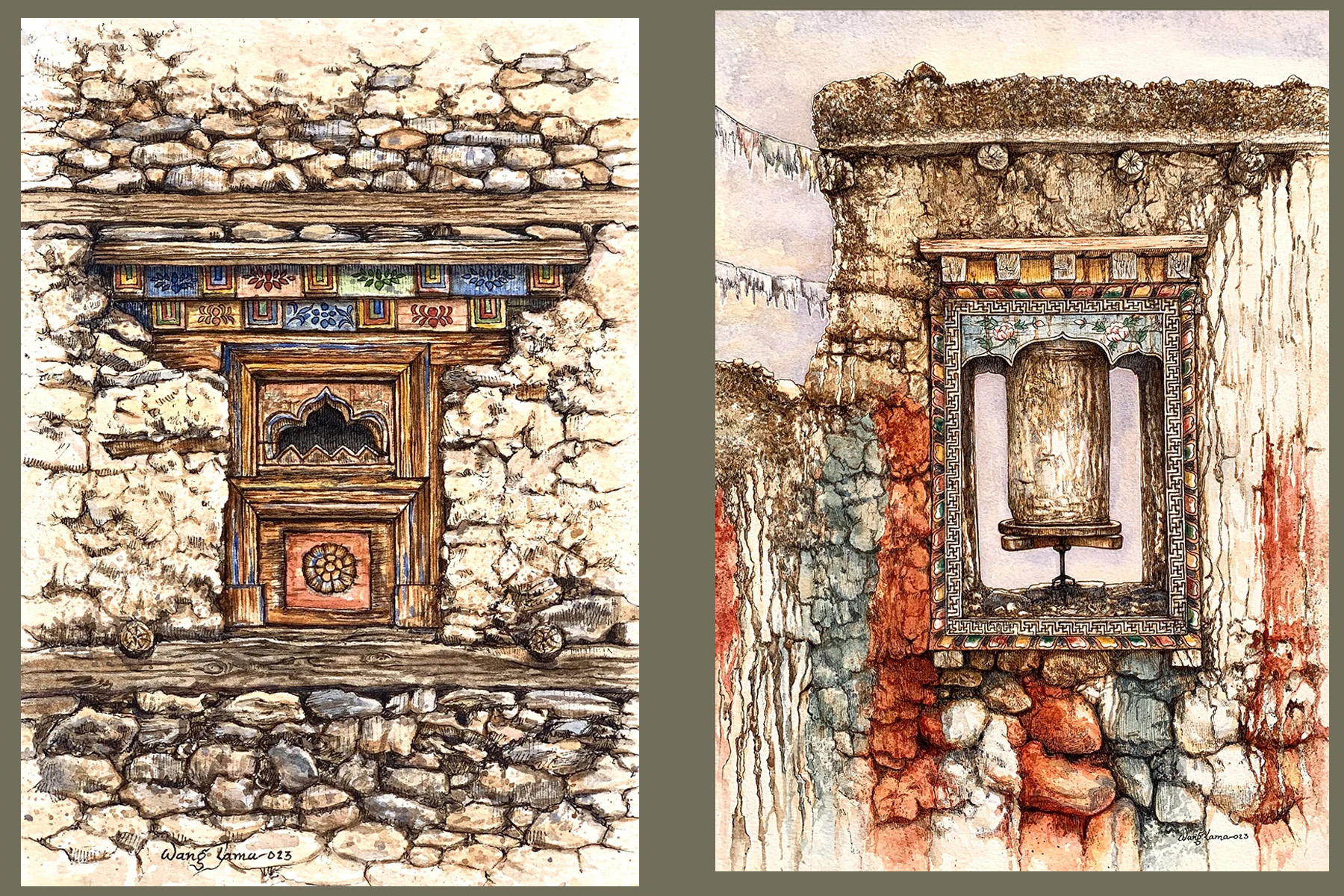
The exhibition showcases his recent trip to Mustang, where he explores the region’s natural landscape and uncovers the forgotten tales of the village, long lost to its inhabitants.
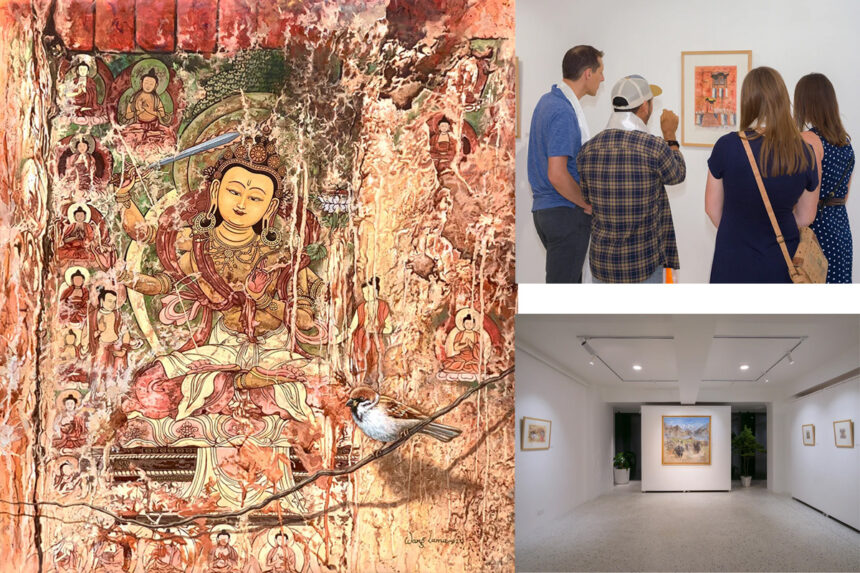
Upon entering the gallery space, you will see a painting of a Manjushree mural on the right side. Wang Lama explains that he discovered this image on a Gompa wall in Mustang. The mural, over 300 to 400 years old, has never been restored, and time and weather have caused parts of it to fade. This mural particularly intrigued Wang, inspiring him to recreate the imagery in his work.
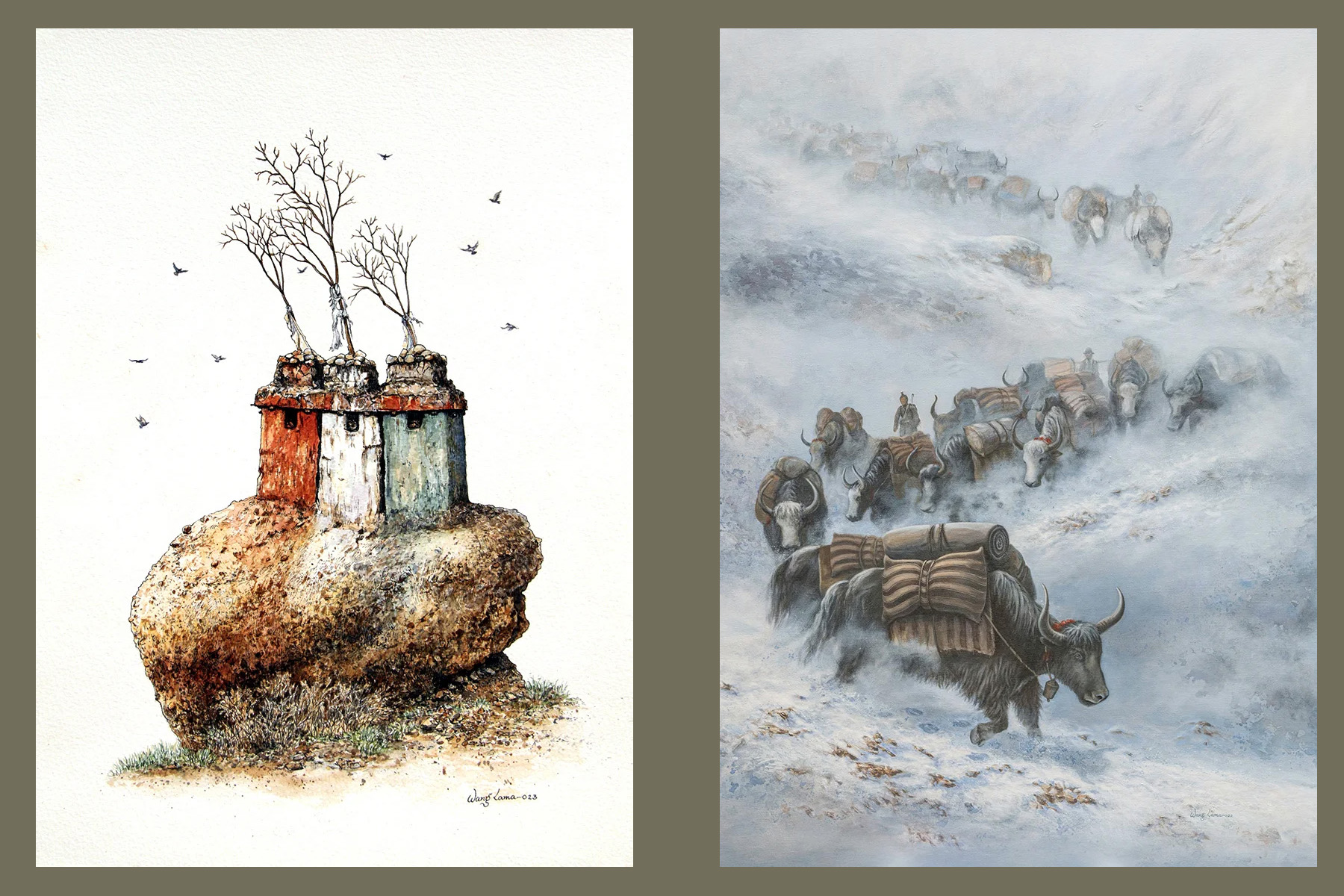
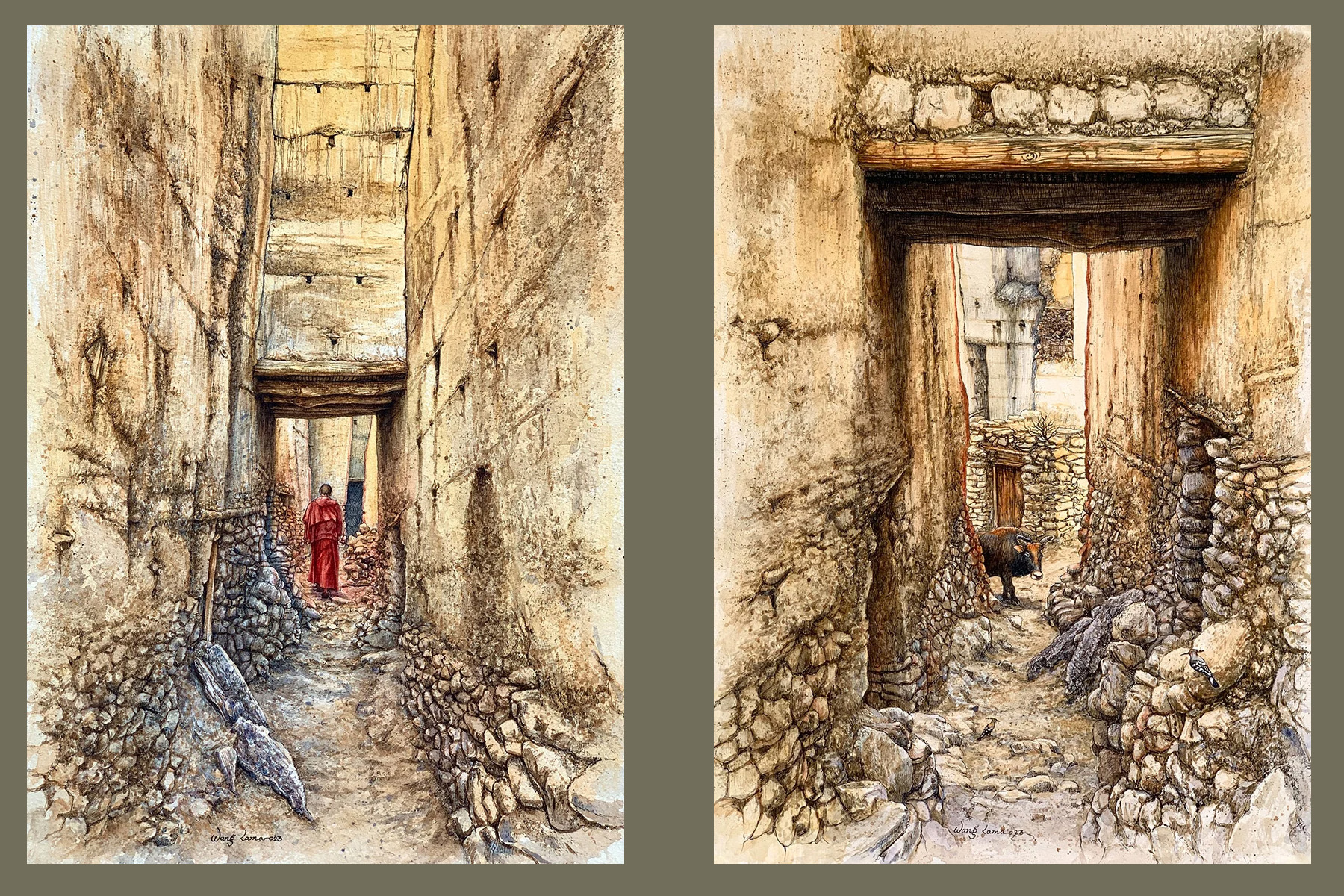
Another painting he has created depicts one of the Gompas in the region, featuring three monasteries that appear to rest on a large stone. According to the artist, this sacred place is visited annually by locals who pray for long life and health. Many residents of Mustang have migrated to other parts of the country in search of better opportunities, leaving their homes abandoned. One particular image that caught the artist’s attention is the last street of Mustang. Traditionally, offerings were made here daily, but with the migration, there are no longer locals to perform this ritual. As a result, a Lama now resides there and makes the daily offering on behalf of those who have left, traveling up the street to pray at the altar for the well-being of the dispersed community. Another painting that Wang has produced for the exhibition is of a stranded bull who for the whole day goes to the grassland to graze and in the evening, it returns to its home to take a refuge. When the village has been an abandoned one, it self keeps on travelling to and fro. This imagery has created an ever-lasting memory in the mind of visitors.
A group of visitors were captivated by a large canvas on the central wall of the gallery. The painting depicted an aerial view of a village in Mustang. Hailing from the same region, the visitors felt a wave of nostalgia as they gazed at what felt like a long-lost view of their home. Speaking with the Khojpatra team, Wang Lama remarked, “Some of the houses still seem to have smoke rising from them, but most are now locked up.” He lamented that in the pursuit of modernity, the centuries-old house-making techniques have been abandoned by the locals in favor of concrete cement houses.
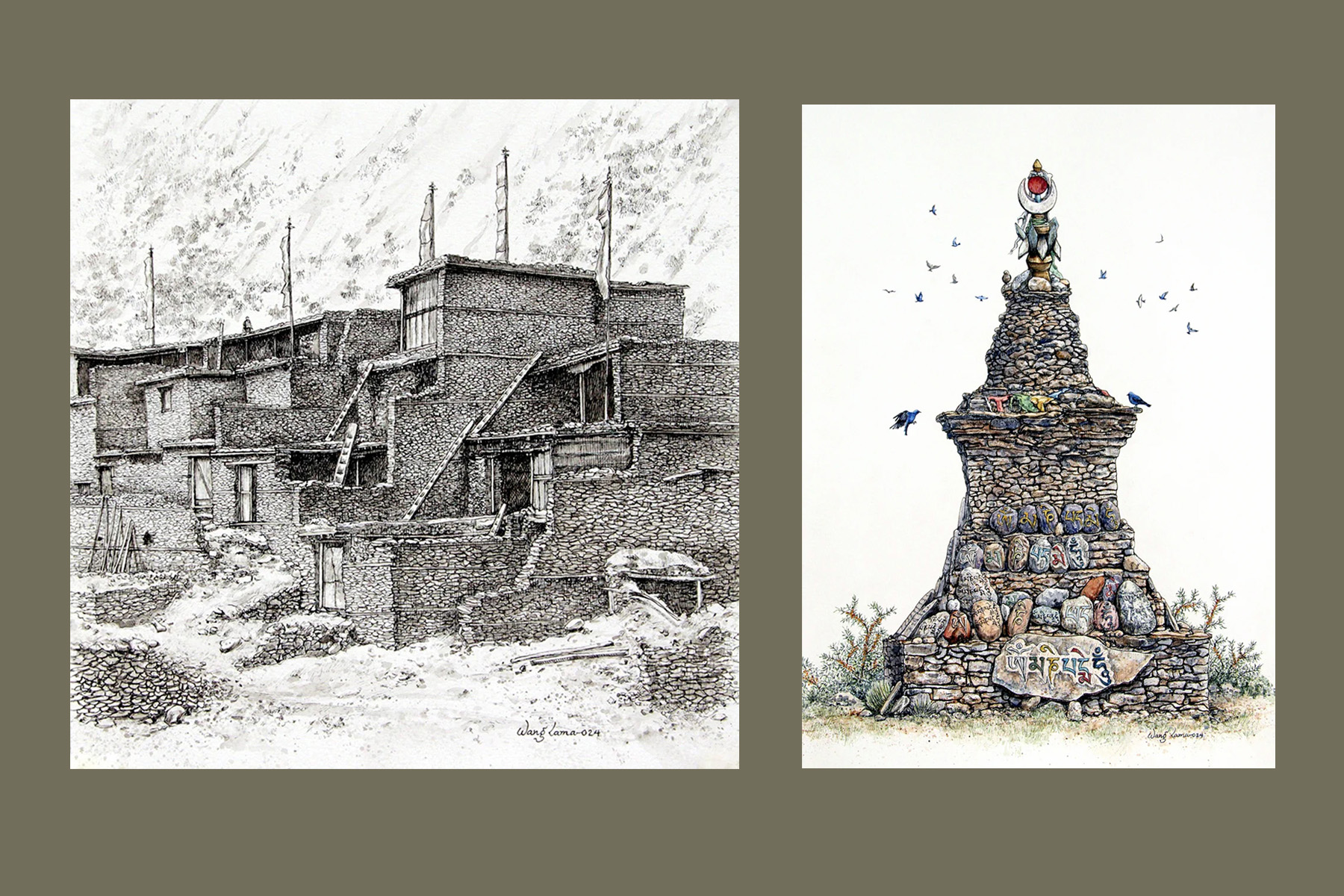
One of Wang’s paintings features a Mane stone Chhorten. In the past, these Chhortens were built out of compassion, and when stones fell from them, people would replace them. Nowadays, fewer people visit these places, and many have begun constructing cement Chhortens instead. In the painting, blue birds are flying around the Chhorten. According to Wang, these birds visit the Chhorten area only during certain seasons to eat the blueberries that grow there. However, these plants are not being preserved, and as they die off, the special blue birds will no longer be seen in the area.
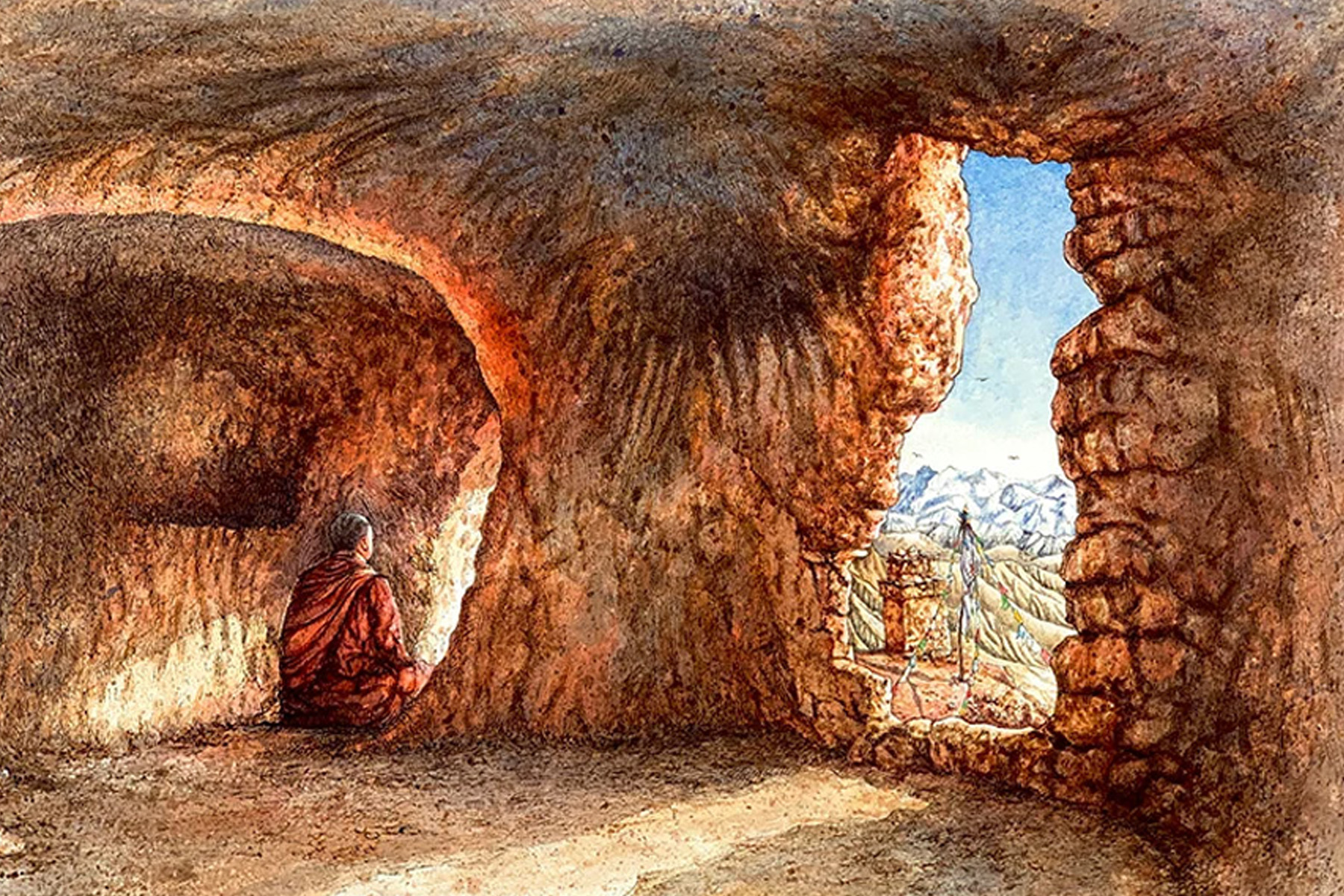
The exhibition presents a unique and captivating story, reflected in the artist’s distinctive use of colors. To truly experience and appreciate this vibrant world, one must visit the gallery in person. The show runs until June 9th.

Leave A Comment