



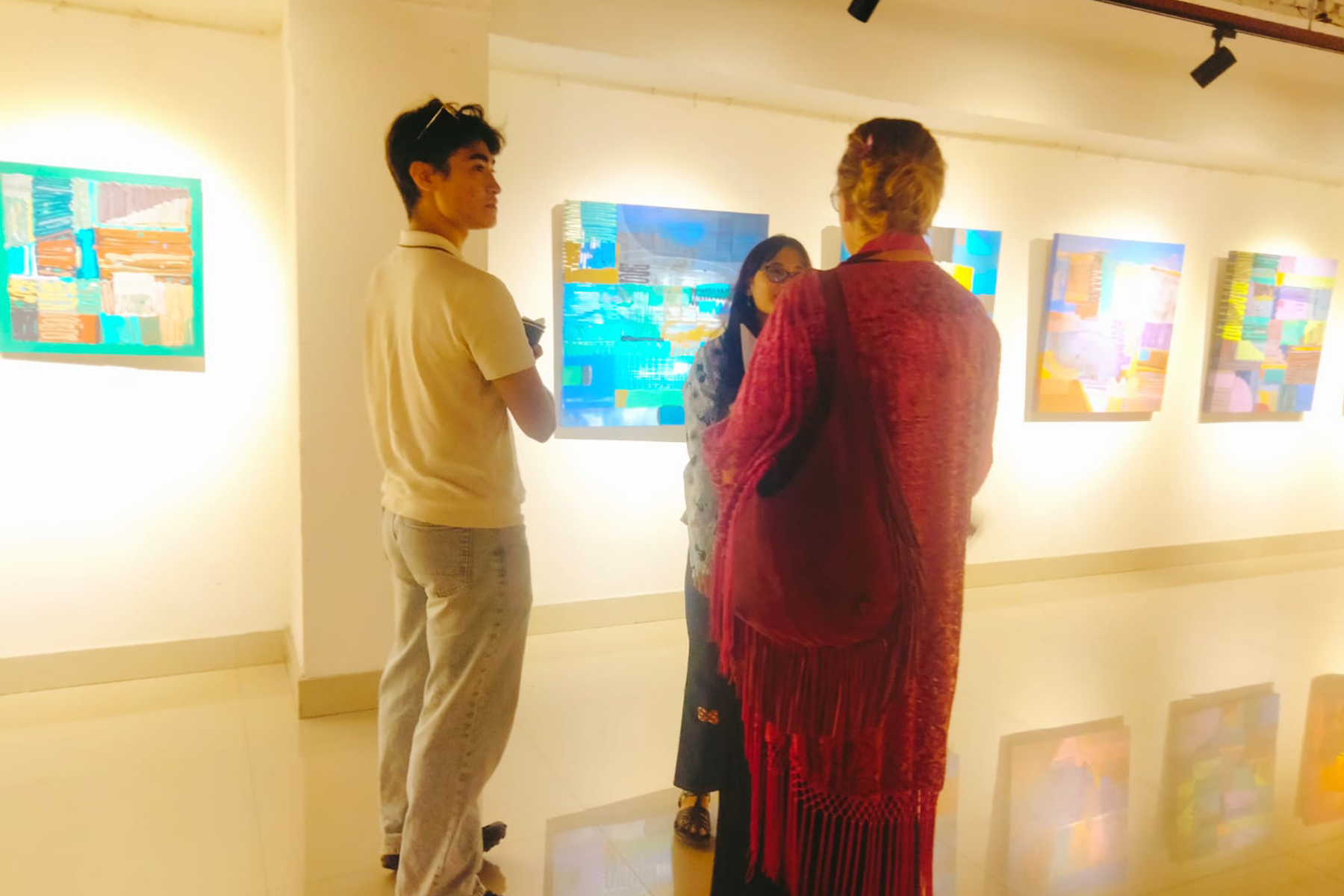
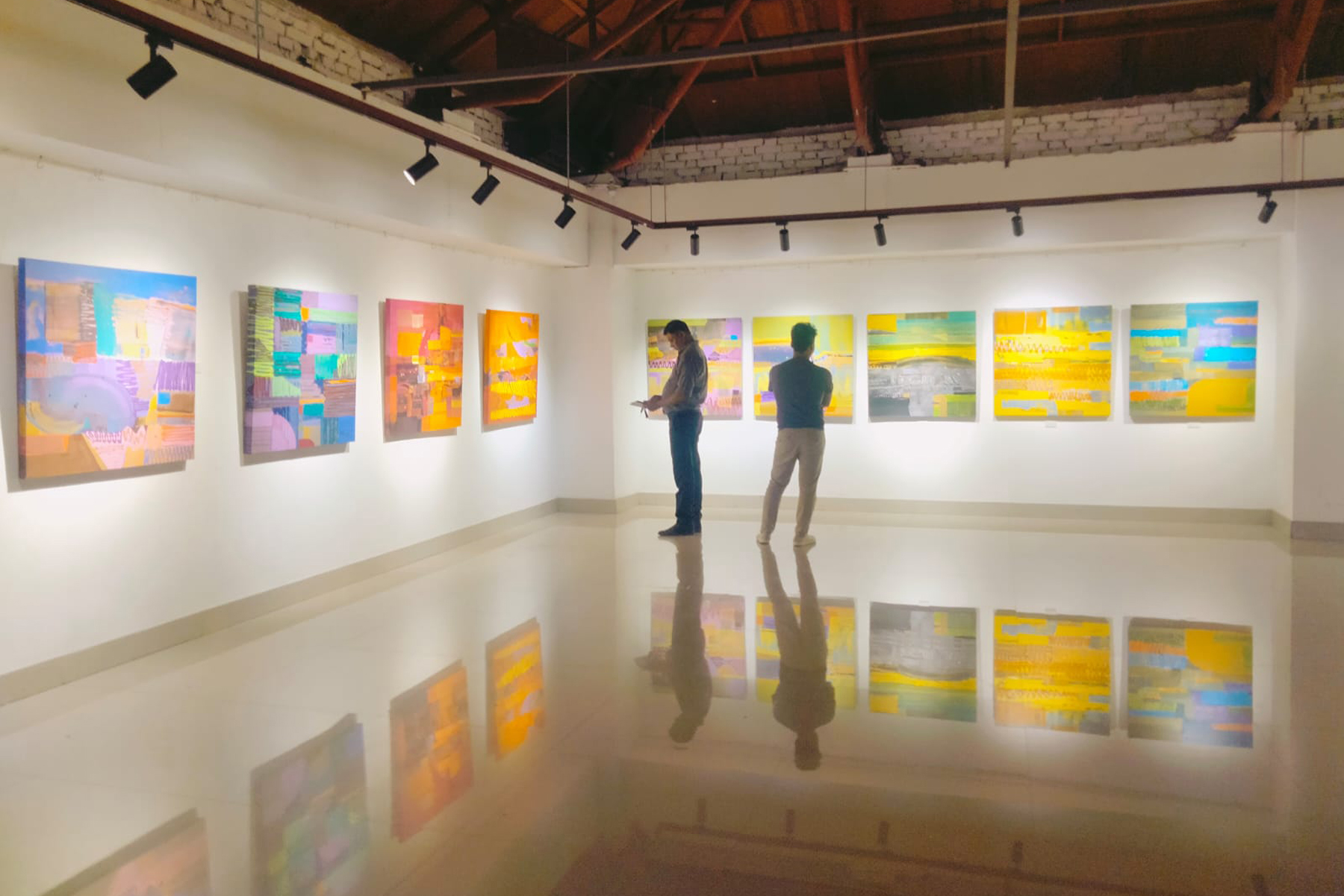
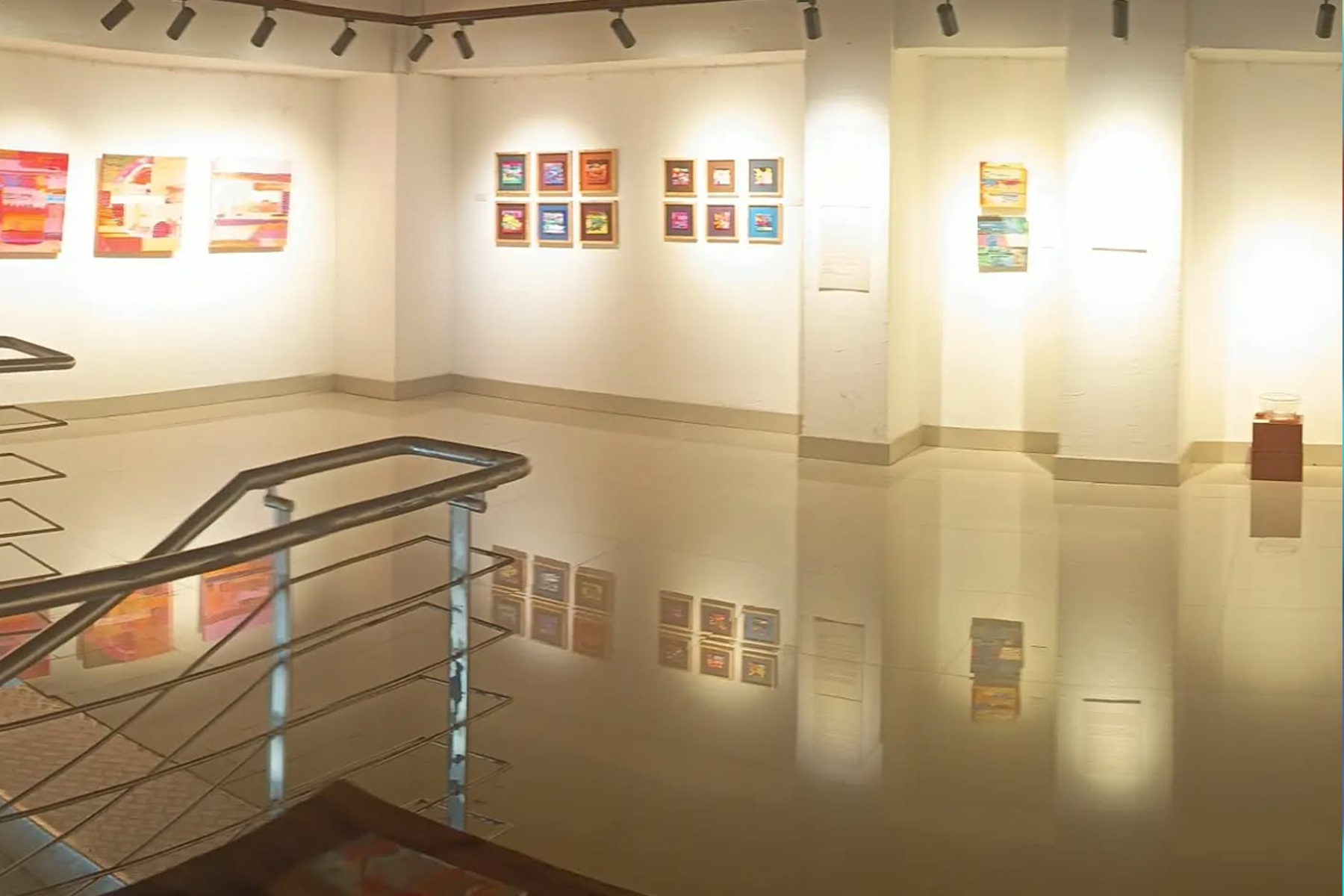
By the time visitors step inside The Kala Salon in Thamel, the paintings hanging quietly on the gallery walls appear complete. Their colors have settled, their textures have found their place and every composition seems resolved. Yet for artist Sagar Manandhar, this is only the final moment of a journey that began long before a single layer of paint reached the canvas.
The real story of each painting unfolded elsewhere- in the quiet of his studio, during long nights when Kathmandu had emptied itself of its daily commotion. There, without the distraction of conversation or music, the artist worked in near silence. The scratch of a palette knife across the surface, the slow grinding of pigments, the resistance of thick paint against textured canvas and the repeated cycle of adding, removing and rebuilding became as important as the image itself.
These sounds were not interruptions to the creative process.
They were the creative process.
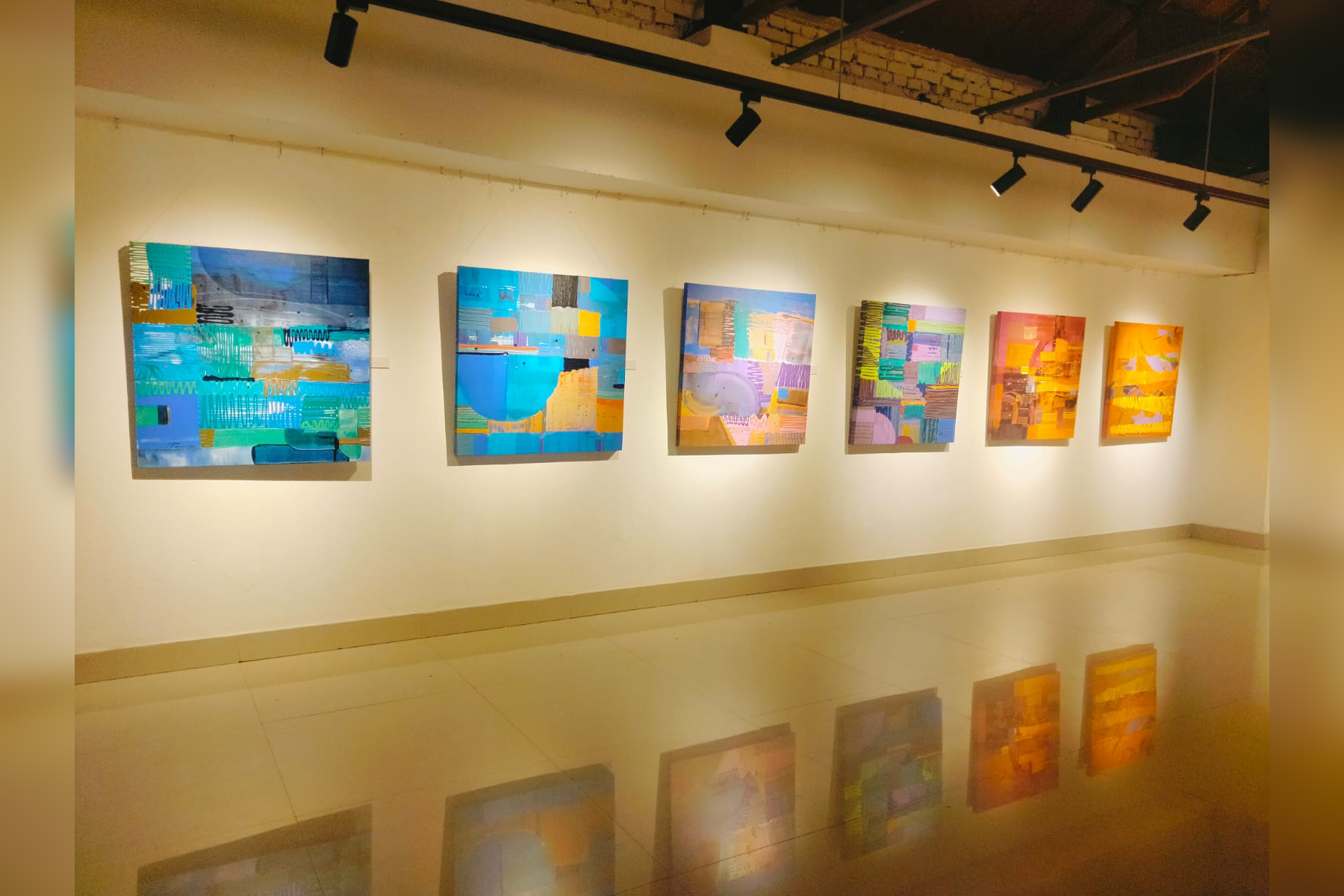
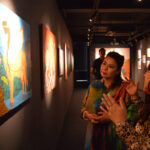
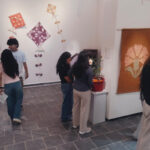
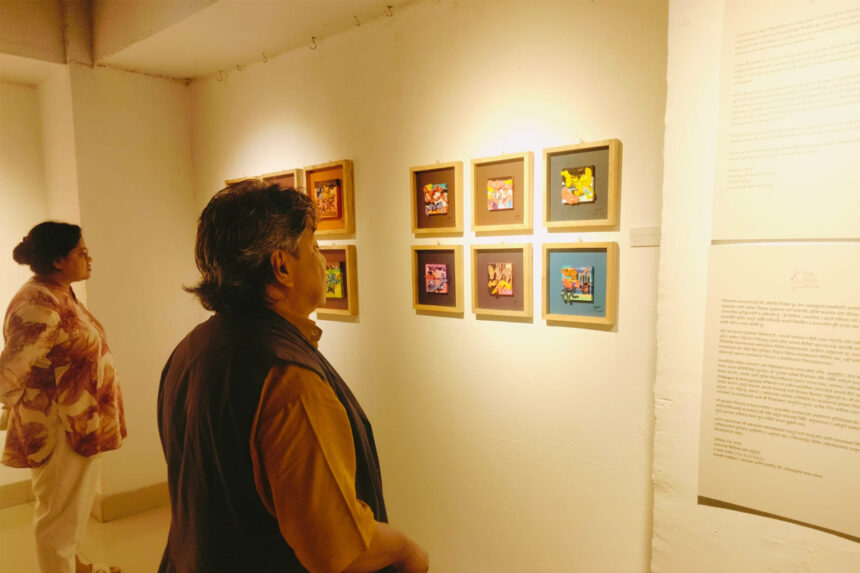
This way of thinking forms the foundation of Dialogue and Perception, Manandhar’s latest solo exhibition at The Kala Salon, inaugurated on July 16. This exhibition is till the 10th of August. Rather than presenting paintings simply as finished works to be admired, the exhibition invites visitors to look beyond the completed surface and consider everything that remained invisible during its making. Every artwork becomes evidence of countless decisions, revisions, accidents and discoveries- moments that disappear once the paint has dried but continue to exist beneath every visible layer.
“We often celebrate the finished work,” Manandhar says. “But we rarely acknowledge the dialogue that created it.”
That dialogue is not merely an internal conversation between an artist and an idea. It unfolds between material and intention, certainty and uncertainty, planning and improvisation. A texture that appears unexpectedly demands another response. A color refuses to behave as anticipated. One decision immediately changes the next. The painting gradually develops its own direction, compelling the artist to respond rather than simply dictate.
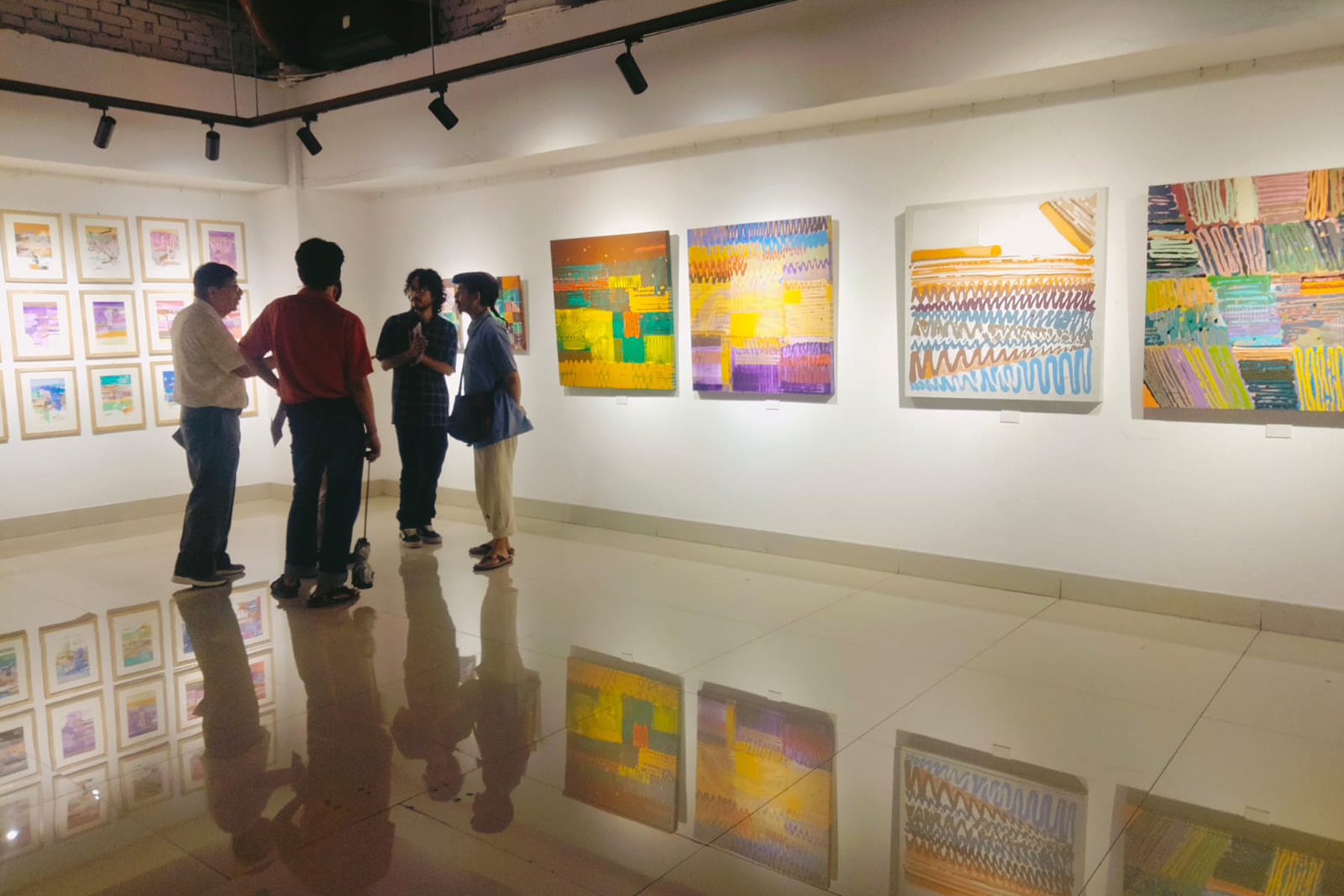
It is this willingness to surrender absolute control that distinguishes Manandhar’s recent body of work.
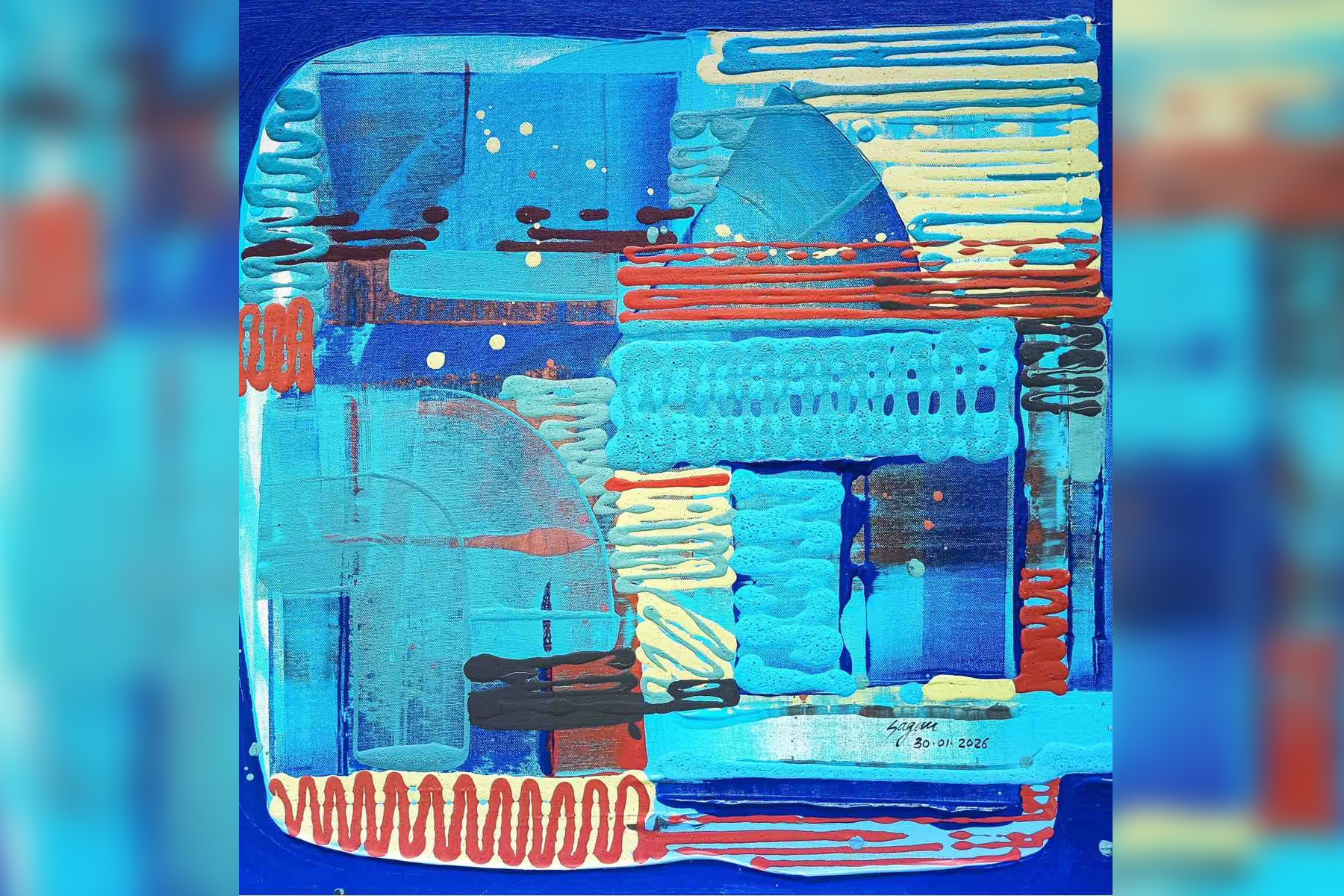
Earlier phases of his artistic practice explored rhythm and musicality through abstraction. In Dialogue and Perception, however, rhythm is no longer borrowed from music alone. It emerges from the physical act of painting itself. The scrape of steel against canvas, the pressure applied by a palette knife, the density of pigment and even the pauses between gestures become part of the work’s internal structure. The exhibition is less concerned with representing sound than with revealing how making a painting possesses its own unmistakable rhythm.
That transformation did not happen overnight.
Like many experienced painters, Manandhar had mastered techniques that allowed him to predict how a painting would develop. Instead of relying on that familiarity, he deliberately challenged it. He introduced unfamiliar materials, altered established methods and accepted the possibility that the work might resist him. Surfaces fractured in unexpected ways. Colors reacted differently than intended. Certain textures emerged entirely by chance.
Rather than correcting these surprises, he allowed them to remain.
“The material has its own voice,” he explains. “Sometimes you have to stop trying to control it and begin listening to it.”
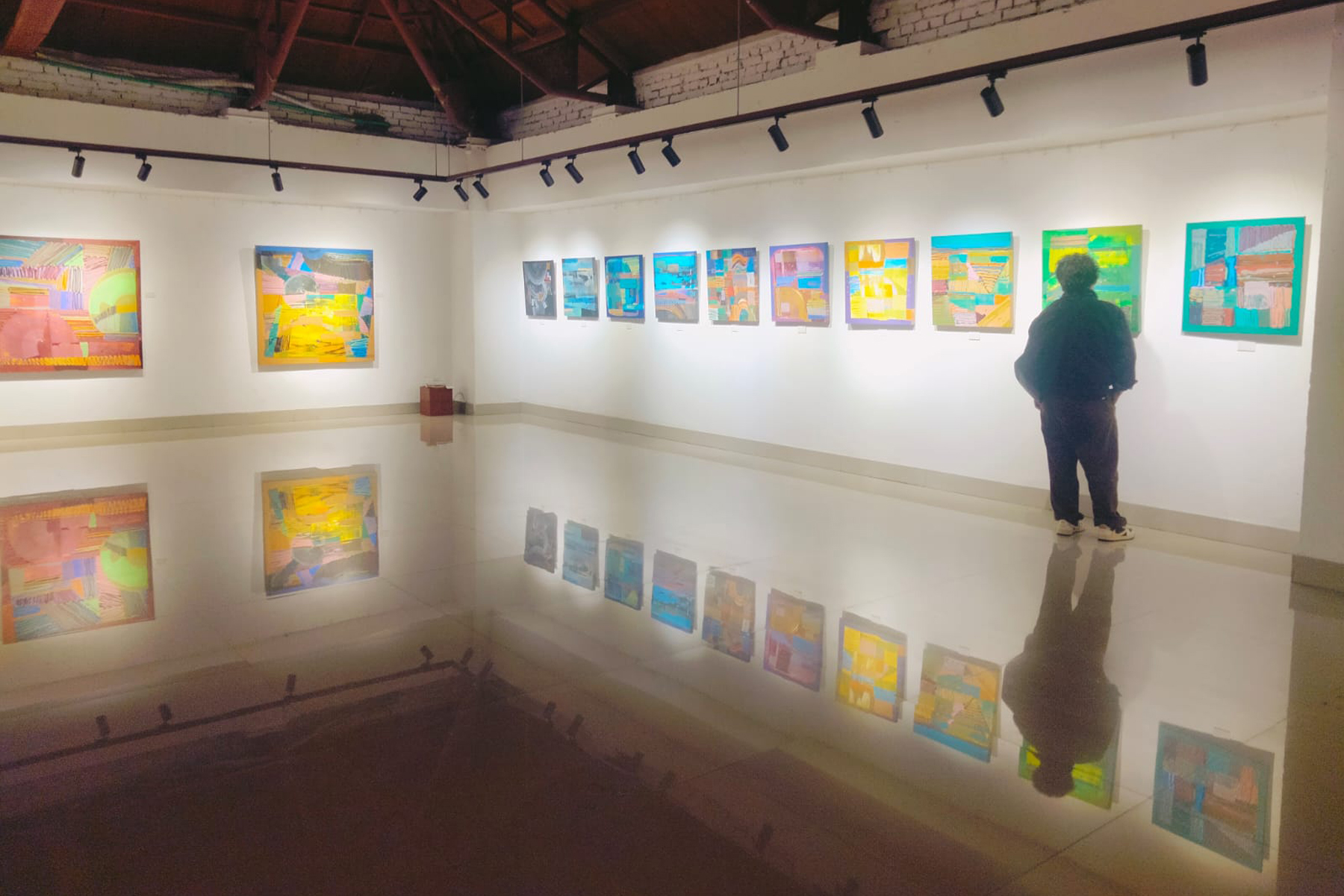
That philosophy has resulted in paintings that feel remarkably open-ended. They appear less constructed than discovered, as though each composition slowly revealed itself through negotiation rather than instruction.
During the exhibition opening, Siddhartha Art Gallery Director Sangeeta Thaapa remarked that several works reminded her of the layered architecture, weathered surfaces and earthy palette associated with Varanasi’s cremation ghats. She suggested that these visual echoes may stem from Manandhar’s years of study at Banaras Hindu University. Whether intentional or subconscious, such observations reinforce one of the exhibition’s central ideas: a painting often contains memories and experiences that continue to reveal themselves long after the artist has stepped away from the canvas.
Although abstraction remains the foundation of his practice, Manandhar rejects the notion that abstract art must be solved like a puzzle. Too often, he believes, viewers stand before a painting searching for a hidden message, convinced they have misunderstood the work if they cannot explain it.
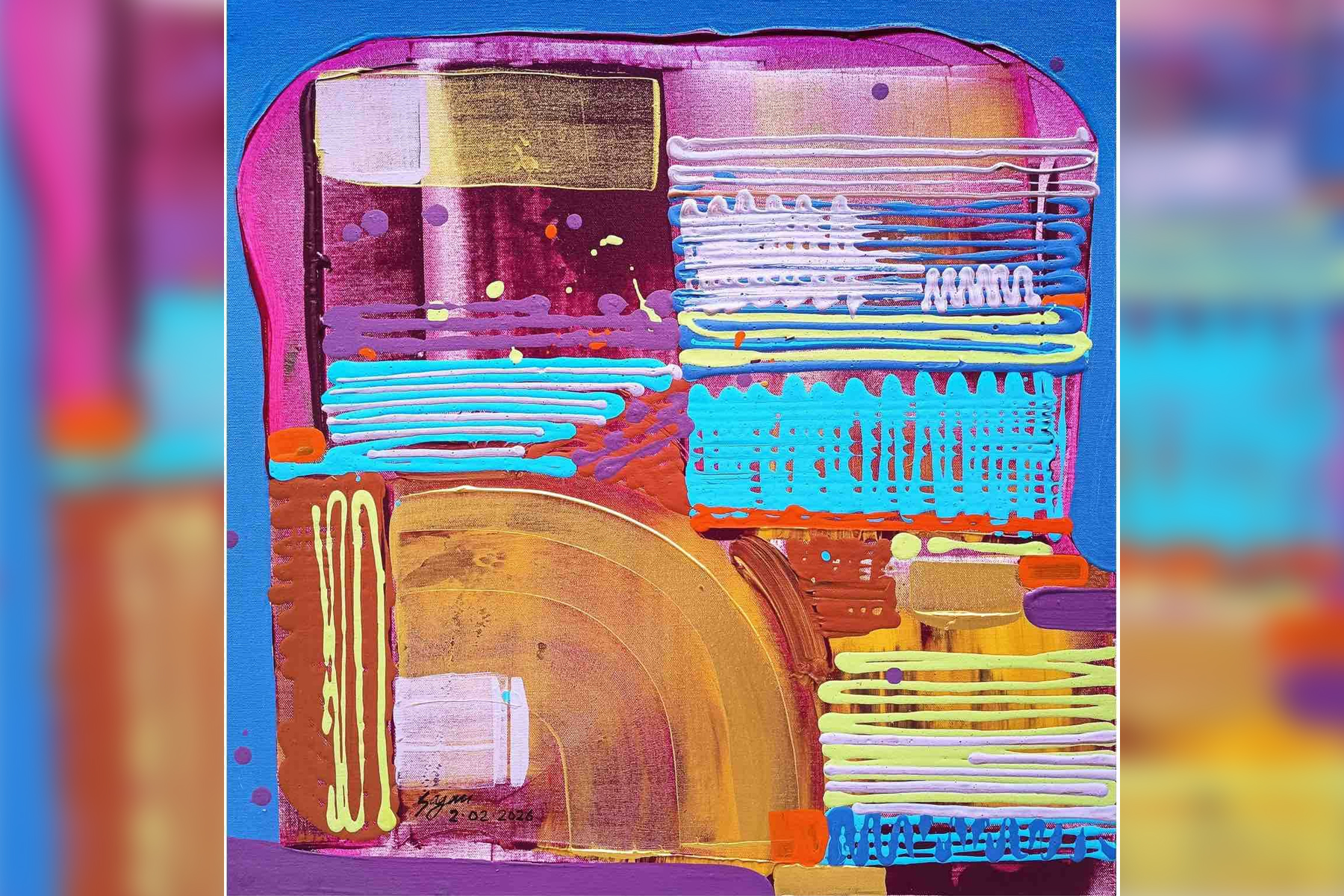
He sees abstraction differently.
Its value lies not in providing answers but in creating experience.
Just as music can move listeners who do not understand its language, an abstract painting can provoke emotion without offering a recognizable subject. Meaning emerges through color, movement, texture and atmosphere rather than through identifiable forms. Every viewer arrives carrying different memories, different emotions and different expectations. Consequently, every encounter with the same painting becomes unique.
Even disagreement becomes meaningful.
If someone walks away saying they dislike a painting, Manandhar does not regard that as failure. The work has already succeeded in demanding attention. It has prompted a response, initiated reflection and established a relationship with its viewer. Indifference, not criticism, is the greater enemy of art.
To Manandhar, abstraction is not an escape from reality.
It is reality unfolded.
It strips away appearances in search of deeper emotional truths, exploring what exists beneath the visible surface rather than reproducing what everyone already recognizes.
Perhaps that endless capacity for discovery explains why abstraction continues to fascinate him. A realistic painting may eventually reach a point of completion, but abstraction rarely does. Even after signing a canvas, he often finds himself imagining another path it might have taken.
Every ending quietly becomes another beginning.
Every finished painting leaves behind another unanswered question.
Nature, too, continues to whisper through his work- not through literal representation but through memory and sensation. Rainfall, flowing rivers, shifting light, distant landscapes and the countless rhythms embedded within the natural world subtly inform his paintings. Living in Nepal further enriches this vocabulary. The vermilion reds of rituals, the lush greens of hillsides, the colors that animate festivals and everyday life remain deeply embedded within his visual consciousness.
Even when nothing recognizable appears upon the canvas, Nepal is still there.
Not as geography.
As memory.
Growing up under the shadow of one of Nepal’s most celebrated artists, Kiran Manandhar, inevitably shaped his artistic journey. Yet what he inherited from his father was not fame, recognition or style.
It was discipline.
Watching his father work relentlessly taught him that art is sustained less by moments of inspiration than by daily commitment. The privilege of belonging to an artistic family, however, came with its own burden. Early in his career, many assumed his achievements were extensions of his father’s reputation.
There was little he could say to change such perceptions.
So he allowed his paintings to answer instead.
Patiently, quietly and consistently, he built an artistic identity that stands confidently beside-not beneath- the legacy from which it emerged.
Along that journey, another figure left an enduring mark: the late master Uttam Nepali. As a young student visiting one of Nepali’s exhibitions, Manandhar received encouragement that would remain with him for decades. Before he left, the senior artist handed him one of his own brushes.
He still keeps it.
Some gifts possess little monetary value but become priceless because of the confidence they quietly bestow. That single brush continues to remind him that artistic journeys are often sustained by unexpected acts of generosity.
Ironically, however, his most honest critics have never been celebrated artists or professional reviewers.
They have always been waiting at home.
His mother remains the final authority before a painting is considered complete. If she feels something is unresolved, the signature waits. Today his wife and daughter have joined that intimate circle of conversation. Although his wife often insists she knows little about art, her observations repeatedly reveal dimensions he himself has overlooked.
The solitary artist, it seems, is never entirely alone.
Every painting carries traces of family, conversation and shared experience.
When asked what role art should play in society, Manandhar resists grand declarations. He does not believe paintings transform nations or rewrite history overnight.
Their power is quieter.
If someone enters his exhibition burdened by anxiety and leaves having forgotten those worries for only a brief moment, then the artwork has already fulfilled its purpose.
A gallery, he says, should be a place of celebration.
His exhibition is his celebration.
If visitors find themselves sharing in that celebration-even for a few moments-then the paintings have succeeded.
In an age increasingly dominated by speed, certainty and instant explanation, Dialogue and Perception gently proposes another way of looking. It asks viewers not to search immediately for answers but to remain with uncertainty a little longer. To notice the textures before the image. To hear the silence beneath the colour. To recognise that every painting preserves not only pigment but also memory, atmosphere and time.
Perhaps that is why Manandhar now records the exact completion date of every artwork, rather than merely its year. Each canvas reminds him of a particular day, a particular state of mind and a particular conversation that unfolded within the quiet confines of his studio.
Seen this way, his paintings become more than works of art.
They become diaries without sentences.
Memories without photographs.
Conversations that continue long after the last brushstroke has dried.

Leave A Comment