

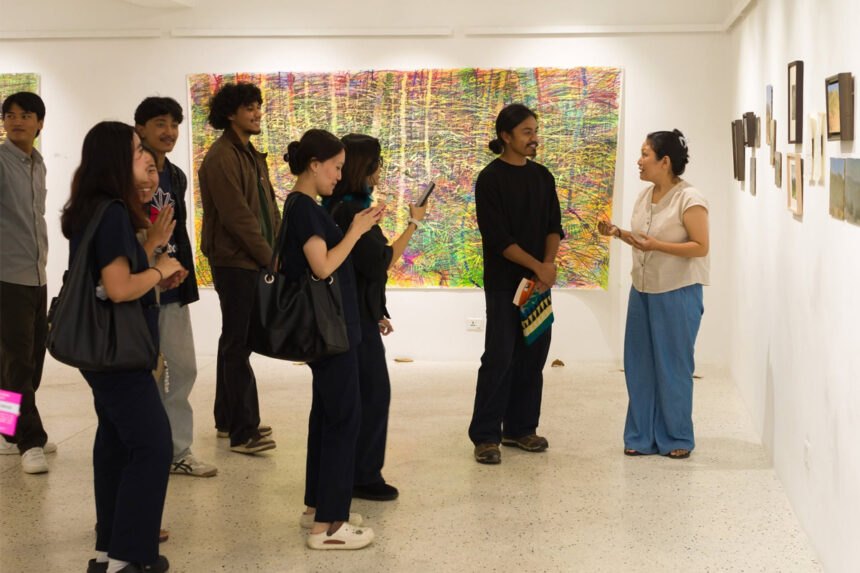
One question has always intrigued those who stand outside the world of art: How does an artist create what they create? What unseen journeys of thought, emotion, memory, and intuition culminate in a single brushstroke on a canvas? For many, the creative process remains an enigma-a silent dialogue between the artist and the self that eventually manifests into forms, colors, and textures. It is perhaps this mystery that continually compels viewers to seek answers within works of art, hoping to decipher stories that words alone cannot tell.

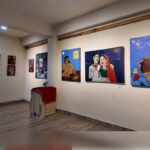
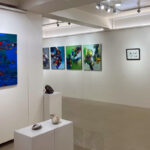
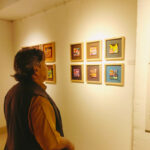
The same sense of curiosity quietly unfolds as one steps into the gallery space of Takpa Gallery this season. The exhibition, on view from 18 July to 25 August, presents the recent body of work by an accomplished artist whose artistic language has undergone a remarkable evolution. Each canvas bears witness to a creative journey that has matured beyond technical mastery into a realm of profound visual contemplation. Rather than merely depicting landscapes, the paintings invite viewers into spaces where memory, imagination, and lived experience converge, revealing an artist who is constantly redefining the possibilities of his own visual vocabulary.
Hailing from the serene hills of Palung, Makwanpur, only a few hours away from Kathmandu, Sanod Maharjan has brought together a compelling collection that reflects years of artistic inquiry and transformation. His landscapes are no longer simple representations of geographical terrains; they have become emotional topographies where nature is filtered through introspection, time, and personal experience. Those familiar with Maharjan’s earlier works will immediately recognize the remarkable shift in his artistic expression. The transition from his previous visual language to his current practice reveals an artist unafraid of reinvention-one who embraces experimentation while remaining deeply connected to the landscapes that continue to inspire him. Every painting, therefore, stands not merely as an image of a place, but as a testament to the artist’s evolving perception of the world and his enduring dialogue with nature.
After graduating in Fine Arts, Sanod Maharjan devoted himself almost entirely to the language of landscapes- a language that has gradually become both his artistic identity and his spiritual refuge. His paintings possess an intriguing duality: they are restrained yet emotionally profound, minimalist in execution yet expansive in experience. At first glance, the surfaces appear deceptively simple, composed of measured brushstrokes and muted harmonies. Yet the paintings reveal their true character only when the viewer steps back. Distance becomes an essential part of seeing. What initially seems like scattered gestures of color slowly gathers itself into rolling hills, quiet forests, shimmering fields, and distant horizons breathing beneath changing skies.
There is an almost meditative rhythm to Maharjan’s brushwork. His strokes are economical, never excessive, allowing silence to occupy as much space as colour itself. This quality may remind some viewers of the lyrical simplicity found in the paintings of the celebrated American modernist Milton Avery, whose forms often balanced abstraction with serenity. Yet Maharjan’s visual language remains unmistakably his own. His landscapes grow organically from the soil of his homeland. They carry the fragrance of Palung’s forests, the softness of mountain air, and the quiet cadence of rural Nepal. Rather than documenting a place, he distils its atmosphere, inviting the viewer to experience not merely what the eye sees but what the heart remembers.
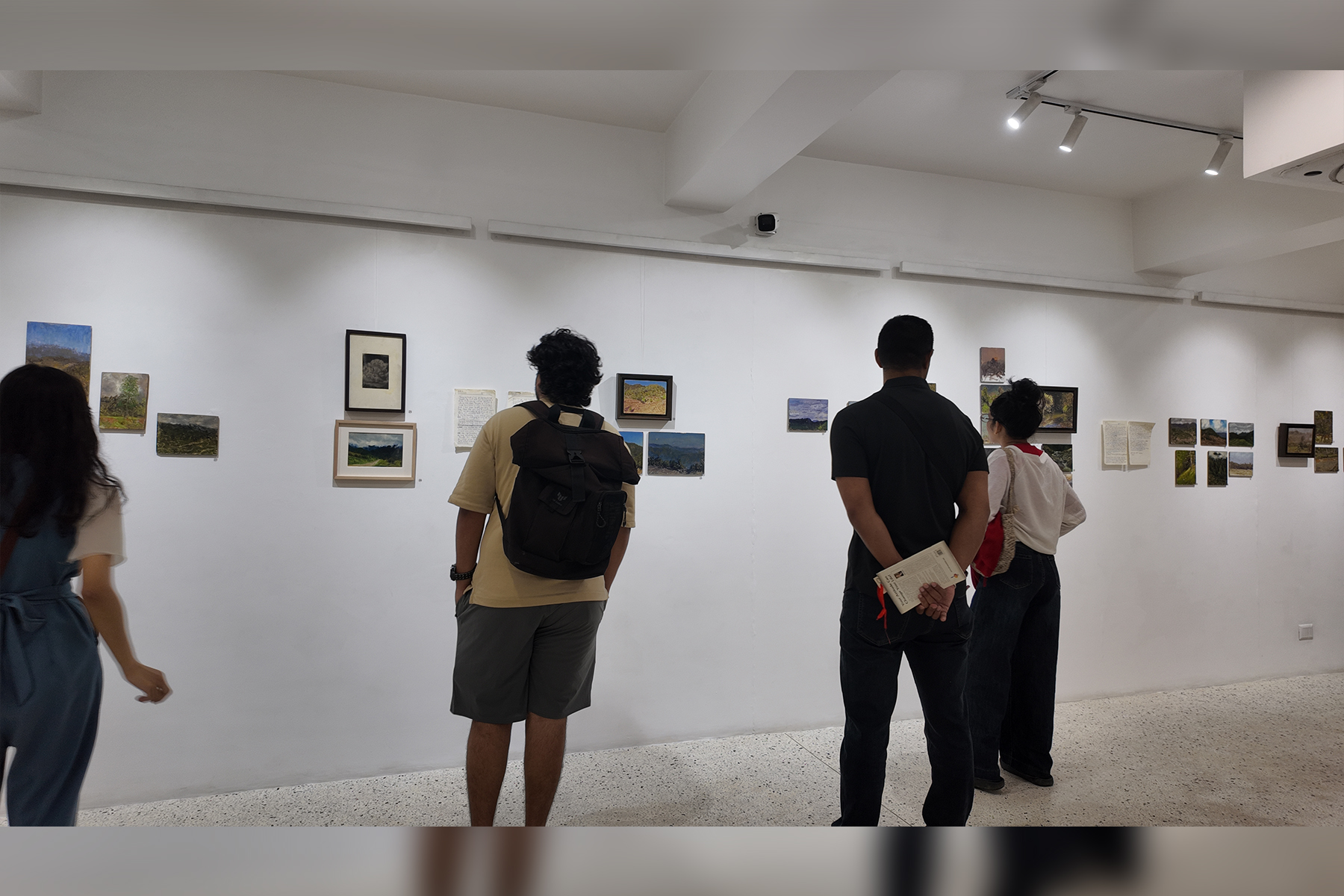
Interwoven among these landscapes are deeply personal letters addressed to the place itself. Their presence transforms the exhibition into something far more intimate than a conventional display of paintings. The handwritten words flow through the gallery like whispered conversations across time, dissolving the boundary between literature and visual art. Memory, grief, gratitude, and longing are no longer confined to sentences; they seep into the pigments themselves. As one moves from canvas to canvas, the letters begin to feel inseparable from the images, as though every mountain carries an unfinished sentence and every ray of light completes a forgotten thought. The viewer finds themselves not only looking at paintings but reading them, listening to them, and, perhaps without realizing it, becoming part of their emotional landscape. Such a harmonious union of image and text is rare, and it elevates the exhibition into a profoundly immersive experience.
Behind these luminous landscapes lies a story of transformation. Like many artists, Maharjan’s creative journey was irrevocably altered by an unexpected encounter with mortality. A serious accident forced him into prolonged bed rest, bringing him face to face with the fragility of life. During those silent days, when movement was limited and uncertainty lingered over every tomorrow, he began questioning everything he had previously believed about art. The paintings he had once considered complete suddenly appeared insufficient, unable to express the deeper truths he had begun to encounter. Rather than returning to his former practice, he chose to begin again.

He made a quiet promise to himself: each new painting would become an honest reflection of the visions that had accompanied him through those vulnerable moments between fear and hope. Those fleeting images-half memory, half revelation-have now found their way onto his canvases.
Standing before these works, one feels drawn into forests where sunlight arrives gently rather than dramatically. Golden rays slip through narrow openings in the dense canopy, illuminating patches of moss, tangled undergrowth, and clusters of delicate wildflowers hidden beneath towering trees. Light does not merely brighten the landscape; it breathes life into it. The blossoms glow as though carrying tiny fragments of dawn, while shadows drift softly across the forest floor.
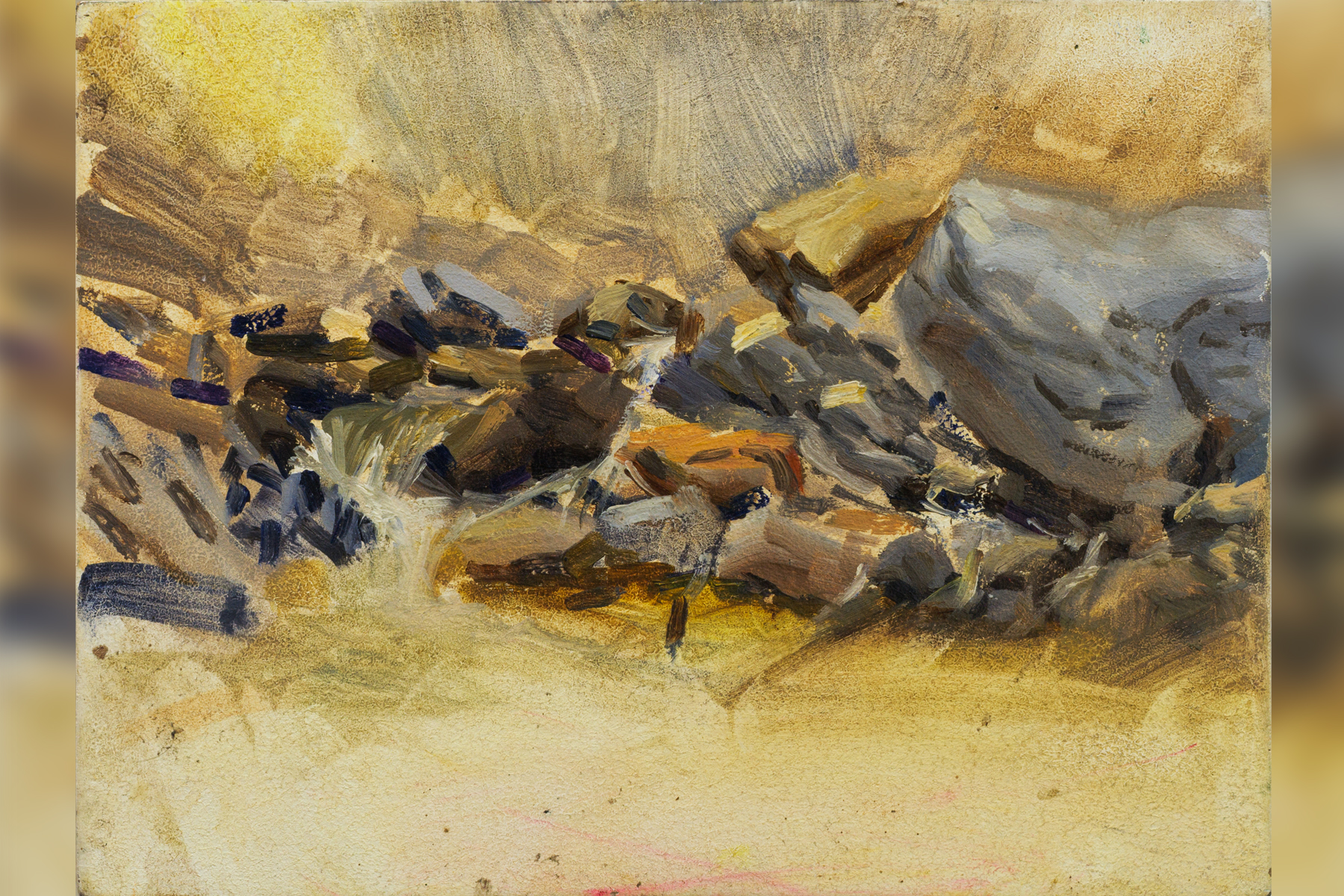
Look closely, and the paintings begin to move. Leaves seem to tremble under invisible currents of wind. Slender branches sway almost imperceptibly, and grasses bend with a rhythm so subtle that one instinctively pauses, expecting to hear the rustling of foliage. The silence within the paintings is alive-a silence filled with birdsong left unheard, cool mountain air left unfelt, and the quiet pulse of nature continuing beyond human presence. Maharjan has achieved something extraordinary: he paints not only what a forest looks like, but what it feels like to stand within it.
That sensation was beautifully articulated by one visitor at the gallery, who requested anonymity while speaking to the Khojpatra team:
“These paintings possess an extraordinary presence. I did not feel as though I was looking at artworks hanging on a gallery wall. Instead, I felt as though I had stepped into the woods themselves. For a few moments, I forgot about the painter entirely and found myself simply witnessing nature in its purest form.”
Perhaps this is the exhibition’s greatest achievement. It does not demand admiration through spectacle or technical virtuosity alone. Instead, it gently dissolves the boundary between viewer and landscape until the gallery disappears, the walls fall silent, and one is left standing alone beneath a forest canopy where light, memory, and emotion become one.
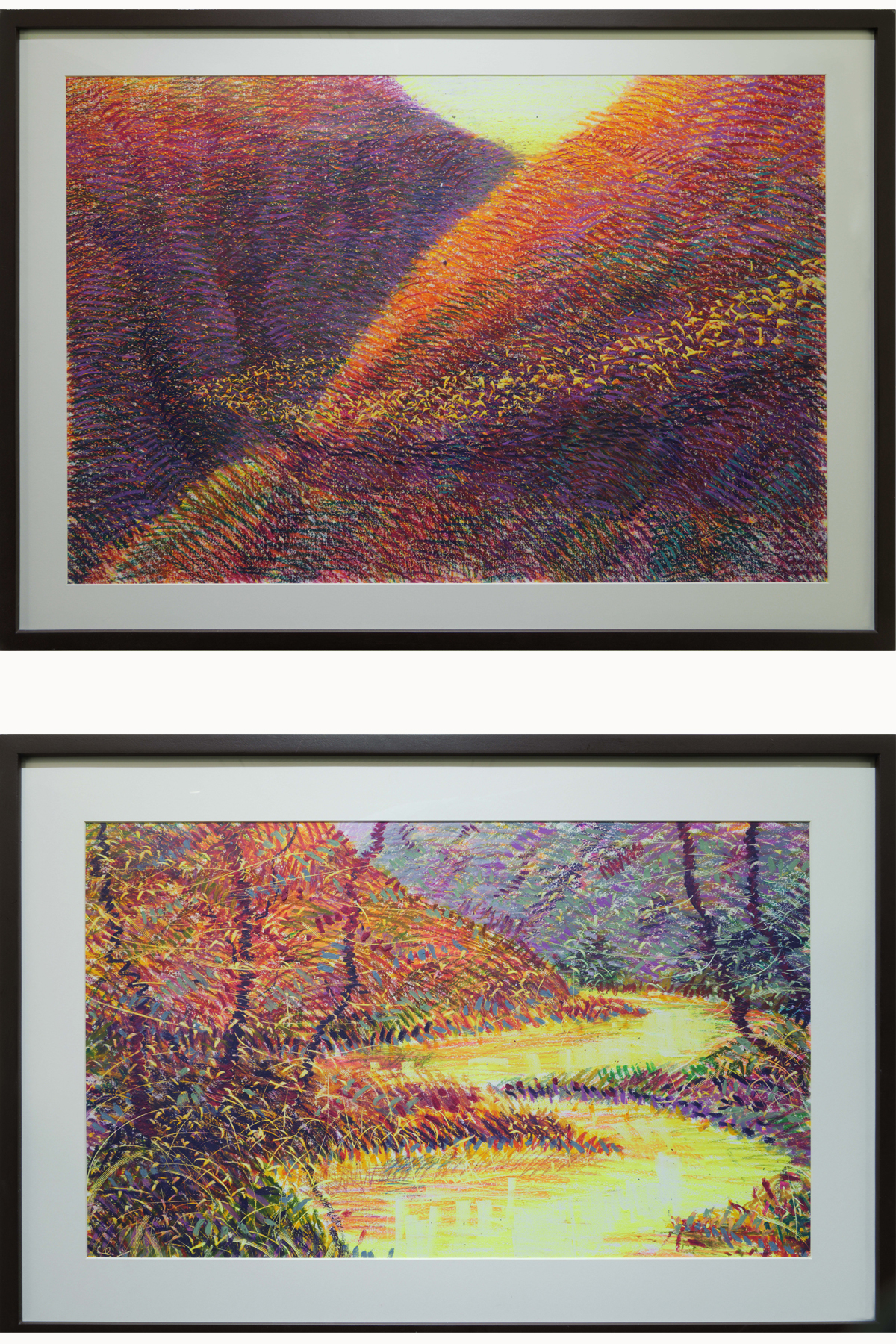
Among the paintings rests another body of work—not created with brushes, but with words. Scattered gently throughout the exhibition are letters that Sanod Maharjan wrote during his prolonged stay in the hospital, when time seemed to slow down and memory became his only landscape. One of these deeply personal letters is addressed to his grandfather, a heartfelt reflection on the forests, winding trails, filtered sunlight, and quiet hills that shaped his childhood in Palung. Confined within the white walls of a hospital room, he discovered that the places he had once taken for granted returned to him with astonishing clarity. Every forgotten path, every whispering tree, every patch of light breaking through the woods resurfaced with a vividness that only absence can awaken.
Perhaps that is life’s quiet paradox: we rarely understand the true weight of what surrounds us until we begin to fear its disappearance. In moments when life itself becomes uncertain, memories cease to be recollections-they become places of refuge. Reading these letters while standing before the paintings, one realizes that the landscapes on the walls are not simply scenes from nature; they are landscapes preserved by memory, rescued from the fragile edge between loss and remembrance. The words do not explain the paintings-they deepen them. Together, they form an intimate conversation where literature and painting breathe through one another, each completing what the other leaves unsaid.
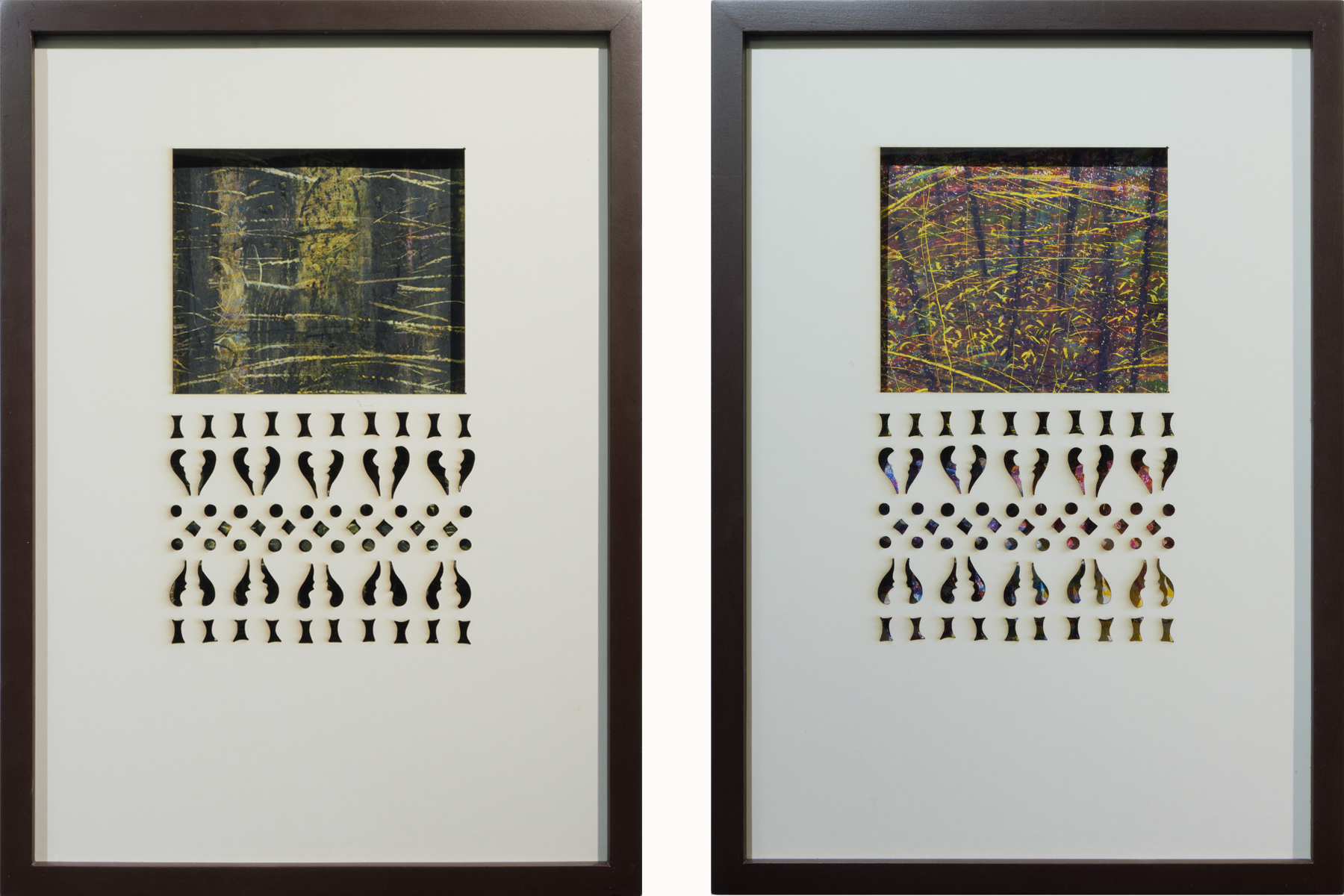
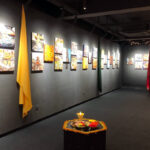
Maharjan extends this dialogue beyond the frame of the canvas through a subtle yet remarkably thoughtful installation. Resting quietly upon a pedestal is a long scroll painting that unfurls like an ancient journey through the forest. The painted woodland stretches gently across its surface, while beside it lie dried leaves gathered from the very landscape that nurtured the artist’s childhood. Their curled edges, earthy fragrance, and delicate textures carry with them the silent testimony of a place that continues to live within him.
Speaking with unmistakable affection, the artist remarked,
“I carried these leaves all the way from my hometown. I could easily have collected similar ones from the outskirts of Kathmandu, but that would never have carried the same meaning. These leaves belong to the forests that raised me. I wanted visitors not only to see where my paintings come from, but to feel a small piece of that place-to sense its presence beyond the canvas.”
It is a simple gesture, yet one of profound emotional resonance. Suddenly, the exhibition is no longer confined to walls, frames, or pigments. It becomes an experience where sight quietly gives way to memory, where the texture of a dry leaf speaks as eloquently as a painted brushstroke. The boundary between artwork and lived experience gently dissolves.
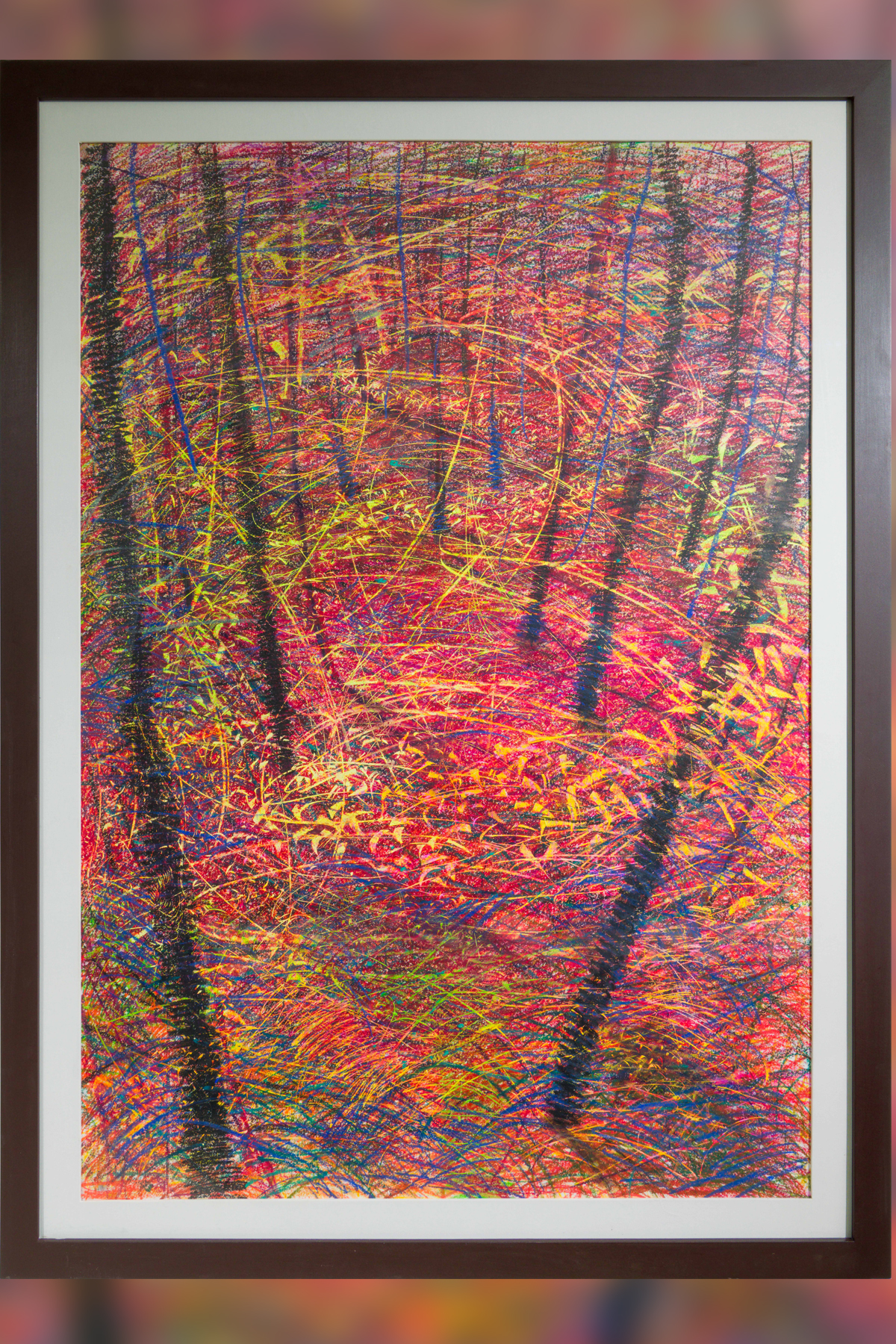
If your journey takes you anywhere near Lazimpat, allow yourself the gift of stepping into Takpa Gallery. Do not arrive expecting merely to view a collection of landscape paintings. Come prepared to wander through forests woven from memory, to stand beneath shafts of imagined sunlight, to listen to silence rendered in colour, and to discover how an artist can transform the most ordinary corners of nature into places that linger in the heart long after one has left the gallery. Some exhibitions are remembered for the paintings they display; this one is remembered for the world it quietly allows you to inhabit.

Leave A Comment