

A remarkable group exhibition in Kathmandu explores the timeless dialogue between humanity, mythology and the living consciousness of nature.
In every civilization, myths have served as invisible maps of human consciousness. They have offered explanations for the unknown, shaped cultural identities, and preserved collective memories long before written history emerged. Although contemporary society often celebrates rationality and technological advancement, mythology continues to inhabit our imagination, quietly informing our beliefs, emotions and artistic expressions. It is within this compelling intersection of the visible and the invisible that Mythical Real: Narratives of Shared Consciousness unfolds. The exhibition began on 17th of July and will last the next one month.
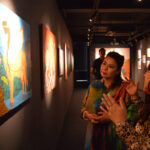
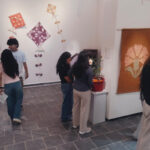
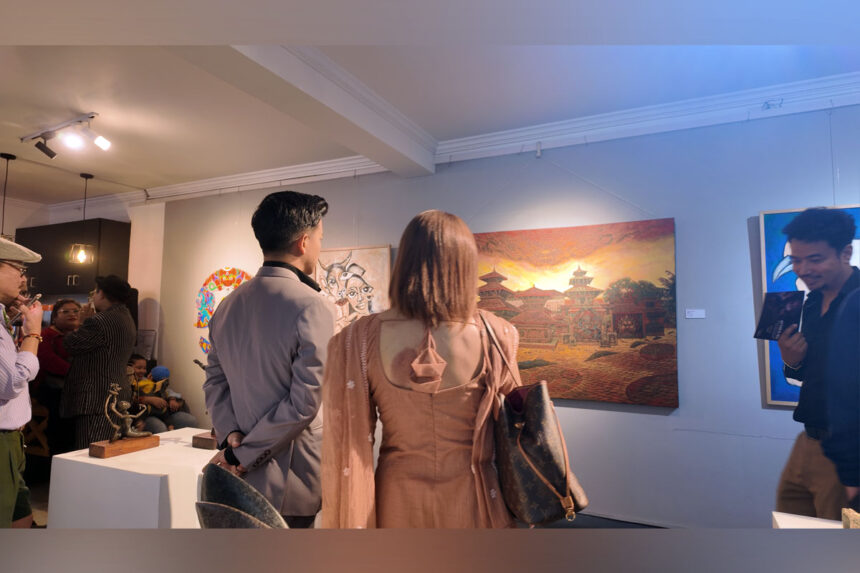
Currently on view at Music Art Gallery, the exhibition brings together seventeen distinguished Nepali contemporary artists whose diverse artistic practices examine the porous boundaries between myth and reality, instinct and intellect, humanity and nature. Curated by Saroj Bajracharya, the exhibition proposes that mythology is not a relic of the past but a living language through which contemporary realities can still be understood.
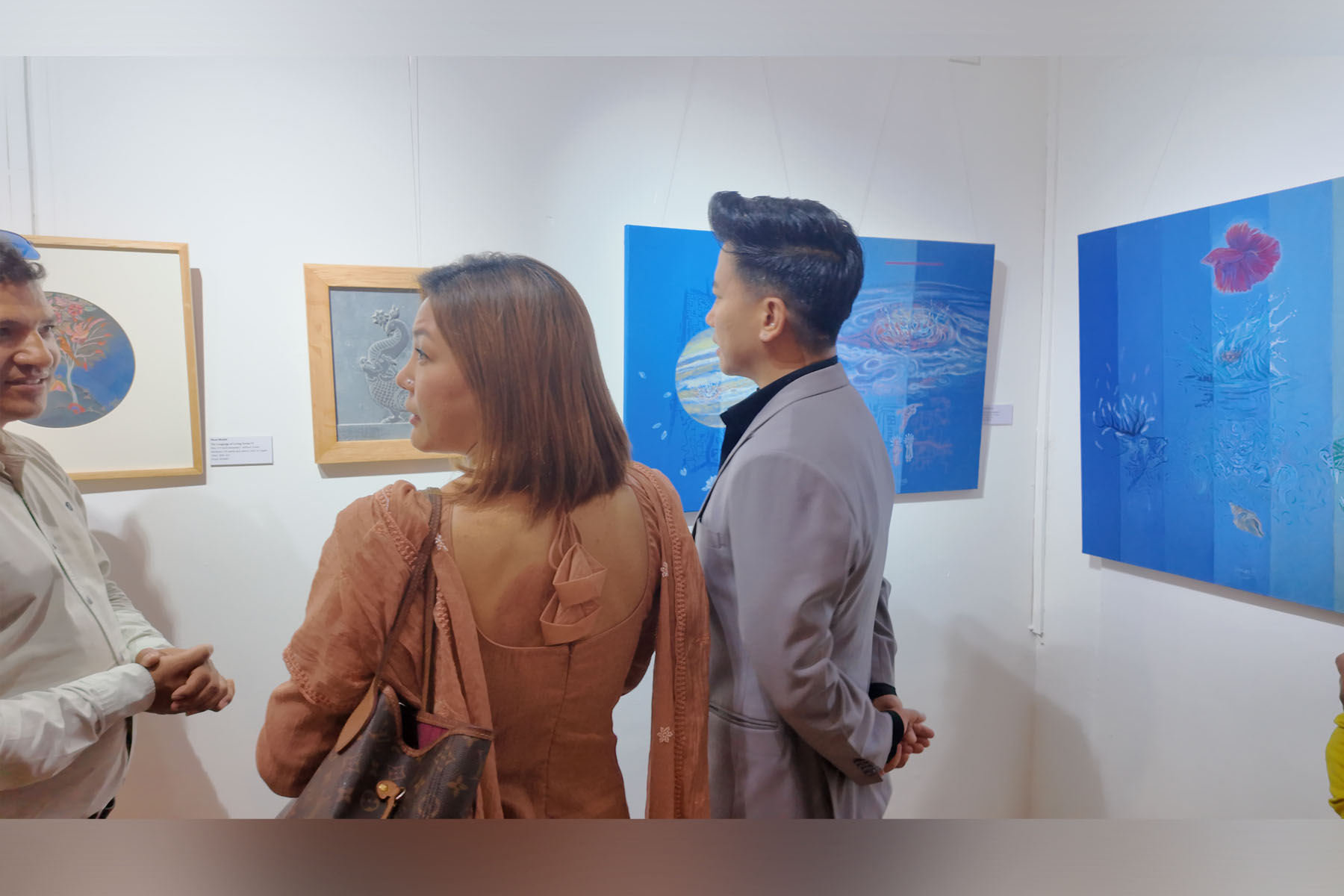
Rather than presenting mythology as fantasy, the exhibition reveals it as a profound psychological landscape where memory, ritual, spirituality and lived experience continuously intersect. Every painting, sculpture and mixed-media work becomes an invitation to reconsider the hidden relationships that bind human beings with animals, landscapes, ancestral traditions and the unseen dimensions of consciousness.
One of the exhibition’s most compelling strengths lies in its understanding that the relationship between humans and animals extends far beyond biological coexistence. Across civilizations, hybrid beings have embodied humanity’s deepest philosophical inquiries. From the Egyptian Sphinx to the Hindu Narasimha and Ganesha, these mythical figures have long symbolized transformation, wisdom, power and the inseparable bond between culture and nature. “Mythical Real” reinterprets these archetypes through contemporary artistic languages, suggesting that these ancient narratives remain remarkably relevant in today’s fragmented world.
Many participating artists employ anthropomorphic figures-human bodies merged with animal characteristics-not merely as visual metaphors but as reflections of shared consciousness itself. Their works dissolve rigid distinctions between species, proposing instead a world where all forms of life participate within a single continuum of existence. Myth, in this context, becomes less a story than a state of being.
The exhibition also examines migration, displacement and identity through mythical frameworks. Anil Shahi’s Traces in Transit, inspired by the legend of the serpent spirit displaced after the disappearance of Kathmandu Valley’s ancient lake, transforms an old myth into a poignant reflection on migration and belonging. The mythical narrative mirrors contemporary experiences of exile, reminding viewers that the search for home remains one of humanity’s oldest and most enduring journeys.
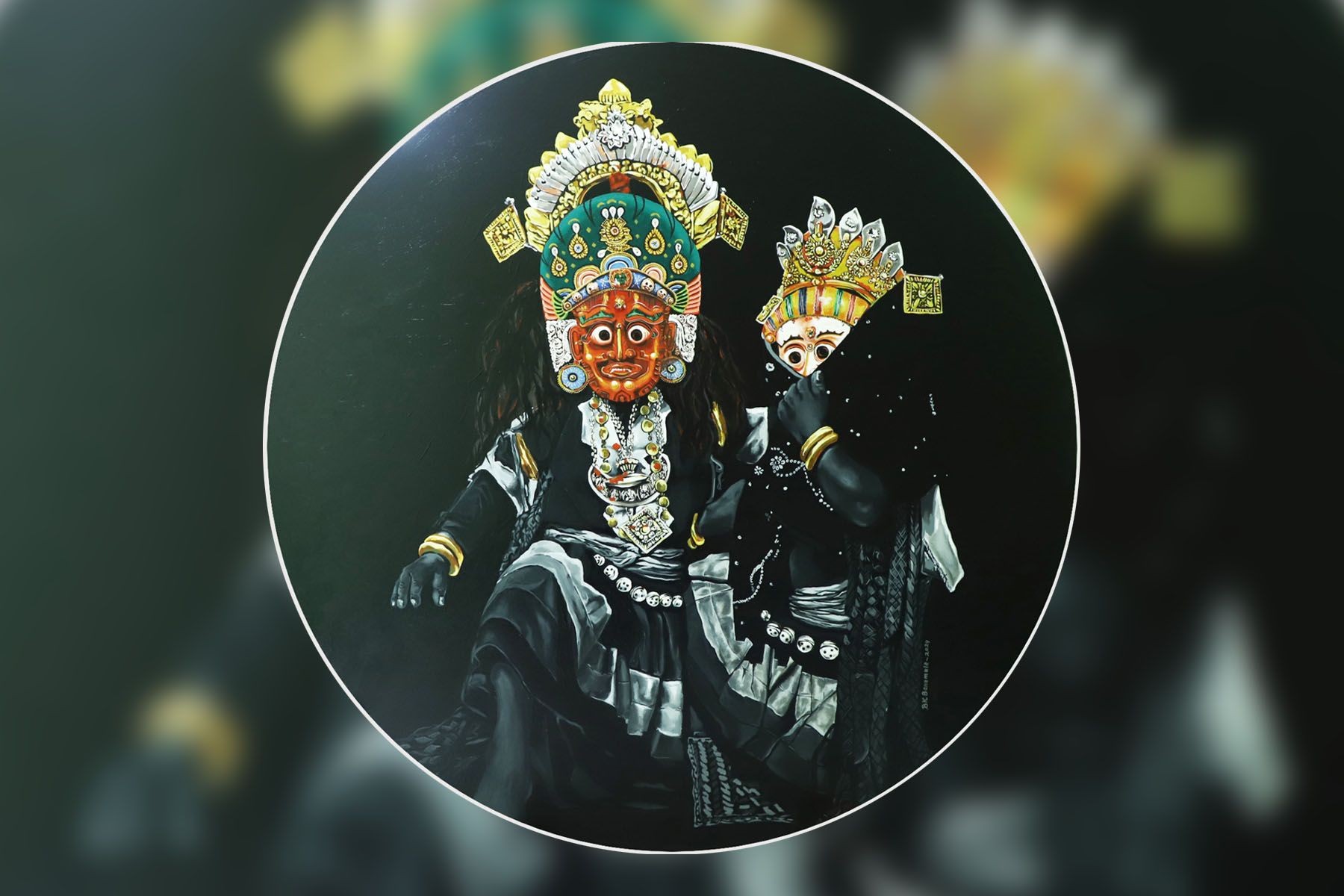
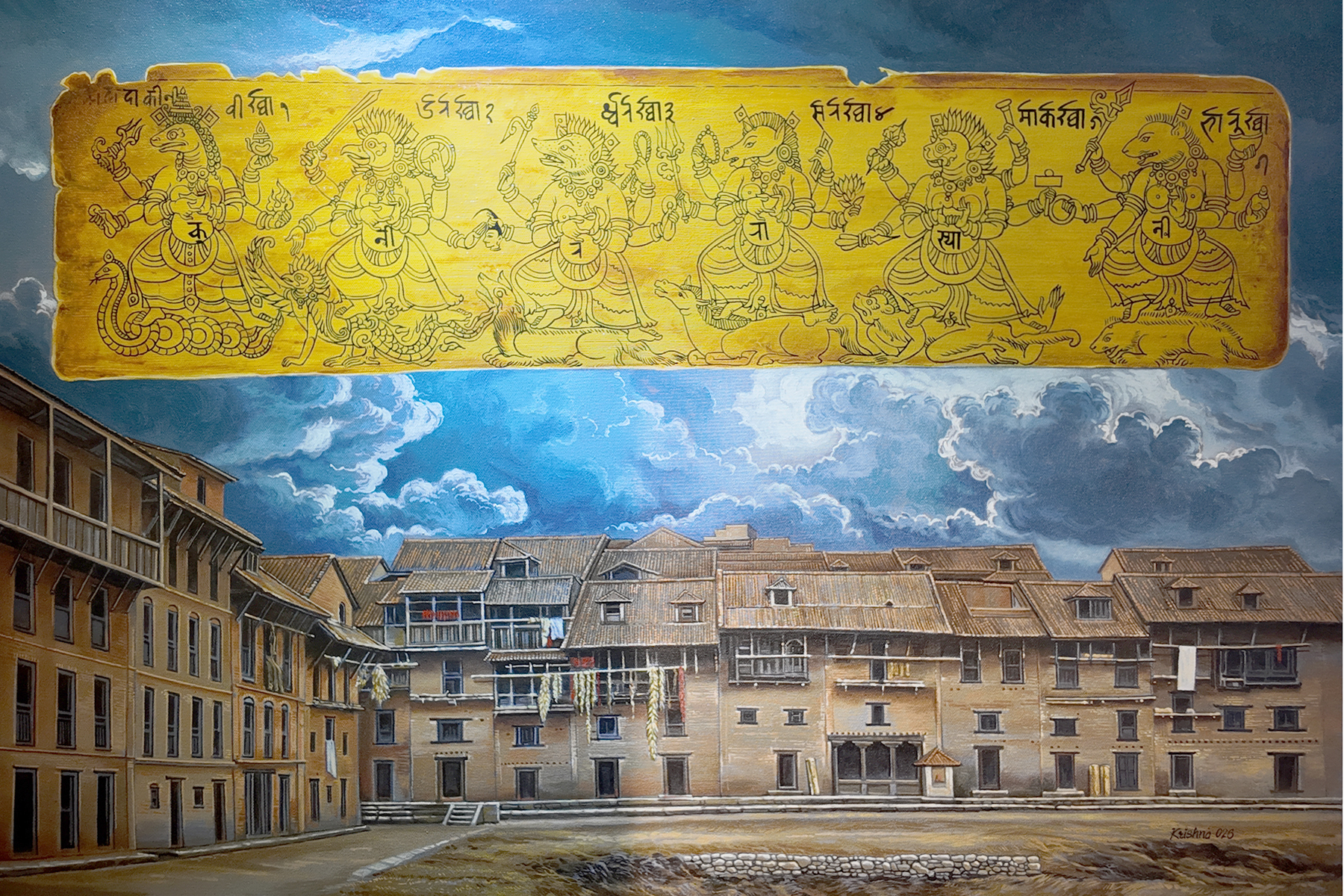
Questions of ritual, gender and cultural memory emerge powerfully in Bal Krishna Banamala’s paintings inspired by the living tradition of the Navadurga dance in Bhaktapur. His works explore the subtle shifts in power, symbolism and gender embedded within ritual performance, demonstrating how cultural traditions continually evolve while preserving their sacred essence. Rather than documenting ceremonies, Banamala reveals the living dialogue between inherited belief systems and present-day consciousness.
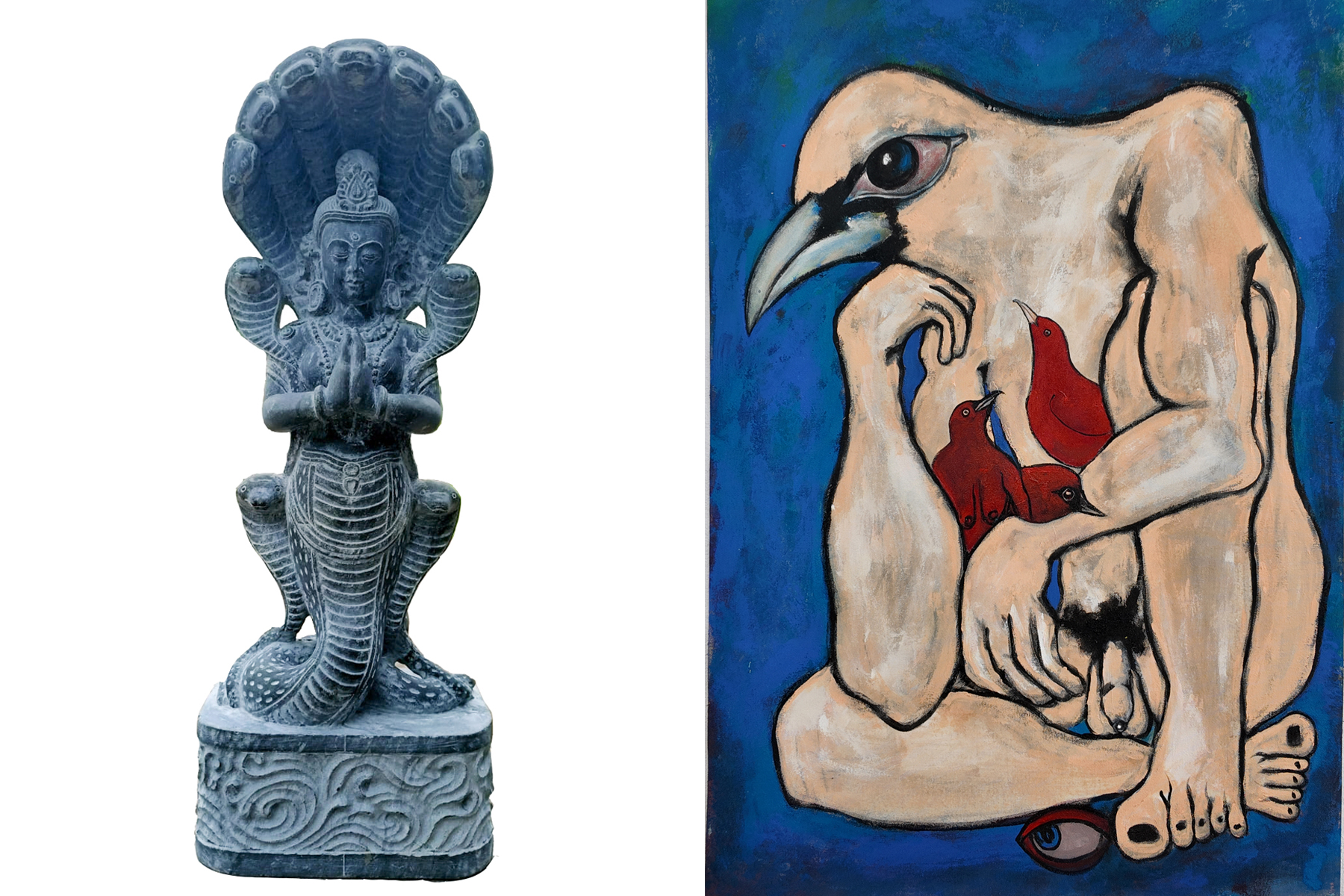
Sculptor Chandra Shyam Dangol revisits the mythical Makara, the composite aquatic creature found in Nepal’s historic stone water spouts. His exquisitely carved sculpture transcends ornamentation, presenting the Makara as a timeless symbol of water, fertility, movement and ecological continuity. In an age increasingly defined by environmental uncertainty, the ancient guardian of water acquires renewed contemporary significance.
Other artists examine compassion, care and emotional vulnerability with remarkable subtlety. Kapil Mani Dixit’s figurative paintings replace conventional notions of beauty with expressive hybrid forms that embody tenderness, sacrifice and unconditional love. His works remind us that genuine humanity often resides not in perfection but in our willingness to protect, nurture and remain vulnerable before others.
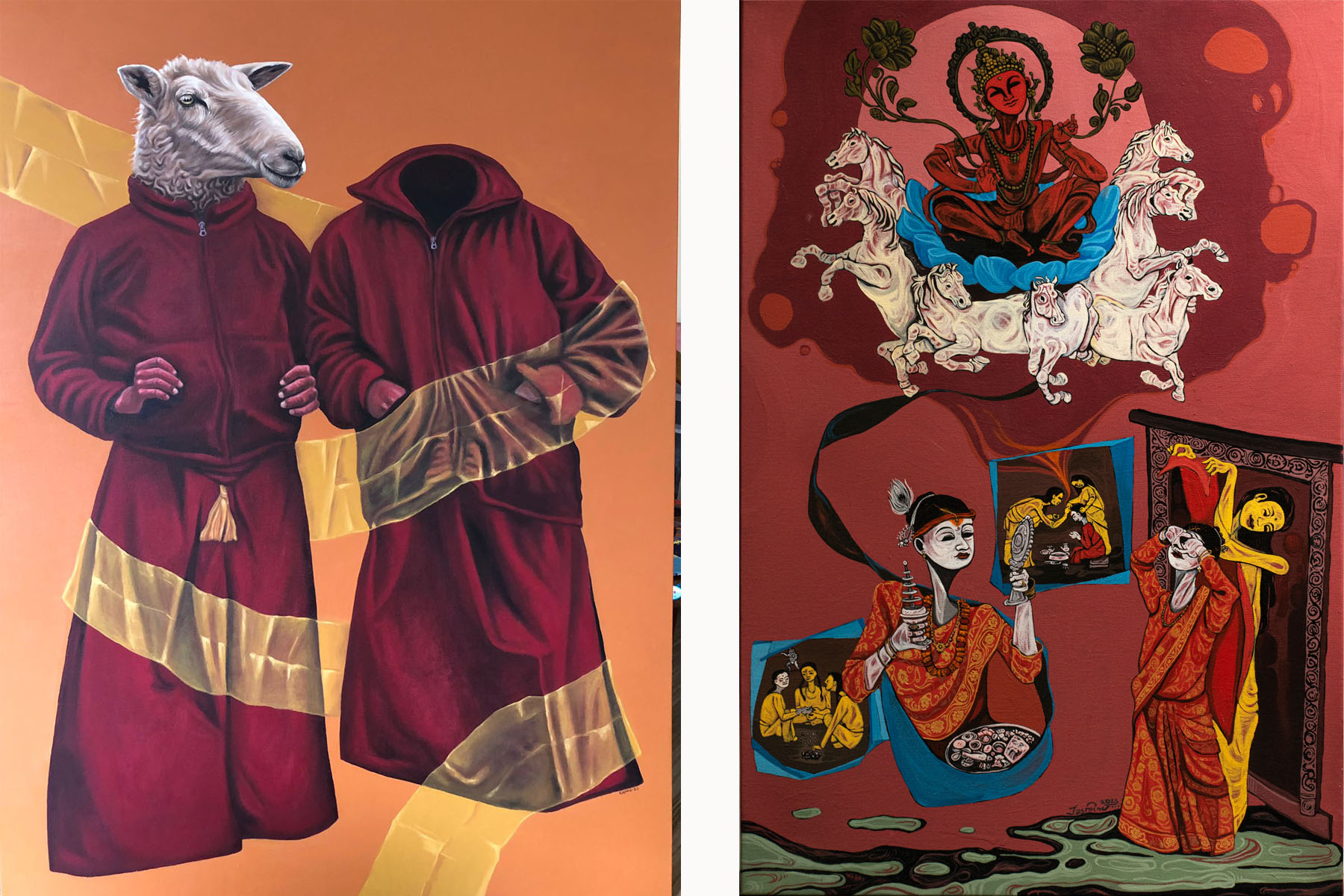
Several artists revisit Newar rituals and cultural practices through deeply personal interpretations. Jasmin Rajbhandari reflects upon the symbolic marriage rituals of Newar women, exploring how spirituality, identity and social structures have historically intersected. Her work transforms familiar cultural ceremonies into thoughtful meditations on womanhood, continuity and resilience, inviting viewers to reconsider traditions through a contemporary feminist lens.
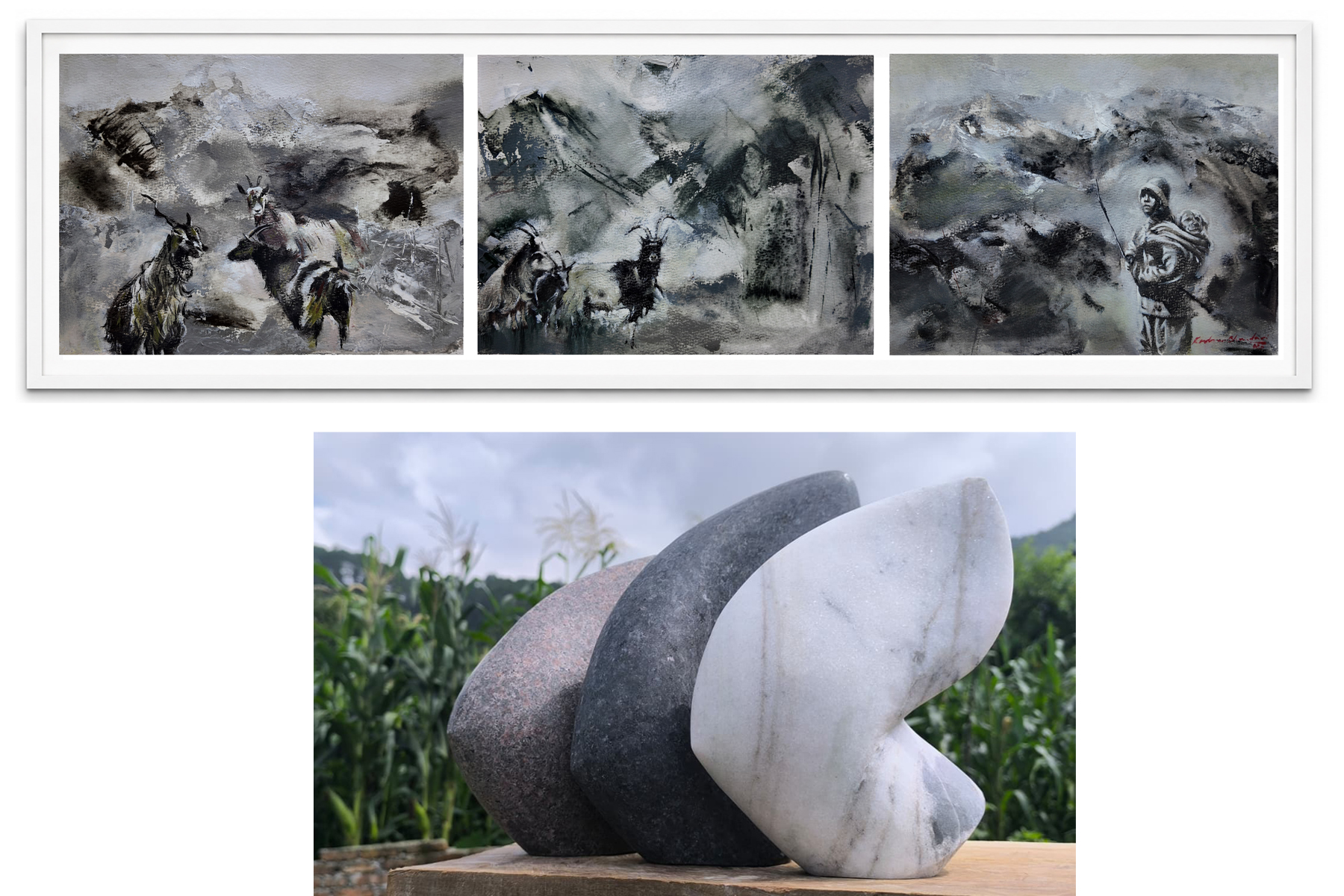
The Himalayan landscape also becomes a powerful metaphor throughout the exhibition. Karma Tashi Gurung draws upon the ecological and cultural realities of Dolpa, where fragile mountain environments coexist with deeply rooted indigenous traditions. His paintings quietly address questions of environmental change, memory and cultural preservation, suggesting that landscapes themselves are repositories of collective consciousness.
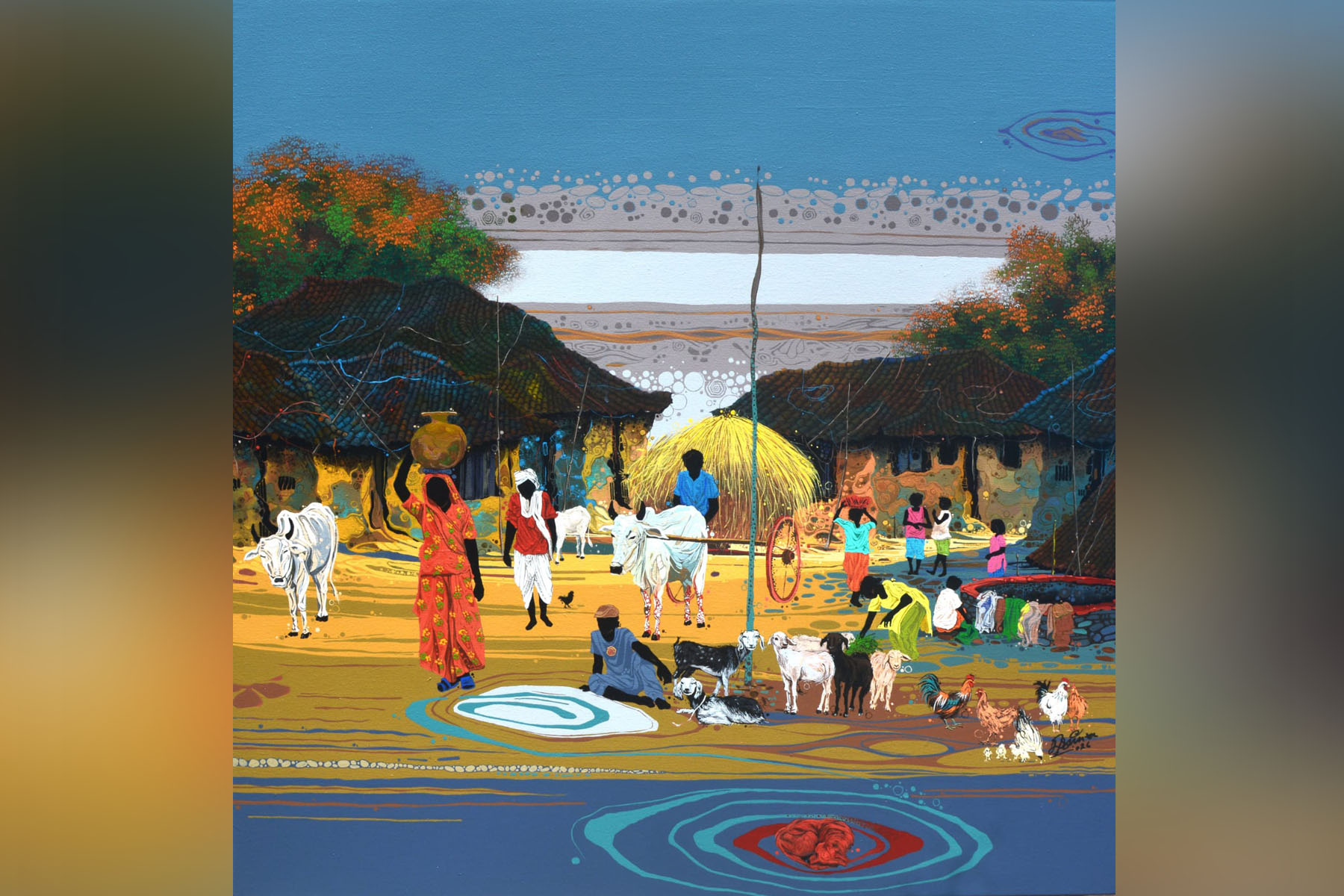
Similarly, Roshan Bhandari evokes pastoral life through dreamlike compositions populated by herders, livestock and expansive terrains. Inspired by childhood memories, his paintings celebrate the intimate emotional relationships between humans and animals, proposing coexistence not merely as survival but as affection, reciprocity and shared destiny.
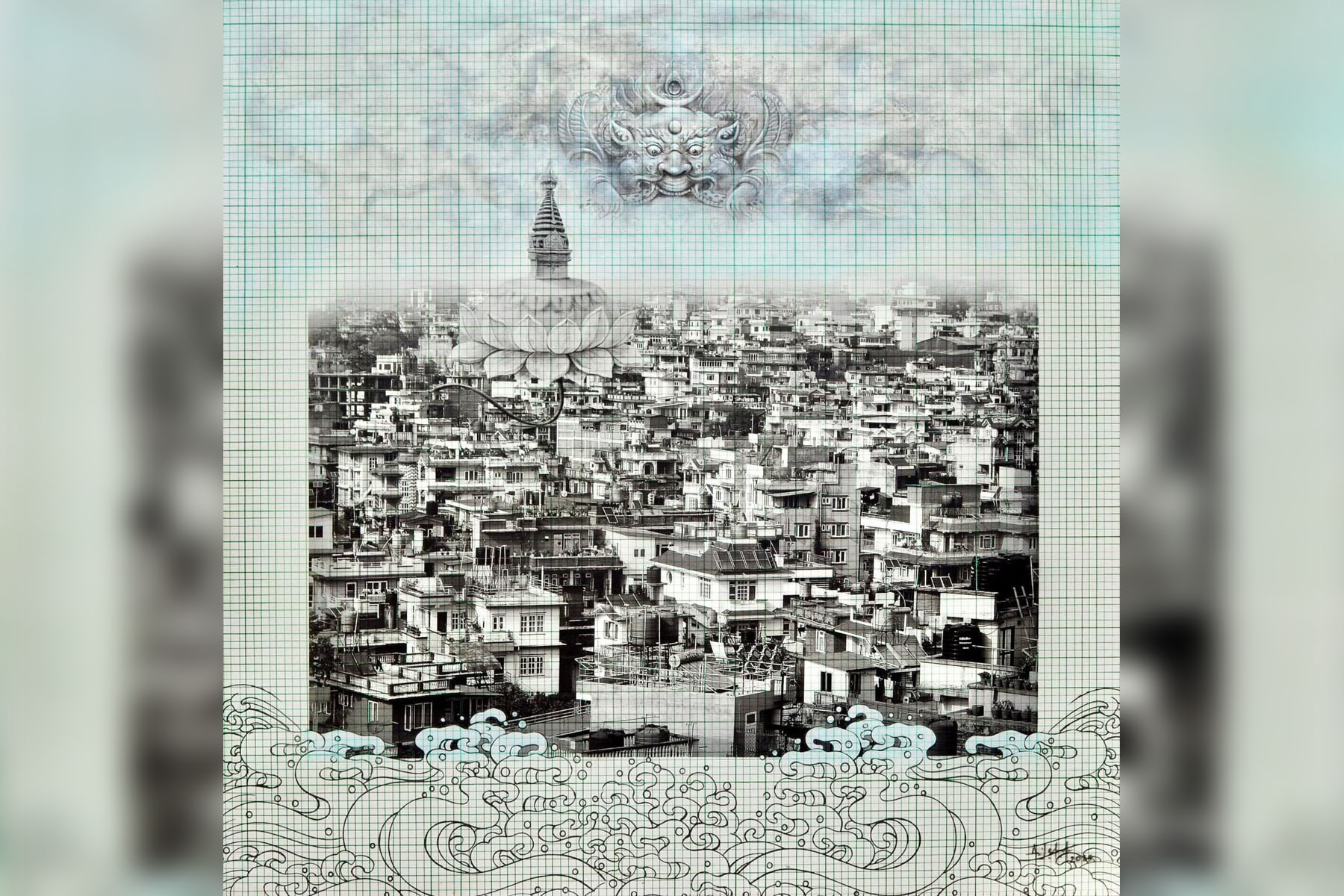
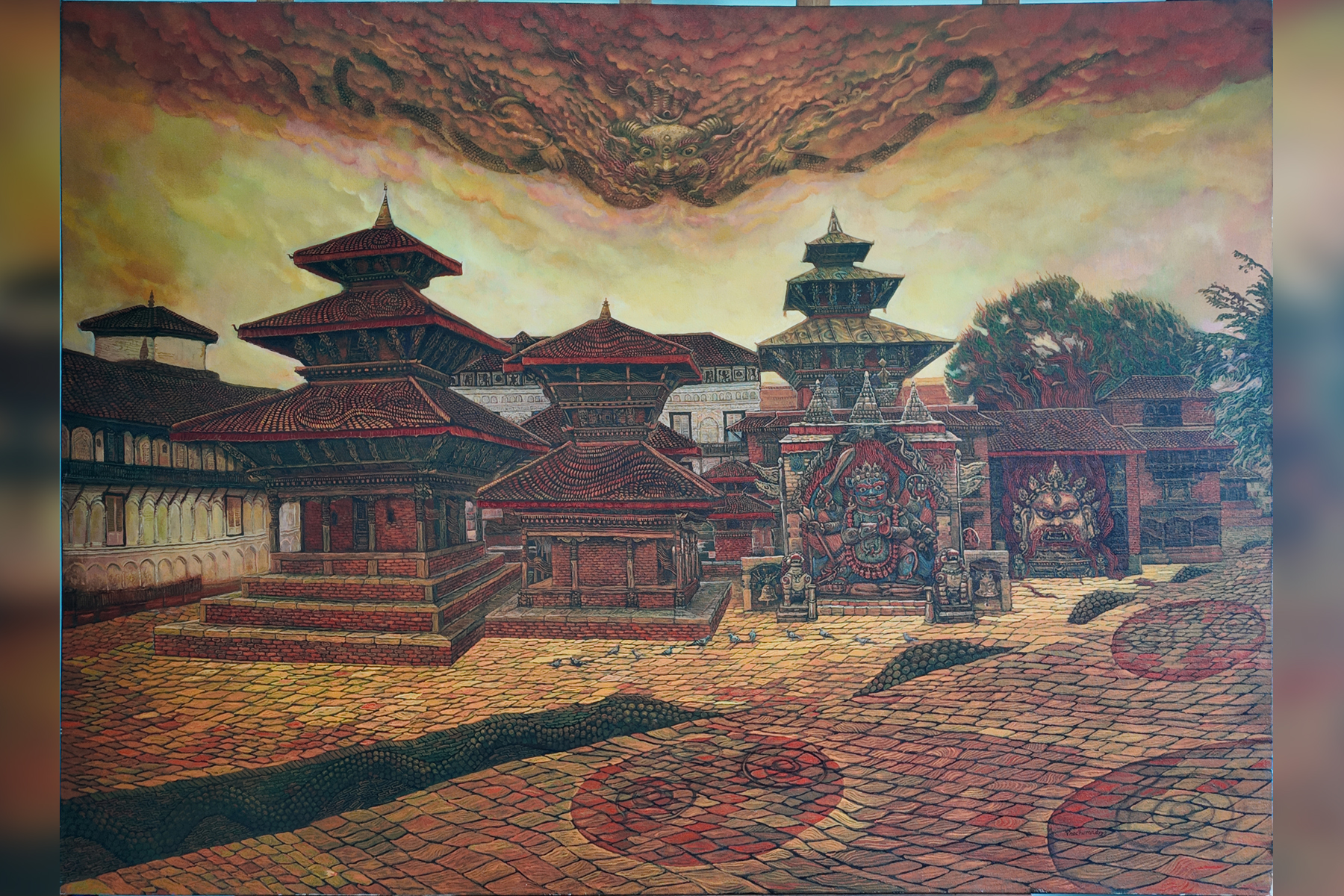
Spiritual symbolism resonates strongly throughout the exhibition. Mukesh Shrestha interprets the Five Dhyani Buddhas through richly symbolic compositions where animals become embodiments of wisdom and inner transformation. Meanwhile, Pradhumna Shrestha reimagines Kathmandu’s Basantapur Durbar Square as an invisible spiritual landscape inhabited by protective deities, sacred memories and unseen energies that continue to animate the historic city beyond its architectural grandeur.
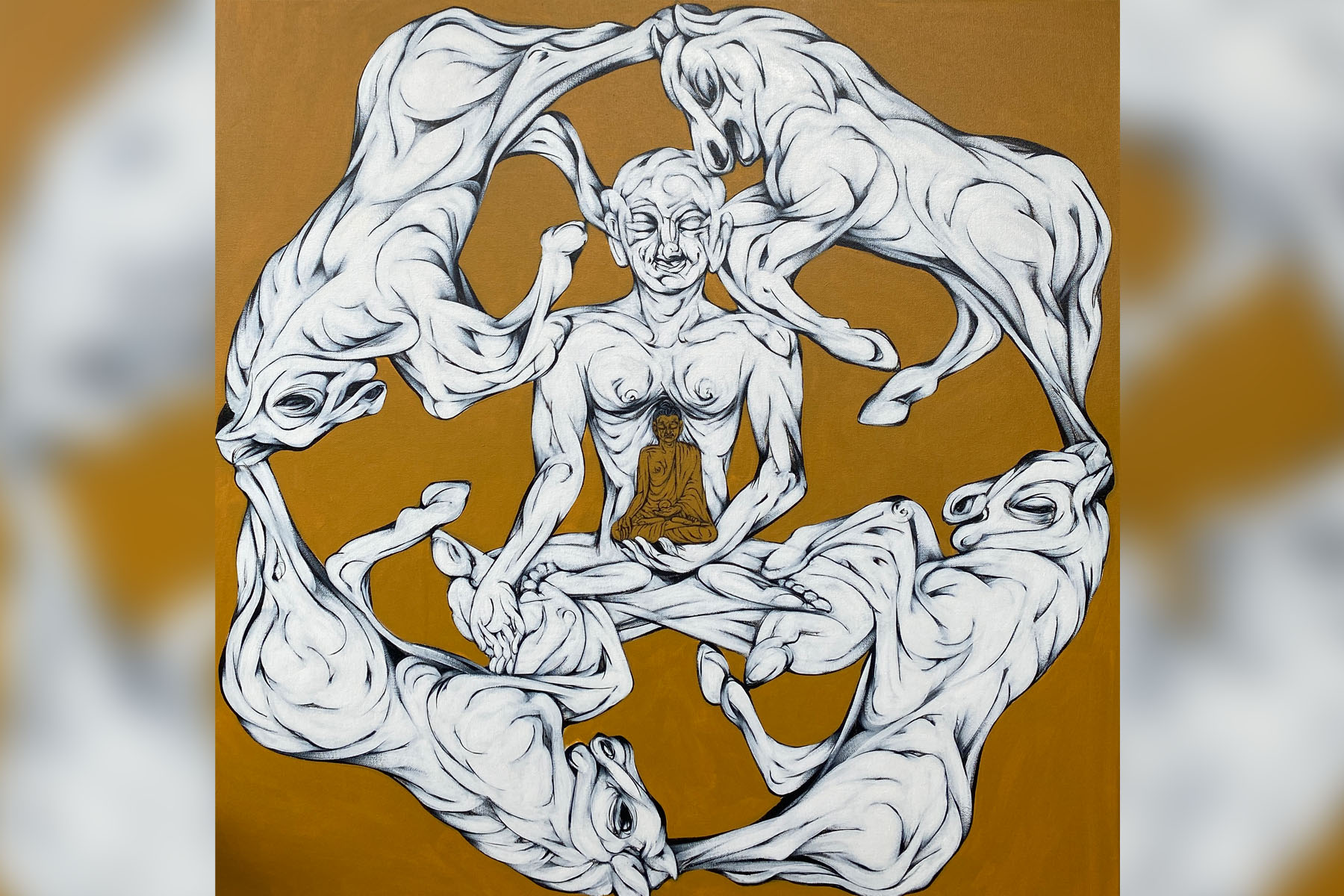
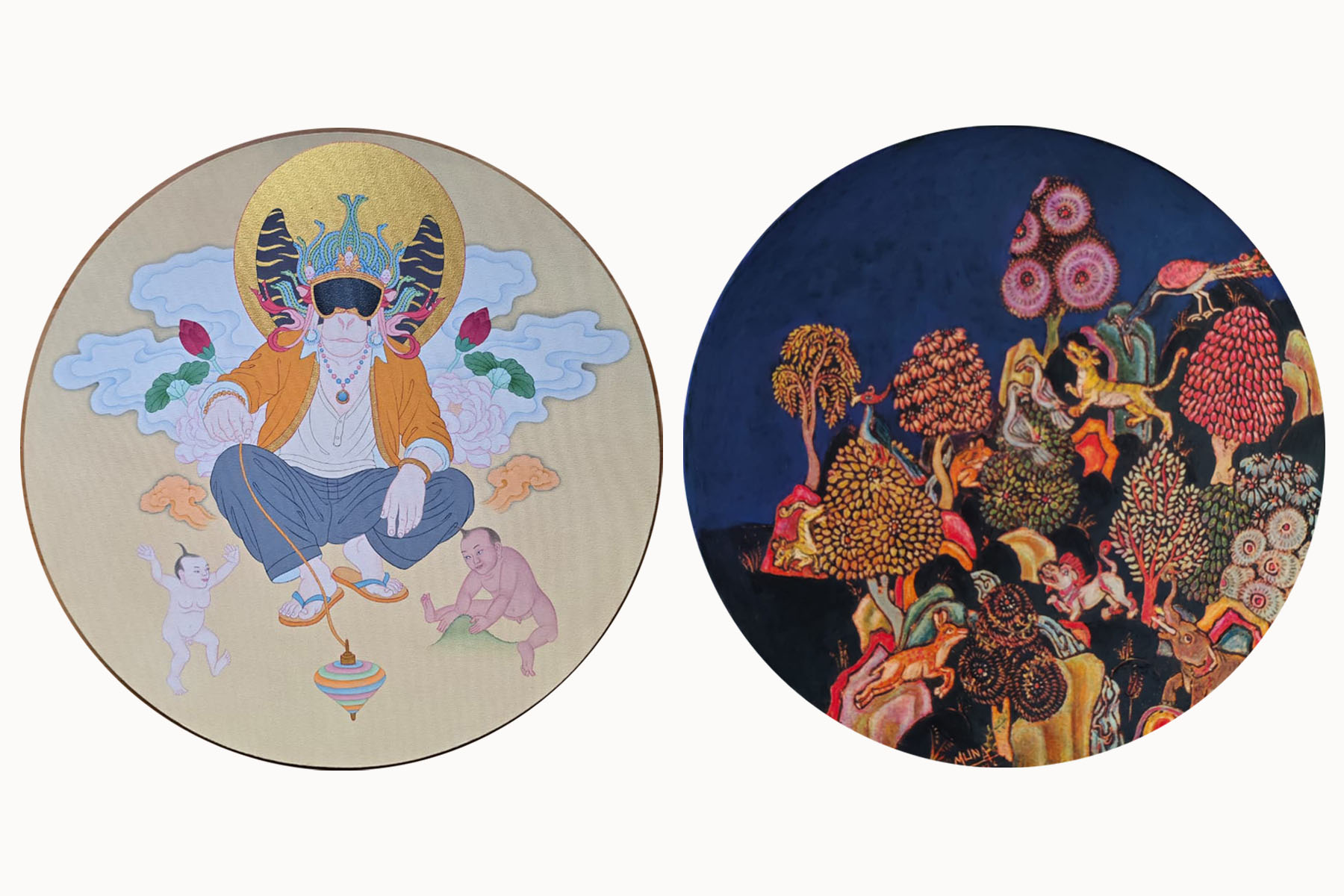
The exhibition equally acknowledges artists whose practices bridge traditional iconography with contemporary experimentation. Sculptural installations by Thinley Dolma Gurung transform organic forms into meditations on transcendence and resilience, while works by Sahil Bhopal reinterpret traditional thangka aesthetics through deeply philosophical explorations of compassion and cosmic consciousness. Across mediums, the artist demonstrates that tradition is not static inheritance but an evolving dialogue with the present.
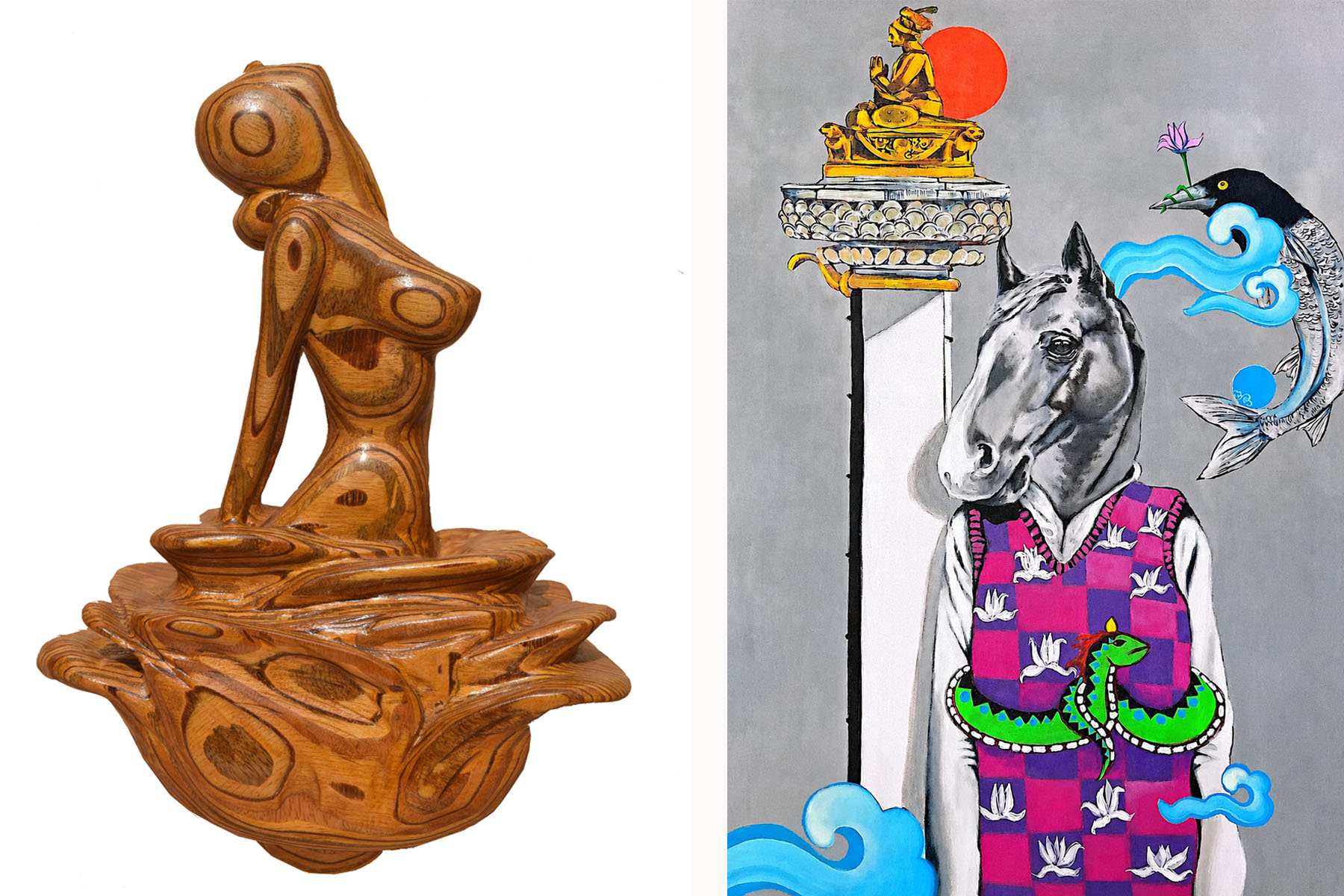
Although stylistically diverse, every artist contributes to a remarkably coherent curatorial narrative. Myth is neither illustrated nor romanticized. Instead, it functions as a conceptual framework through which questions of identity, ecology, migration, spirituality, gender and collective memory become newly visible. Ancient stories are not revisited for nostalgia; they are activated as living metaphors capable of illuminating contemporary human experience.
Curator Saroj Bajracharya aptly frames the exhibition as an exploration of the subtle thresholds separating myth from reality, instinct from consciousness, and humanity from the wider web of life. These boundaries, the exhibition suggests, have never been fixed. Rather, they have always remained fluid, continuously reshaped through memory, ritual and artistic imagination.
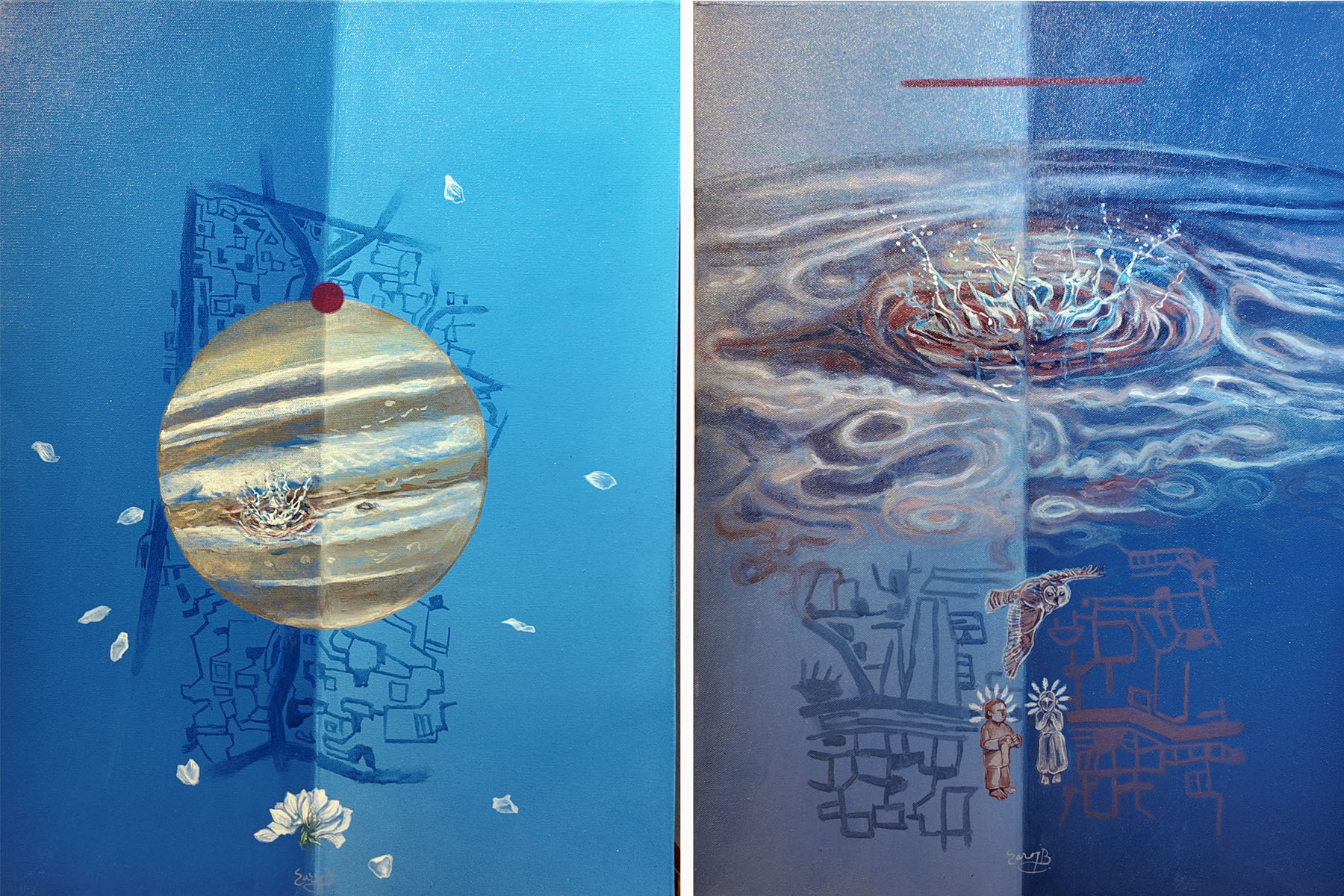
The significance of “Mythical Real” extends beyond its impressive gathering of established Nepali artists. It demonstrates how contemporary Nepali art is increasingly engaging with global philosophical concerns while remaining deeply anchored in local histories and indigenous knowledge systems. The exhibition neither abandons tradition nor confines itself within it. Instead, it constructs a thoughtful conversation between ancestral wisdom and contemporary existence.
In an era increasingly characterized by ecological crisis, cultural fragmentation and accelerating technological change, “Mythical Real” reminds us that mythology continues to offer essential ways of understanding ourselves and our place within the living world. It asks us not to escape reality through myth, but to recognize that myth has always been one of reality’s deepest dimensions.
Ultimately, the exhibition leaves visitors with a quiet but enduring realization: beneath our individual identities lies a shared consciousness woven from memory, nature, ritual and imagination. Within that shared space, myth does not merely survive-it continues to breathe.

Leave A Comment