
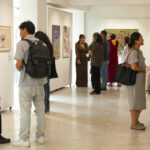
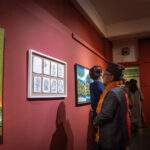
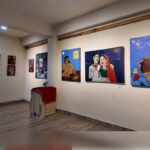
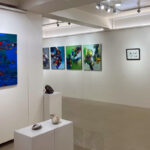


In the gallery space of Siddhartha Art Gallery, an exhibition was going on. The exhibition was the amalgamation of art and public health. A lot of literature had been written with the theme of releasing stress and obtaining good mental health, the aid of art was taken into consideration. The exhibition was the materialized concept of the UK based Nepali academic researcher Dr. Ranjita Dhital (UCL).
Upon entering the gallery space, one can view the marigold painting by one of the talented artists of Nepal, Rahul Maharjan by its side are the leaves woven with wools by Mini Tamang, carefully placed in the walls of the gallery, by its side are the two wooden sttatues made by Indra Prasad Shilpakar representating female dancing tree spirits.
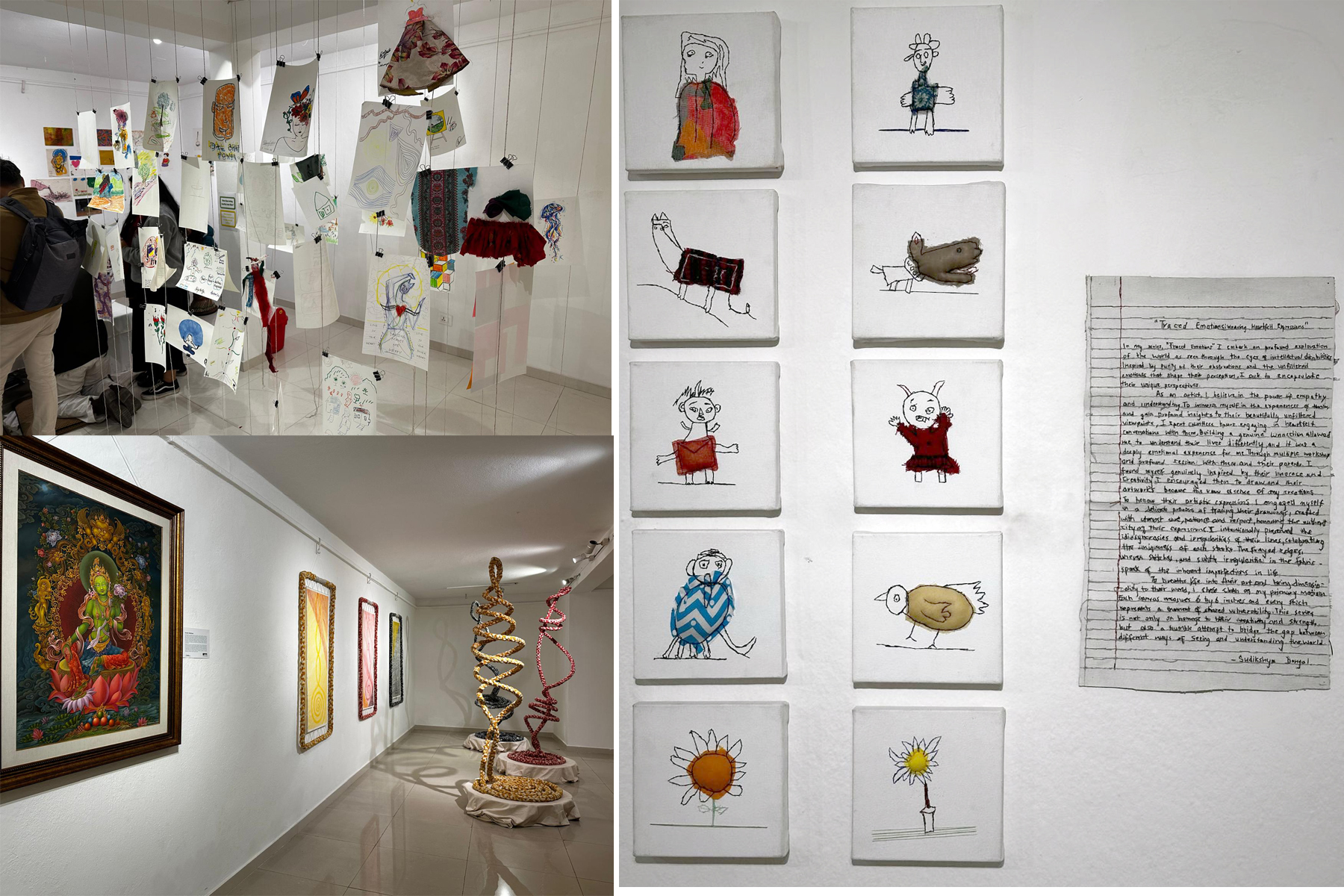
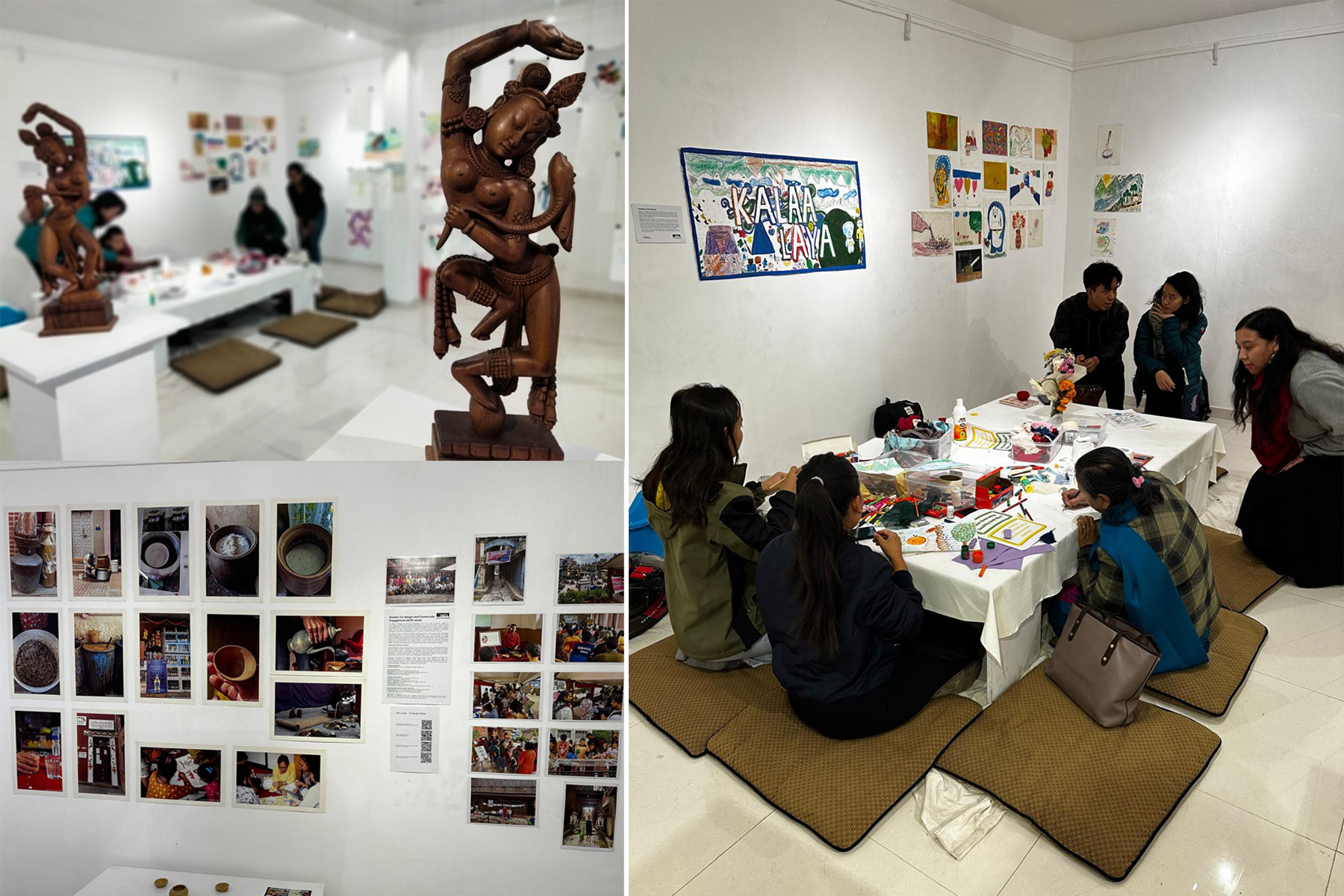
When talking about the concept, the husband of Dr. Dhital, Geoff Morrow explained that this was the concept of forest bathing, where the flowers are blooming on one side and the leaves and the wooden statues represents the nature itself. This is followed by research done the research done by Dr. Ranjita regarding the tradition of alcohol making.
Gallery visitors were invited to paint and draw on the paper. They were sketching and coloring whatever they like and after completing the work the organizer managed to showcase their work in the gallery. That reflects the mindset of the people and joyful moments too.
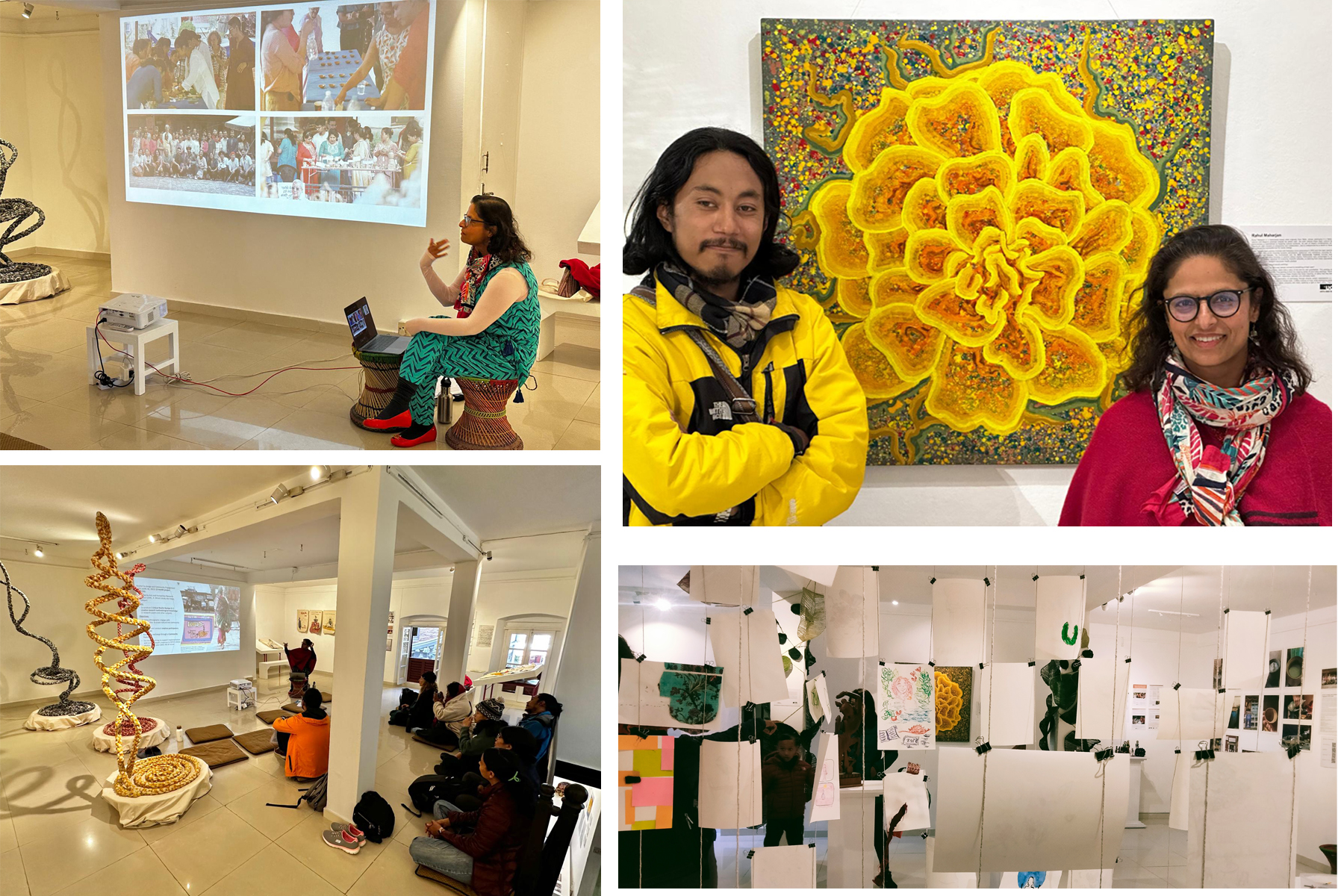
Dr. Ranjita Dhital mentioned that the exhibition showcases emerging creative health research, experiences, ideas and practices, for a new creative global health. Meanwhile, during her research she collaborated with diverse communities, researchers, practitioners, artists and others across arts and science field.
Through this exhibition she wanted to spread the findings related to public health research which was done in Nepal. One of the painting entitled “At the End” by Rahul Maharjan, a contemporary Nepali artist, is an impression of a marigold, a sacred flower in Hinduism used for religious and cultural ceremonies. He explained, “I wish to tell stories through flowers. It has stories of life, birth, happiness, sadness, and ultimately death”. The artwork resonates with ideas around creative health and is metaphor to illustrate the cycle of life.
During the exhibition powerful art, live music and daily interactive creative sessions were also held. ‘Tales in Thread: A World Through Different Eyes’ by Sudikshya Dongol a Contemporary Artist said her art works highlights the unique perspectives of individuals with Down syndrome, emphasizing that their lives are as vibrant and meaningful as anyone else’s. The artist reflects on their personal experiences with the community. The collection features stories written and narrated by individuals with Down syndrome, accompanied by hand-stitched art and drawings, offering a window into their world and inviting others to view life through their eyes.
Om Prakash Shrees,, another contemporary Nepali artist, produced three contemporary sculptures and paintings interpreting the three Gunas of Prakriti ( elements of reality) – Tamas, Rajas and Satvas, in the Samkhya system of Hindu philosophy. Om’s artwork strives to capture their harmonious dance, exploring the opposite yet interconnected energies. The artwork invites viewers to reflect on their own experiences and constant shifts that shape our reality. His visual representation of the three elements offer a glimpse into the deeper layer of life that often go unnoticed.
Sundar Sinkhwal, one of Nepal’s most celebrated artists, exhibits the image of Green Tara, that embodies the spiritual vibrance of Nepali Buddhist and Hindu traditions. Through intricate details and vivid colors, Sundar weaves stories of spiritual health and wellbeing, preserving cultural heritage while pushing artistic boundaries. With accolades from Japan to the Kathmandu Art Biennale, his work is a beacon for artists and art lovers alike.
Amshad Sunuwar whose exploration of social capital, gender roles, and cultural preservation challenges the intersection of tradition and modernity. For the exhibition he explored ideas around environmental health, including farming practices. Amshad’s work continues to reflect his commitment to bridging gaps within communities and preserving cultural heritage.
Neda Haffari an Iranian writer and curator based in Kathmandu, explores the intersection of health and creativity through her own lens, discussing her lived experience of illness. She fosters cultural exchange and meaningful conversations between artists.
Dr. Jo Morrison from UCL shares her research on the unique experiences of Nepali adolescents with disabilities during the COVID-19 pandemic. Her innovative, creative methods make research inclusive and engaging.
Maitri Music Therapy Nepal took part in the exhibition on Wednesday and Saturday, bringing community drumming therapy to the gallery. Guests enthusiastically joined in the drumming and together produced a meditative and enjoyable atmosphere which was enjoyed by all.
The exhibition was inagurated by Deputy mayor of Lalitpur Metropolitan City, Manjali Shakya Bajracharya.
Exhibition was held on 27-30 November,2024.

Leave A Comment