

Abstract painting in Nepal did not merely follow the well-trodden paths carved by Western modernism; rather, it unfolded along its own quiet, introspective current- shaped less by rupture and more by continuity. In the West, abstraction arose like a tremor beneath the surface of a rapidly transforming world. The accelerating pulse of scientific discovery, the dissonance of fractured geopolitics, and an undercurrent of psychological unease seemed to exceed the grasp of the individual. In response, artists turned inward, relinquishing the visible world to give form to something more elusive- an emotional and intellectual residue of modern existence. What emerged was a language often opaque yet profoundly cathartic, where meaning dissolved into gesture, color, and rhythm. As time progressed, this language matured, gradually assuming a quieter confidence, at moments even transcending into realms tinged with spirituality.
In Nepal, however, abstraction did not arise from a crisis of fragmentation, but from a continuum of inner awareness. Spirituality was not an afterthought nor a later evolution- it was the very ground upon which abstraction took shape. This distinction may be traced to the temporal and cultural conditions surrounding its emergence. By the time abstract practices began to find resonance in Nepal, the movement in the West had already undergone decades of evolution, reaching a certain critical maturity during the 1960s and 1970s. Yet more significantly, Nepal’s cultural landscape has long been steeped in a layered spiritual consciousness, woven through its diverse religious and philosophical traditions. As the currents of modernity gradually entered this milieu, they did not displace the existing sensibilities but instead intertwined with them. Thus, abstraction in Nepal became less an escape from reality and more a meditative extension of it- where form dissolves not in confusion, but in contemplation, and where the canvas becomes a site of quiet transcendence rather than existential unrest.
In Nepal, abstraction does not emerge from the tremors of existential unrest as it once did in the West; instead, it unfolds like a small drum , inward journey—an unbroken continuum of contemplation and inner awareness. It is a language born not out of fragmentation, but of stillness. One might say that this quiet spiritual inclination is not merely an artistic tendency, but a reflection of the collective psyche of Nepali abstract artists- a shared sensibility that seeks meaning beyond the visible, in the spaces between thought and feeling.
Abstract art itself resists the comfort of defined form. It exists in gestures that seem shapeless, in splashes of color that refuse immediate recognition, and yet, paradoxically, begin to form their own silent structures upon the canvas. To many, it may appear incomprehensible at first glance- a chaos without anchor. But linger a little longer, allow the eye to wander through the currents of brushstrokes and textures, and something begins to shift. A quiet resonance emerges. There is, at times, a strange yet profound sense of satisfaction, even catharsis—as if the painting speaks in a language the mind cannot fully translate, but the body instinctively understands. It is precisely this subtle, experiential dialogue that the curator of the exhibition, Roshan Mishra, seeks to evoke. With years of curatorial practice behind him, his vision is not simply to display artworks, but to create a space where viewers can encounter abstraction as an intimate, almost meditative experience.
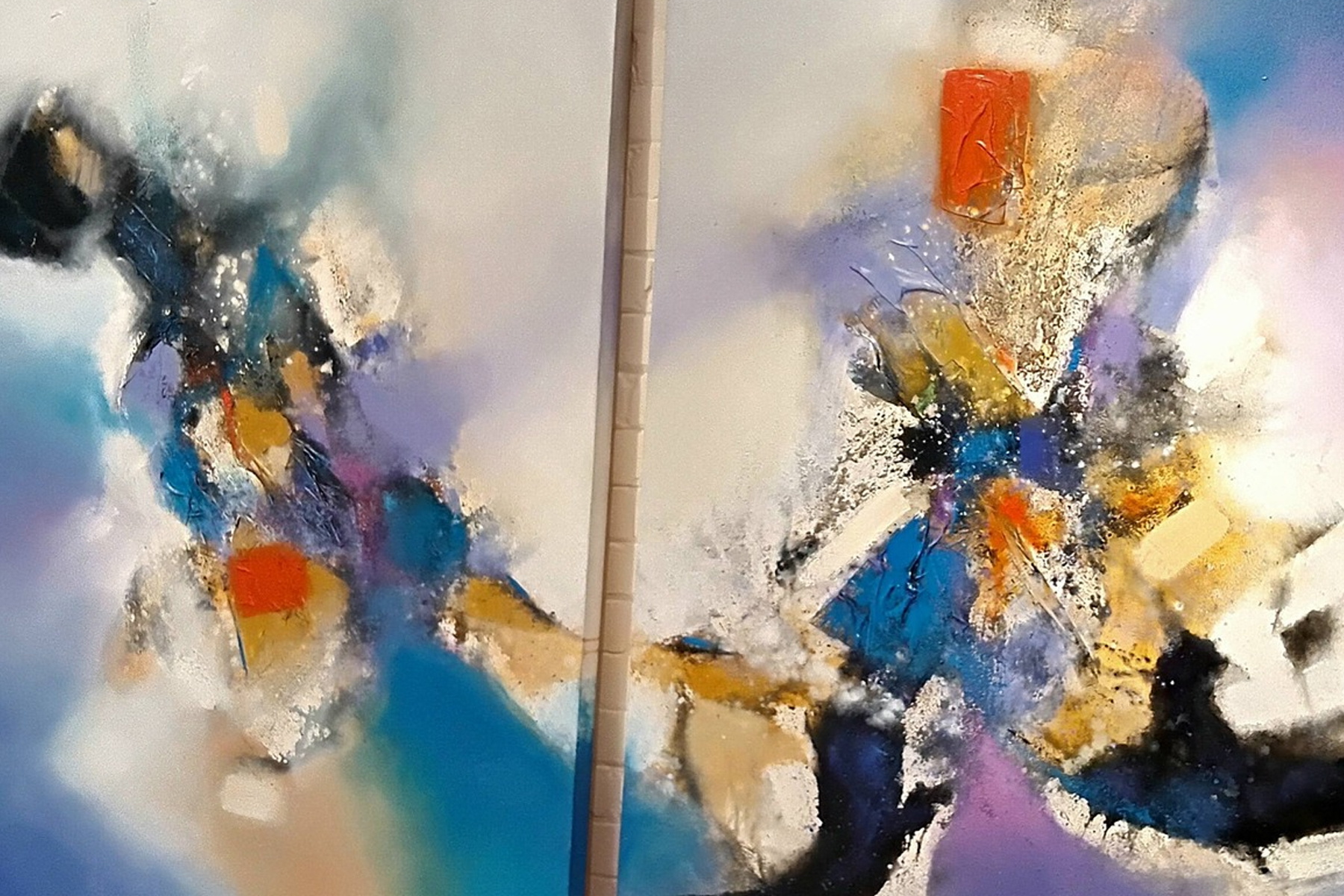
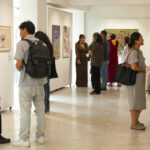
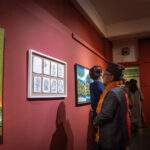
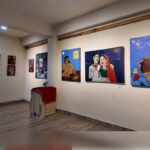
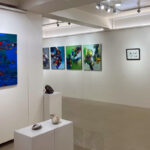
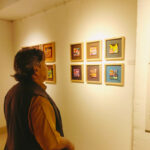
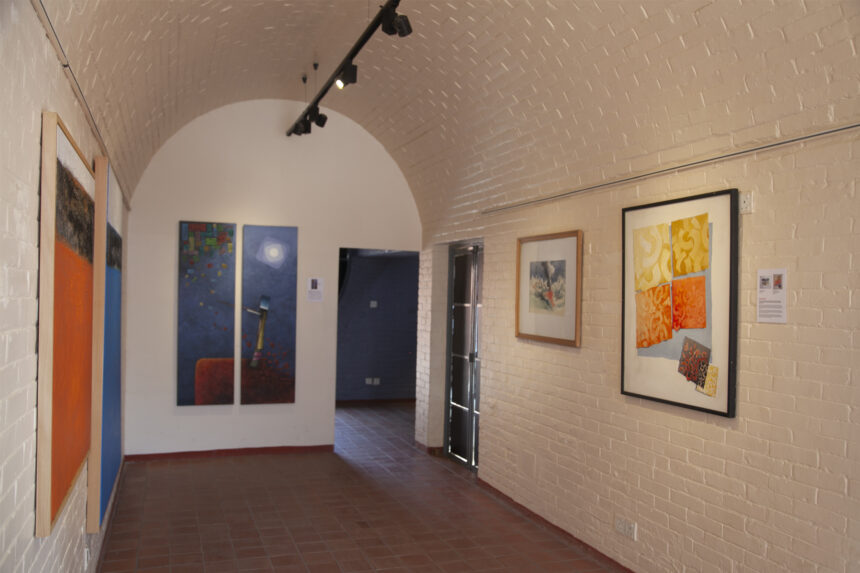
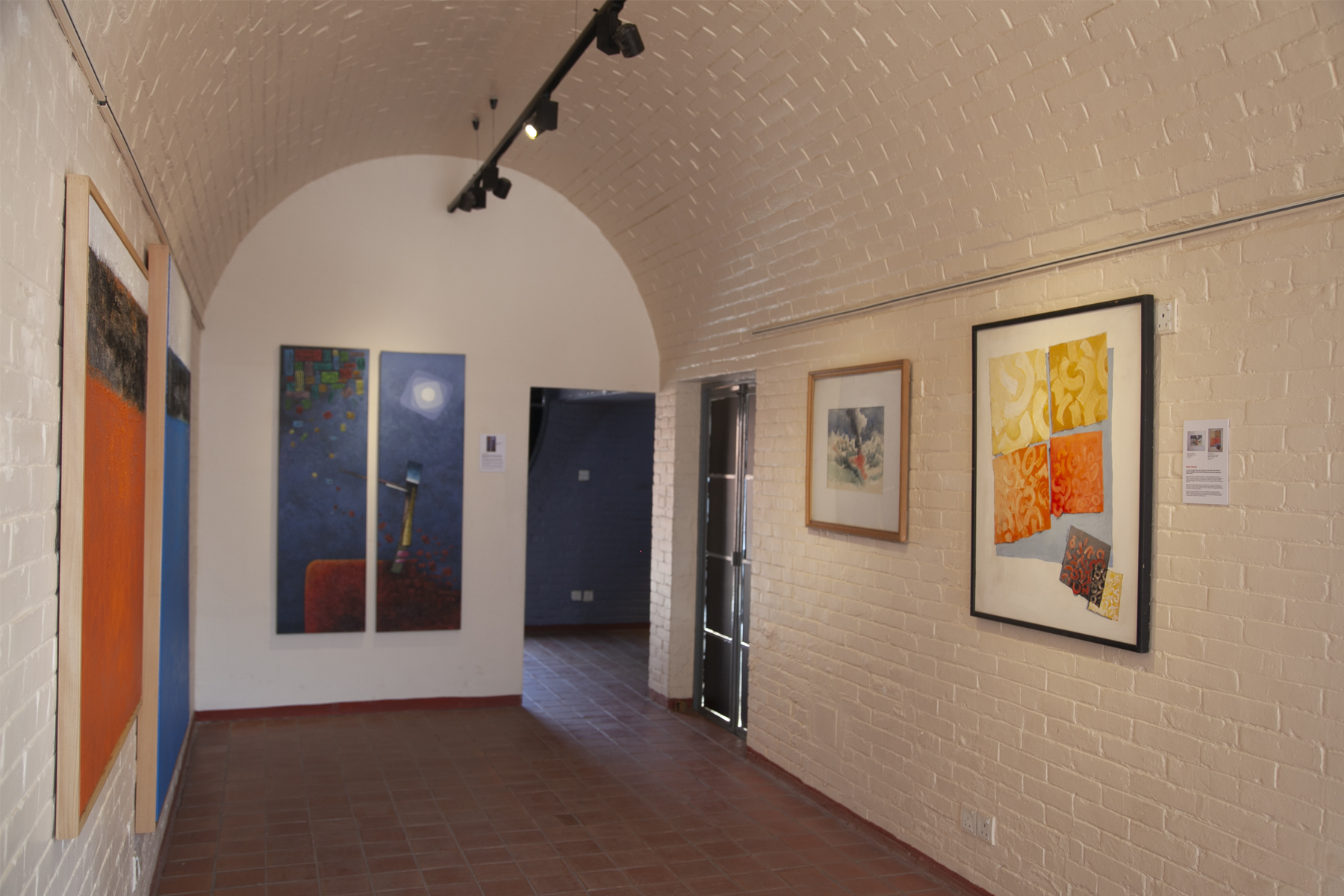
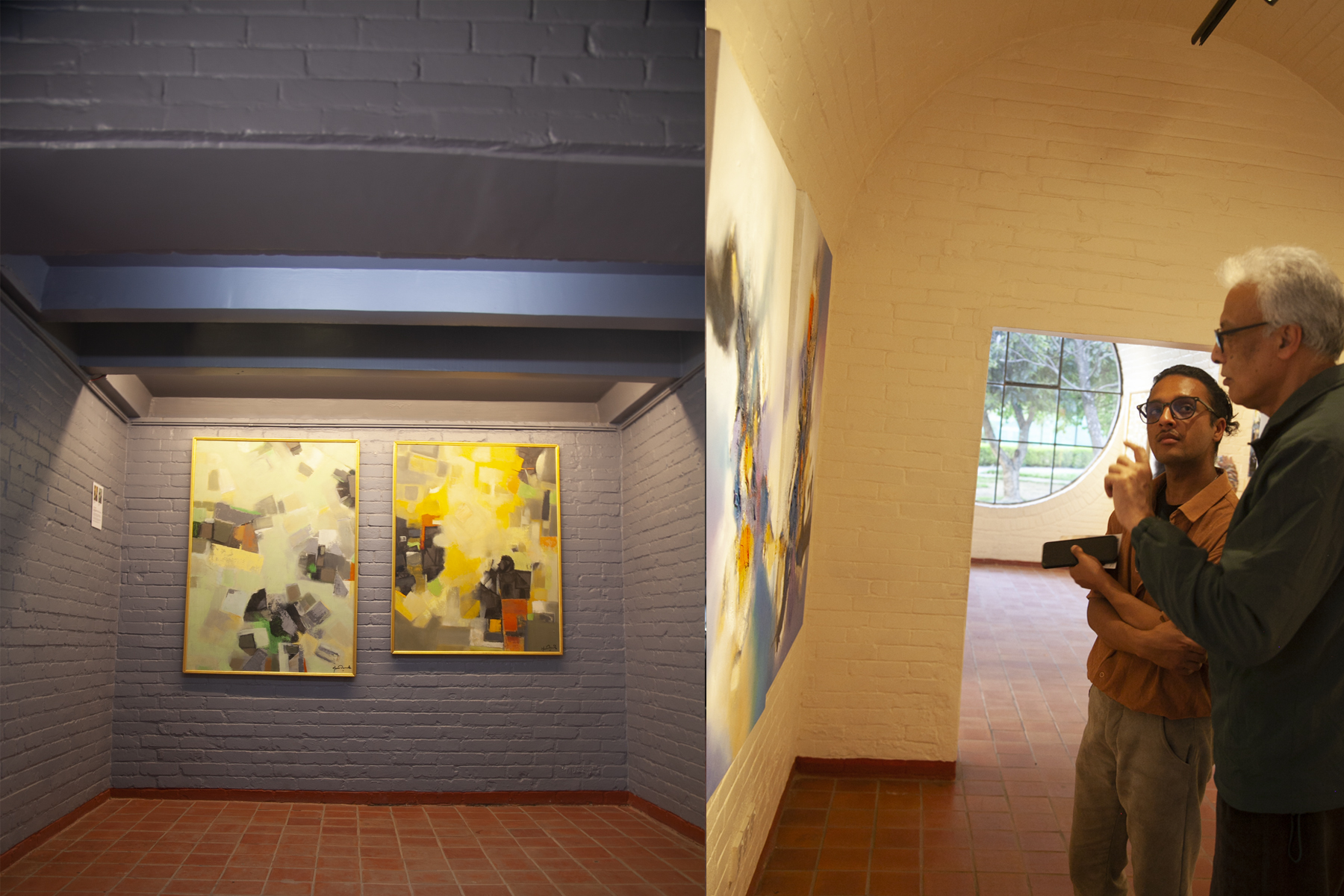
The exhibition gathers the works of twenty six prominent Nepali artists- individuals who have devoted their creative lives to the exploration of abstraction. Titled Forms of Abstraction, it offers a compelling overview of contemporary abstract practices in Nepal, bringing together twenty-six living artists and around fifty works that bear witness to decades of sustained engagement. Here, abstraction is not presented as a rupture or departure from tradition, but as a continuum- an evolving visual language shaped through time, discipline, and lived context.
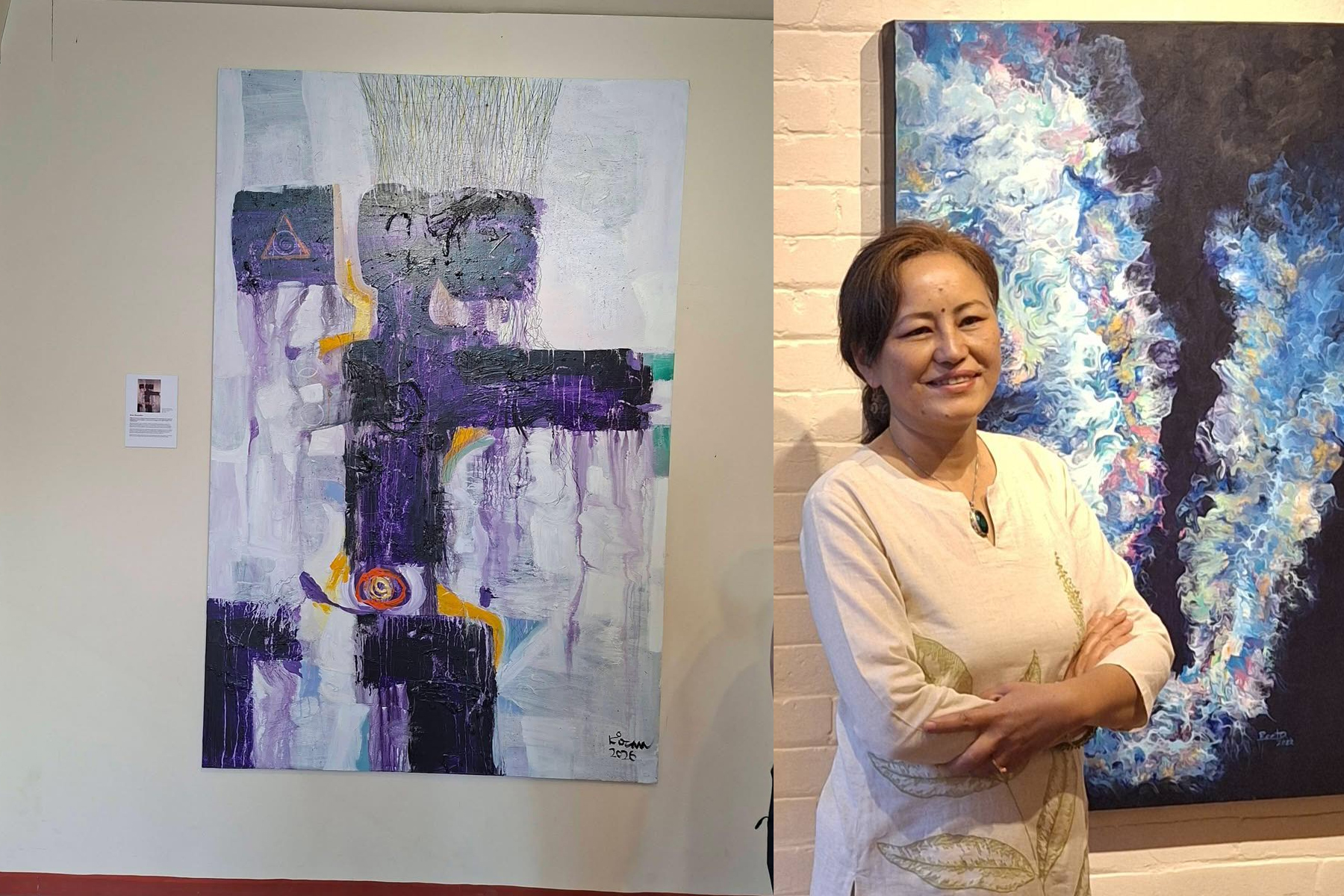
Within the Nepali context, abstraction carries a distinct set of nuances. It is deeply informed by spirituality, cultural memory, and an acute sensitivity to gesture, motion, and emotion. The influence of nature-its vast landscapes, shifting atmospheres- as well as architectural forms and geometric rhythms, subtly permeates these works. Through layered applications of color, textured surfaces, and rhythmic compositions, artists construct visual fields that seem to breathe with movement and stillness at once. These are not merely paintings to be seen, but spaces to be entered- where meditation and motion coexist, and meanings unfold gradually, like echoes. This show at the Taragaon Next began on 2nd of April and will last till 24th of May.
For Nepali artists, abstraction becomes both a sensory and conceptual terrain- a meeting point where the visible dissolves into the intangible. The roots of this practice in Nepal trace back to the mid-20th century, a period marked by the country’s gradual opening to the wider world. A pivotal figure in this transformation was Lain Singh Bangdel. Having encountered European modernism in Paris during the 1950s, he returned to Nepal with a radically new artistic vision. In the 1960s, he began to move away from representational forms, embracing instead the expressive potential of color, texture, and emotional depth. His works often carried philosophical undertones, infused with a sense of Himalayan spirituality. Through his practice, Bangdel laid the foundation for abstraction in Nepal- establishing a visual language that was at once globally informed and deeply rooted in local sensibilities.
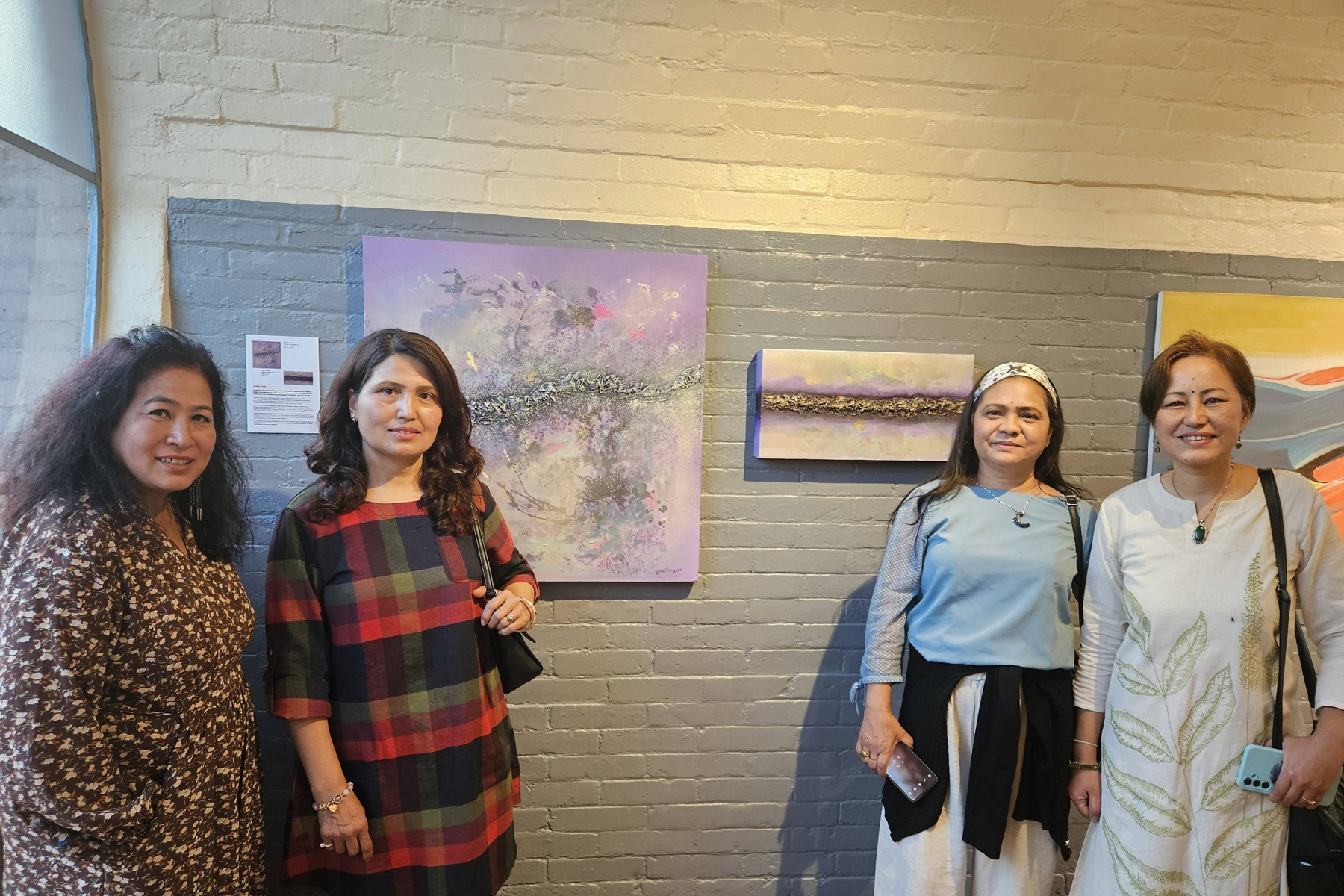
By the mid-1960s, this language began to find resonance among a new generation of artists such as Gehendra Man Amatya, Laxman Shrestha, Uttam Nepali, Urmila Upadhyay, Pramila Giri, Govinda Dangol, Vijay Thapa, and K.K. Karmacharya, who further expanded the possibilities of abstract expression in the Nepali art scene.
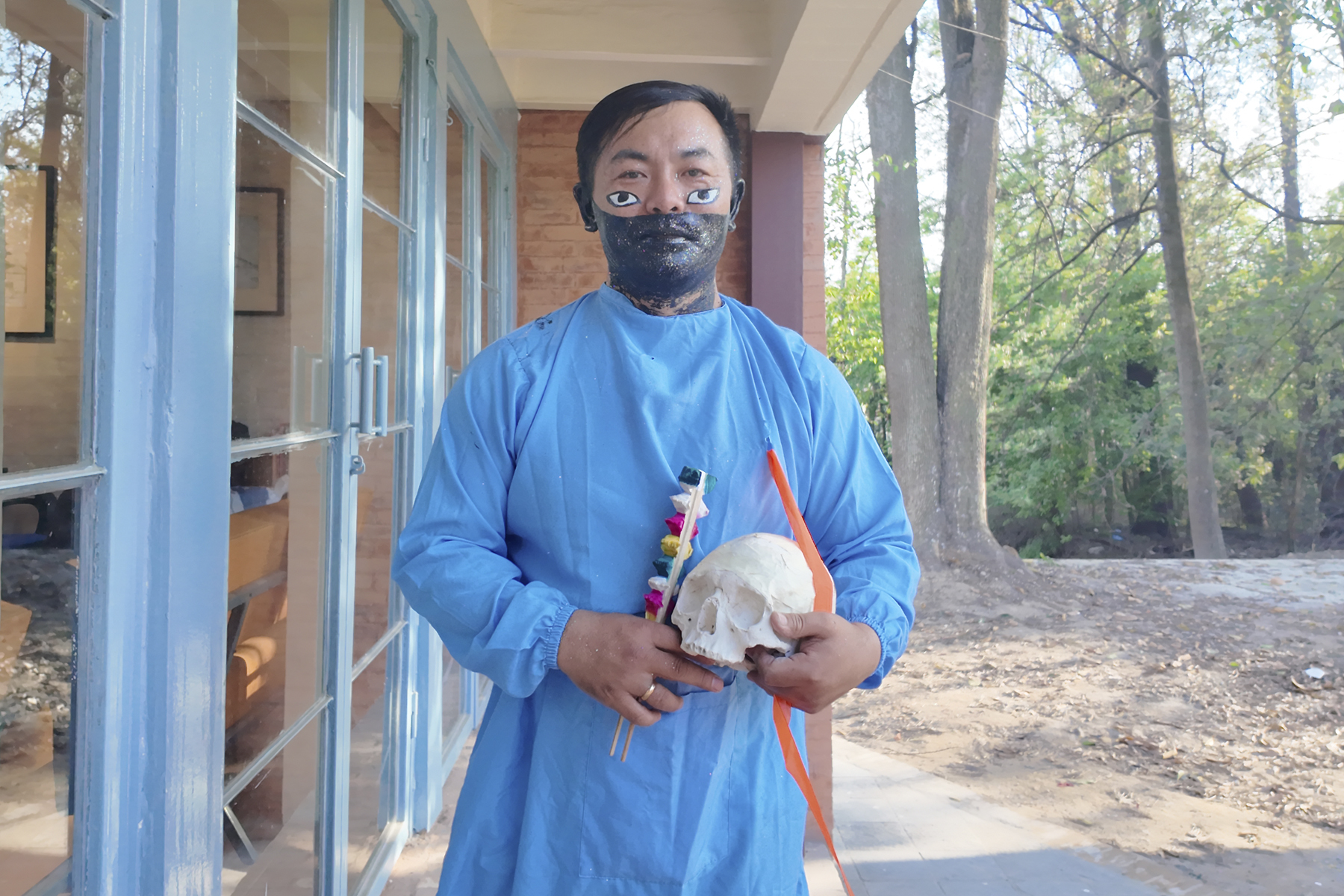
On the opening of the exhibition, the artist Sundar Lama had given a performance where the central theme was about life and death. He was draped in a hospital gown and was making a swing around the life itself showing that every activities that one performs during the lifetime has no meaning at all as everything at last turns into the ending itself.
Forms of Abstraction also becomes an act of remembrance- a quiet homage to those artists whose presence is no longer physical, yet whose influence continues to ripple through time. Over the span of nearly six decades, several pioneers have passed on, leaving behind legacies that remain deeply embedded within Nepal’s artistic consciousness. As Roshan Mishra reflects, their contributions continue to shape and inspire new generations. Among these revered figures are Bal Krishna Sama, Lain Singh Bangdel, Uttam Nepali, Indra Pradhan, Surendra Raj Bhattarai, Puran Khadka, Shankar Raj Singh Suwal, and Prashant Shrestha- artists whose works have indelibly shaped the contours of Nepal’s abstract tradition.
The exhibition itself unfolds across three distinct buildings, creating a spatial journey through the many dimensions of abstraction. Within these spaces, the works of twenty-six veteran artists are displayed, each canvas offering a unique voice within a shared language. Among the featured artists are Kiran Manandhar, Krishna Manandhar, Madan Chitrakar, Mukesh Malla, Navindra Man Rajbhandari, Nem Bahadur Tamang, Pramila Bajracharya, Ratna Kaji Shakya, Sagar Manandhar, Sunita Rana, and many others- each contributing to a vibrant, evolving dialogue.
Together, these works do not merely represent abstraction; they embody it as a living, breathing continuum- one that flows gently between past and present, between the seen and the unseen, inviting the viewer into a space where meaning is not fixed, but felt.

Leave A Comment