
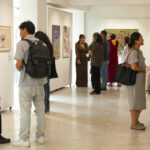
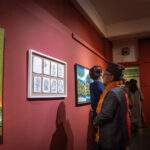
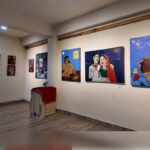
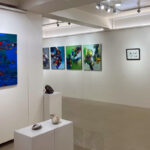
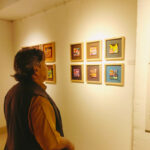

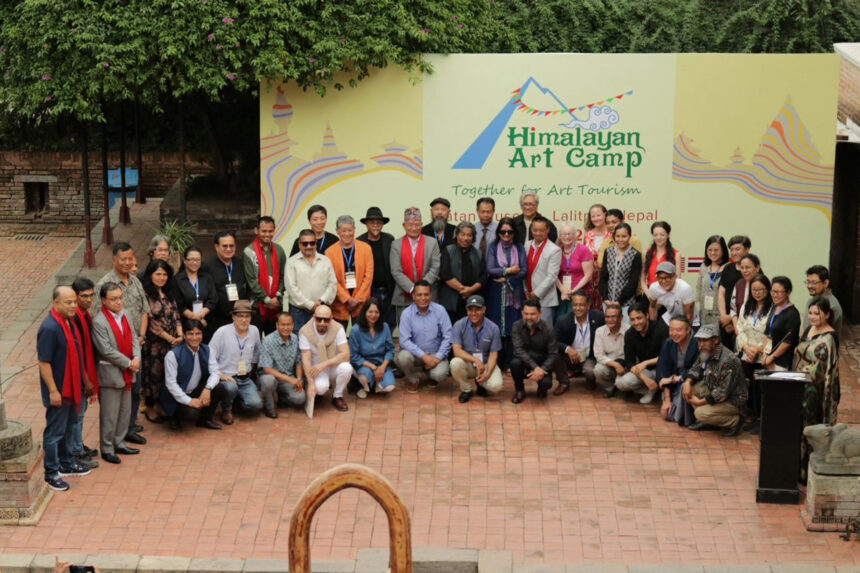
On a sunlit Sunday, May 18th, 2025, the ancient stones of the Patan Museum Courtyard stirred with new life, as if echoing centuries of art and spirit. The Himalayan Art Camp 2025 unfurled its vibrant wings, not merely as an event, but as a radiant festival of imagination, dialogue, and shared dreams. For seven unforgettable days, the courtyard transformed into a living masterpiece — where 30 artists from 15 far-flung corners of the world came together with 10 of Nepal’s finest. In this mosaic of minds and hearts, borders dissolved as brushes moved in harmony, weaving tales of unity, heritage, and hope upon the timeless canvas of Patan.
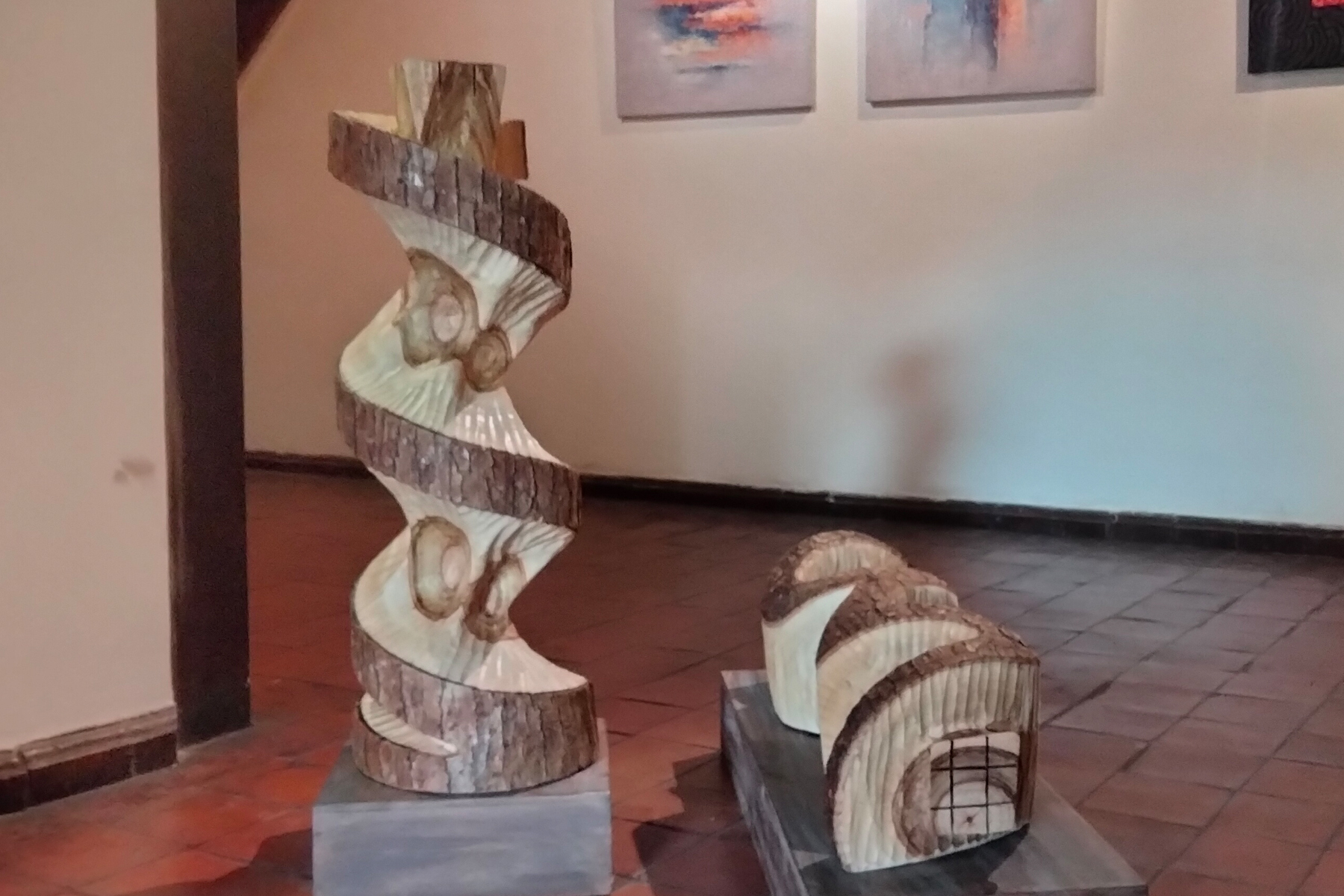
Since 2017, E-Arts Nepal’s Himalayan Art Camp has been a bridge of brushstrokes and spirit, fostering cross-cultural dialogue through art. Returning this year with renewed vitality, and in collaboration with the Lalitpur Chamber of Commerce and Industry (LCCI), the camp gathers local and global artists in a shared pursuit of creative communion. Rooted in excellence and community, it blossoms into a final exhibition — unveiled on May 24 by Mayor Chiribabu Maharjan — where the world is seen through Nepali eyes, and Nepal speaks in many colors.
Artists from fifteen countries—including the USA, China, Malaysia, Indonesia, Vietnam, Canada, Cambodia, Singapore, the Philippines, Thailand, Japan, South Korea, Italy, and Romania—have converged in Nepal to engage in a dynamic intercultural dialogue through art. Their collective presence signifies more than geographic diversity; it reflects a commitment to mutual understanding and creative synergy. During the opening ceremony, Mr. Asha Dangol, Co-Founder of E-Arts Nepal, acknowledged this collaborative spirit, stating, “We are deeply grateful to each artist for bringing your unique stories, styles, and spirit to this collaborative celebration.” His words underscored the camp’s core philosophy: that artistic expression, when shared across cultures, becomes a powerful vehicle for connection, empathy, and innovation.
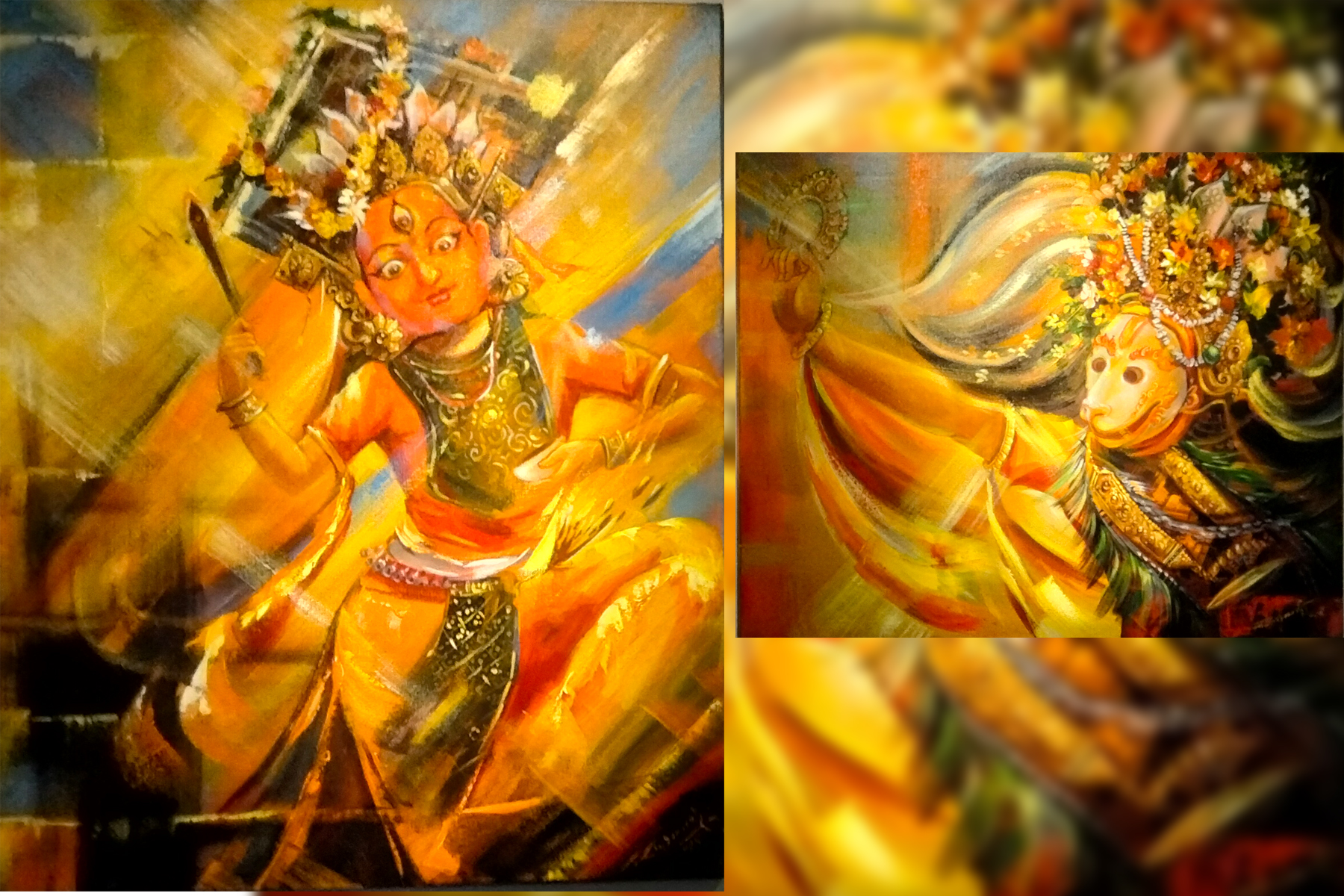
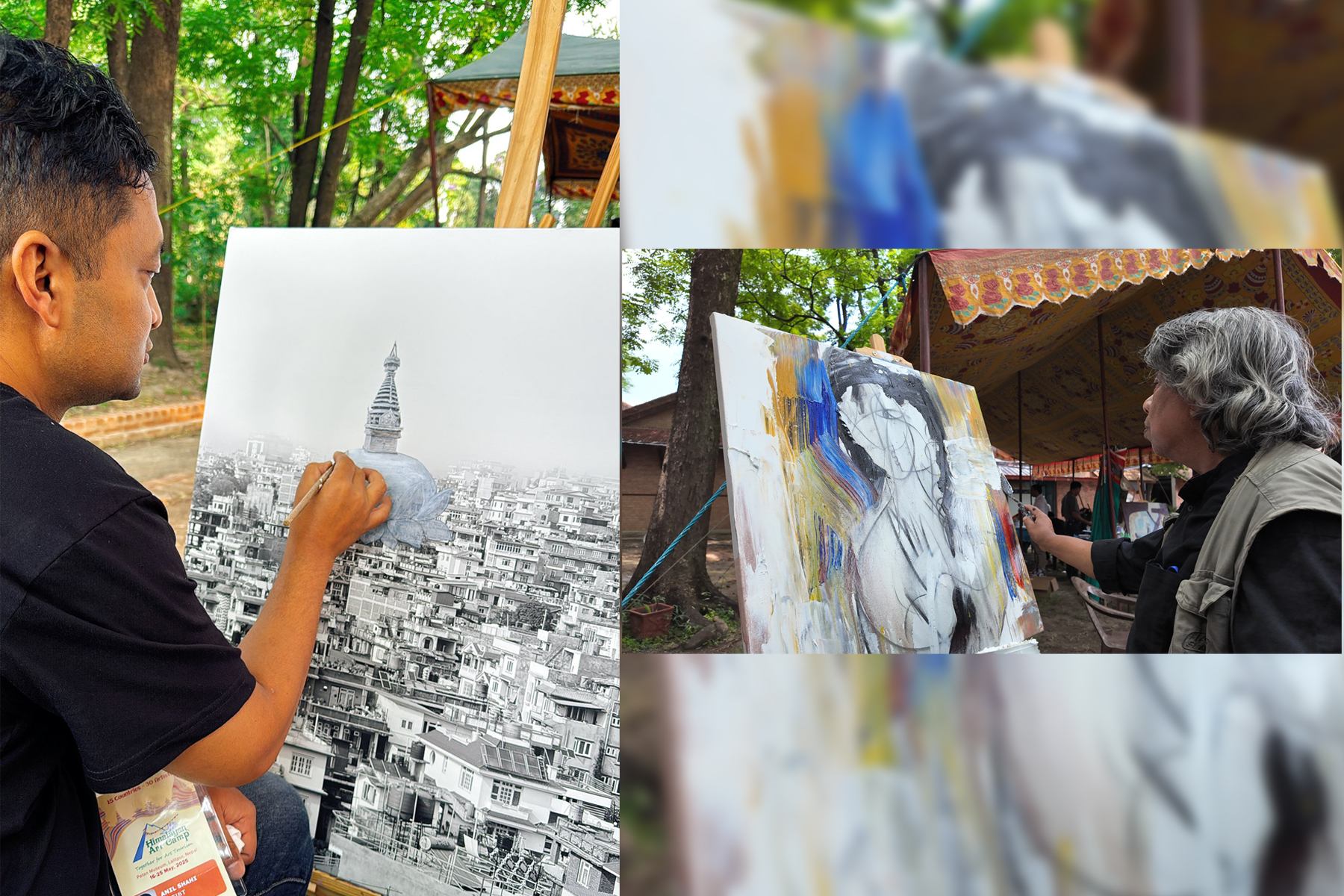
This year’s Nepali artist cohort brings together ten visionary creators whose works span the sacred arc from ancestral tradition to bold conceptual inquiry, each infused with scholarly depth and personal expression. At the heart of this collective stands the revered Kiran Manandhar — a towering figure in Nepali art and an MFA graduate of Banaras Hindu University. His presence lends the camp both gravitas and inspiration, a guiding light for younger artists. For the exhibition, he unveiled his iconic lady figure — a composition that pulses with elegance and emotion. With every fluid brushstroke and masterful interplay of color, Manandhar reaffirms why he remains one of Nepal’s most beloved and celebrated artists.
Among the distinguished artists gracing the workshop are Navindra Man Rajbhandari, Lok Chitrakar, Seema Sharma Shah, Bhuwan Thapa, Sushma Shakya, Samundra Man Singh Shrestha, Sabita Dangol, Anil Shahi, and Pratima Thakali. Each carries a distinct voice, yet together they form a vibrant chorus—echoing the richness, depth, and evolving spirit of contemporary Nepali art.
This year’s international lineup gathers a vibrant constellation of 20 distinguished artists from 14 nations, each carrying the colors, stories, and spirit of their homelands. From Cambodia, the renowned Chhim Sothy stands as a beacon of artistic duality—seamlessly blending tradition and innovation through his evocative works in watercolor and oil. His art becomes a mirror of Cambodian identity, yet it speaks a universal language, resonating far beyond borders with grace and power.
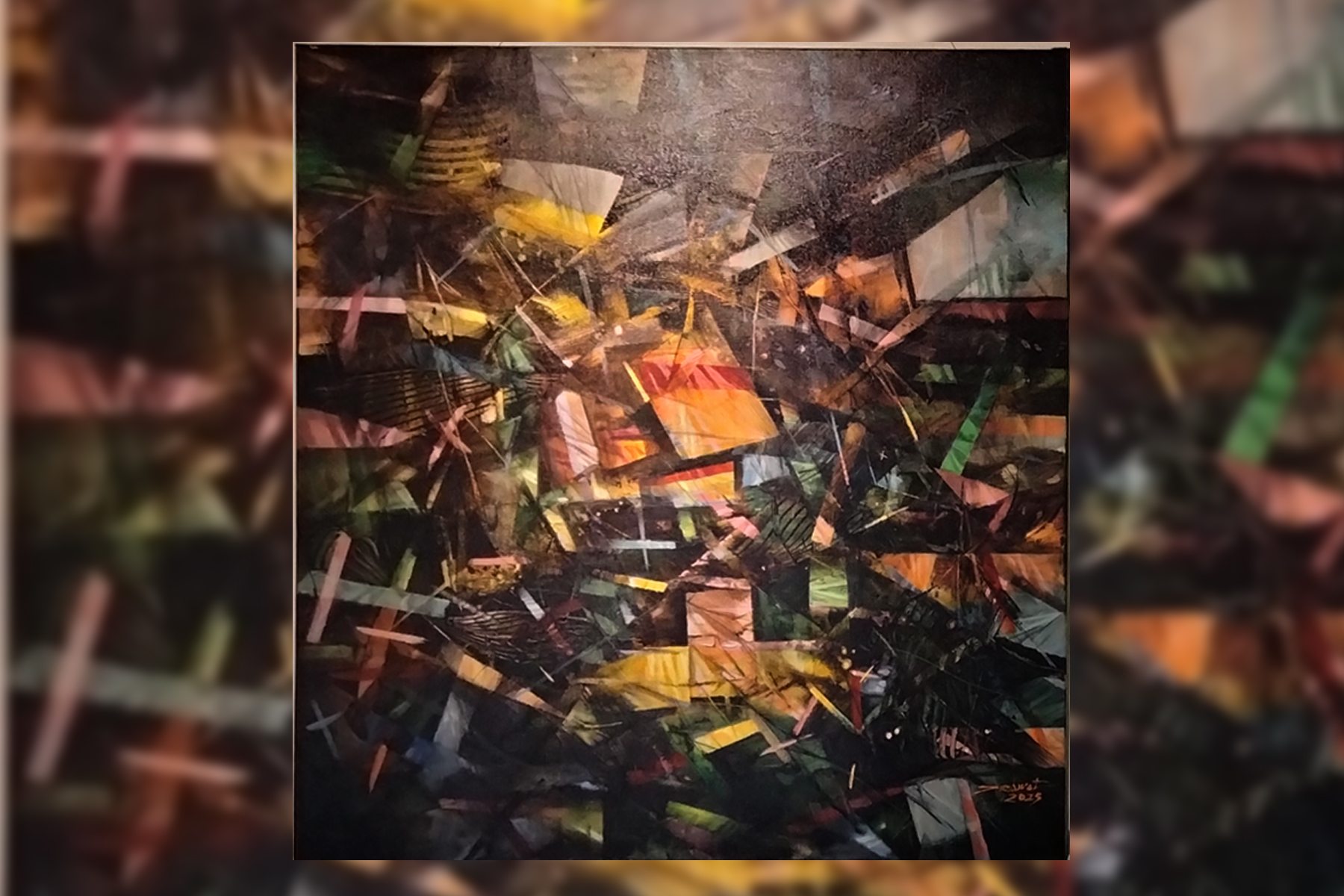
Lisa Larson Lee, a Canadian artist now rooted in Singapore, transforms the raw poetry of urban decay into luminous, intuitive abstractions—each canvas a dialogue between chaos and harmony, instinct and intention.
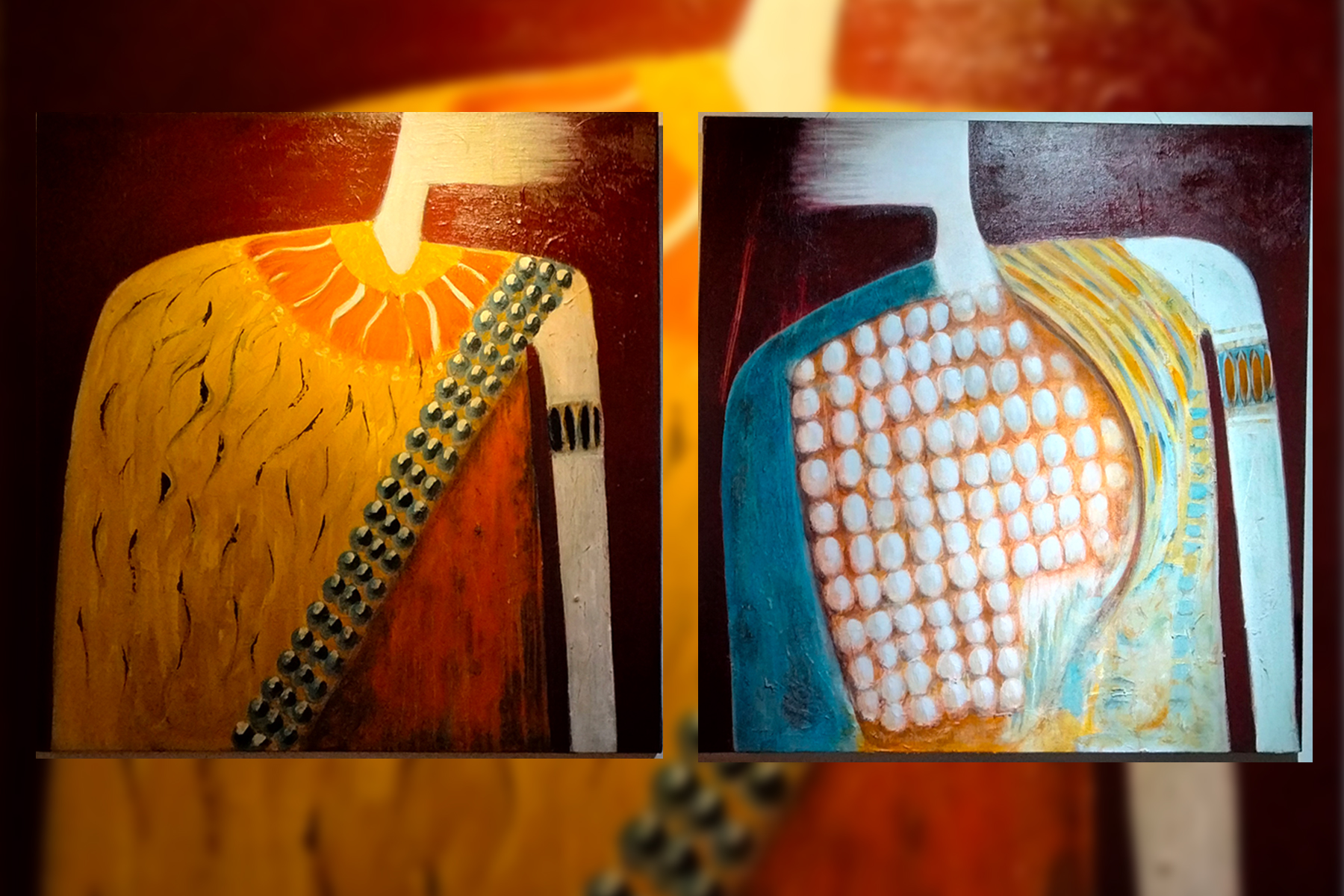
From China, Haijun Song and Liu Yi bring not only their artistic brilliance but also their influential voices in arts education and policy. Liu’s work, in particular, introduces a tactile innovation—embedding organic materials like maize into his compositions to create intricate textures. This technique offers Nepali artists a fresh lens on materiality, expanding the possibilities of surface and depth.
Meanwhile, from the heart of Indonesia, Hadi Soesanto and Sulistyo Chung channel the mystique of Java into their symbol-rich paintings. Their art resonates with myth and memory, while their involvement in initiatives like the Solo International Art Camp exemplifies a commitment to nurturing global artistic kinship.
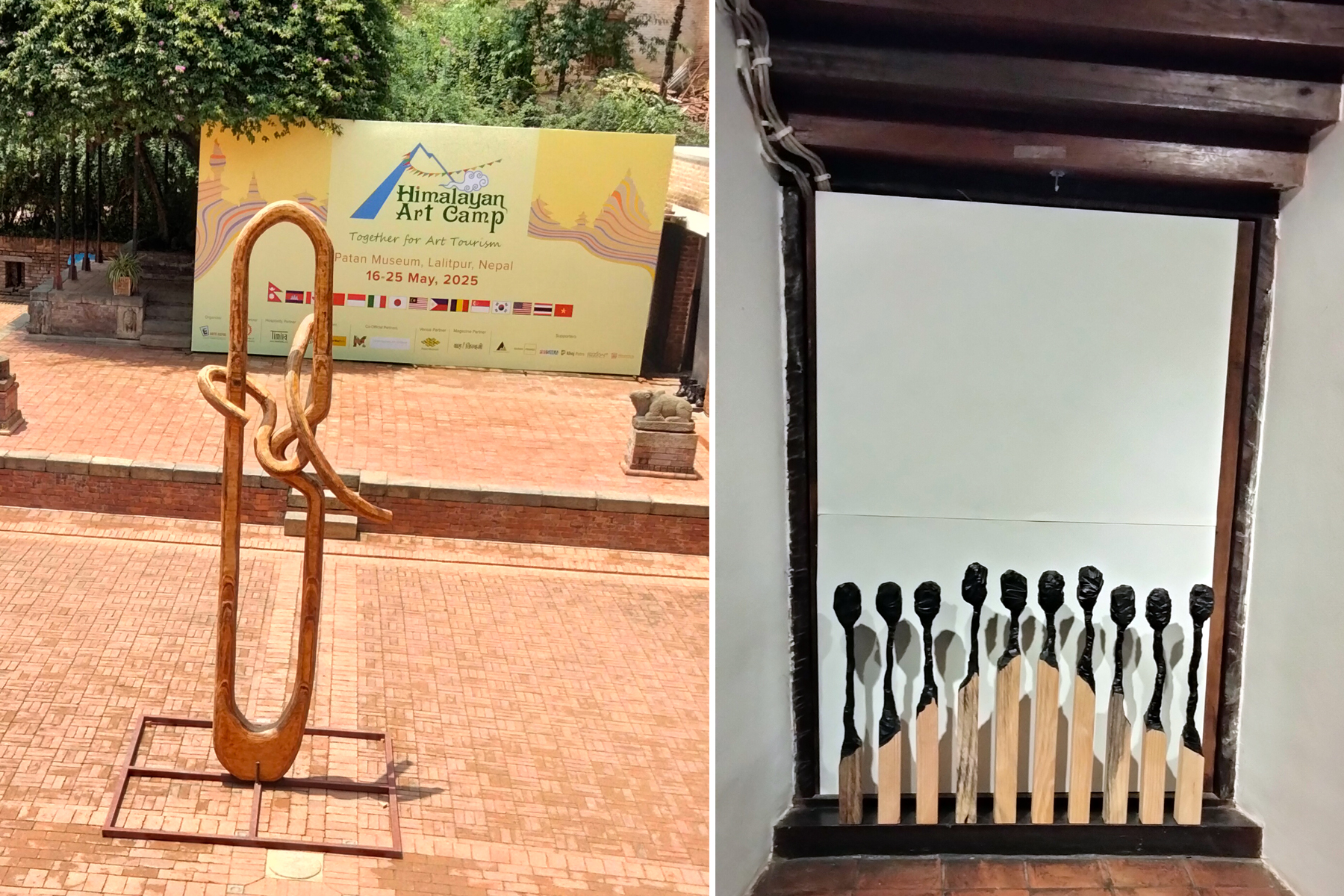
Japan’s Kei Yasaka paints with the unseen—his delicate pigments capturing the whispers of invisible energies, like echoes suspended in light. Alongside him, the revered Katsumi Mukai crafts contemplative sculptural installations, each one a quiet meditation shaped by decades of global acclaim and introspection.
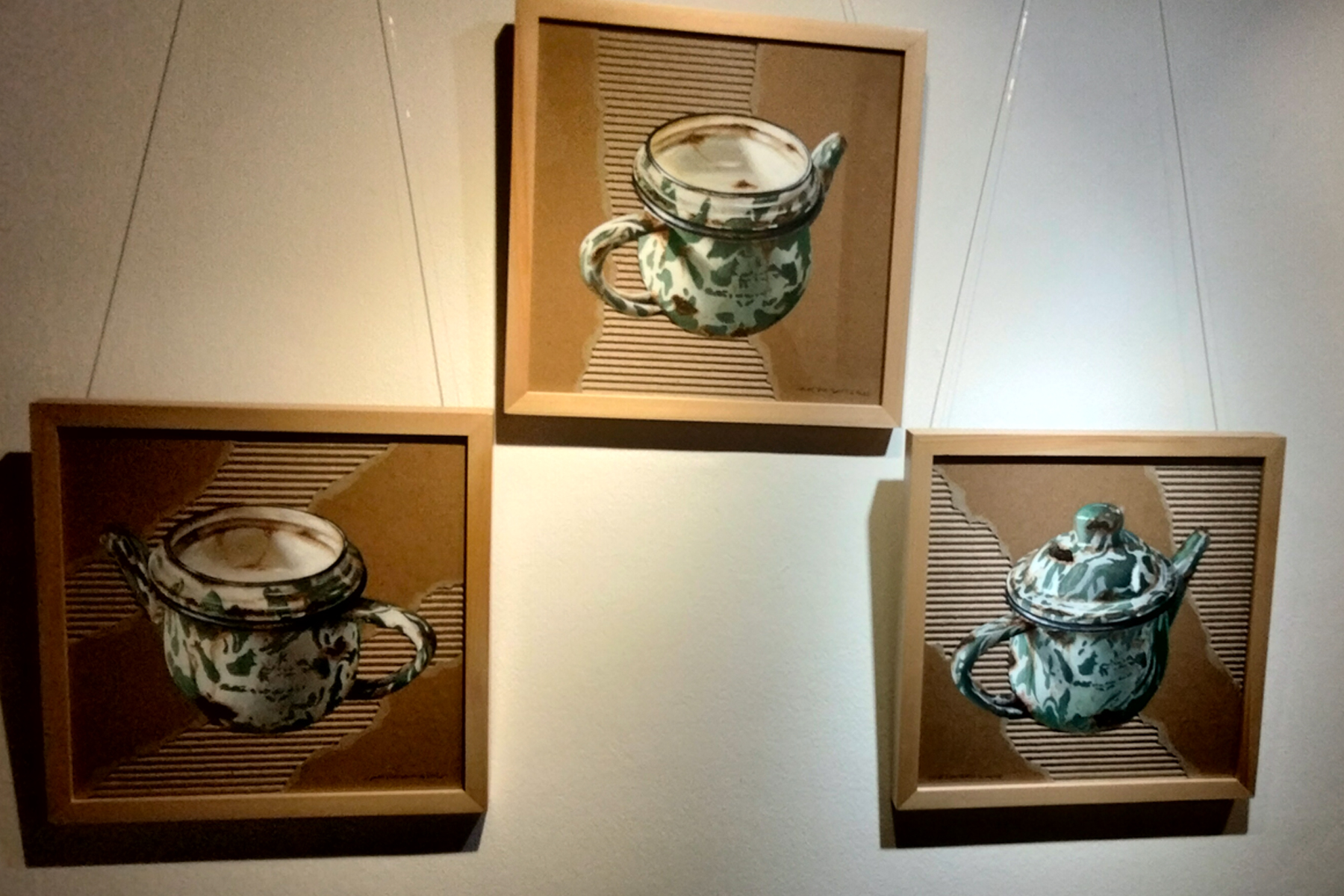
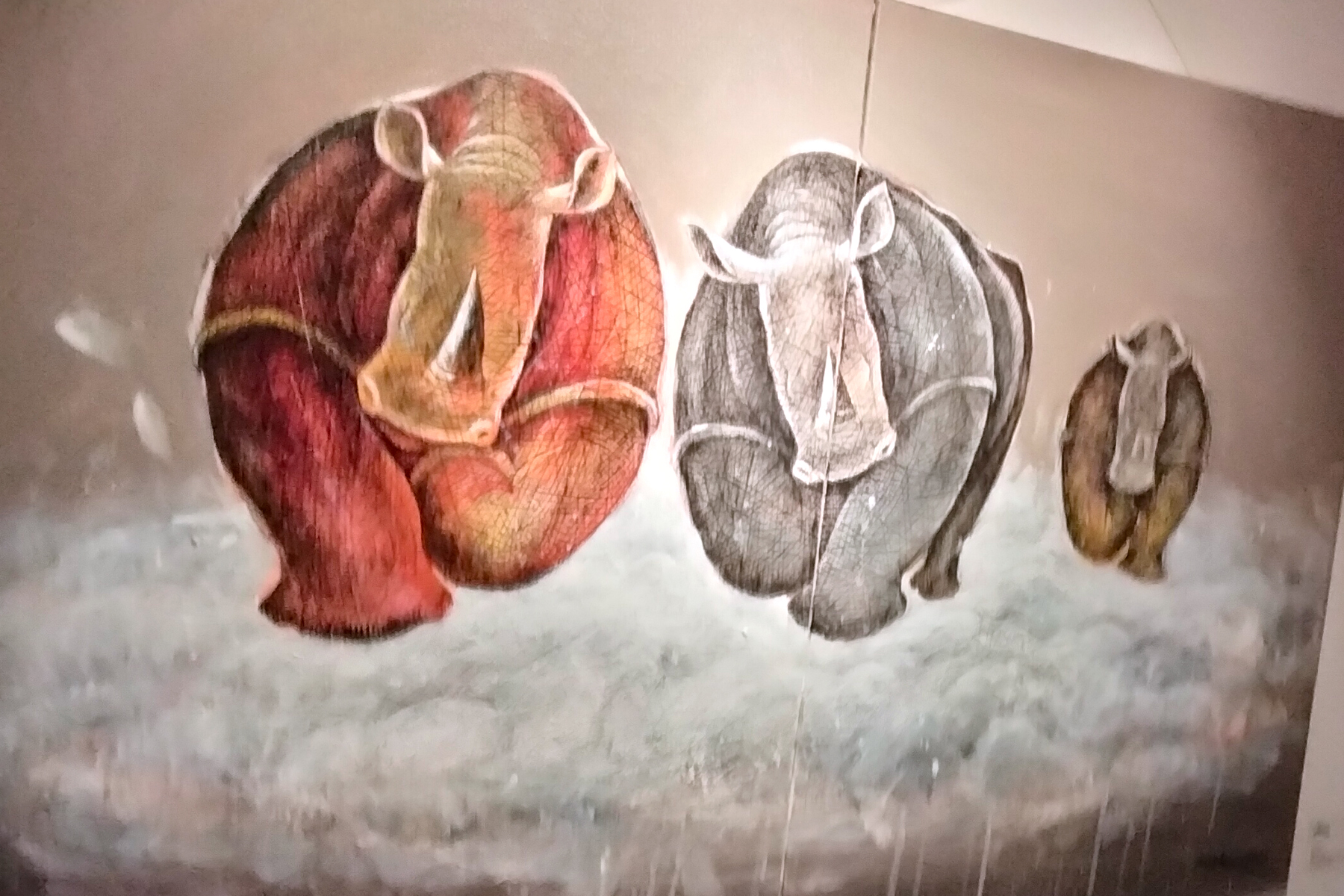
Italian sculptor Giuseppe Strano Spitu leaves an elegant impression with his sophisticated command of form and material, transforming stone and metal into lyrical gestures. From Malaysia, Ng Bee and Ng Kim Heoh offer strikingly distinct yet complementary visions: Bee’s beloved rhinoceros series pulses with vitality and affection, while Ng Kim Heoh’s fusion of abstraction and realism produces a captivating tension—works that shimmer at the edge of dream and memory.
Singapore’s Casey Chen delights in the crossroads of design and storytelling, his joyful, cross-disciplinary pieces dancing between disciplines with playful sophistication. South Korea’s Dong Yeoun Kim mesmerizes with surreal, otherworldly landscapes; this year, his twin visions of mountain forms evoke both solitude and mystery.
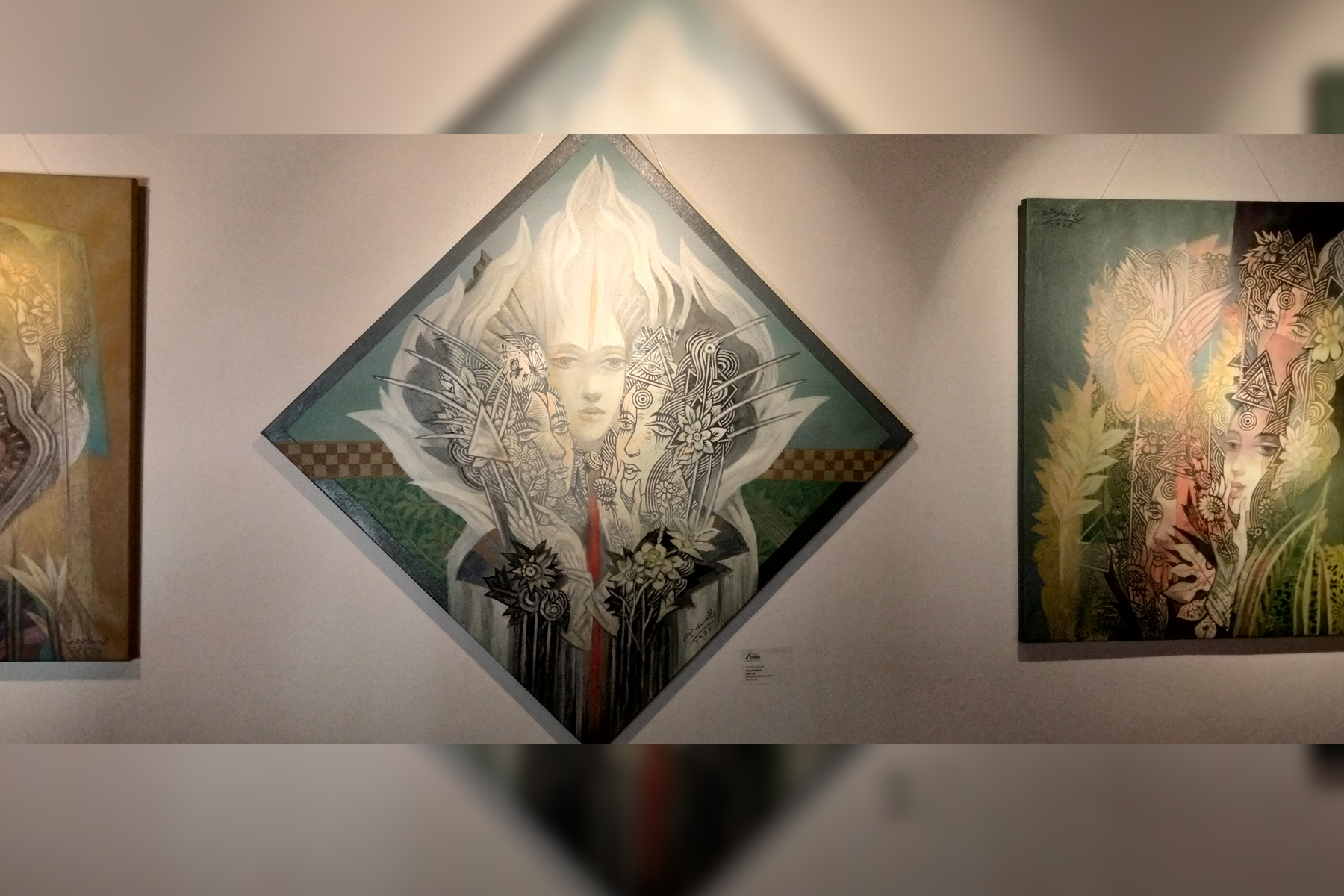
Fil Delacruz of the Philippines blends ancestral motifs with a contemporary pulse, layering painting with printmaking in rhythmic harmony—a technique as innovative as it is rooted in tradition. Romania’s Eva Radu infuses her visual narratives with both scholarly precision and lyrical nuance, creating works that think and feel in equal measure.
From Thailand, Wattanachot Tungateja and Jirawat Phirasant move fluidly across media and institutions, shaping contemporary discourse with works that are both grounded and visionary. Representing the USA, Carolyn Muskat—an acclaimed Tamarind Master Printer—brings precision and passion to her printmaking practice, marrying technical excellence with a spirit of global exchange.
Vietnam’s presence shines through the evocative landscapes of Tran Manh Linh, whose work echoes a deep reverence for cultural continuity, and the bold vision of Nguyen Ngoc Linh, a trailblazer in Vietnamese contemporary art. Their contrasting yet complementary voices enrich the tapestry of the Himalayan Art Camp, where creativity becomes a shared language and the borders between cultures blur into beauty.
The program was set aglow with the ceremonial lighting of the lamp—a symbolic act of illumination and unity—led by two esteemed artists: Nepal’s own Kiran Manandhar and Japan’s Katsumi Mukai. With grace and reverence, they lit the flame, officially opening the Himalayan Art Camp 2025.
The culminating exhibition, a celebration of this extraordinary convergence of artistic voices, runs from May 24th to 28th within the historic embrace of the Patan Museum, where each artwork tells a story, and each story adds a brushstroke to the collective canvas of global imagination.

Leave A Comment