

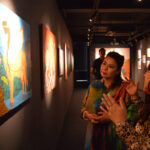
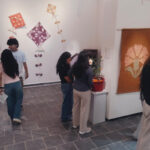

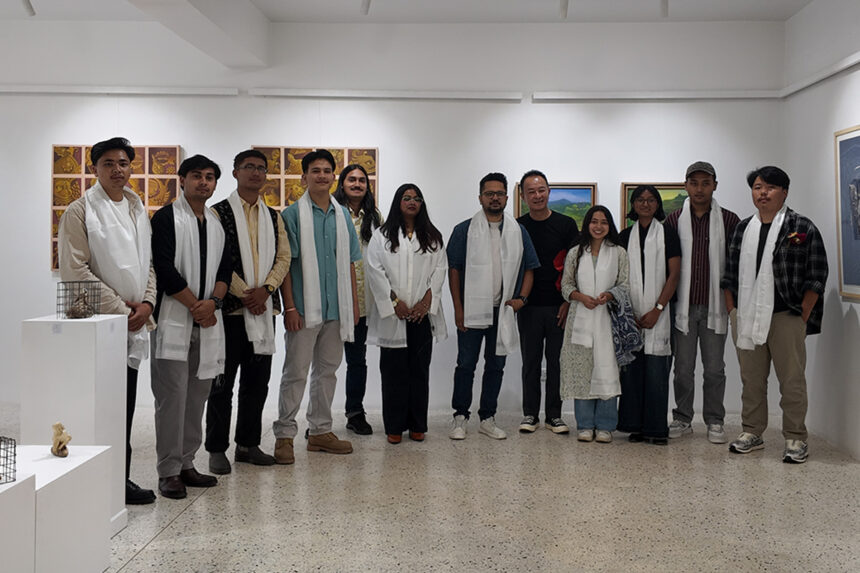
The second edition of The Next is currently on view at Takpa Gallery, Lazimpat, from 13 June to 11 July. Conceived as a celebration of emerging artistic voices, the exhibition carries forward the vision of its inaugural edition-creating a vibrant platform for young artists who are either pursuing their studies in fine arts or have recently stepped into the professional world after completing their academic journey.
This year’s edition brings together eleven promising artists, each presenting a unique visual language shaped by personal experiences, cultural memories, and contemporary sensibilities. The participating artists are Amisha Maharjan, Anil Nepali, Anush Khaiju, Lijen Maharjan, Mukta Rani Singh, Rahul Yakami, Ranjan Khadka, Rudrakshya Man Pradhan, Smarika Maharjan, Sonam Rai, and Yambang Thapa Magar. Their diverse bodies of work transform the gallery into a dynamic space where experimentation, introspection, and creative aspirations converge.
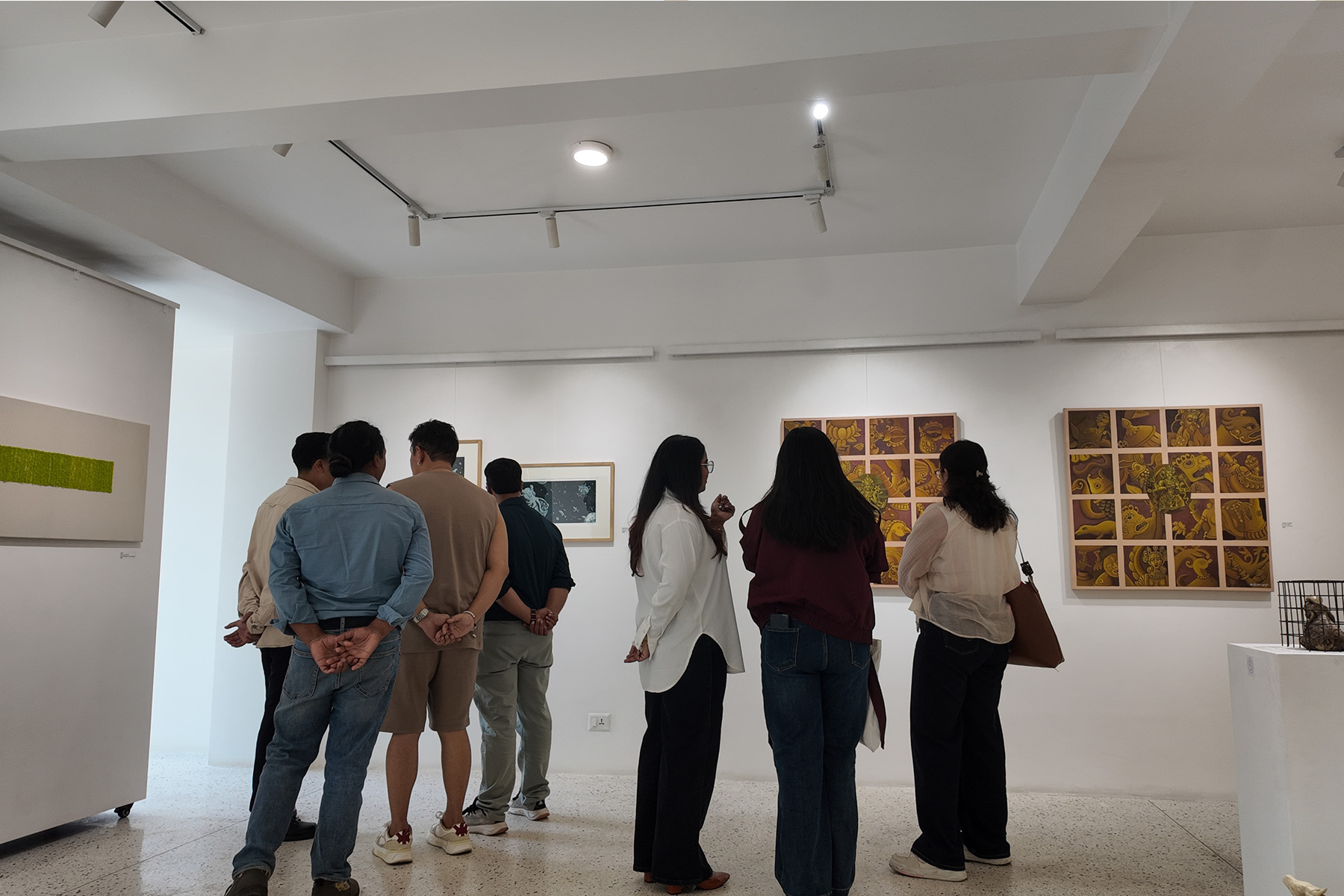
Reflecting on the motivation behind the exhibition, curator Roshan Bhandari shares, “When we were young artists, exhibiting our works in galleries was one of our greatest aspirations, yet opportunities were scarce. We often dreamed of the day when such spaces would become more accessible. The Next emerged from that very longing-to bridge those gaps and create meaningful opportunities for the younger generation of artists. Through this annual exhibition, we hope to nurture their confidence, amplify their voices, and help them take their first significant steps into the art world.”
More than an exhibition, The Next stands as a testament to hope, mentorship, and continuity-a space where emerging talents are not merely showcased but encouraged to dream bigger, experiment fearlessly, and shape the future of Nepal’s contemporary art landscape.
The artworks created by these young and gifted artists transcend the conventional boundaries of artistic practice. Combining technical mastery with lived experiences, they push their creative pursuits to new horizons, revealing a generation of artists who are not merely inheriting traditions but reshaping them with fresh perspectives and contemporary sensibilities. The exhibition stands as a testament to the evolving artistic landscape of Nepal, where painting, printmaking, and mixed media become powerful mediums for storytelling and introspection.
The themes explored in the exhibition are as diverse as they are profound—ranging from memory and mythology to spirituality, cultural heritage, communal life, environmental concerns, and deeply personal experiences. Each artwork opens a window into the artist’s inner world while simultaneously inviting viewers to reflect on the collective narratives that shape society. What follows is a glimpse into some of the remarkable works currently on display at the gallery.
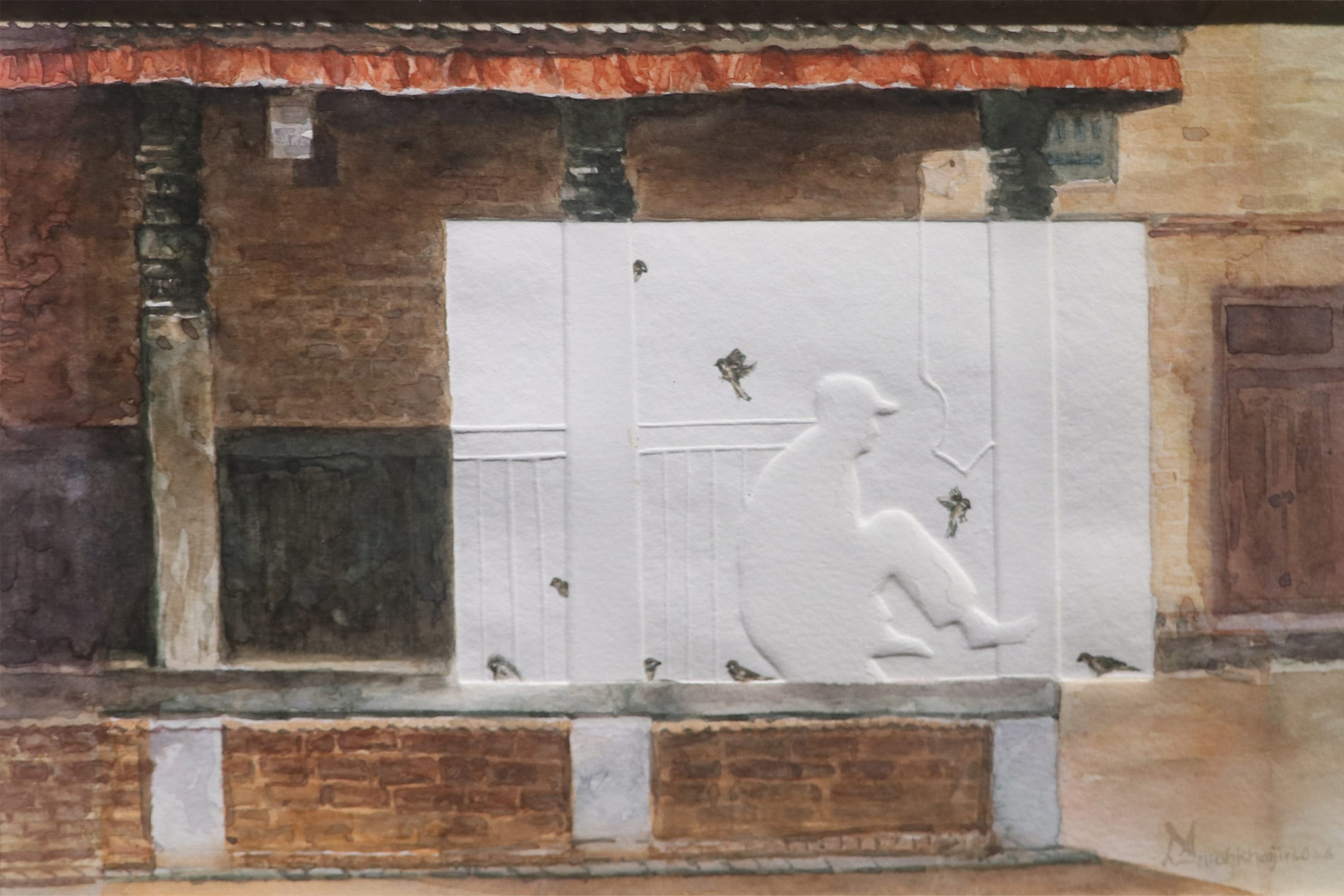
Among the participating artists, Anush Khaiju presents a poignant meditation on the changing social fabric of the Kathmandu Valley. Skillfully combining watercolor with embossing techniques, he celebrates the cultural richness of the valley while mourning the gradual disappearance of its communal traditions. In earlier times, public resting places served as vibrant social spaces where people gathered, conversed, and shared stories that bound communities together. Today, however, modern lifestyles have distanced even the older generation from these cherished spaces.
To evoke this fading reality, Khaiju portrays elderly figures in embossed forms, rendering them almost ghostlike-memories etched into the surface of time. The juxtaposition of delicate watercolor washes with textured embossing creates a compelling dialogue between tradition and modernity, presence and absence. His series, aptly titled Same Space, Fading Experience, captures the melancholic transformation of social life in contemporary Nepal. Beyond its conceptual depth, the series also demonstrates Khaiju’s remarkable command over watercolor, allowing fluidity and emotion to merge seamlessly within his compositions.
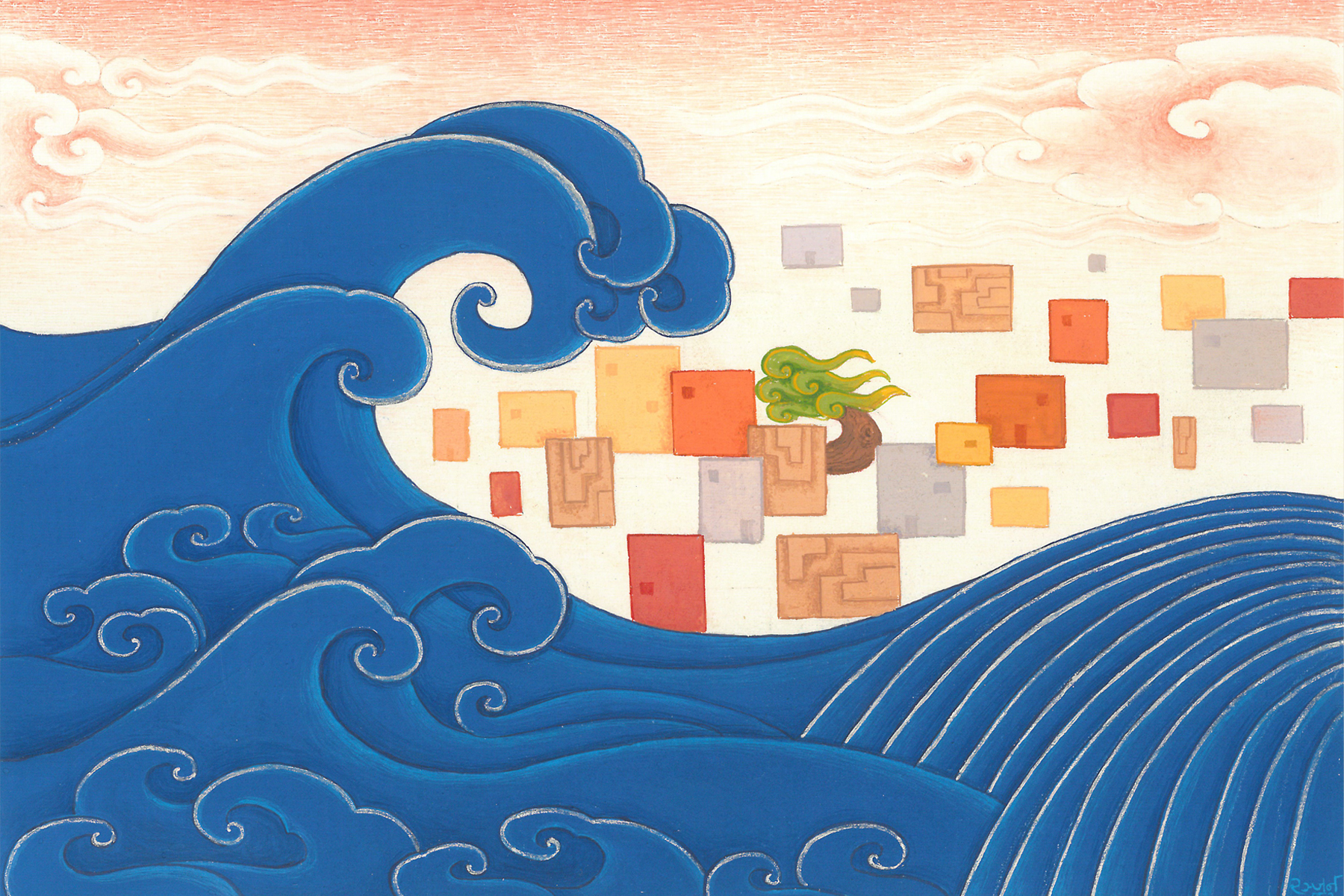
Ranjan Khadka, another promising artist in the exhibition, narrates the story of the city through an entirely different visual language. Employing poster colors and mixed media, he delves into the origins and transformations of urban civilization. His works remind viewers that most flourishing cities, including Kathmandu, have historically emerged alongside rivers-the lifelines that nourished settlements and sustained communities.
Yet, Khadka’s paintings also reveal the fragile balance between nature and urban expansion. As cities grow relentlessly and rivers change their course, the boundaries between the two become increasingly blurred. At times, the river seems to reclaim the city; at others, urbanization appears to engulf the river itself. Through layered surfaces, fluid forms, and evocative imagery, Khadka constructs a visual narrative of coexistence, conflict, and transformation-a reflection on the ever-changing relationship between humanity and the natural world.
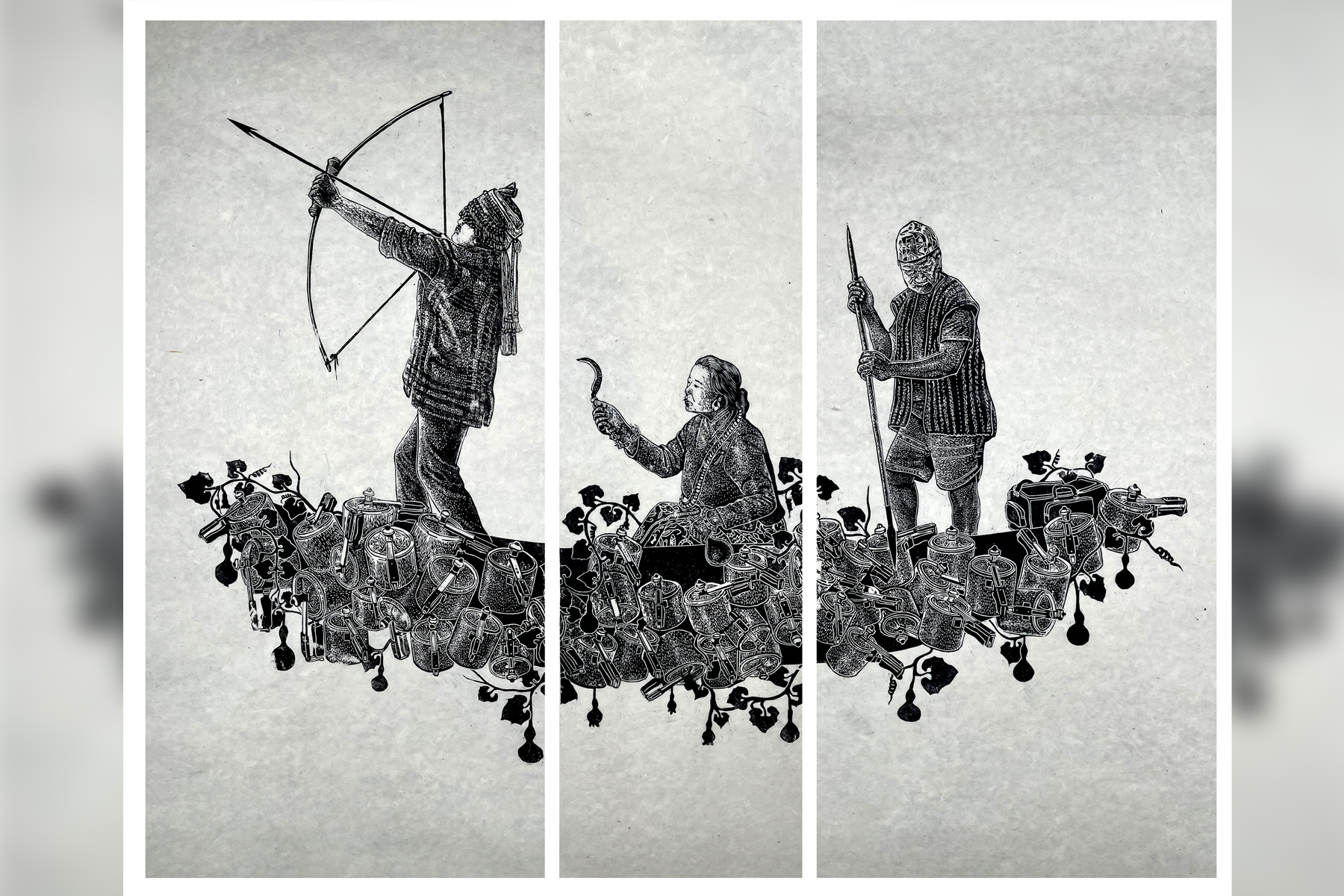
Equally captivating are the works of Sonam Rai, whose paintings delve into the lives and memories of hunters. Drawing inspiration from the traditions of rural communities, Rai revisits a time when hunting was not merely an act of survival but an integral part of life. Armed with bows and arrows, hunters traversed forests and mountains, venturing into the unknown to provide for their families. Their courage, resilience, and intimate connection with nature find expression in his evocative compositions.
Among his works, Beneath Concrete Forest emerges as particularly striking. The painting offers a poignant commentary on urbanization and environmental loss. Trees, once abundant and life-giving, have gradually surrendered their place to expanding cities. Rai masterfully depicts miniature cityscapes nestled within the trunks of trees, creating a haunting metaphor for how civilization has grown by hollowing out nature itself. The pervasive blue hues that envelop the background lend the work a quiet melancholy, echoing the artist’s sorrow for a world where forests are steadily replaced by concrete landscapes. The painting thus becomes not only a visual delight but also a powerful reflection on progress, memory, and the cost of modernity.
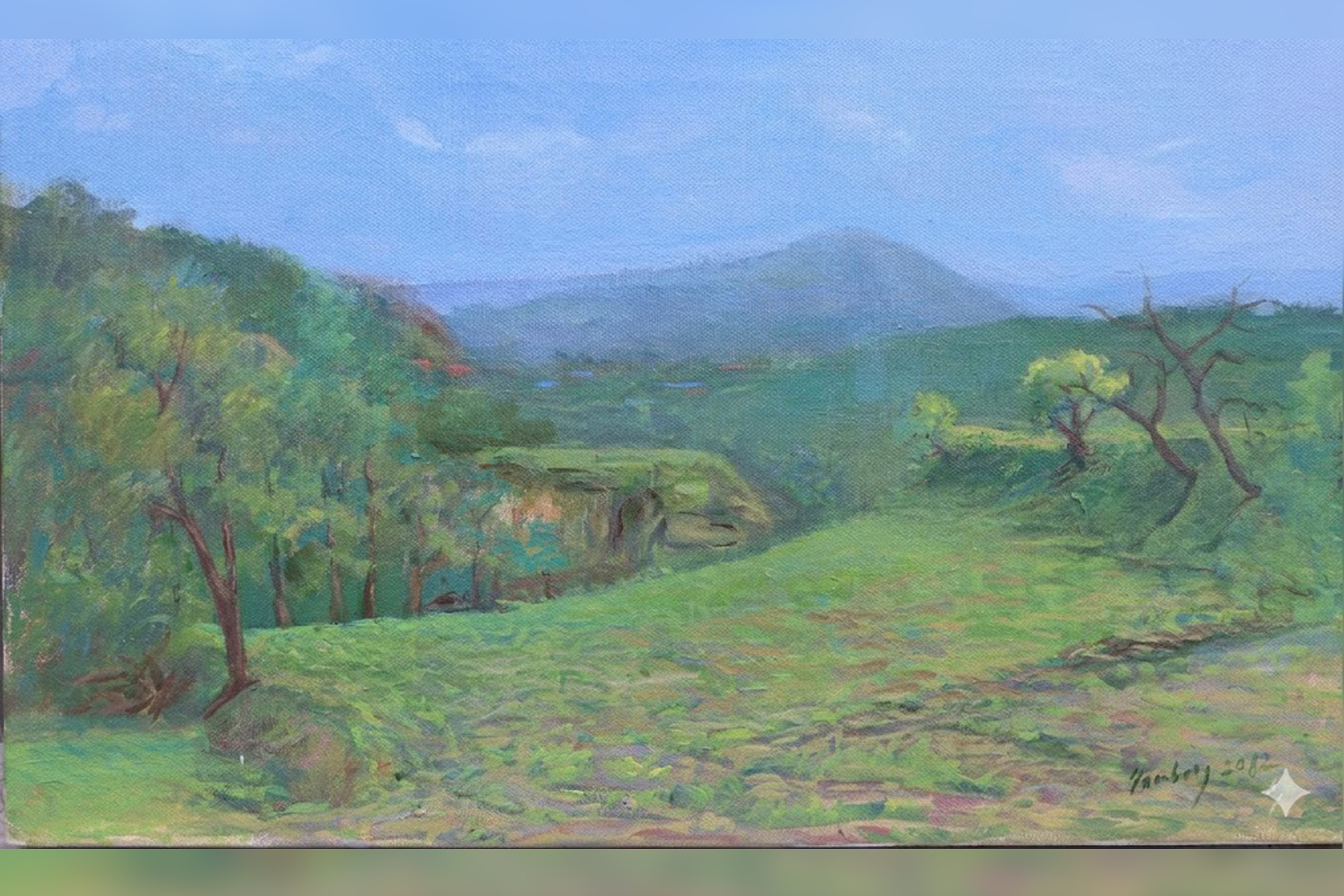
In contrast to the conceptual and socially engaged works presented in the exhibition, Yambang Thapa Magar turns his gaze towards the quiet grandeur of nature. Working primarily with acrylics, he captures the idyllic beauty of Nepal’s countryside with remarkable sensitivity and immediacy. His paintings are not mere reproductions of landscapes; rather, they are emotional reconstructions of places imbued with memory and affection. The lush greens, receding hills, and expansive skies unfold with a rhythm that draws viewers into the scene, allowing them to momentarily inhabit the serenity of rural life. Yet beneath their apparent tranquility lies a subtle nostalgia-a longing for landscapes that are increasingly threatened by rapid urbanization and environmental degradation. The strength of Yambang’s work lies in this delicate balance between celebration and lamentation, where beauty becomes a quiet act of preservation.
Mukta Rani Singh, another compelling voice in the exhibition, delves into the realm of memory and heritage through her work entitled Golden Vestiges. Constructed as a collage of traditional motifs, the painting becomes a visual archive of cultural fragments gathered across time. The composition is anchored by an enigmatic idol positioned at the center, commanding both reverence and curiosity. Rather than functioning as a mere religious symbol, the idol appears as a guardian of memories-a silent witness to the passage of generations. The earthy brown background evokes antiquity and permanence, while the golden-yellow motifs shimmer like remnants of a glorious past struggling to retain their luminosity in the present. Singh’s work thus transcends decorative aesthetics and enters the domain of cultural inquiry, questioning how traditions endure, transform, and survive in an age of relentless change.
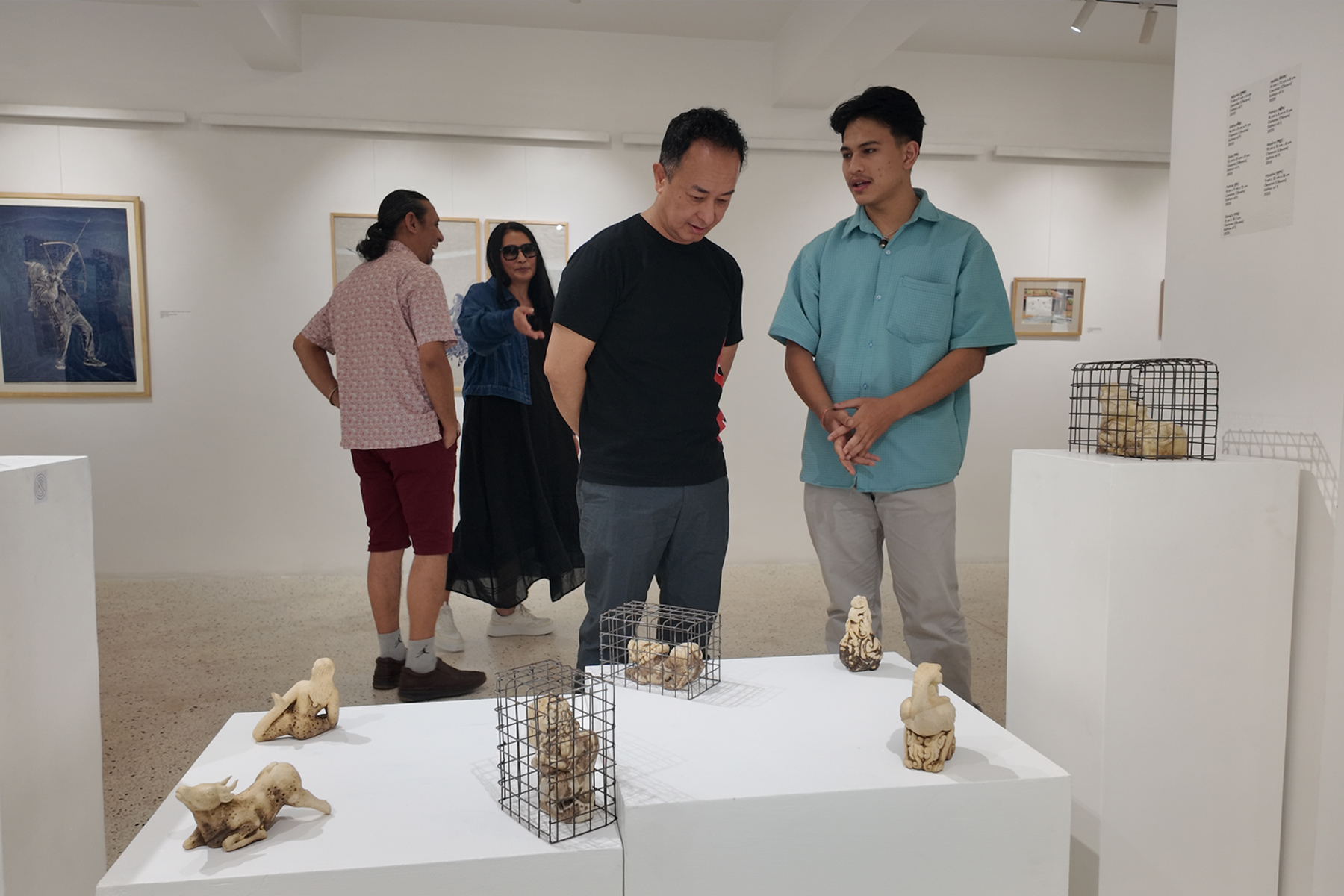
Rudrakshya Man Pradhan brings an altogether different sensibility to the exhibition through his ceramic sculptures, which revive ancient motifs such as rats, elephants, Vetalas, and ducks. Rooted in mythology and folk traditions, these forms are rendered with exquisite craftsmanship and a playful yet poignant imagination. However, the most striking aspect of his work lies in his decision to place some of these creatures within cages. This gesture immediately transforms the sculptures from objects of beauty into powerful metaphors. The cages evoke not only physical confinement but also the symbolic imprisonment imposed by modern society-where nature is commodified, traditions are curated for consumption, and living beings are stripped of agency. Through these works, Pradhan critiques the hypocrisy of humanity, exposing how civilization often prides itself on progress while simultaneously alienating itself from the very ecosystems and traditions that sustain it. The contrast between the organic vitality of the creatures and the rigidity of their enclosures creates a profound tension, making his works aesthetically captivating as well as intellectually provocative.
Bidhyaman Tamang, one of the artist and the visitors at the gallery, reflected, ‘The young artists have skillfully portrayed their artworks in the gallery. Their artworks are really interesting and the minimalistic works that some of the artists have done really impacted me. I wish all these talented artists would come up with their extraordinary works in the future as well.’

Rahul Yakami, on the other hand, invites viewers into an introspective and dreamlike universe. Employing the aquatint technique, he creates ethereal images that seem to hover between reality and imagination. His works are imbued with a childlike wonder-a fascination with stars, wishes, and the vast unknown of outer space. Yet beneath this whimsical surface lies a deeper reflection on human aspirations. The recurring motifs of shooting stars and celestial journeys become metaphors for hope itself: fragile, elusive, and yet endlessly pursued. Yakami’s prints do not provide definitive answers; rather, they inhabit the liminal space between dreams and reality, where longing becomes a form of resistance against the limitations of everyday life. The soft tonal gradations achieved through aquatint lend his works a poetic ambiguity, allowing viewers to project their own desires and memories onto the images.
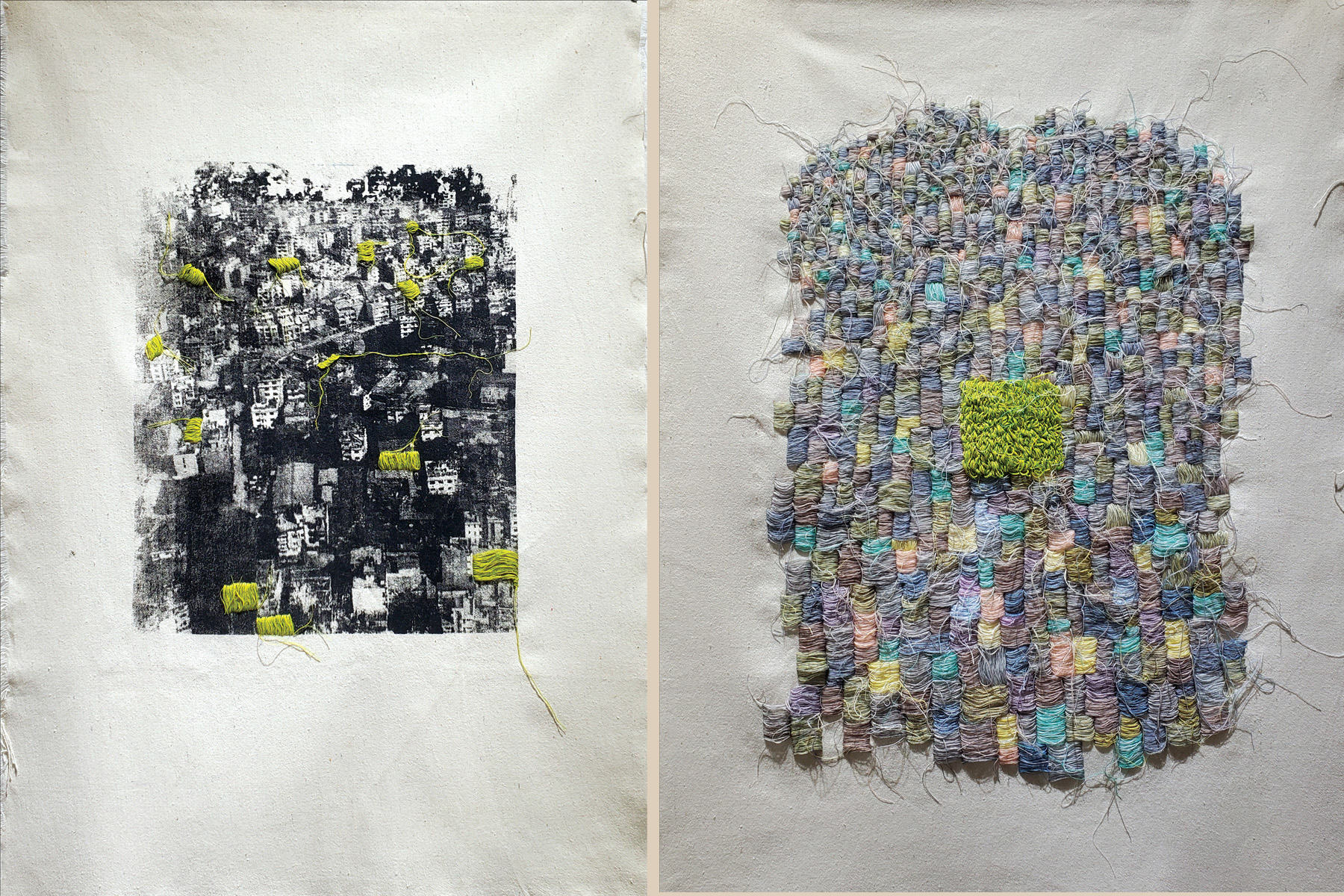
Equally innovative is the work of Amisha Maharjan, who employs punch needling on canvas to construct landscapes that blur the boundaries between textile art and fine art. In a field historically dominated by painting and sculpture, her practice challenges conventional hierarchies of artistic mediums. Through painstaking embroidery, she assembles fragments of cities, fields, and natural forms, allowing textures to emerge as carriers of meaning. The tactile quality of her works invites viewers to look closely, to appreciate the labor embedded in each stitch and knot. There is an intriguing paradox in her practice: soft threads are used to depict rigid urban structures, while the rawness of the canvas evokes the unfinished nature of modern existence. In the rapidly evolving landscape of Nepali contemporary art, Maharjan’s work offers a refreshing perspective, demonstrating how traditional craft techniques can be reimagined to engage with contemporary artistic discourse.
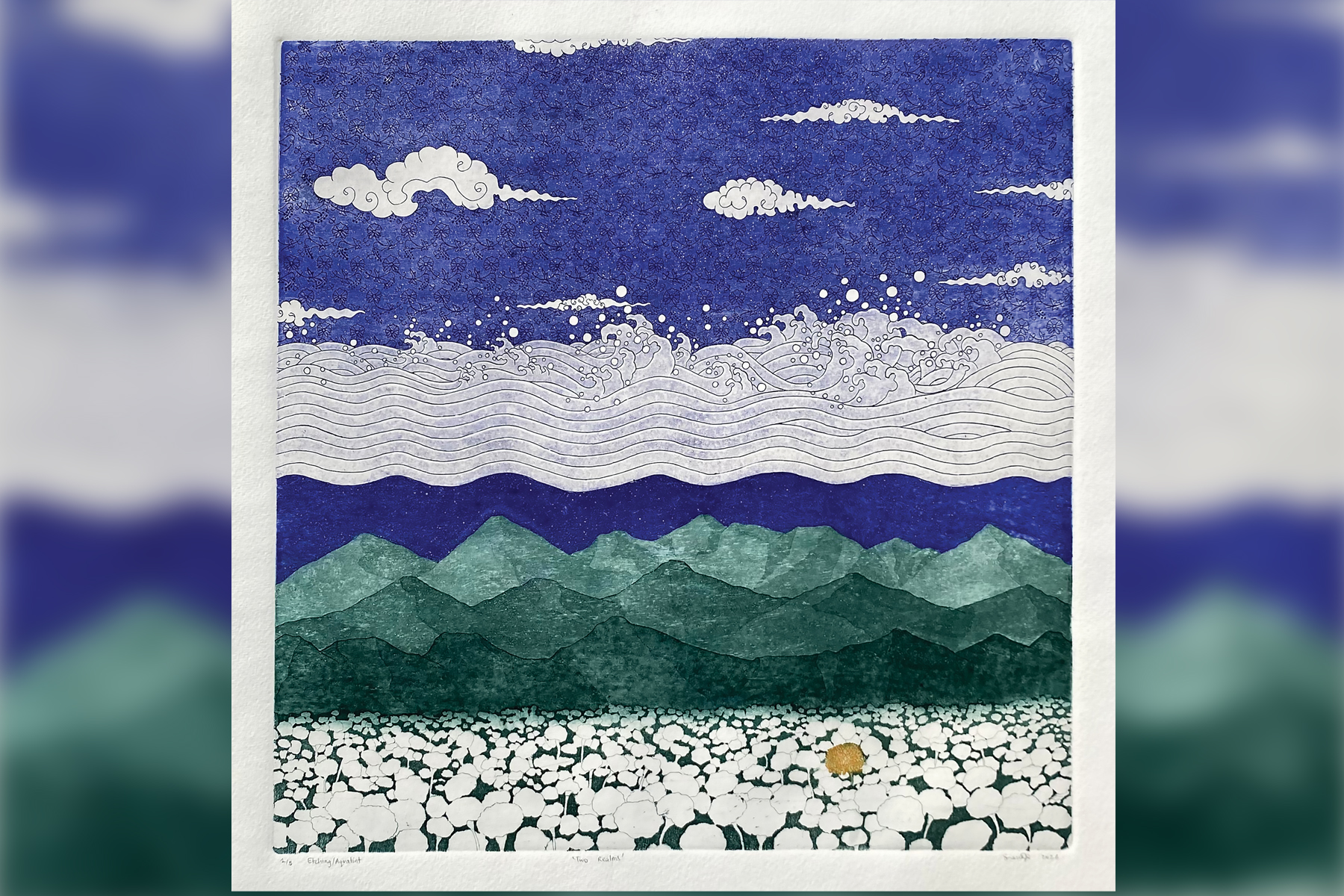
Smarika Maharjan’s etchings and aquatints are perhaps among the most intimate works in the exhibition. Minimalist in form yet profound in emotional resonance, her prints speak softly but linger long after one has left them behind. A small flower, delicately rendered in a work titled Remembering You, becomes a vessel of memory and longing. The sparseness of the composition is not an absence but a deliberate strategy-an invitation for viewers to fill the silence with their own recollections and emotions. In an era saturated with images and visual noise, Smarika’s restraint feels radical. Her works remind us that art need not shout to be heard; sometimes the quietest gestures carry the deepest meanings.
One of the visitors at the exhibition, Jupiter Pradhan reflected, ‘The artworks created by these young artists have covered diverse themes. I find them really fascinating. The government should also intervene in certain ways to make the art-scene more accessible in the public domain.’
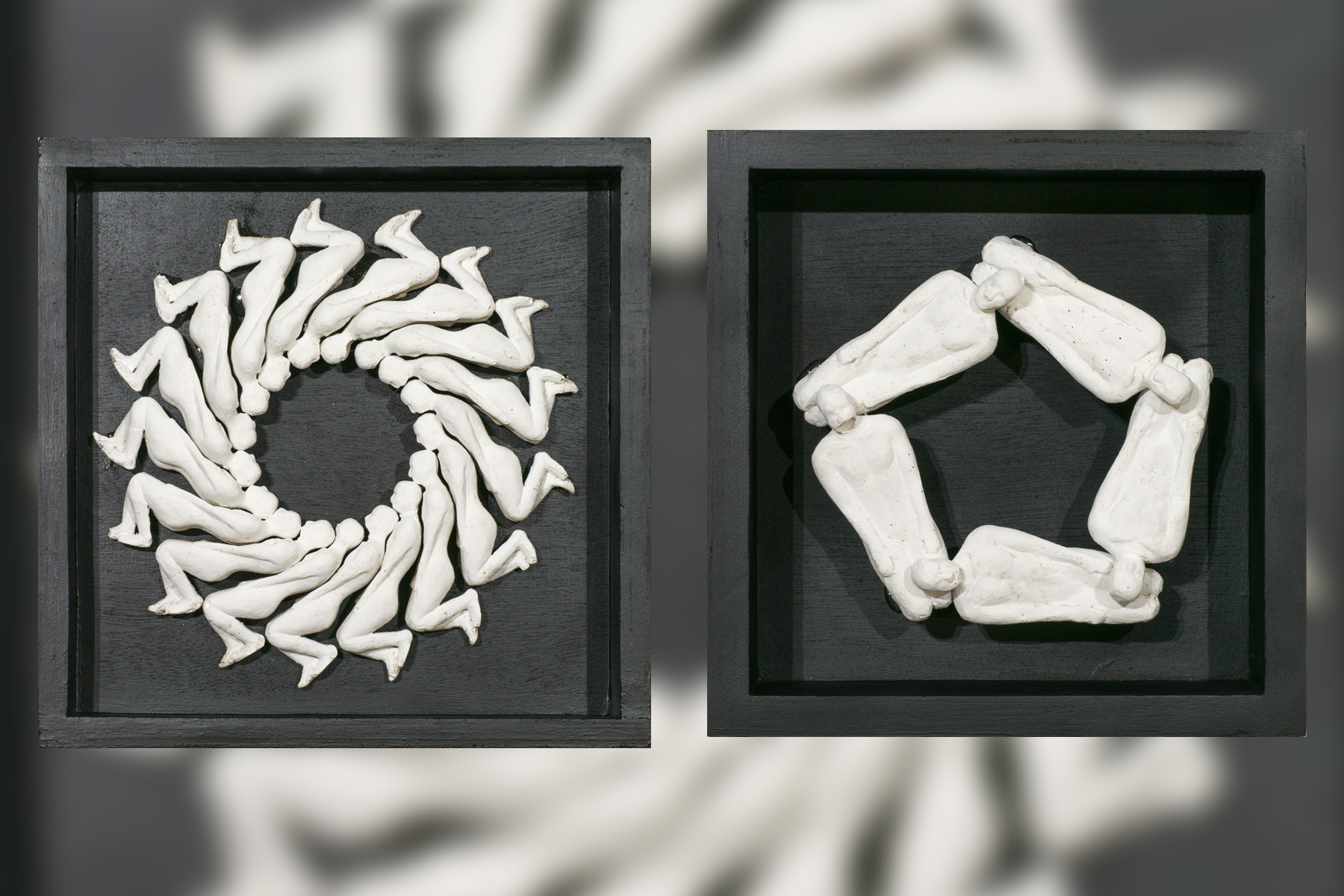
Lijen Maharjan explores the interconnectedness of humanity through compositions built around loops of human figures. Arranged with remarkable symmetry and rhythmic precision, these figures seem to dance in perpetual harmony, each dependent on the other for balance and continuity. The circularity of the forms suggests cycles of life, relationships, and collective existence. Yet the works are not merely decorative explorations of pattern. They raise important questions about individuality and community: Where does the self end and the collective begin? Can harmony exist without sacrifice? By transforming human bodies into interconnected motifs, Lijen creates images that are at once visually mesmerizing and philosophically engaging.
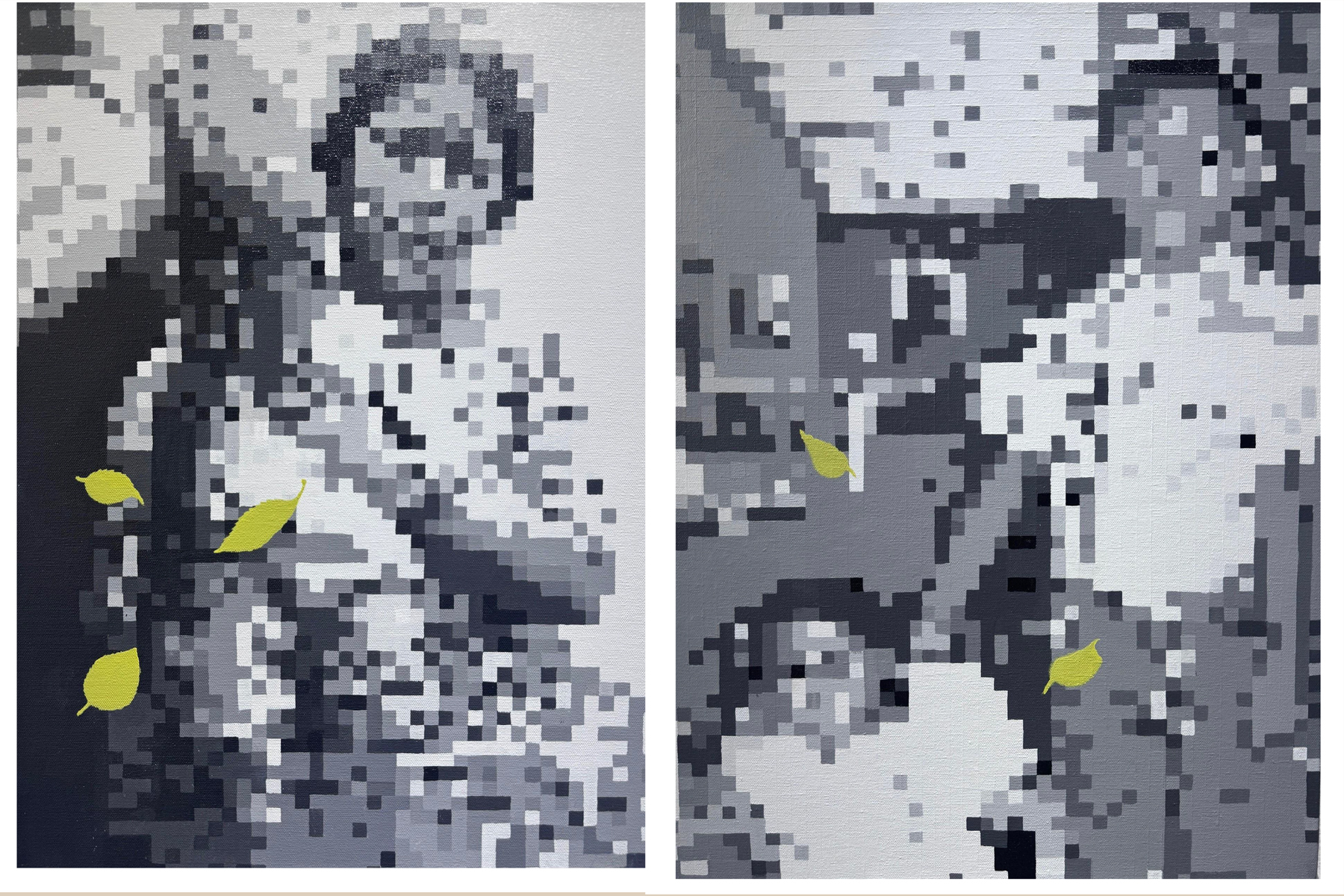
Anil Nepali, meanwhile, adopts a distinctly personal and nostalgic visual language in his series Closer to the Past. Through childlike figures engaged in playful interaction, he revisits memories that hover on the threshold of innocence and introspection. His restrained monochromatic palette lends the works an almost dreamlike quality, as though the scenes are fading recollections retrieved from the depths of consciousness. At certain moments, his use of pointillist techniques introduces an intriguing tension between fragmentation and unity—the image dissolves into countless dots only to reassemble itself before the viewer’s eyes. This oscillation mirrors the nature of memory itself: fragmented, elusive, and yet emotionally coherent. Nepali’s works are deceptively simple; beneath their playful surface lies a profound meditation on time, nostalgia, and the human desire to remain connected to the fleeting moments that shape our identities.

Leave A Comment