

Before an artwork acquires a body, it exists as a thought. It begins quietly-in memory, imagination, observation, experience, or perhaps in a question that refuses to disappear. Long before color touches canvas, metal takes form, wood is carved, or an installation occupies a gallery space, the artwork has already begun its existence within the mind of the artist.
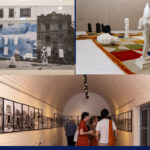
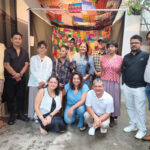
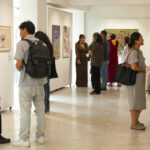
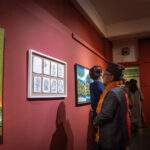
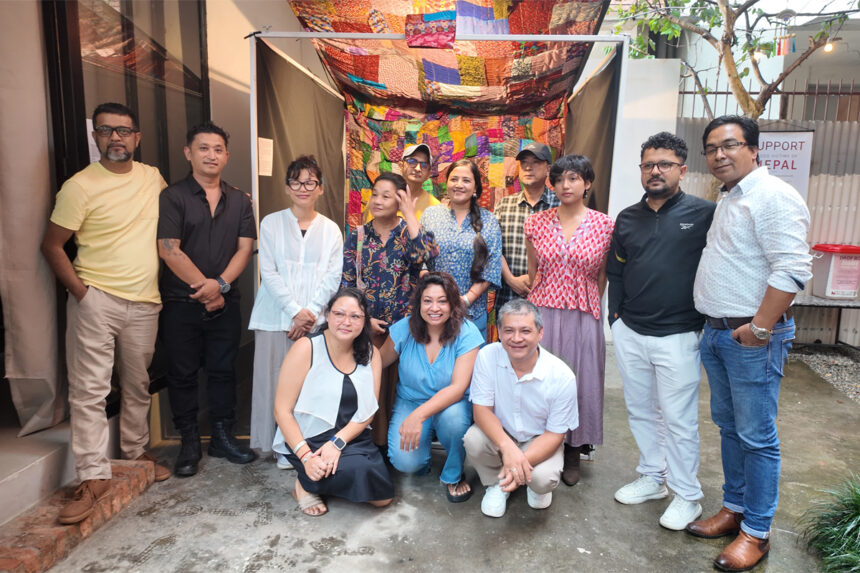
It is this intimate passage from thought to material that lies at the heart of Made in Mind, the third edition of an exhibition series currently on view at MCube Gallery, Chakupat. Curated by artist and gallery director Manish Lal Shrestha, the exhibition proposes a fascinating reversal of the conventional way of encountering art: rather than beginning with the finished object, it invites viewers to consider the ideas, tensions, memories and contemplation from which the works emerge.
Here, the mind is not merely the place where art originates. It becomes the exhibition’s conceptual landscape.
Bringing together works by 15 veteran and contemporary artists of Nepal, Made in Mind III: Narratives of the Contemporary presents a diverse constellation of practices. Sculpture, painting, installation, performance, ceramics, etching and video converge, yet the works remain distinctly individual. What connects them is not a uniform aesthetic but a shared interest in the invisible processes through which thoughts become forms.
The exhibition also carries a social dimension. Nepal has recently witnessed the devastating consequences of floods, leaving lives disrupted, homes destroyed and communities vulnerable. In response, the organizers have expressed their intention to donate a portion of the sales from the exhibition to flood victims. Thus, the movement from mind to material extends beyond artistic expression into an act of collective responsibility.
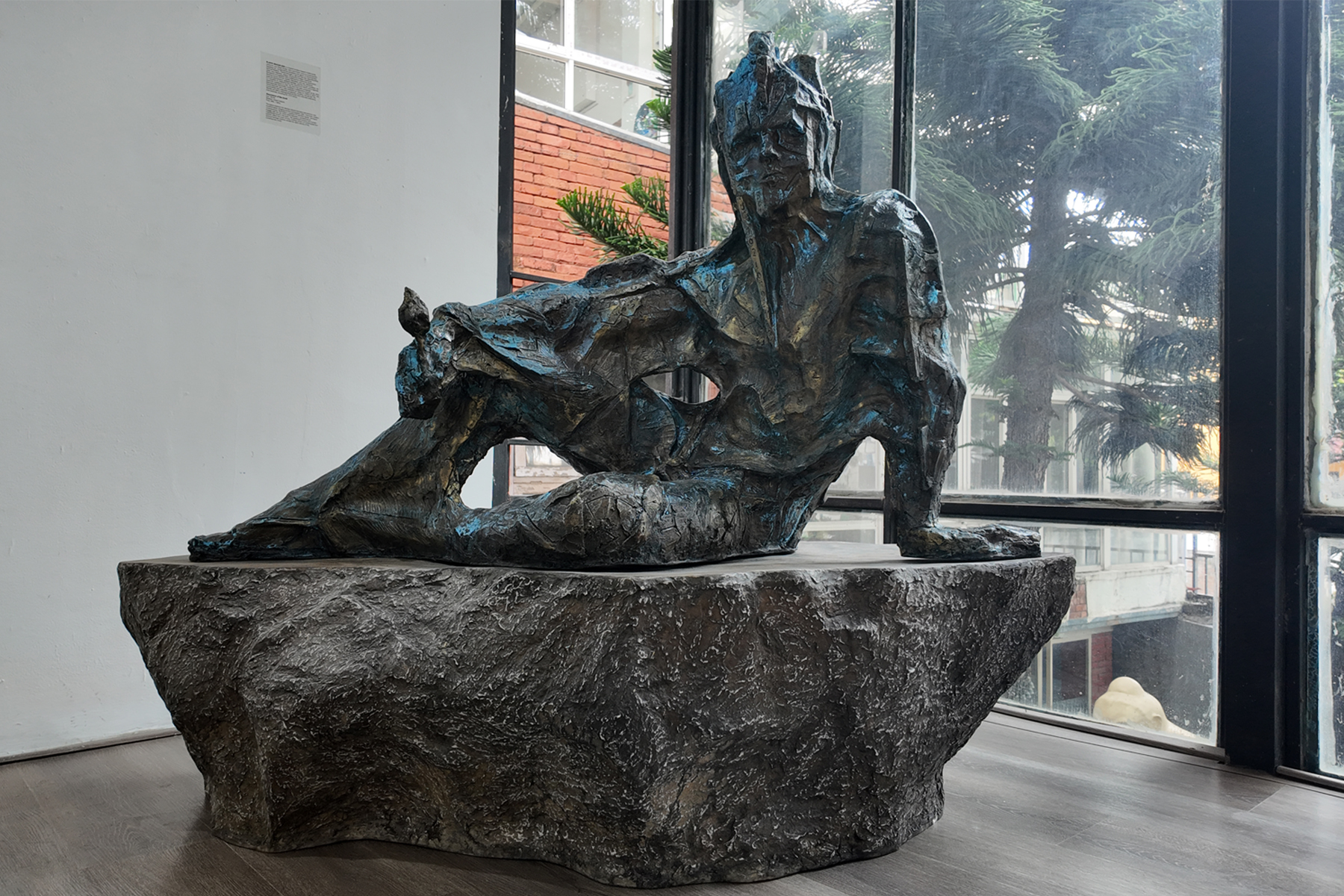
Among the works, Bijay Maharjan’s Resonance of the Earth immediately draws attention through his characteristic sculptural language. The work explores the fragile relationship between permanence and impermanence, between what survives and what inevitably transforms. Ancient iconographical references appear to encounter a fractured contemporary consciousness. Its watchful posture, weathered textures and metallic patinas evoke the scars accumulated through time, suggesting that material itself can become a record of history.
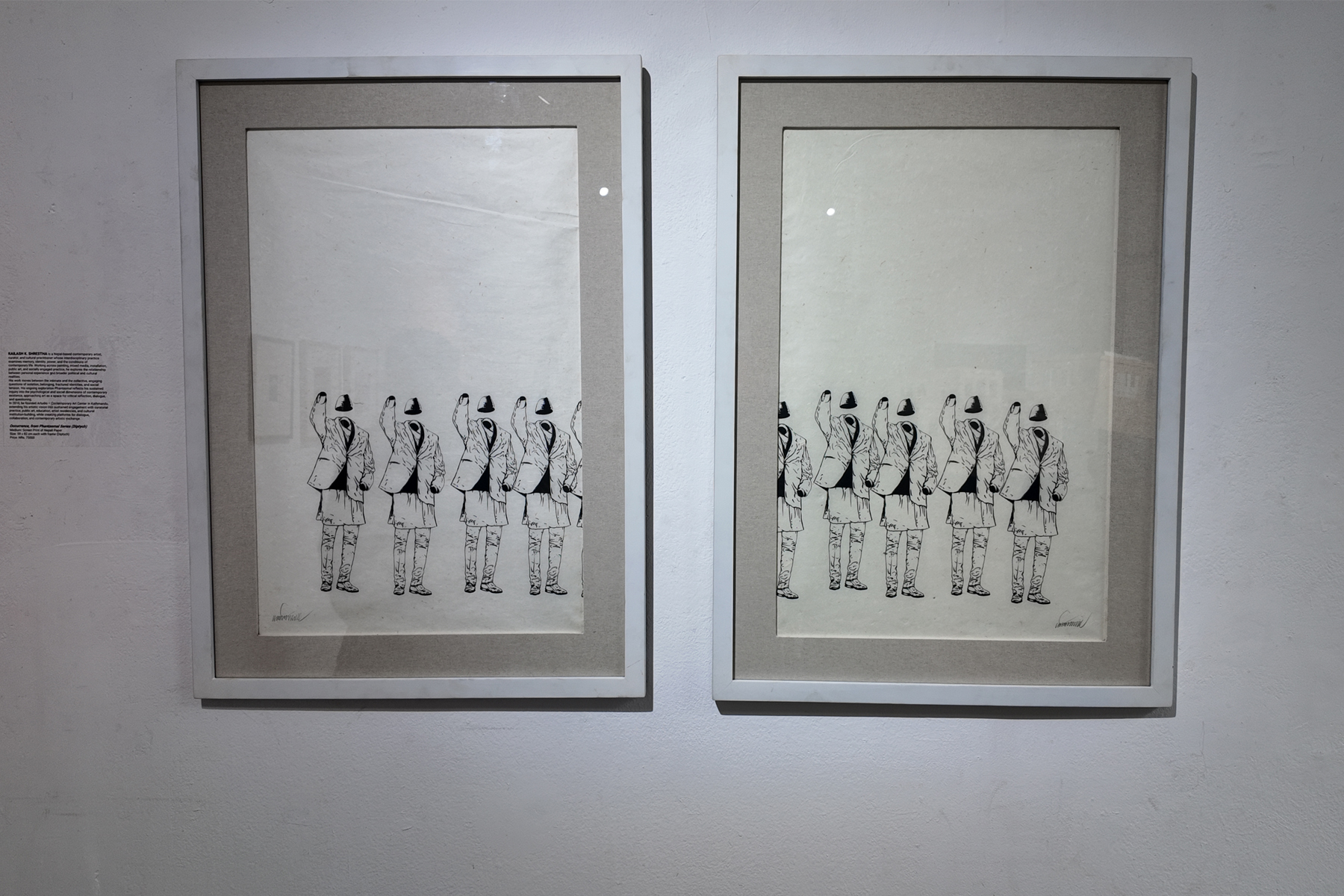
In Kailash K. Shrestha’s Occurrence, from Phantasmal Series, the human figure appears without a face. The facelessness becomes significant precisely because the figure remains recognizably human. Despite humanity’s extraordinary achievements, the work suggests, there remains an interior void that accomplishment alone cannot fill.
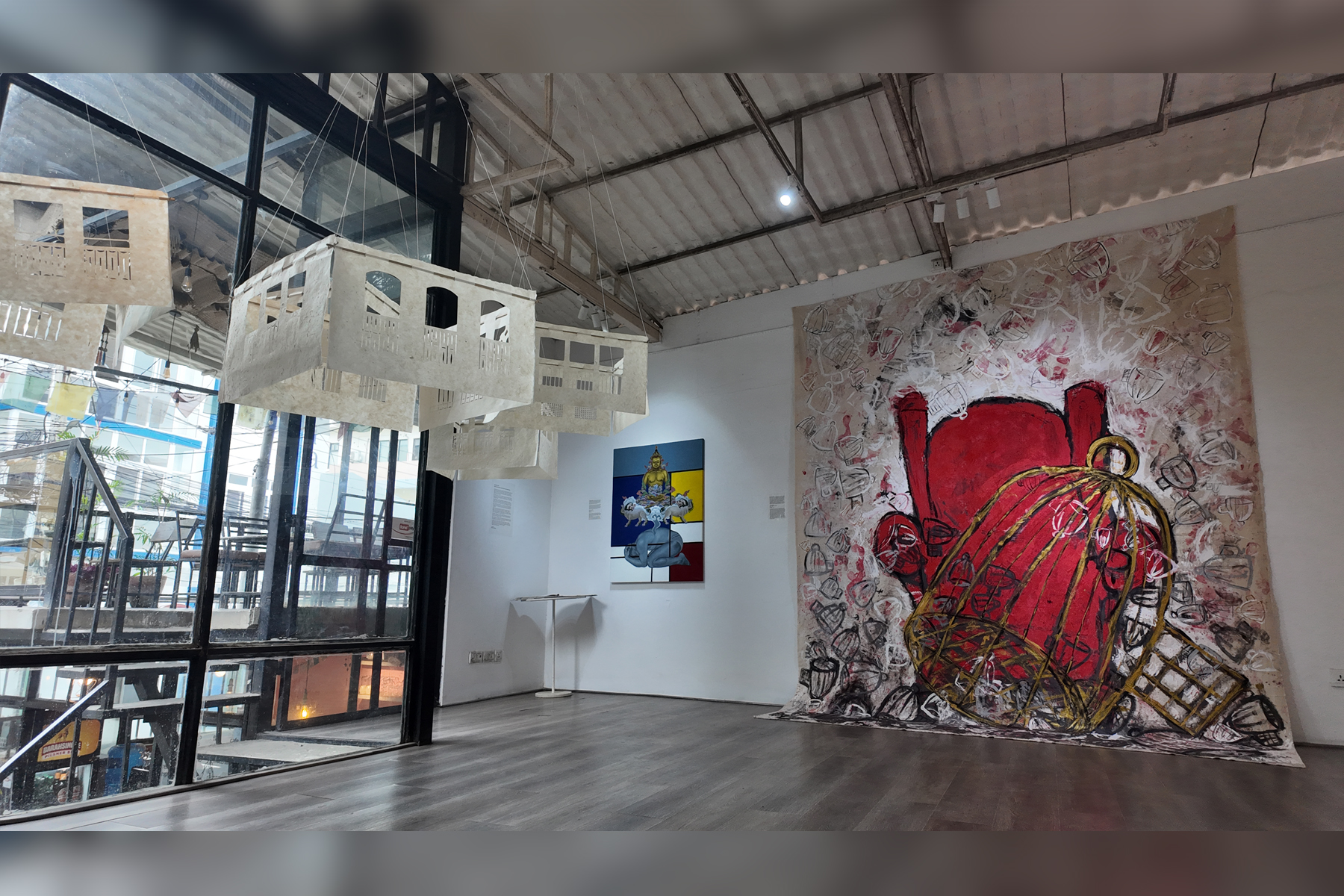
A different psychological territory emerges in Kapil Mani Dixit’s monumental The Open Cage, measuring 13 by 7 feet. The painting examines the paradox of freedom: what does it mean to have an open door and yet remain inside?
At the centre, the large red sofa evokes power, authority and the social structures that influence individual identity and choice. Around it, open cages become metaphors for emotions, desires, thoughts and aspects of the self that remain imprisoned despite the absence of physical barriers. Fear of judgement, social expectations, cultural conventions and the pressure to conform become invisible walls. Through rough lines, layered forms and pronounced contrasts, Dixit gives visual shape to confusion, vulnerability and emotional tension. The work ultimately asks whether physical freedom is enough when the limitations we experience have already taken root within us.
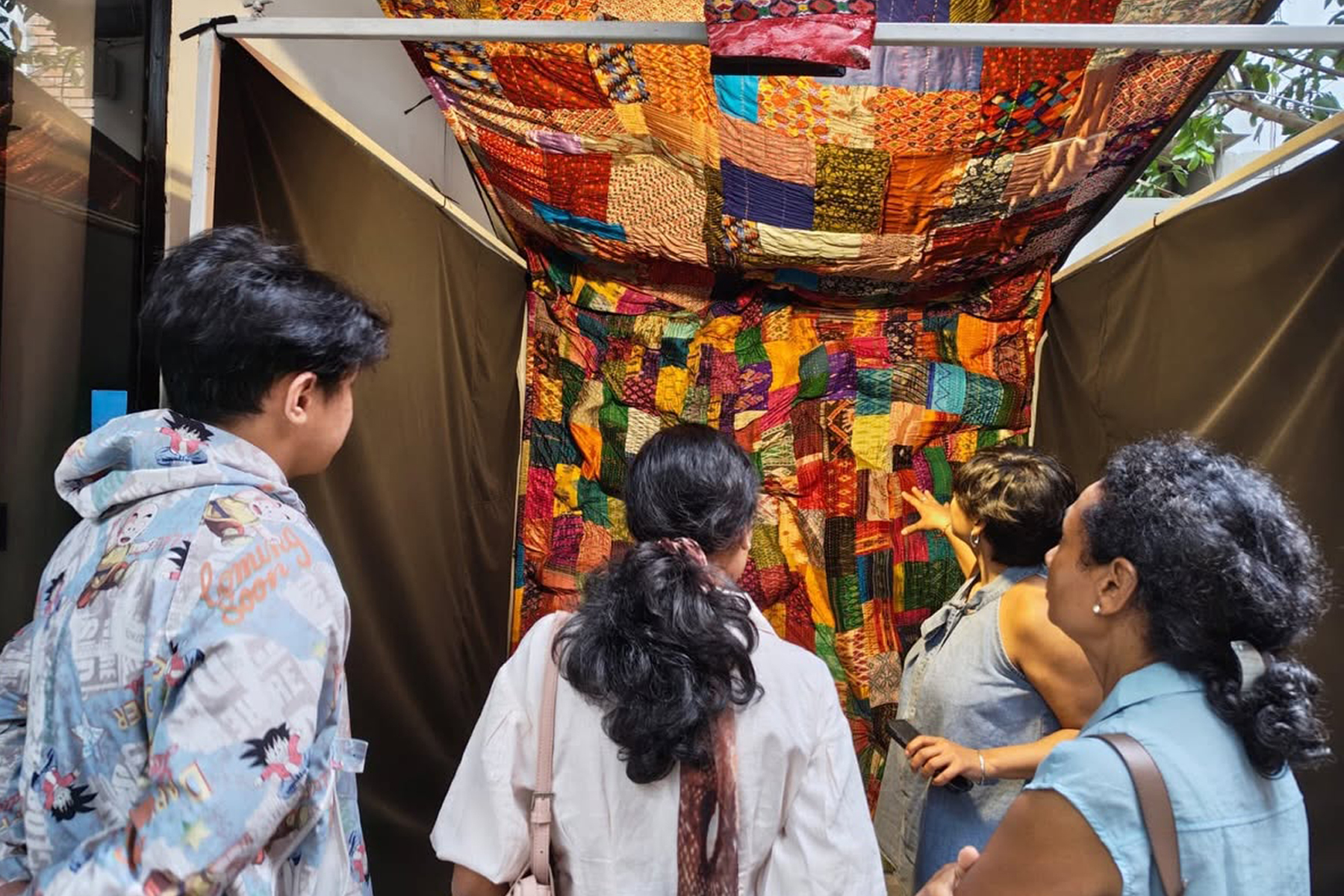
Nirvita Shakya’s Somethingness takes the viewer into another kind of psychological space. Constructed through clothing, the installation begins with the imagined experience of being trapped inside a cave without an opening. Then, unexpectedly, a hole appears-a possibility of escape, discovery and encounter with the outside world. Yet an invisible rope remains attached, carrying the possibility of being pulled back into the darkness.
The work becomes an existential meditation on the brief and uncertain space between nothingness and somethingness. There is no map or predetermined choreography for existence. Instead, one must improvise one’s own movements amid absurdity, injustice, joy, sorrow and wonder. Somethingness brings barren darkness into dialogue with the breathing colours and light of the world outside, placing the viewer precisely at the threshold between the two.
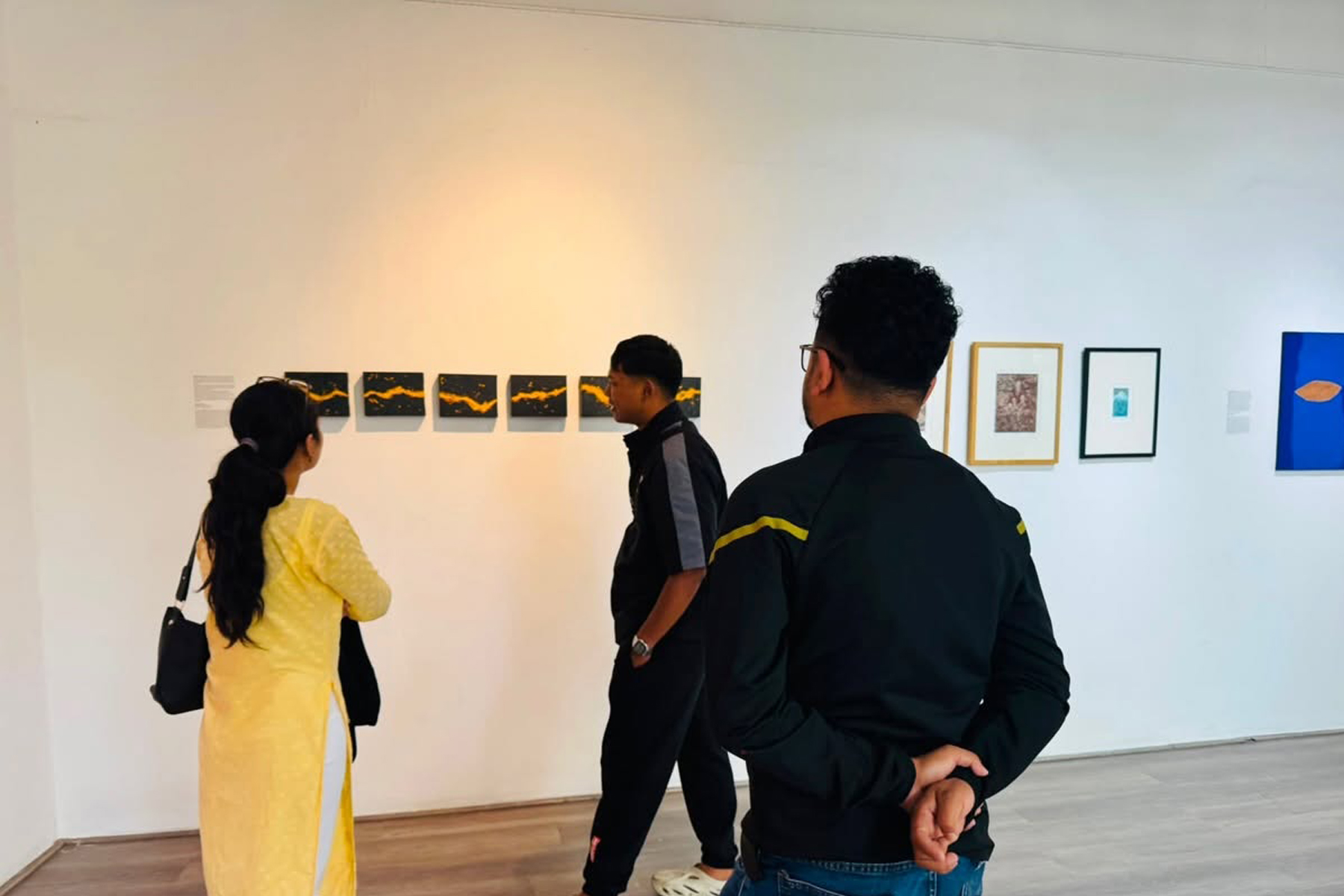
In Roshan Bhandari’s Mind and Gold, transformation takes on a quieter, meditative character. Drawing upon the ancient metaphor of the goldsmith’s fire, Bhandari considers the mind as raw material. Ego, anger, attachment, fear and illusion become impurities that obscure an inner clarity. Meditation, in this conception, functions like a refining fire-not destructive, but transformative.
Gold therefore becomes more than a precious material. It becomes a metaphor for an inner radiance that may already exist within us, waiting to be revealed. The work gently asks what remains when the noise of the mind begins to settle. Beneath accumulated fears and attachments, perhaps, lies a quiet state of being.
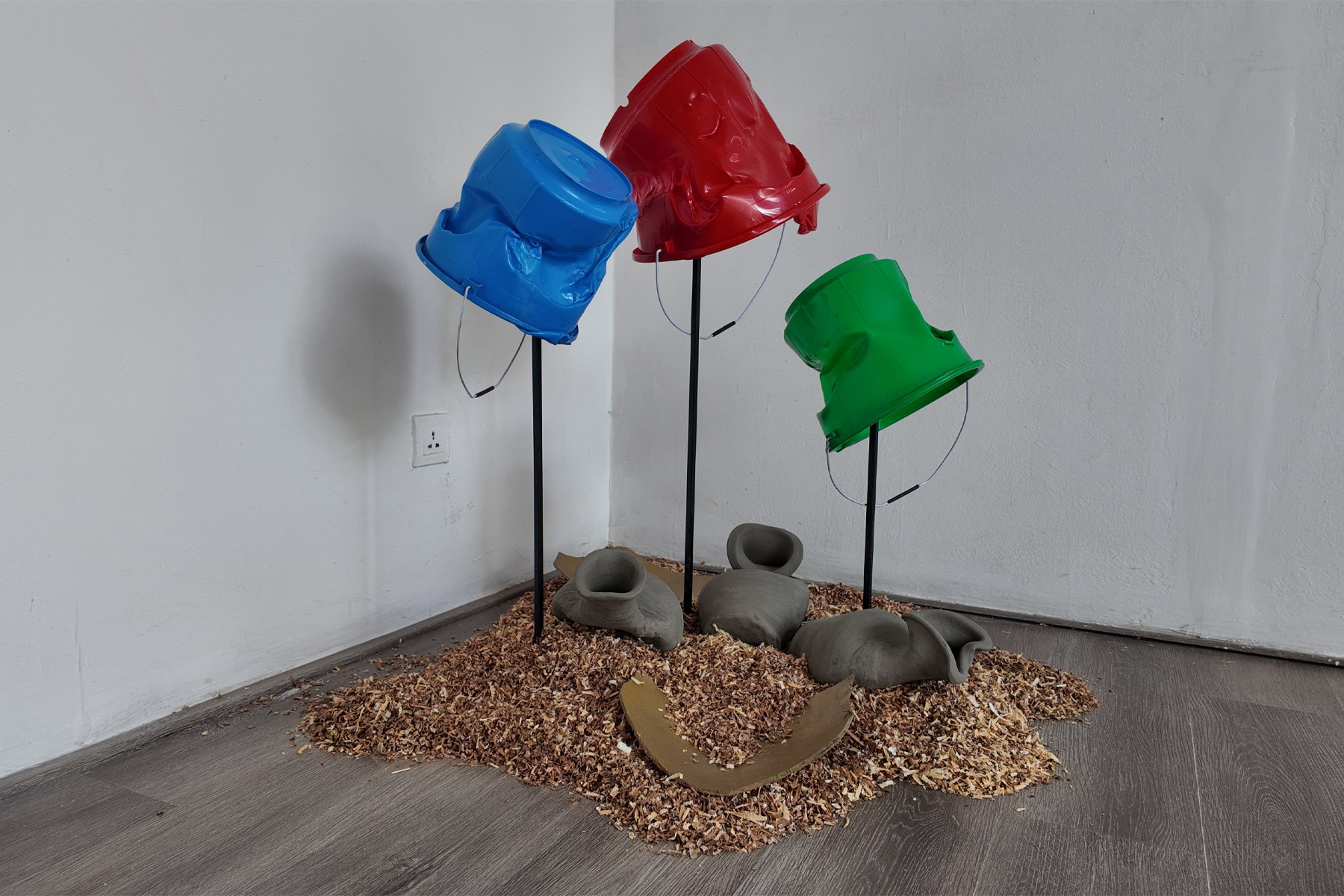
Roshan Mishra’s Deforming Thoughts, Part of 365 Rotation turns inward toward the instability of ideas themselves. Thoughts appear, develop, transform and sometimes disappear before becoming complete. Some remain as aspirations, while others dissolve almost immediately. The artist is interested not only in what thoughts become, but also in their unfinished existence.
The forms in the work appear caught between emergence and disappearance. They resemble thoughts in motion—changing direction, colliding with one another, becoming distorted and gradually fading. Yet the work also questions the very ownership of thought. What we believe to be ours is inevitably shaped by what we see, hear and experience. Culture, memory and the people around us enter the mind and are transformed there. The resulting forms therefore become visible traces of an invisible process: thought continually becoming something else.
Roshan Pradhan’s Sacred Contradiction explores another tension: the distance between spiritual transcendence and the weight of human existence. A serene sacred presence rises above a fragmented world, while a crouching human figure carries the burdens-both visible and invisible-of earthly life. Guardian lions suggest strength and protection, while flowing forms connect the human body to a higher consciousness.
The painting’s fields of blue, yellow, white and red correspond to different psychological and emotional states-stillness, awakening, purity and vitality. Through the encounter between sacred symbolism and contemporary geometry, Pradhan evokes the continuous human movement between suffering, transformation and the possibility of inner liberation.
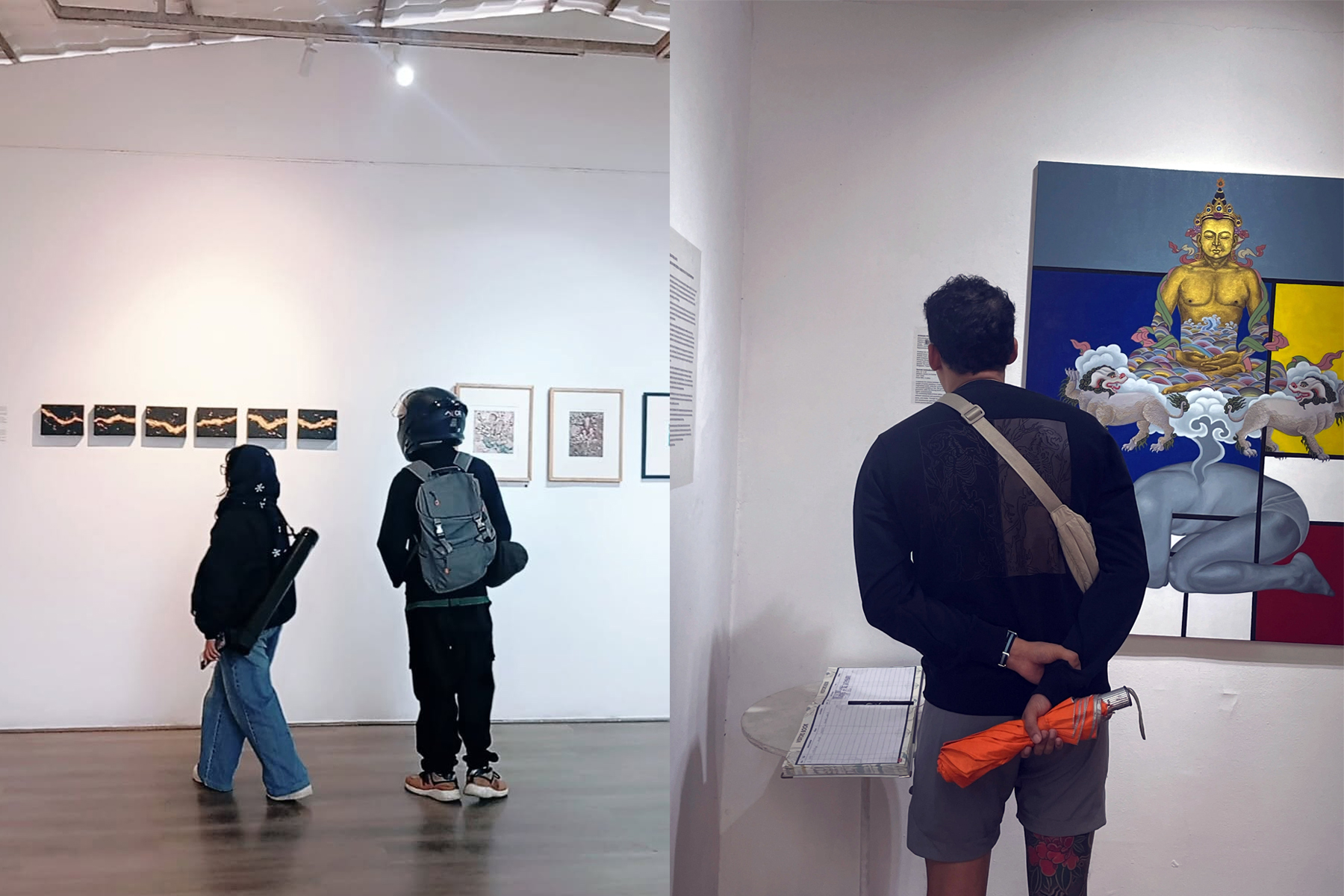
During the opening, Samana Nachhiring Rai extended the exhibition beyond static objects through her performance From Khola to River. The performance carried an ecological message: what human beings discard into rivers does not simply disappear. There may come a time when the river returns what has been given to it. The performance created a moment of heightened awareness, compelling the audience to reconsider its relationship with the natural world.
Water and air become the central elements of Sanjeep Maharjan’s Tatva—Forms of Water and Air. Through sculpture and ceramics, Maharjan explores movement, renewal and cyclical existence. Fluid forms and simplified geometries celebrate grace, freedom and continuity, suggesting a mind that discovers harmony through its encounter with the elemental world.
The work also establishes a dialogue with Nepal’s artistic heritage. Drawing inspiration from ancient and medieval Nepali carving traditions, particularly motifs associated with the water cycle in Torana and Kirtimukha, Maharjan connects celestial water, clouds, rivers and groundwater with a contemporary sculptural vocabulary. In doing so, Tatva brings together natural elements, cultural memory and spiritual imagination.
Memory finds its physical language in Saurganga Darshandhari’s Field of Memory. Through a series of etchings, the artist brings together nature, people, culture and life, drawing attention to the invisible roots that connect them. Lives may change and circumstances may shift, but relationships, memories and connections continue to anchor us. The work is therefore less about what is immediately visible than about the unseen networks that hold experience together.

Sushma Shakya’s Home Sweet Home approaches memory and belonging through architecture. Her works take the shape of houses and incorporate visual references reminiscent of the intricate window panes of Newari architecture. Their simplicity is part of their strength. Familiar architectural forms are transformed into aesthetic objects, allowing the idea of home to emerge simultaneously as structure, memory and cultural inheritance.
The political imagination occupies a prominent place in Manish Lal Shrestha’s Search of Diamond. Working with wood, card and metal, Shrestha examines the desire for a better life against the political realities that shape individual and collective choices.
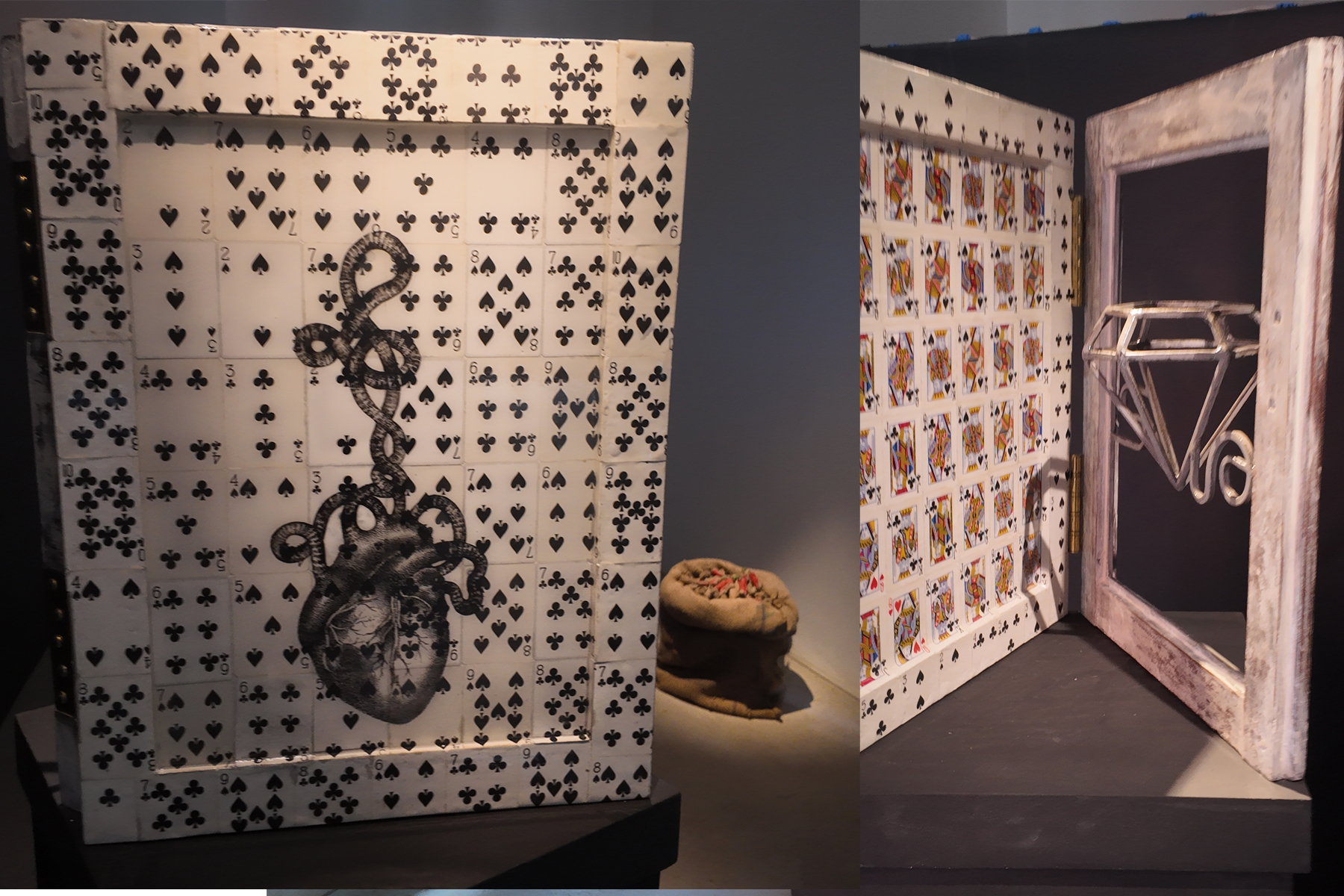
The diamond becomes a metaphor for aspiration-for prosperity, dignity, opportunity and the possibility of a better future. An antique window connects past and present, suggesting that every generation possesses the capacity to look beyond inherited structures. Meanwhile, the King, Queen and Jack, surrounded by the lowest cards, invert the familiar hierarchy of the playing deck. Ordinary people, represented through the numbered cards, become capable of challenging authority and altering the existing balance of power.
The heart and tangled, vein-like ropes bring this political narrative back into the body, evoking connection, pressure, confusion and the desire for freedom. Together, these elements trace a journey from inheritance and aspiration toward awareness, resistance and collective transformation-a search for a diamond that is ultimately imagined not as individual possession, but as a possibility shared by all.
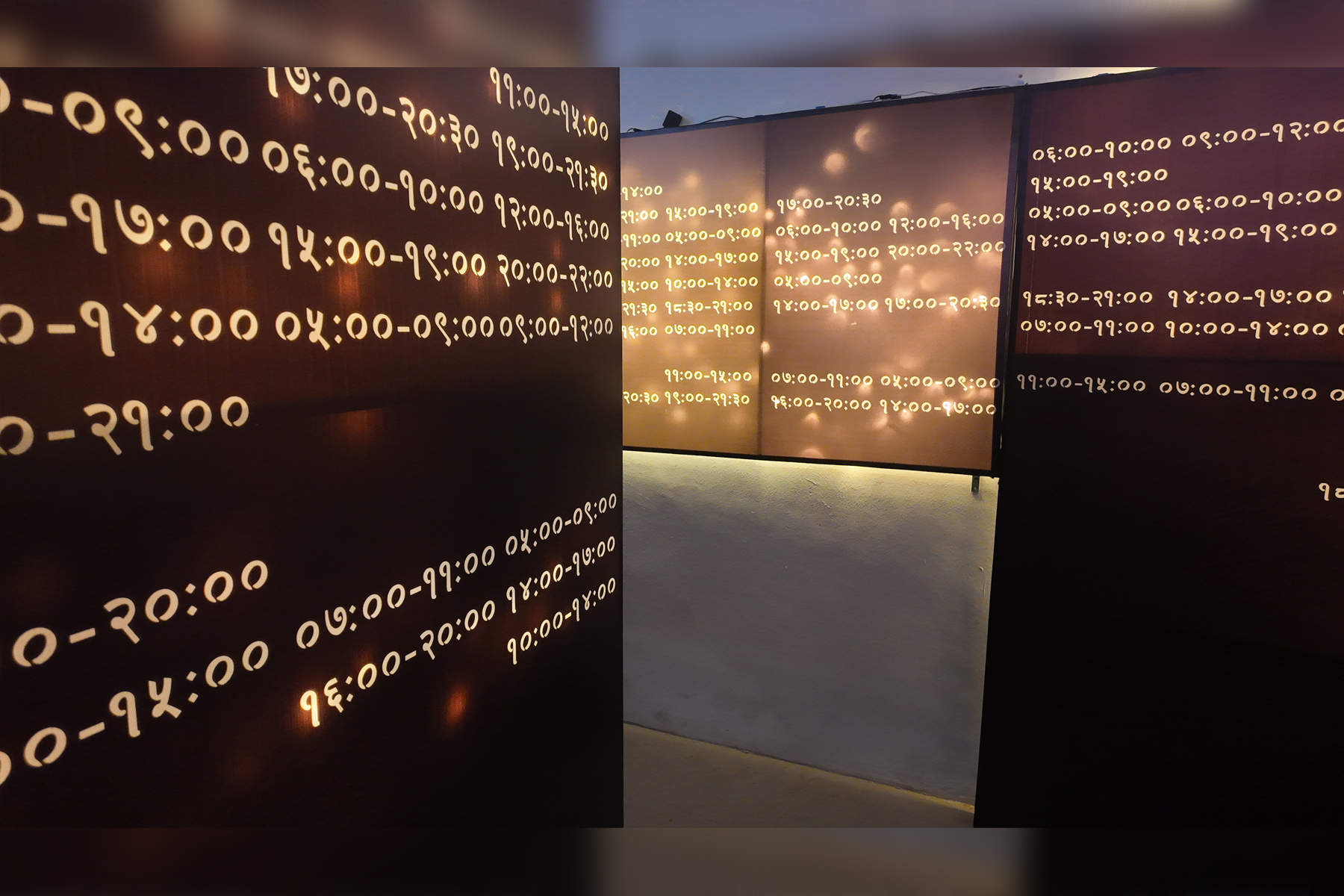
Kaushal Joshi revisits one of Nepal’s more difficult collective memories through his maze-like installation. The work recalls the sensory and emotional exhaustion of the country’s prolonged period of load-shedding between 2006 and 2016. For more than a decade, unpredictable electricity shaped everyday life and work, becoming an enduring memory of a period marked by political instability and systemic failures.
The viewer is invited to move through the installation almost as one would navigate those years themselves-searching for a way through a landscape of uncertainty.
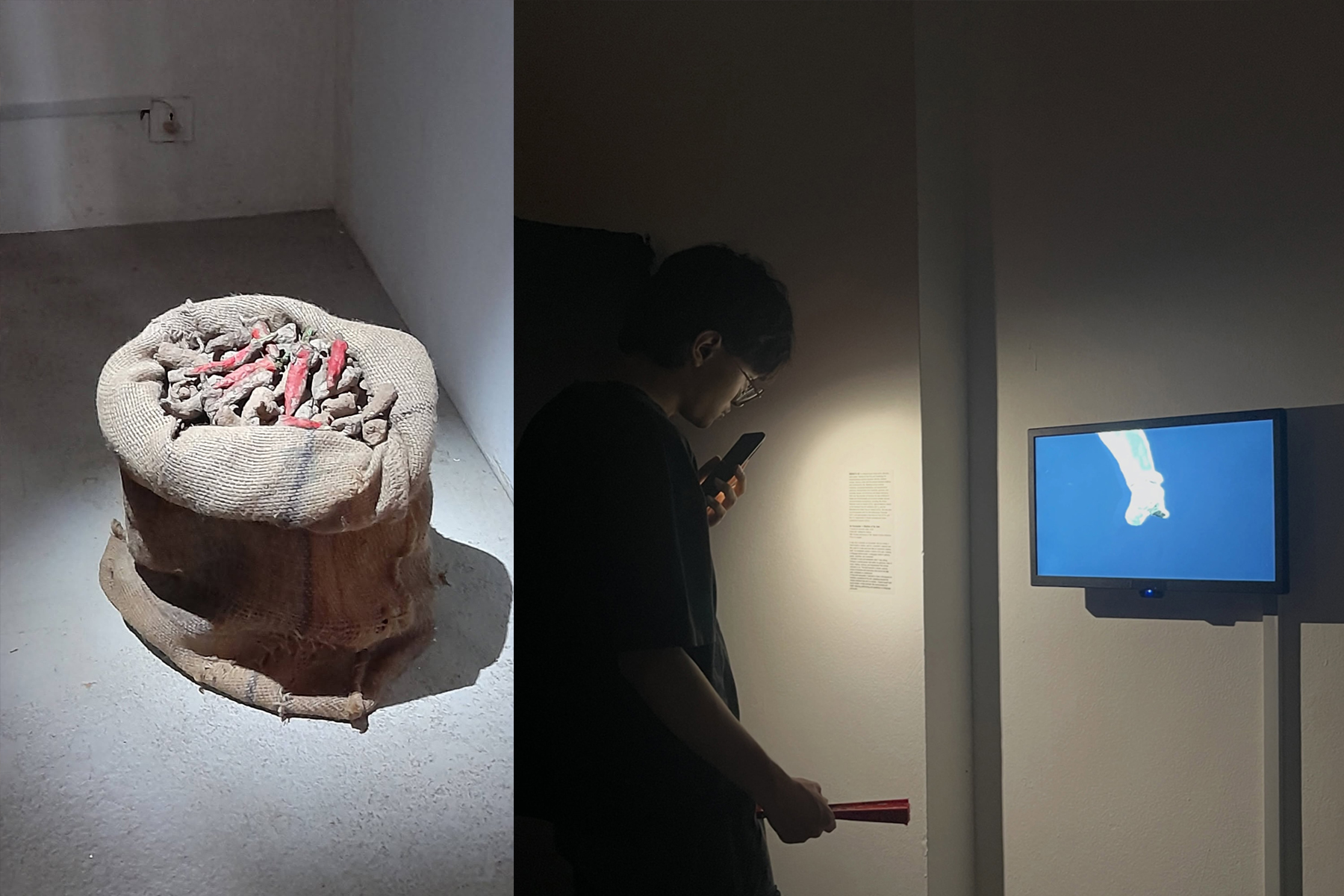
In Bidhata KC’s video installation An Encounter: A Rhythm of Its Own, movement becomes language. The one-minute-and-forty-two-second video presents hands moving across a dark surface. Their gestures—touching, pausing and repeating—appear simple, yet they accumulate meaning through rhythm. KC invites the viewer to consider how even the smallest physical gesture can communicate something beyond words.
Finally, Sarita Dangol’s Made in Mind brings an ecological consciousness into an otherwise intensely introspective exhibition. Using paper-mâché and natural jute bora, Dangol creates chilli forms and arranges them within ordinary sacks. The familiar chilli becomes a recurring visual element, carrying a simple but urgent message about consumption and environmental responsibility.
By contrasting biodegradable materials with the persistent problem of plastic, the work encourages viewers to reconsider everyday choices-particularly the seemingly insignificant decision of what kind of bag to carry when shopping.
Taken together, the works in Made in Mind III reveal the remarkable diversity of contemporary artistic thought in Nepal. There is no single way in which an idea becomes an artwork. A thought may become a sculpture, a faceless figure, a cage, a house, a maze, a gesture, a river, a memory, a diamond or even a chilli.
What matters is the transformation.
The exhibition reminds us that art does not begin with the finished object. It begins somewhere quieter-in contemplation, contradiction, memory, imagination and lived experience. The gallery merely becomes the final meeting place where those invisible beginnings acquire material form and encounter another mind: that of the viewer.
Made in Mind is on view at MCube Gallery, Chakupat, from 4 to 21 September.

Leave A Comment