
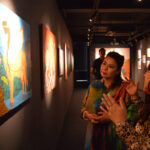

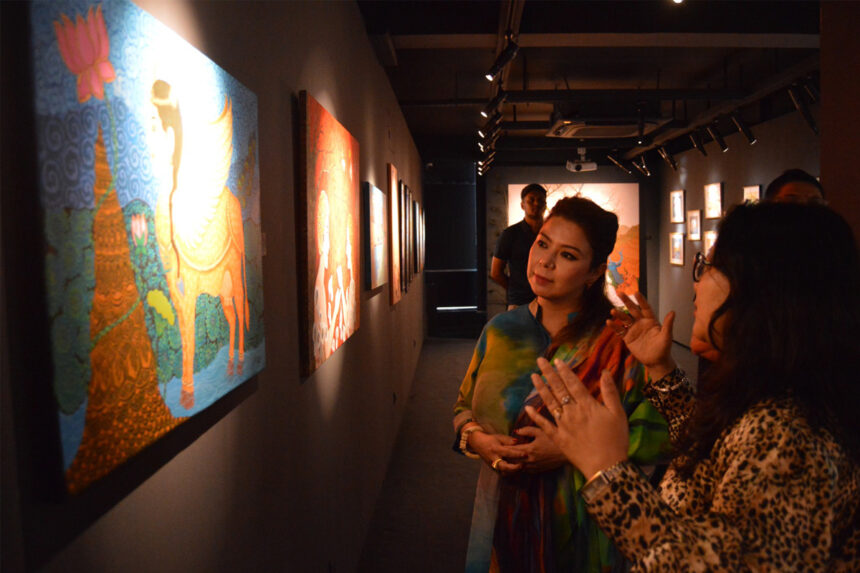
A Sacred Union: Eternal Harmony, a solo exhibition by Nepali visual artist Sabita Dangol, opened at 108 Gallery, Durbar Marg, Kathmandu, on September 4, 2026, and will continue until October 4, 2026.
The exhibition explores themes of love, companionship, spirituality, nature, culture, and coexistence, drawing particular inspiration from the timeless relationship of Radha and Krishna. In the exhibition, Dangol’s familiar use of traditional imagery, ornamental patterns, vibrant colours, and intricate details develops into a contemporary exploration of how human relationships connect with the natural and spiritual world. Ten percent of the sales from the exhibition will be donated to the Prime Minister Disaster Relief Fund.
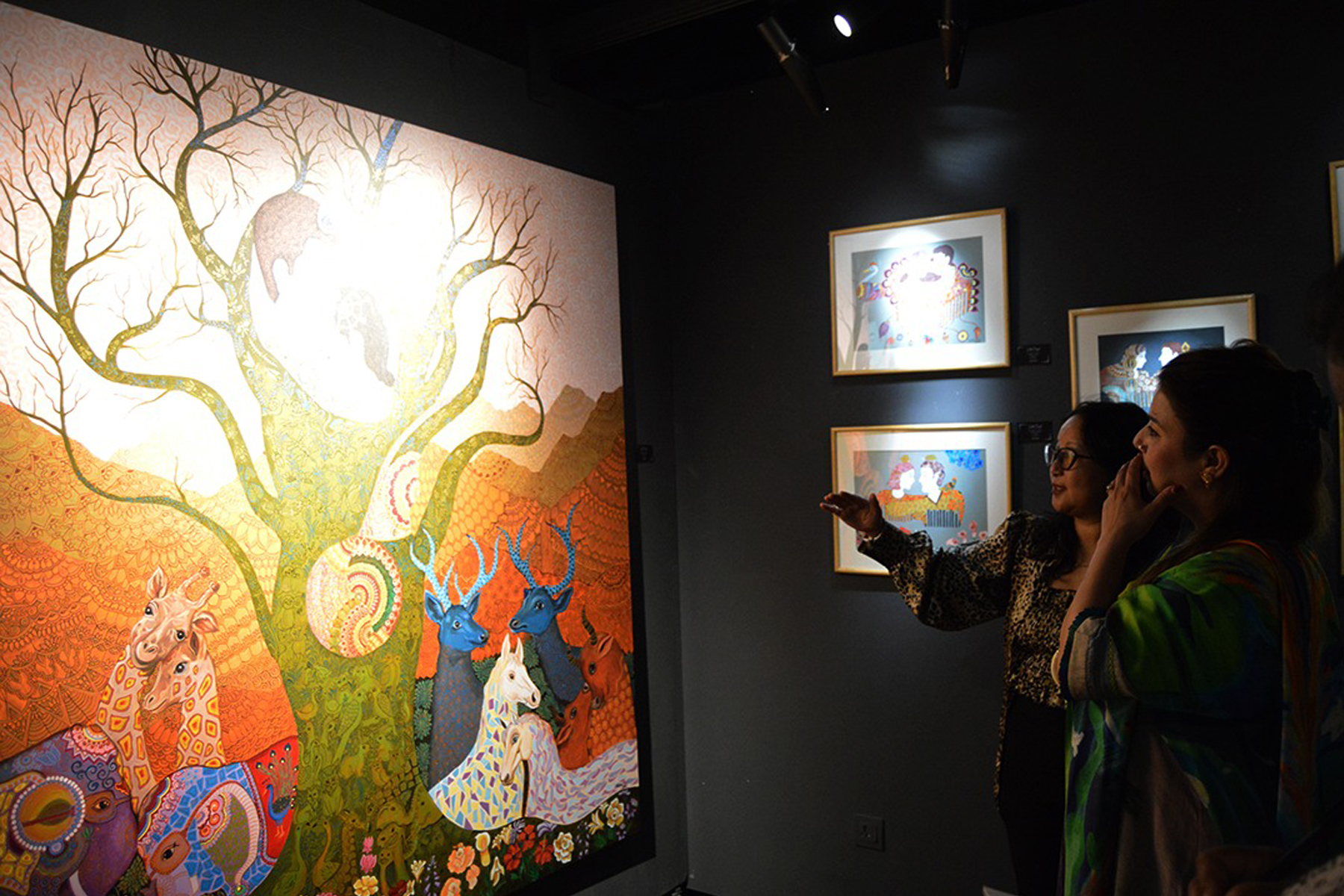
One of the works presents a grand, monumental tree trunk intricately patterned with delicate insects and beetles, which gradually transforms into an embracing couple. The painting evokes a living ecosystem, with the couple appearing as its living heartwood. The roots of the tree, symbolising the roots of love, seem to sustain everything within the composition, while flowers emerging from the branches suggest peace, creativity, and spiritual growth. Their love is not portrayed as static; instead, it appears to revitalise the barren winter tree, bringing life back into its branches. The branches stretch into the rosy sky like an antenna absorbing the atmosphere of love, further connecting the couple to their surroundings.
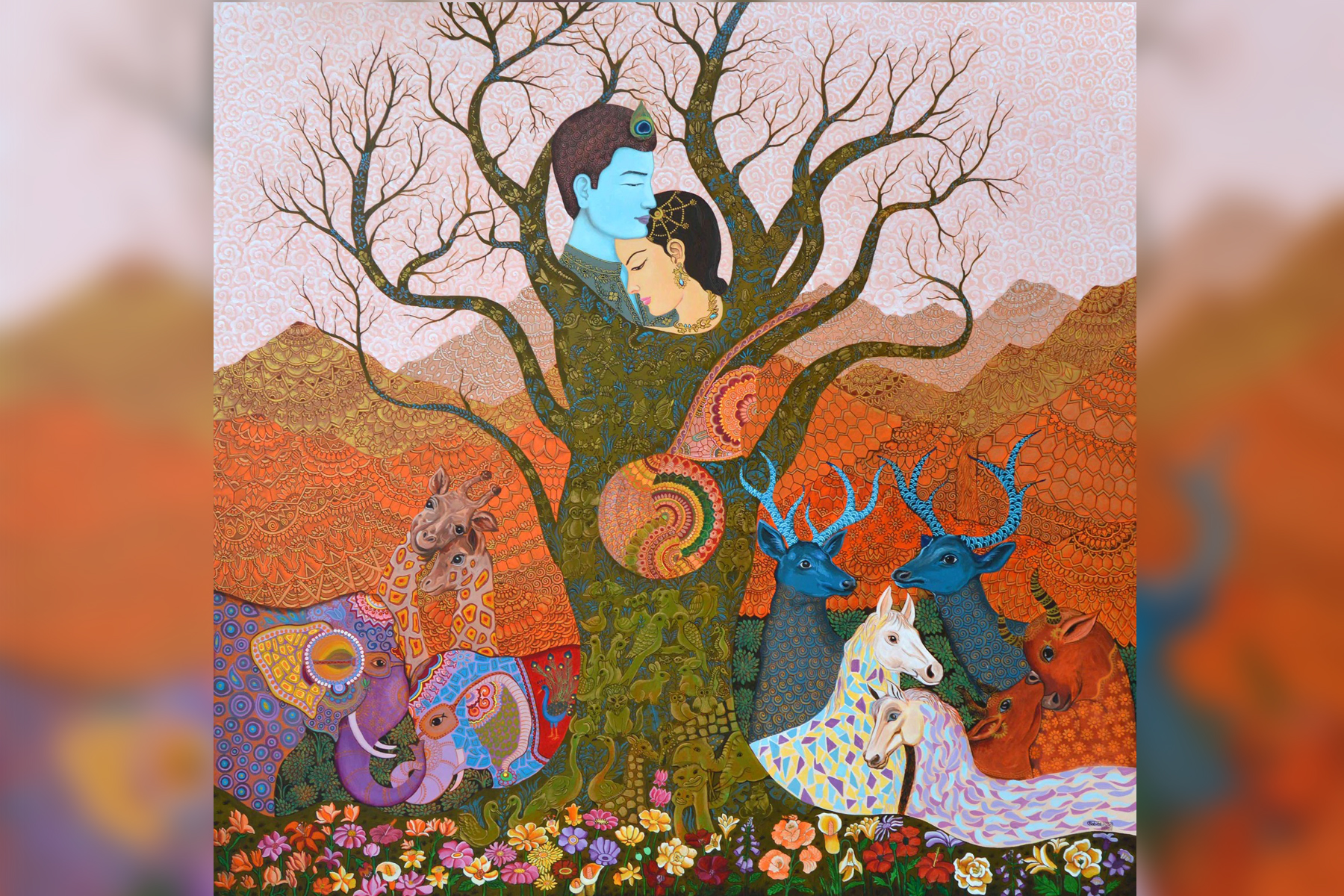
The distant hills and mountains, covered in intricate patterns, appear imbued with history and cultural memory rather than representing merely physical landscapes. Deep gold, terracotta, orange, and rust tones transform the mountains into a warm, blazing presence behind the cool blue tree, creating a contrast between earth and heat that grounds the couple and the surrounding animals. The elephants add another layer of symbolism, representing wisdom, strength, stability, royalty, and good fortune. Their imagery also recalls Airavata, the vahana of Lord Indra, and the elephant guardians associated with Newar temples and Malla-era Durbar Squares such as Patan Durbar Square. Through these layered symbols, the composition creates a sense of tranquillity, warmth, and magical realism, suggesting that human affection and the natural world are deeply interconnected and that true harmony emerges when human intimacy and the environment exist in balance.
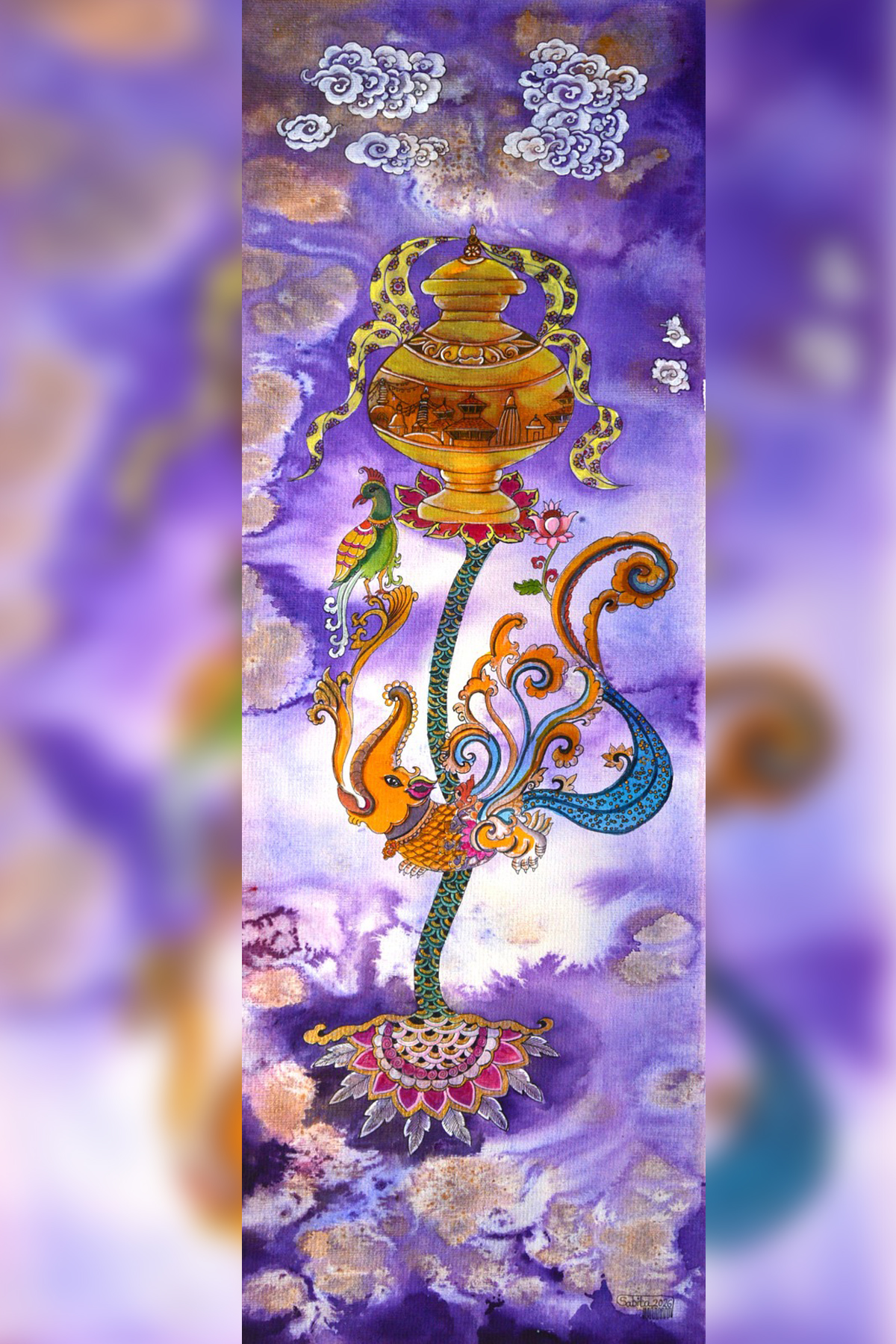
In her other artwork, the central subject acts as a cosmic anchor and a bridge between realms, rising from an ornate lotus base resting within swirling atmospheric mist. A slender green stem winds upward like a thread of life or spiritual spine, carrying fantastical creatures such as a green bird and a mythic, dragon-like or elephant-headed sea creature, the Makara, intertwined with delicate floral tendrils. At the apex, a lotus pedestal holds a radiant golden jar, or Kalasha, symbolising divine wisdom, abundance, and immortality, while embroidered-like white clouds float against the deep violet cosmos. The swirling background evokes the ocean of the mind, ether, or primordial cosmos from which all forms emerge. The deep indigo and violet tones suggest mysticism, higher consciousness, and spiritual transformation, while the warm gold and amber convey divine light, purity, enlightenment, and imperishable truth. Emerald green and bright coral bring a sense of growth, vitality, and living energy, creating a composition deeply influenced by South Asian, Tibetan, and Hindu-Buddhist visual traditions.
A 3D model of an oversized wooden comb rises like an ornate bridge or defensive crest, its surface intricately carved with swirling cloud motifs in soft lavender and plum. When asked why she uses the comb in most of her motifs, she replies, “It is an Manifestation of the feminine essence. Combing hair Releases emotional Baggage and is a symbol of Collaborative Synthesis. It represents the versatile operation of women.”
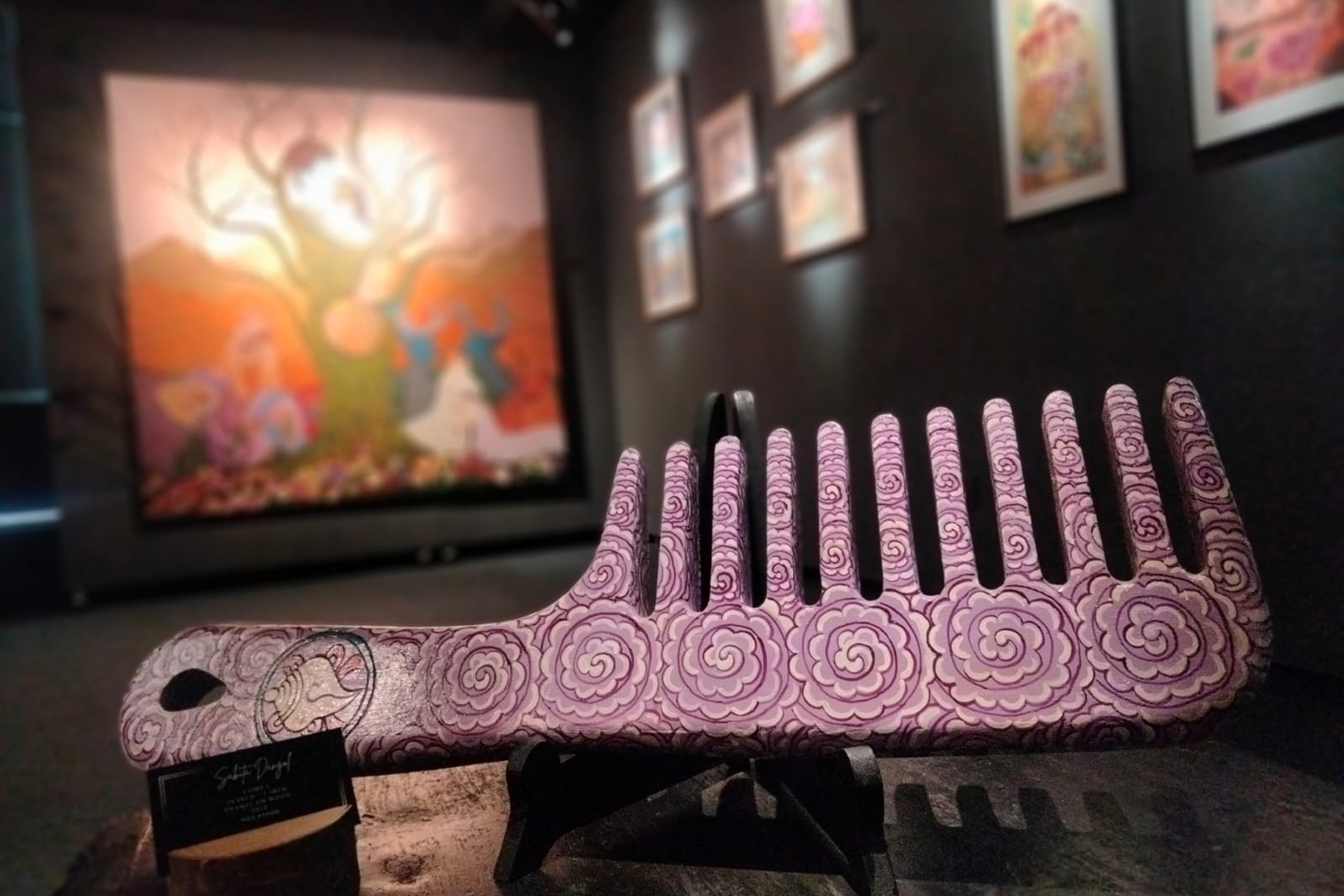
At its centre, a circular medallion frames a Sankha (conch shell) against a deep emerald ring, transforming an everyday object into a symbolic spiritual instrument. Behind it, the painting depicts human silhouettes and ethereal figures merging into the branches of a cosmic tree, set against a warm orange and golden sky. The comb acts as a metaphor for the human mind; just as it smooths tangled hair, it symbolises the untangling of anxiety, mental chaos, and life’s complications. The tree of souls represents interconnectedness, with the intertwined figures suggesting two souls growing together into a shared, sheltering organism. The sunset gold, amber, and orange hues evoke warmth, spiritual illumination, and emotional security, while the lavender and purple of the comb suggest peace, meditation, and transformation. The emerald green surrounding the Sankha reflects growth and nature, while the red accents convey life force and protection. Rooted in Newari heritage and Hindu-Buddhist iconography, the artwork transforms familiar cultural symbols into a dreamlike reflection on love, resilience, and harmony, suggesting that life’s tangles can be gently worked through with mindfulness, affection, and positive energy.
Through Eternal Harmony – A Sacred Union, Sabita Dangol brings together cultural heritage, spirituality, nature, and human relationships in a visual exploration of coexistence. Her richly coloured paintings and intricate ornamental details transform familiar cultural symbols into reflections on love, trust, compassion, and balance. The recurring imagery of Radha and Krishna, natural elements, and the comb motif reinforces the exhibition’s central idea that harmony extends beyond relationships between individuals. Ultimately, the exhibition invites viewers to consider how greater understanding, patience, and connection can shape the way people live with one another and with the world around them.

Leave A Comment