

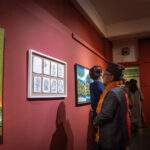




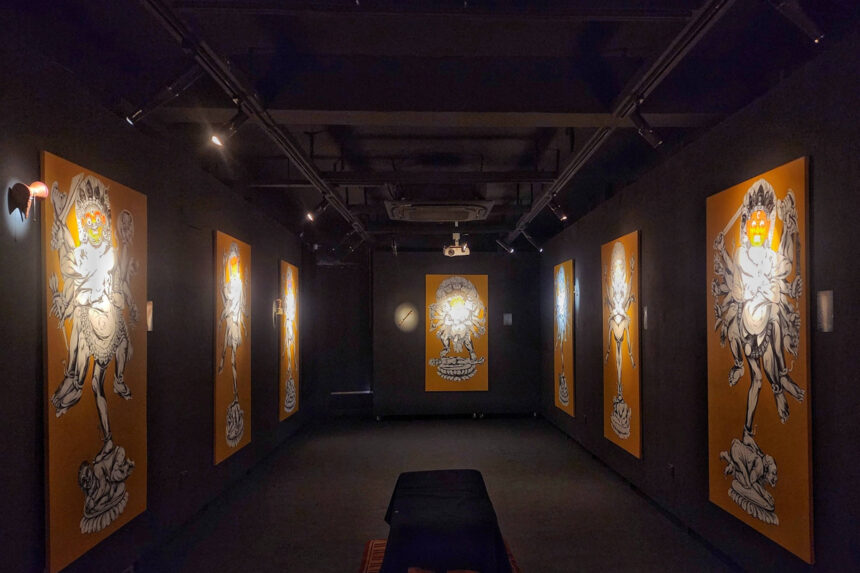
Kathmandu’s art landscape once again finds itself illuminated by the visionary presence of Mukesh Shrestha, an eminent Nepali artist whose latest exhibition, Bhav Bhairav, is currently on view at Gallery 108, Durbarmarg. Known for consistently redefining sacred imagery through his distinctive painterly language, Shrestha returns with a body of work that is at once meditative, powerful, and deeply human.The show is on from 19th December till the 31st of January.
A gold medalist from Banaras Hindu University, Shrestha’s artistic journey took a decisive turn after his return from India. While his academic grounding refined his technical mastery, it was in Nepal that he developed his own unmistakable style—particularly in his reimagining of Bhairav. Rather than adhering to conventional iconography, Shrestha approaches Bhairav as an evolving presence, shaped by time, society, and inner reflection.
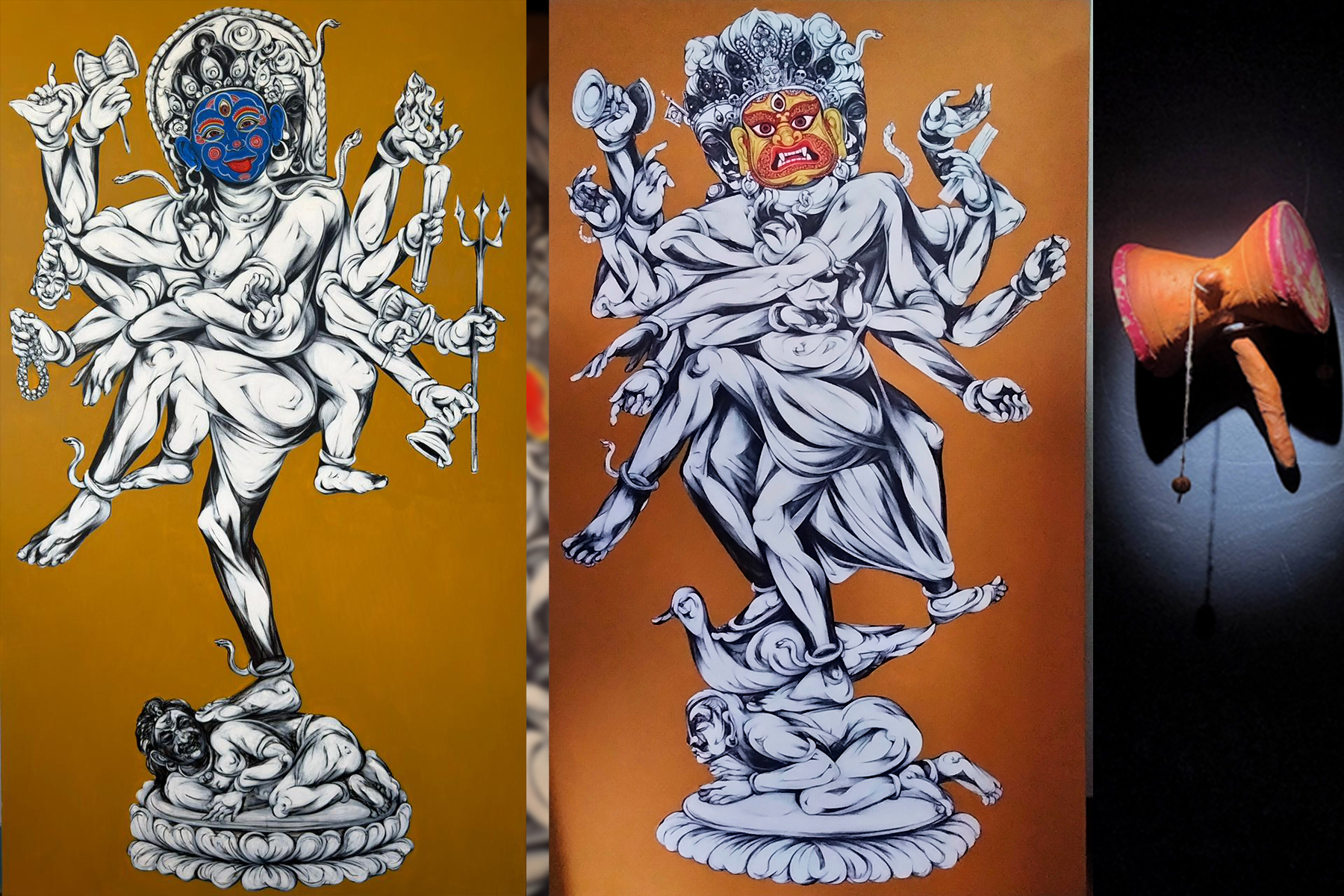
Bhav Bhairav is not merely an exhibition; it is the culmination of a long-held vision. The artist reveals that the process demanded unwavering devotion—two to three months of relentless work, often stretching to sixteen or seventeen hours a day. The idea of painting Bhairav had lived within him for years, but it was during the era of Gen Z movements and shifting social consciousness that the form finally emerged on canvas. In Shrestha’s hands, Bhairav becomes not only the fierce protector deity of the Kathmandu Valley, but also a mirror reflecting contemporary unrest and aspiration.
Kaal Bhairav, in particular, holds a personal significance for the artist. Passing by the deity time and again, Shrestha would bow in reverence, gradually immersing himself in ancient scriptures before daring to translate devotion into form. This spiritual preparation is palpable in the works, where reverence meets rigorous inquiry.
At the heart of the exhibition lies an ethical question: What can humanity learn from Bhairav? Despite his immense power, Bhairav renounces ego, prejudice, and material attachment. He walks naked, stripped of arrogance and hierarchy. Shrestha suggests that if humans embraced even fragments of these qualities—humility, fearlessness, and equality—the world could move closer to becoming a more compassionate place.
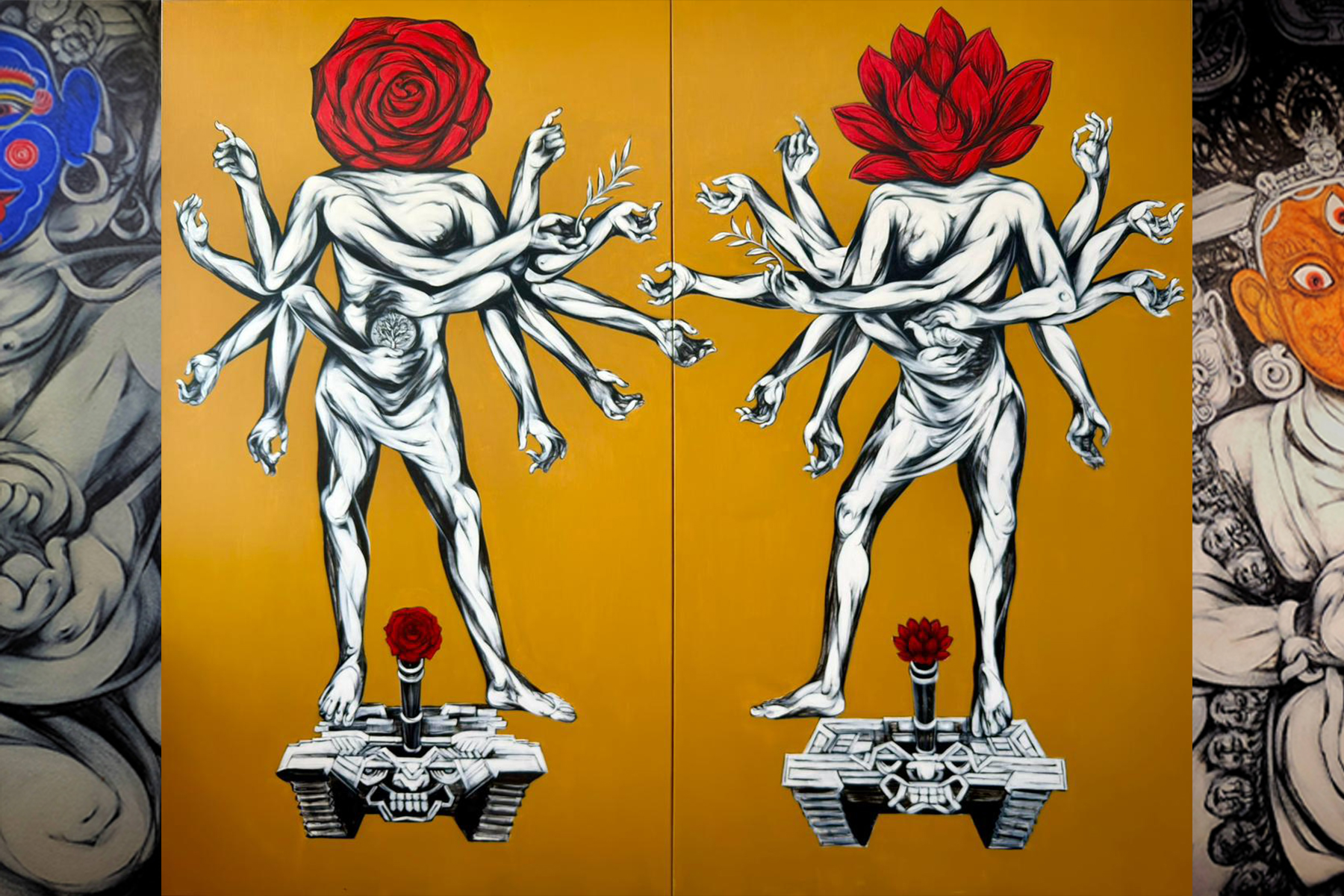
One of the most striking moments greets visitors at the entrance of the gallery. Two monumental images—a male and a female deity—stand as symbols of reconciliation and harmony. From their hearts bloom pigeons and flowers, gentle metaphors for peace. The imagery subtly recalls the historic reunion between North and South Korea after four decades, transforming geopolitical history into a universal visual language of hope.
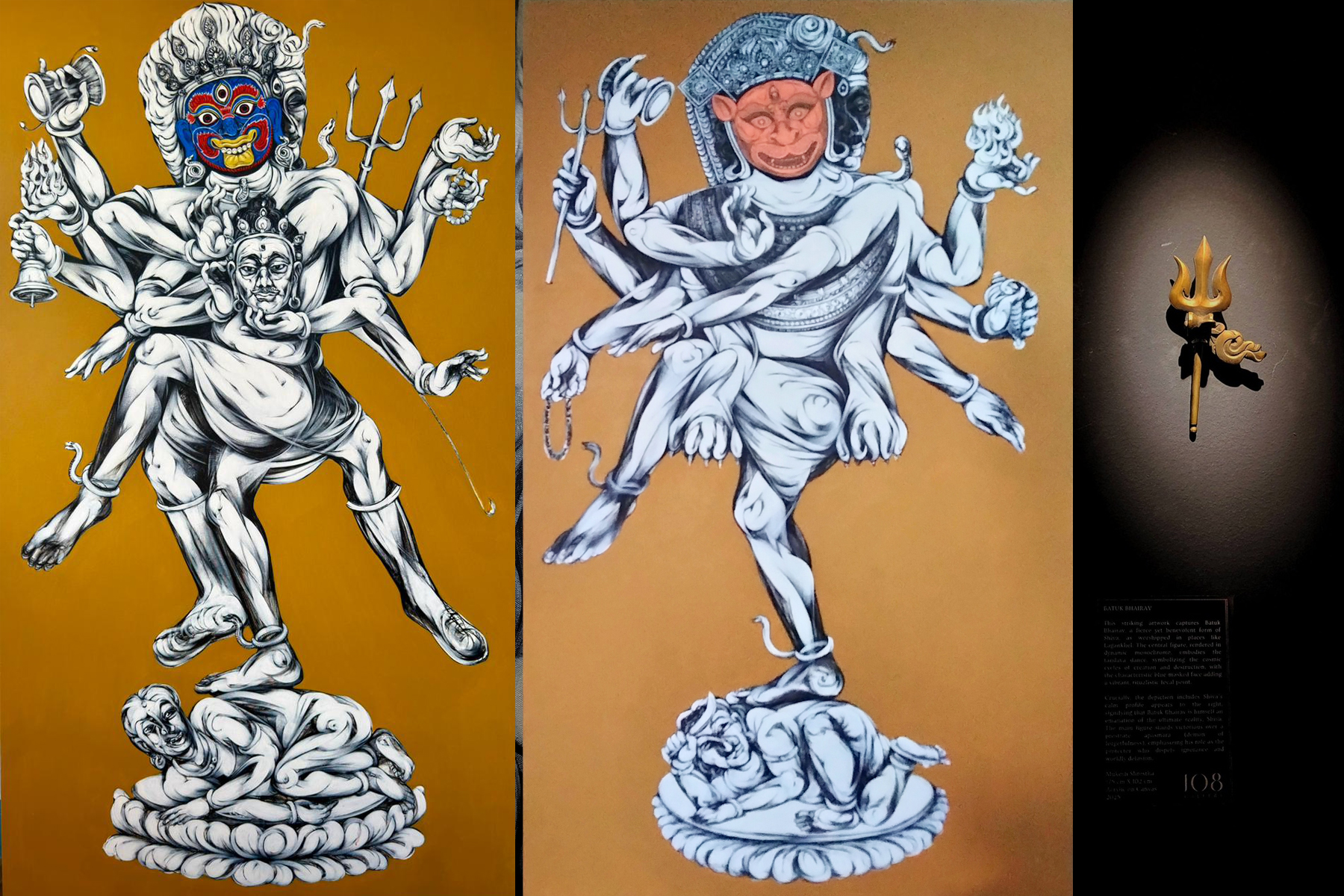
Across the exhibition, Bhairav stands upon human forms placed at his feet. According to Shrestha, this refers to an ancient myth of a destructive demon who once threatened the planet. The positioning is symbolic—not of domination, but of balance—suggesting the eternal struggle between chaos and order, ignorance and awakening.

Shrestha’s philosophy is clear: true peace arises only through equality. Bhairav, in his mythic role, restores balance not through cruelty, but through justice. Even lesser-known narratives, such as the birth of Govinda Tandan through Bhairav’s boon, find subtle resonance in the works, enriching the exhibition with layers of mythological intrigue.
Visually, the paintings are unified by a yellow ochre background, a deliberate choice that lends warmth, gravity, and spiritual depth. The earthy tone amplifies the solemnity of Bhairav while highlighting the sincerity and discipline behind each stroke.
In Bhav Bhairav, Mukesh Shrestha does more than depict a deity—he invites viewers into a space of reflection, urging them to confront power, humility, and peace within themselves. The exhibition stands as a quiet yet commanding reminder that divinity, when stripped of ego, becomes profoundly human.

Leave A Comment