

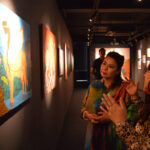
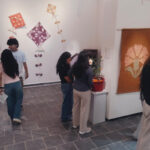

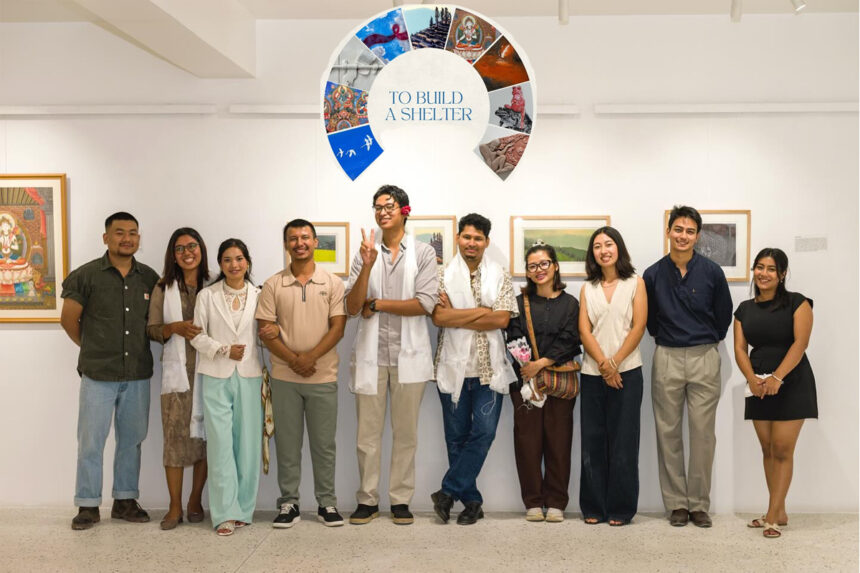
The idea of shelter is not merely a structure but a profound reflection—something that resonates with every living being. This season, Takpa Gallery, Lazimpat, comes alive with a vibrant new exhibition, presenting the works of a collective of promising young artists. Their creations revolve around the theme of shelter, exploring its meaning not just as a physical space but as a symbol of belonging, identity, and imagination. Through their art, we glimpse the raw, unfiltered vision of emerging minds—fresh perspectives that stand apart from the established voices of seasoned artists. This exhibition, in many ways, becomes a dialogue between generations: a deviation, yet also a continuation, of how art perceives the very notion of dwelling and refuge.
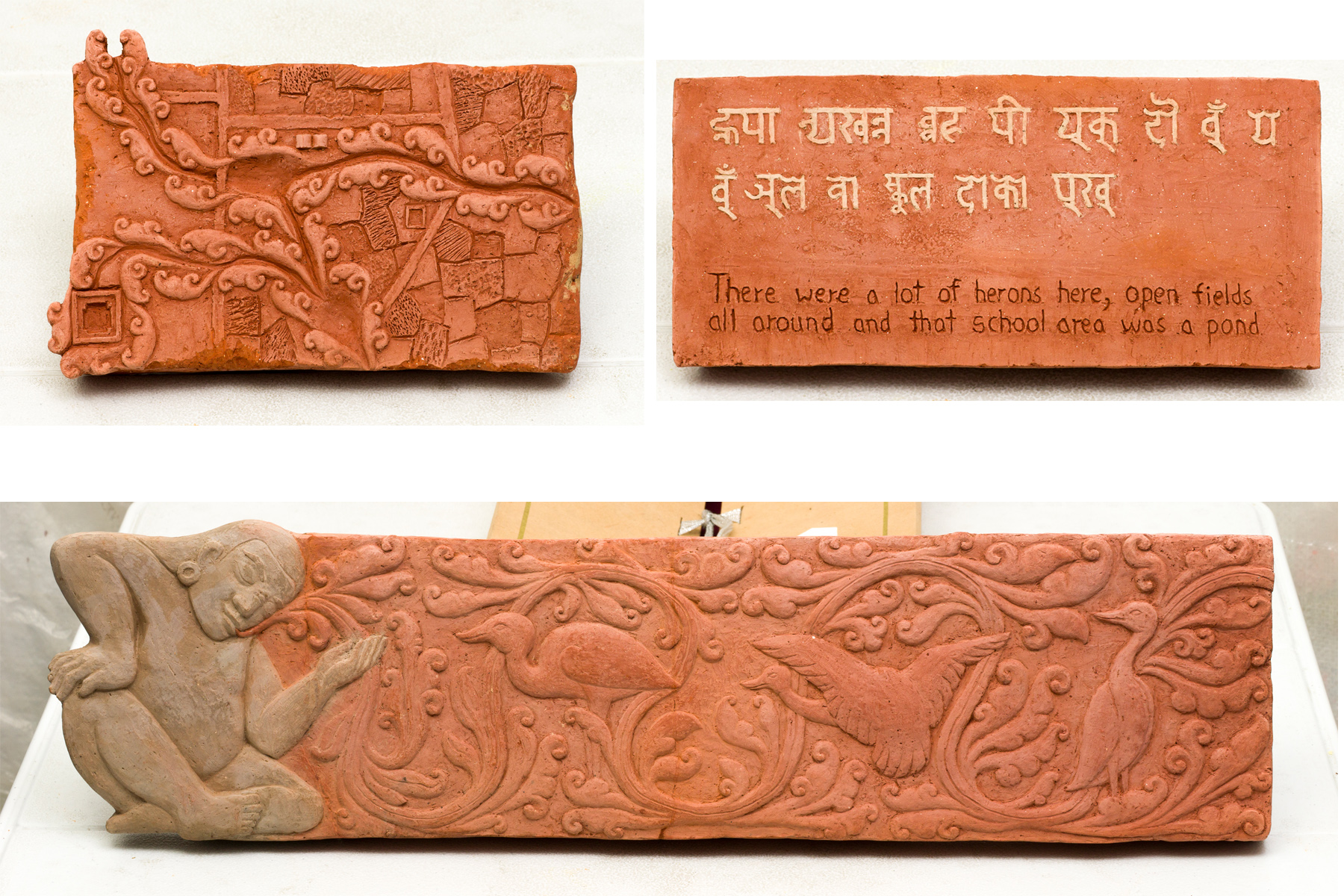
Shrayam Shakya, one of the exhibiting artists, draws deeply from the city of his childhood-Patan, the place that shaped his earliest memories. In those days, Patan was far less crowded; the closeness between humans, animals, and the natural world was palpable. He recalls how wild creatures would wander into his surroundings, and how a small river once flowed gently toward the ‘hiti’, the traditional stone water spout. Beneath the ‘hiti’ dwelled the Yaksha, a guardian spirit linked to ancestry and heritage. Inspired by these recollections, Shakya reimagines the figures of Yaksha and jackals in the warm, earthy medium of terracotta. Cranes, too-once abundant in the area and etched into local inscriptions—find a place in his artistic narrative, weaving memory with myth.
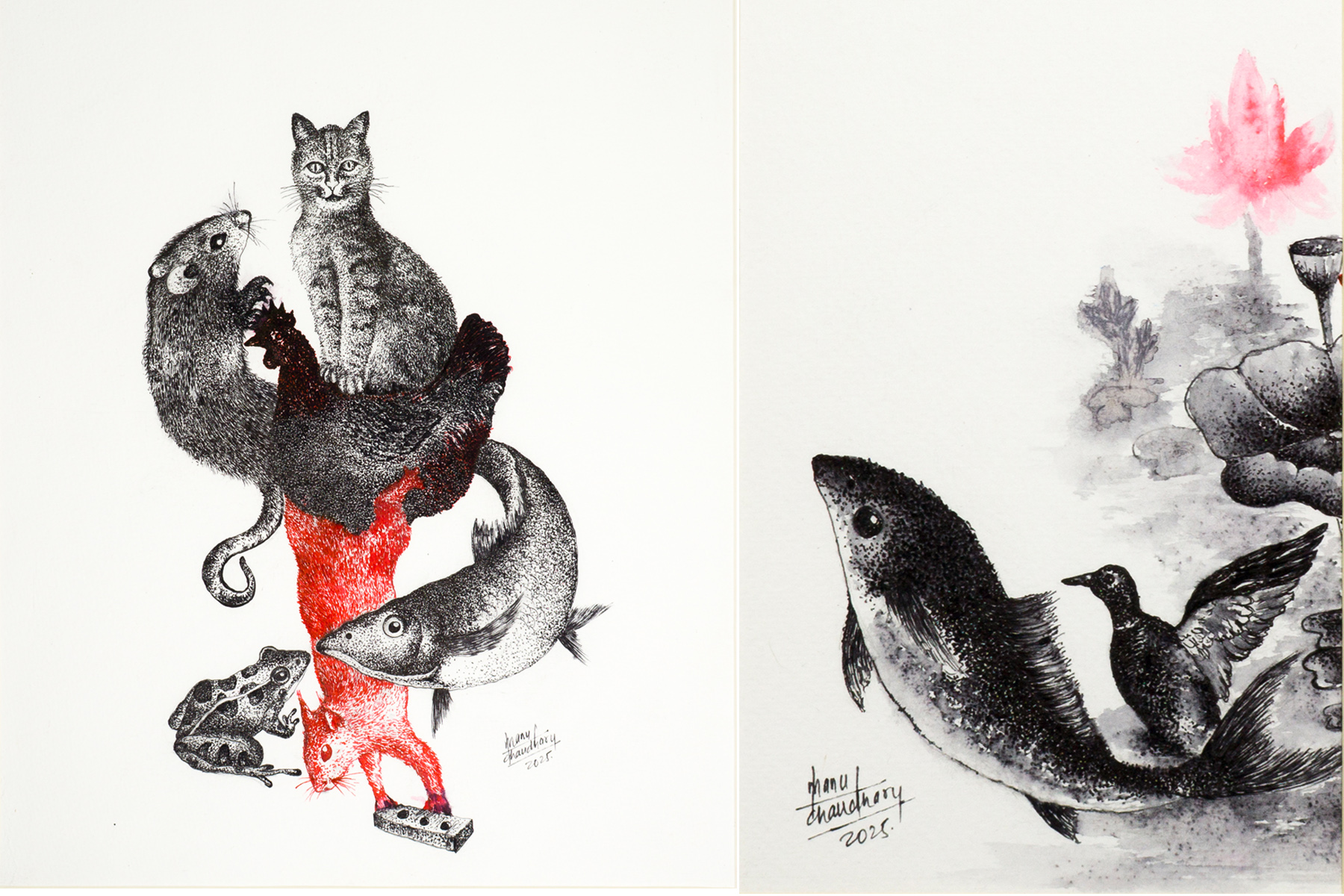
In contrast, fellow artist Manu Chaudhary explores the theme of shelter through the poetic lens of printmaking. His works elevate animals to a metaphorical plane, suggesting their role in the larger human story. Just as people in rural communities come together, offering help to one another in the building of homes, Chaudhary envisions animals as contributors, too, each bearing a gift of their own. His affinity for fish is particularly striking; within his culture, fish hold a dual significance-both as sustenance and as sacred beings of worship. Through his prints, he captures this delicate balance, presenting the fish as a symbol of life, reverence, and shared existence.
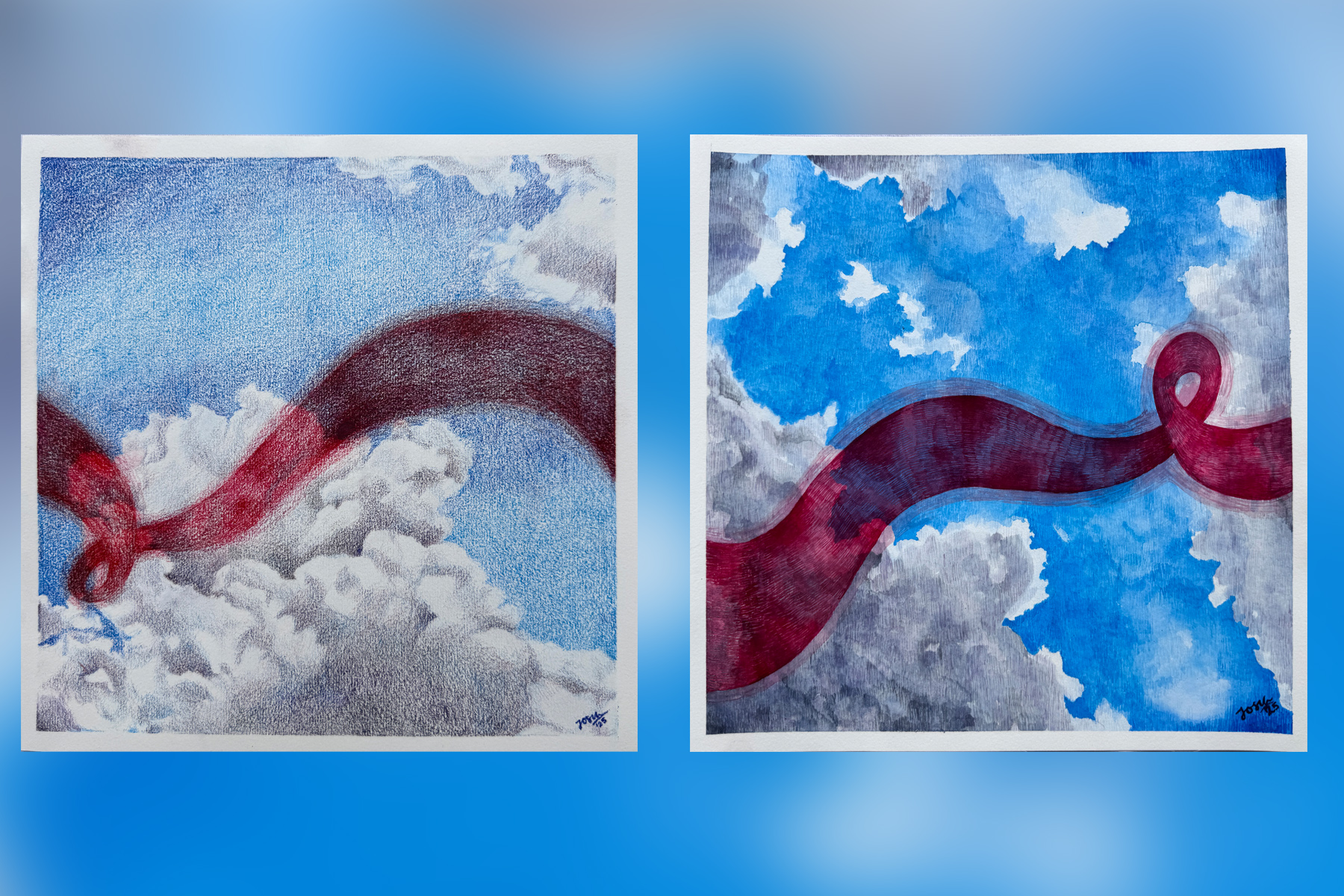
Jyotsna Udas, another of the artists featured in the exhibition, reflects on the theme of shelter through a striking declaration: “and then they all dreamed under the same sky.” Her works often circle around womanhood and the weight of patriarchy, questioning the idea of what truly defines a home. For her, a house is not simply a woman’s shelter—it cannot confine her being. The vast expanse of the sky becomes her metaphor for freedom, while the red, bold and unyielding, embodies the struggles and resilience of women within society. Her canvases shimmer with these symbols, urging viewers to reconsider the space women are given, and the infinite sky they deserve.
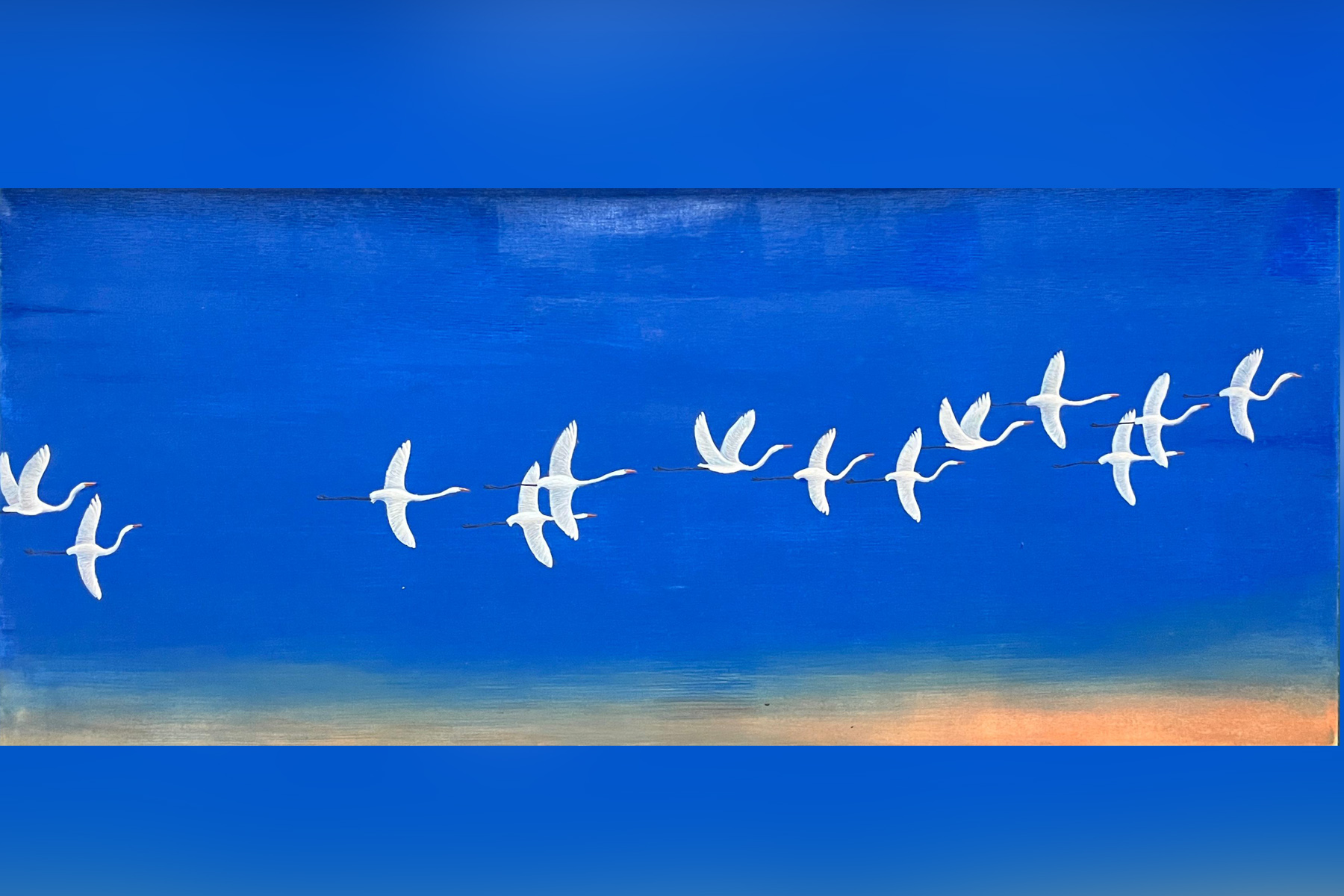
In contrast, Maulik Limbu approaches the idea of shelter in a more poetical and introspective manner. His artworks meditate on the relationship between objects and spaces, and the memories they carry. Birds and household objects frequently inhabit his imagery, not as mere decorative forms but as vessels of meaning. Through them, he asks a simple yet profound question—why do certain objects linger in our minds? By embedding birds alongside domestic relics, Limbu blurs the line between the tangible and the remembered, transforming ordinary objects into carriers of identity, belonging, and memory.
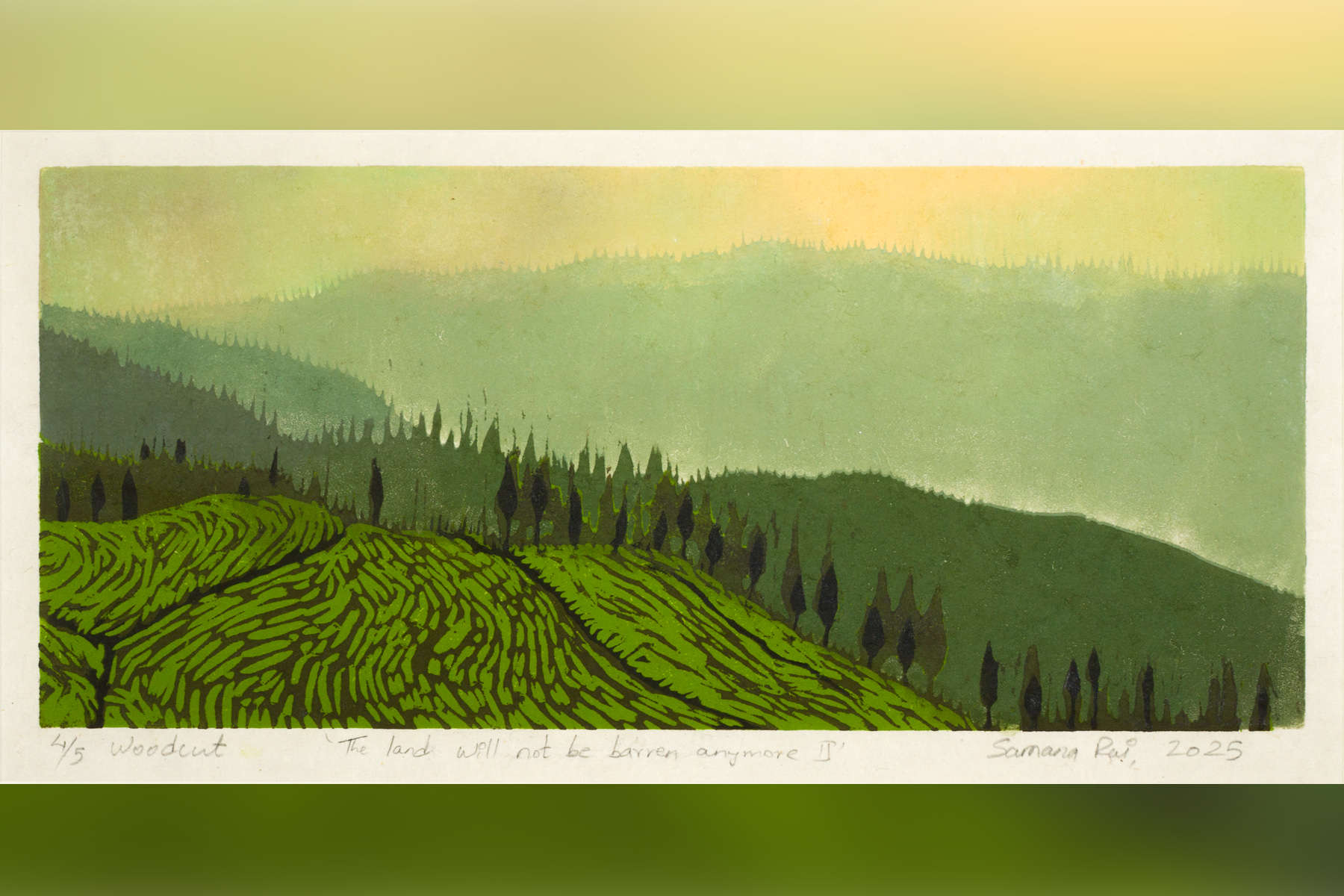
For Samana Rai, the narrative of shelter is deeply personal and rooted in her family’s story. In this exhibition, she presents woodcut and etching works that draw upon the cultural memory of migration and tradition. She recalls how, when her parents first came to Kathmandu, they brought with them objects like the ‘doko’ and other utensils from their village. These items were more than tools; they were tokens of remembrance, carried across distances so the children would not forget the roots of their heritage. In her works, Rai reconstructs not only the physical forms of these objects but also the landscapes and processes they evoke. Her art becomes an act of preservation—an attempt to hold onto fading memories while breathing new life into them through the language of printmaking.
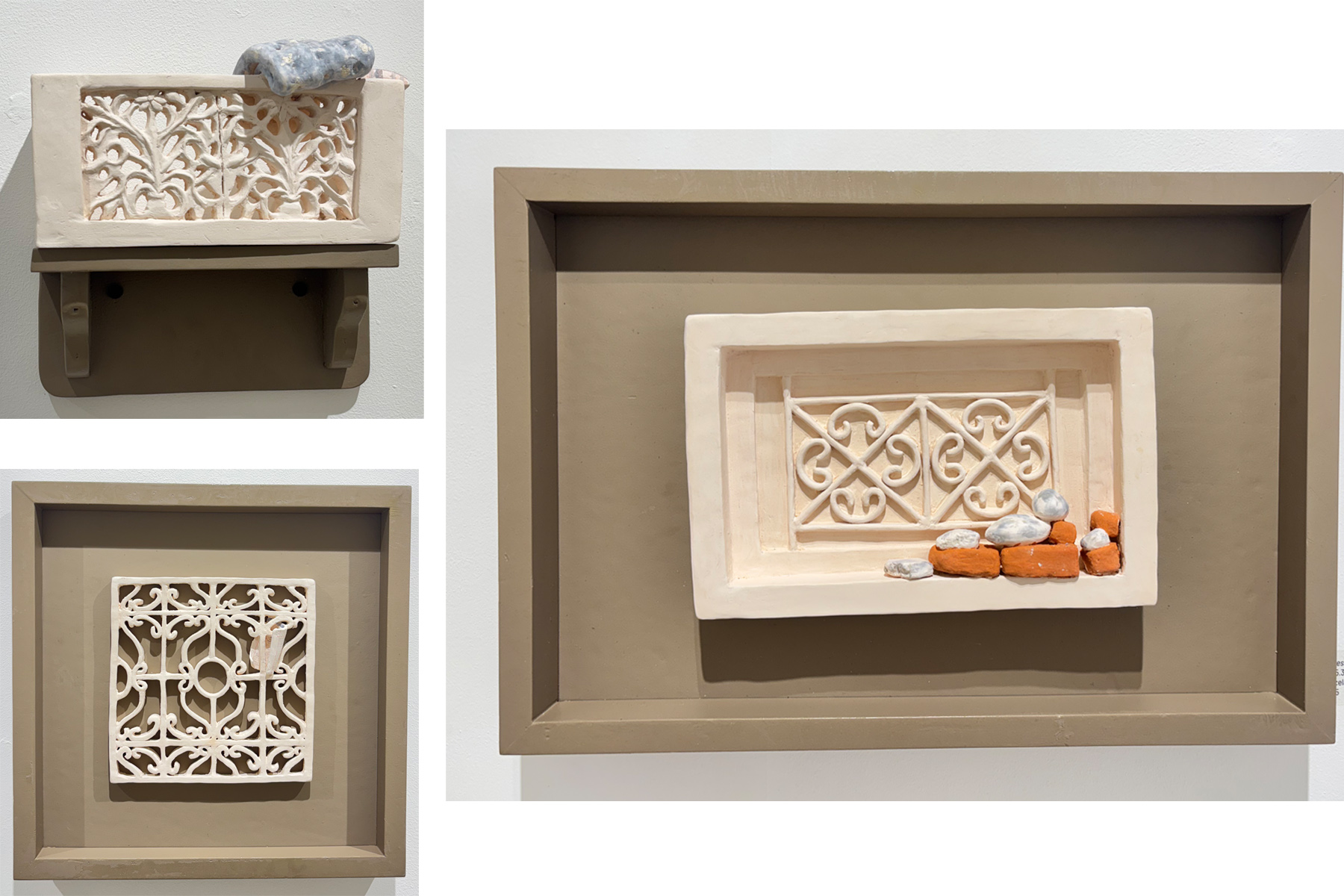
Preeti Duwal, one of the exhibiting artists, laments the fading presence of Newari windows-those intricate wooden lattices that once defined the character of traditional homes. To her, their absence is not merely architectural loss, but the vanishing of stories, identities, and ways of seeing the world. In her work, she reimagines these windows in clay, framing her narratives within their outlines. Each structure she shapes is singular, carrying the weight of memory and the beauty of reinvention, as though she is resurrecting forgotten voices through earthen frames.
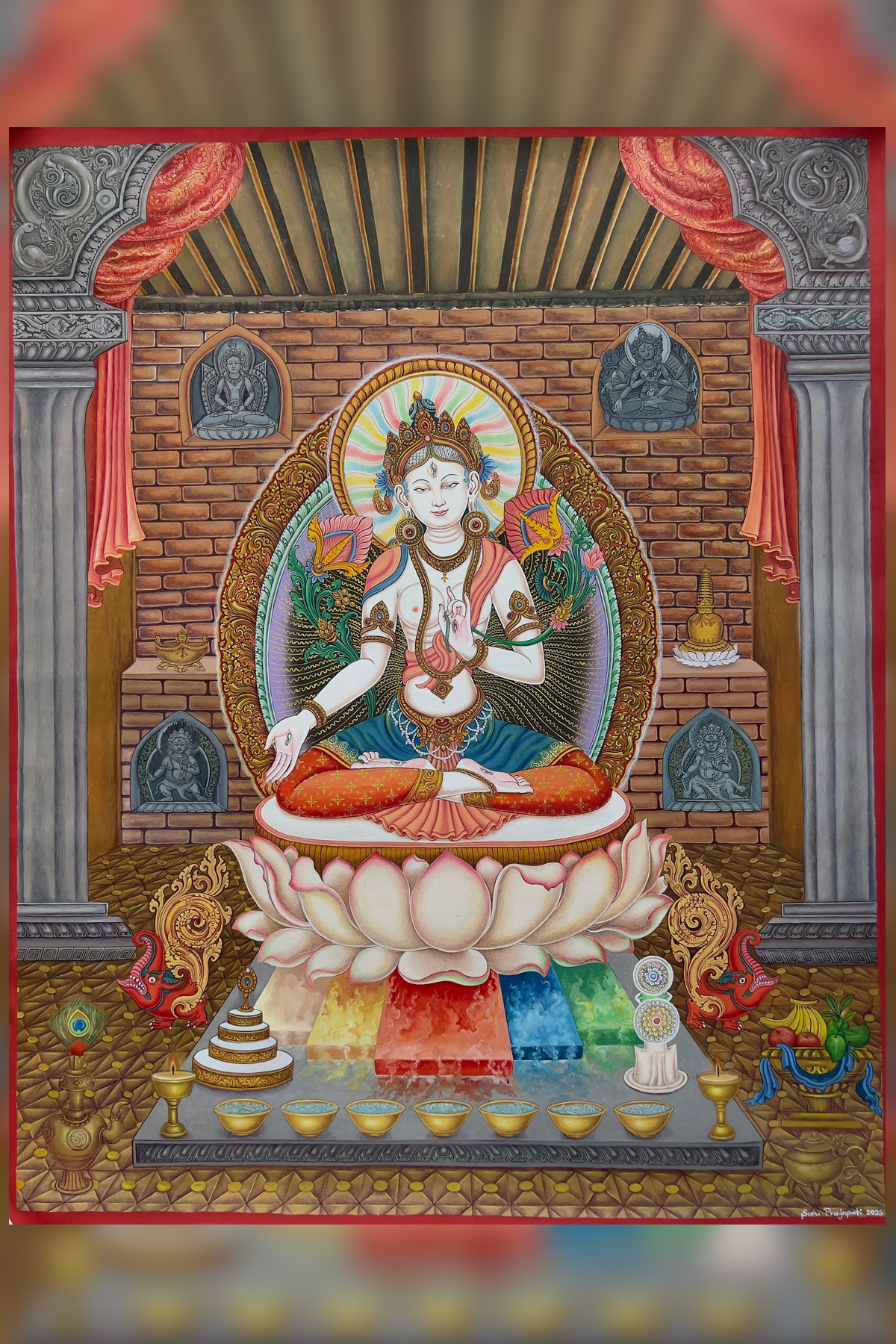
For Saru Prajapati, inspiration flows from the quiet devotion she witnessed in her own home. Growing up, she often saw her mother and grandmother bowing before a modest household altar, their simple rituals weaving faith into the fabric of everyday life. This intimacy with Paubha painting became her foundation. In her work, she places the deity at the center, encircled by brick walls—an imagery that evokes both sacredness and shelter. Her paintings reveal the elegance of ordinary worship, reminding us how timeless devotion finds its place even in modern lives, bridging tradition and the present with grace.
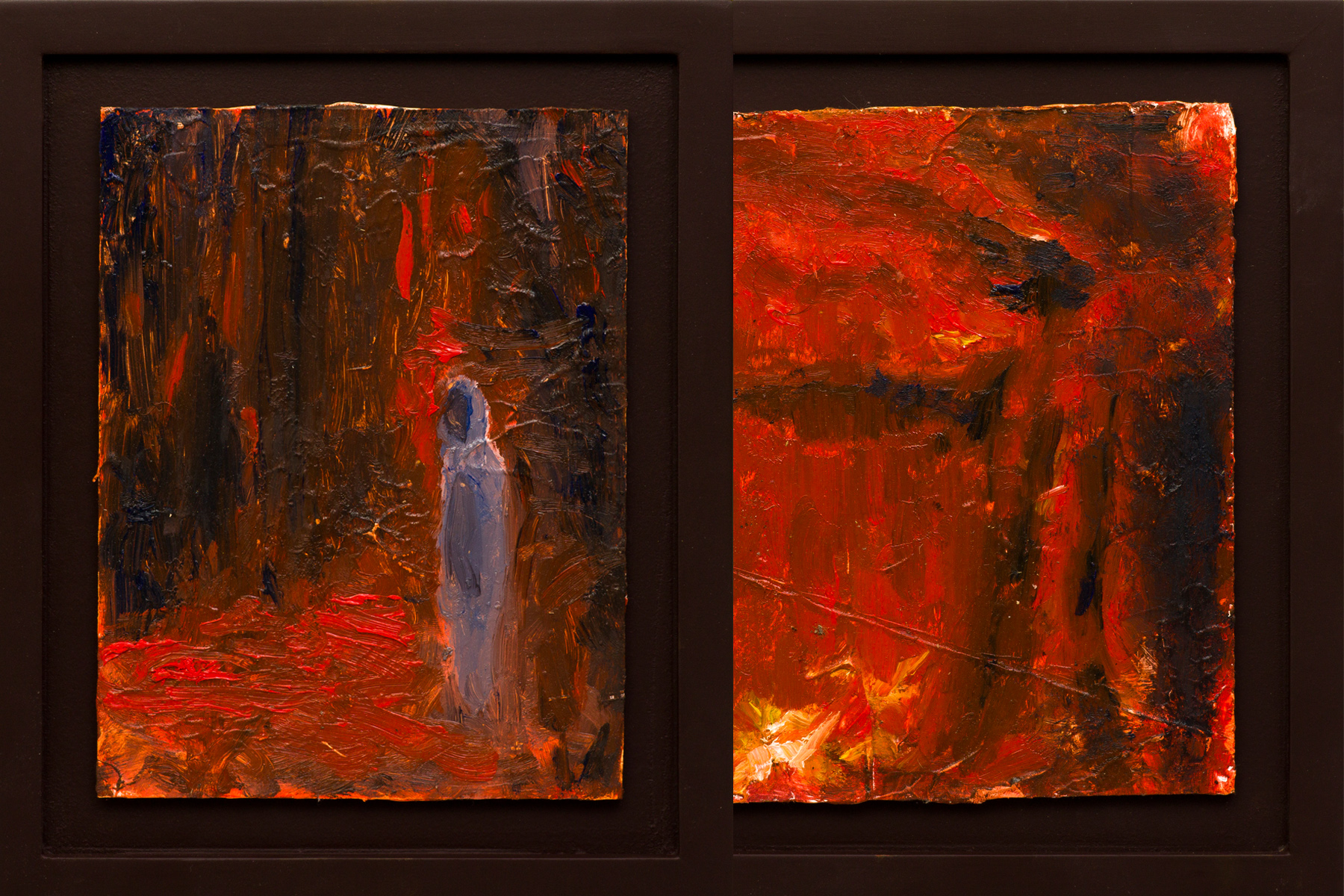
Purushottam Chaudhary turns his gaze outward, toward memory and landscape. His paintings lean into ’plein air’ practice, but with a deeply personal inflection. Red tones dominate his canvases, bleeding into forms that echo both the vibrancy of life and the residue of recollection. He paints fragile, skeletal trees-guardians of his childhood play, which in his memory appear both delicate and eternal. Nightfall is a recurring motif: the time when villagers returned home, when his mother brought snacks after a long day’s labor, when the world quieted into rituals of rest. His work captures this rhythm of day into night, where fragility and warmth converge in colors that pulse with nostalgia.
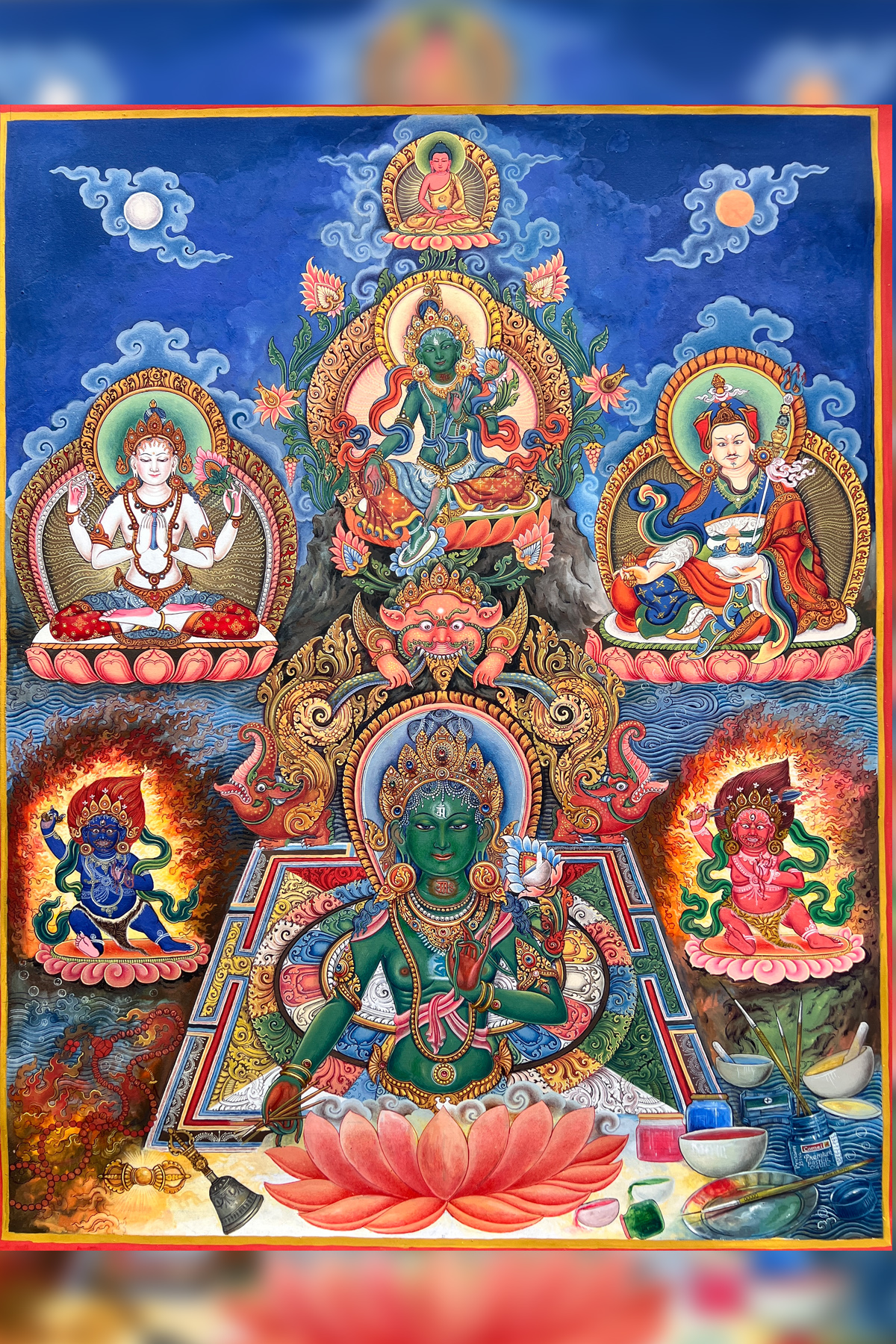
Sujit Maharjan, rooted in the discipline of traditional art, brings yet another dimension to the exhibition. Having practiced for over a decade, he remains loyal to the sacred palette of traditional painting. Yet, within this fidelity, he allows subtle modern touches to enter—breathing freshness into a form that is centuries old. His works become bridges between continuity and change, carrying the spirit of tradition while whispering to the present.
This remarkable exhibition, alive with memory, devotion, tradition, and reinvention, will remain on view until the 27th of September. If you find yourself near Lazimpat, step into Takpa Gallery to experience the world these artists have so carefully unfolded—worlds that invite you to look closer, to feel deeper, and to linger a little longer in the stories of shelter they tell.

Leave A Comment