



Within the quietly vibrant halls of Music Art Gallery in Sanepa, Lalitpur, a new exhibition gently simmers into life like a work of art still warm from creation. Titled Contours of Two, this duet of visions brings together Kapil Mani Dixit and Roshan Bhandari-two artists tempered by time, trial, and triumph, whose journeys through uncertainty and resilience now unfold across the gallery’s walls. Opened on the 21st of February and continuing until the 21st of March, the exhibition stands as both a meeting point and a dialogue: two sensibilities tracing their lines across a shared horizon.
The space itself feels almost orchestral in its arrangement. Under the thoughtful direction of Mr. Sagar KC, artworks appear to converse from every corner, every surface, every pause between steps. He reflects with quiet conviction, “Music and art are the supreme forms of human creation, and they deserve to be seen-and felt-in every possible way.” Here, that philosophy is not merely spoken; it is staged, suspended, and softly resonant in the air.
Though Kapil Mani Dixit and Roshan Bhandari have walked along distinctly different artistic paths, their expressions seem to meet at a quiet crossroads. Each turns instinctively to the human figure as a vessel of feeling, allowing gesture, posture, and gaze to whisper the subtleties of tenderness and emotion. Their trainings unfolded in distant geographies—Kapil in United States and Roshan in India—yet despite these divergent pedagogies, their figures possess a shared magnetism, a certain ineffable quality that draws viewers inward as though summoned by an unseen current.
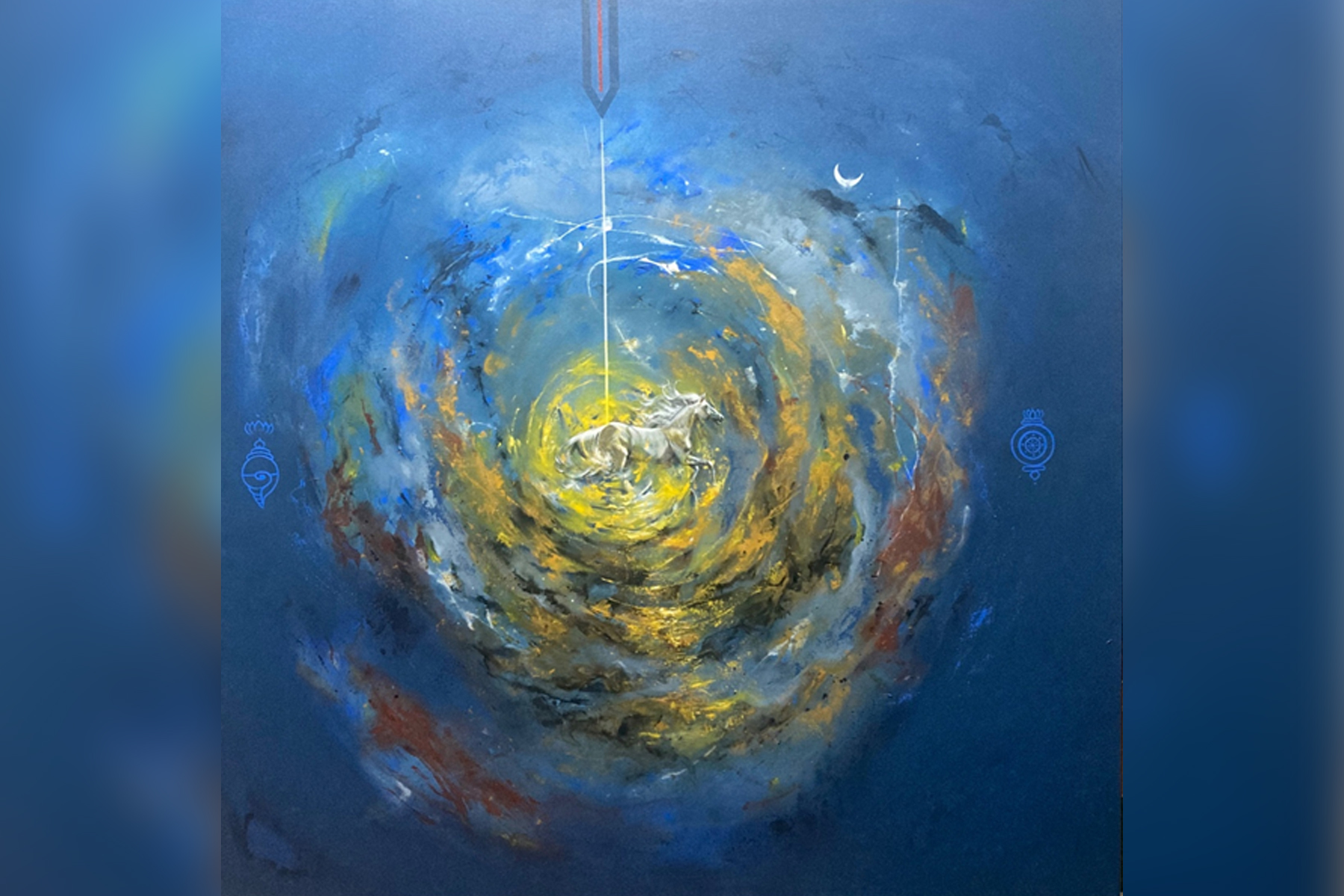
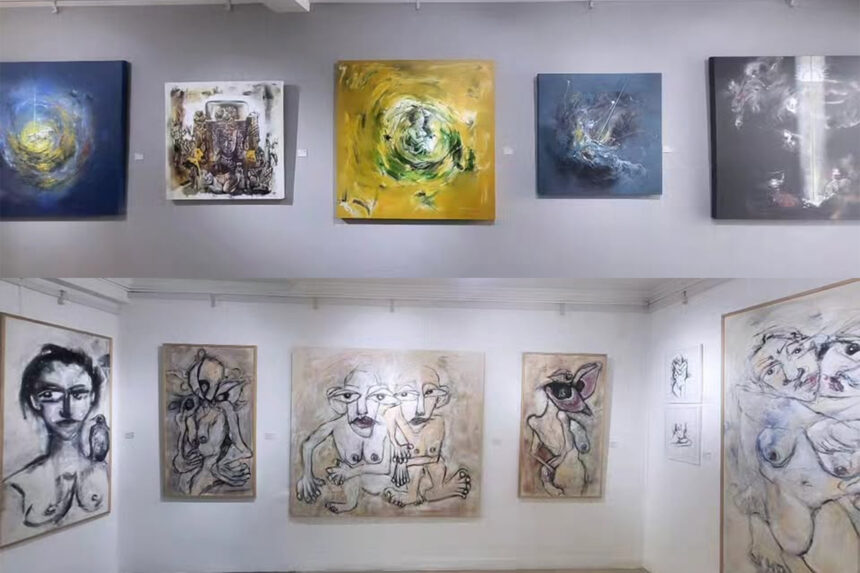
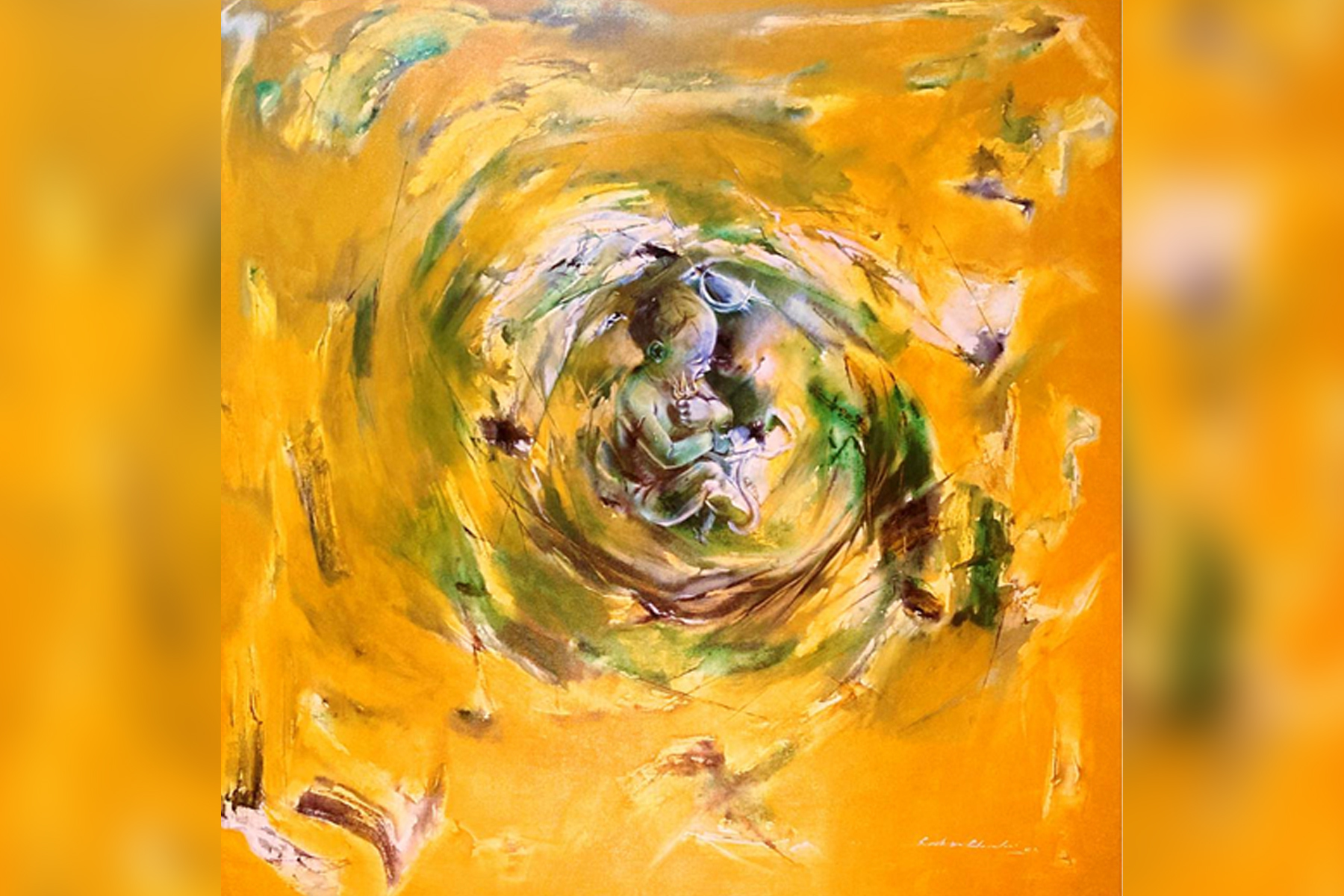
In Roshan’s canvases especially, feminine presences emerge like fragments of unwritten epics, their narratives steeped in echoes of myth, scripture, and story. At first glance, the surfaces may appear unfinished, as if paused mid-thought; yet once the viewer steps away, the images linger, unfolding slowly in memory until they transform into meditative spaces of reflection. This lingering afterlife of his paintings distinguishes him within Nepal’s artistic landscape-an artist whose works continue their quiet conversation long after the gallery walls have disappeared from sight. His palette, too, resists predictability: at times luminous and daring, at others restrained to near-silence, each chromatic choice carries an emotional gravity rarely encountered, as though color itself were breathing.

In contrast, Kapil Mani Dixit stands as a singular presence within Nepal’s artistic constellation. In his early years, when his brush was guided by youthful rigor, perfection of form was his foremost pursuit; every contour was measured, every line disciplined. Yet time, that quiet sculptor of sensibilities, softened this pursuit, and gradually expression alone became enough. Now his canvases tremble with tonal depth and emotional resonance, capable of sending a shiver through the attentive viewer. A closer gaze reveals a subtle mischief in his figures-the tilt of an eye, the eloquence of a hand, the playful grammar of gesture-details that seem to breathe with a life of their own. Restless in spirit, he refuses allegiance to a single medium: cardboard, sackcloth, and whatever surface chance places before him are transformed beneath his touch. Among the works displayed is even a painting born within the middle pages of a book, its once-humble paper elevated, framed, and granted a new afterlife on the gallery wall.

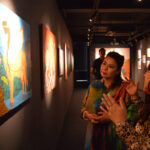
Most of the pieces that now inhabit the gallery are not recent creations but companions from the artists’ past decade-a visual chronicle of evolution, persistence, and transformation. Visitors wander through them with a quiet curiosity, tracing the shifts in vision that ten years have etched into their practice. One such observer, Saurab Shrestha, shared in conversation with Khojpatra, “The artworks on display are truly remarkable-both artists work with the human figure, yet their styles stand worlds apart.”
Mukti Singh Thapa, one of the veteran traditional artists of stated: ‘ the paintings of Kapil Mani Dixit has come a long way. The way we make our traditional paintings, his figurative works has certain features of playfulness. The way he plays with colors, the mastery of figures always mesmerizes me. The works of Roshan Bhandari has the amalgamation of abstraction and figurative paintings. The combination of duo has made the exhibition much more meaningful.’
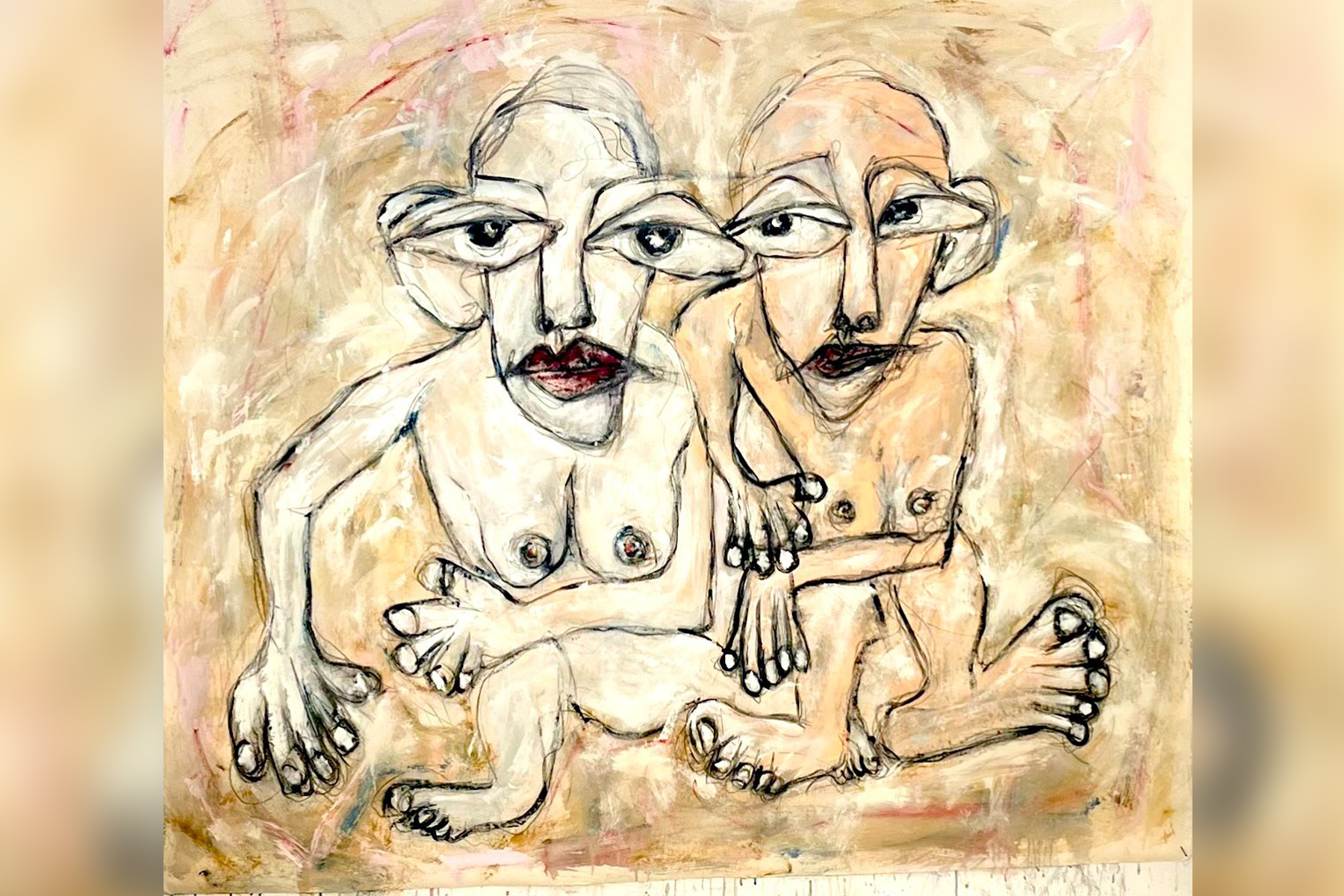
Roshan Mishra, the director of Taragaon next stated, ‘ in the figurative works of Kapil Mani Dixit, I find the imagery of landscapes. This kind of figure is truly rare for most of the veteran artists. In the works of Roshan Bhandari too, there is intekngle of abstraction and figurative works. Sometimes it makes me wonder how it feels just to see those abstract works.’
For those within reach of Music Art Gallery, the exhibition beckons like an unfinished poem awaiting its reader. Step inside, and with a measure of serendipity, one might even find oneself in dialogue with the artists themselves, listening as they unravel the quiet stories woven into their art.


Leave A Comment