
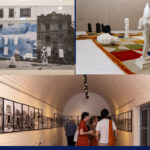
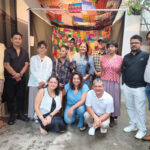
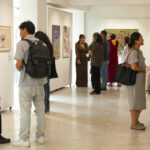
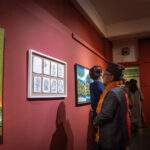
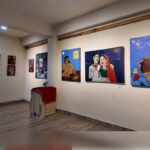

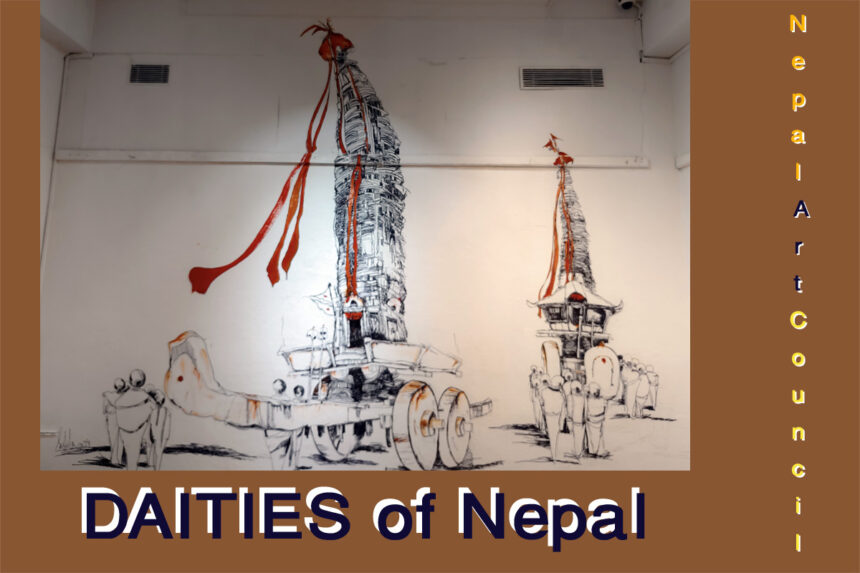
The Nepal Art Council is currently showcasing a remarkable collection titled “Deities of Nepal,” featuring 235 artworks created by 163 highly talented artists. These artists have meticulously crafted their pieces, which for many theists, beautifully represent the scriptures and manuscripts that guide devotees in finding the divine within their hearts.
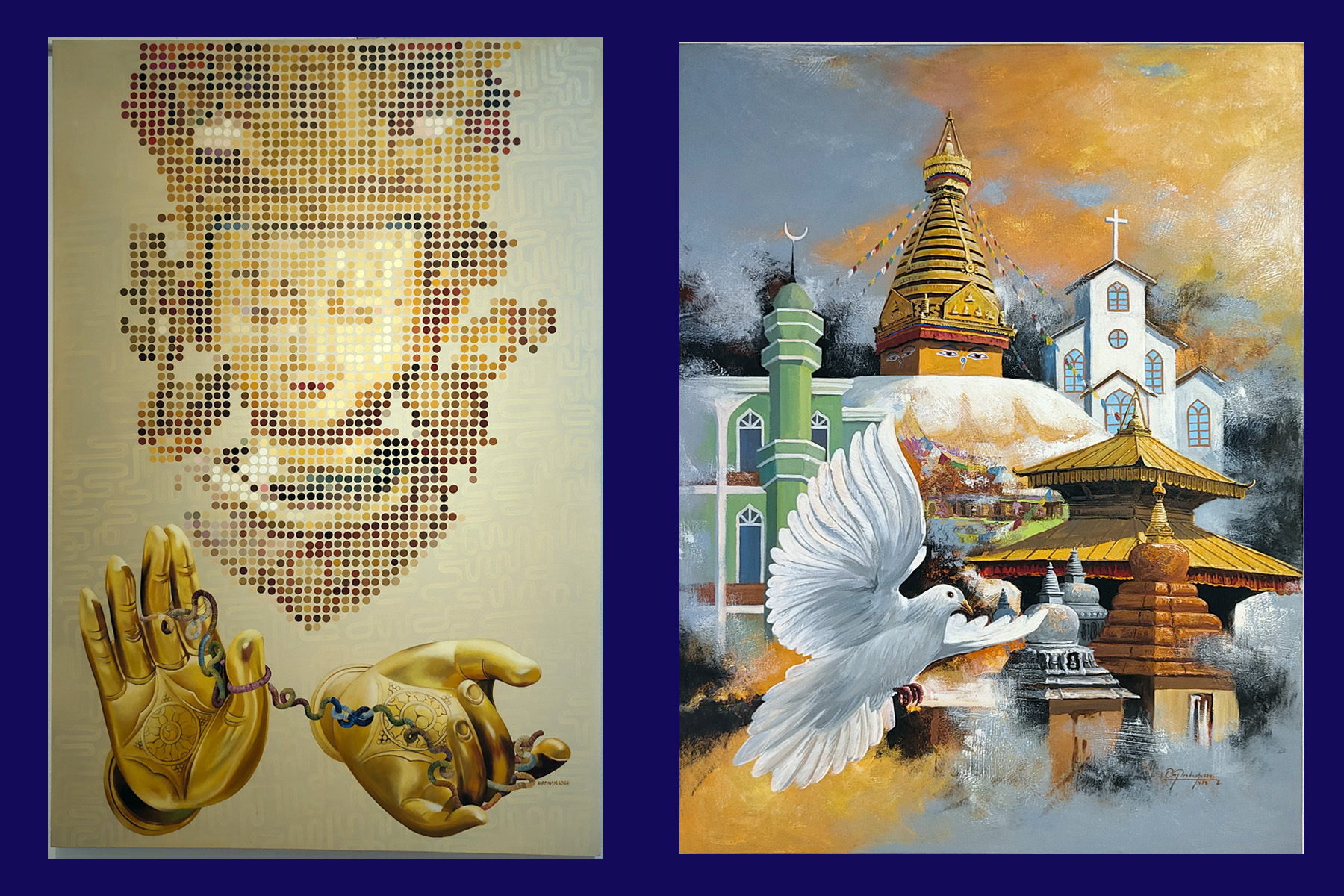
On the ground floor, to the right of the exhibition hall, the space is adorned with maps as backdrops for various artists’ paintings. Among the most attention-grabbing pieces are those by Shreejan Rajbhandari, who masterfully uses light and shadow to enhance the aesthetic appeal of his work. Similarly, images of temples and deities are displayed throughout the gallery. One notable installation features a wooden temple with a bronze image of Ganesh at its center, allowing visitors to circumambulate and even ring a bell. This piece demonstrates that Nepali art transcends the canvas, offering a rich and immersive experience beyond mere visual beauty.
Similarly, on the left side of the gallery hall on the ground floor, photographs and maps display the stolen deities of Nepal. This new concept highlights the gallery’s awareness of the many artifacts stolen from Nepal each year, with only a few being properly restored. While this space could have accommodated more artists, the curator’s focus on the narrative of stolen artifacts demonstrates a deliberate shift away from commercial aspects, emphasizing the importance of cultural preservation instead.
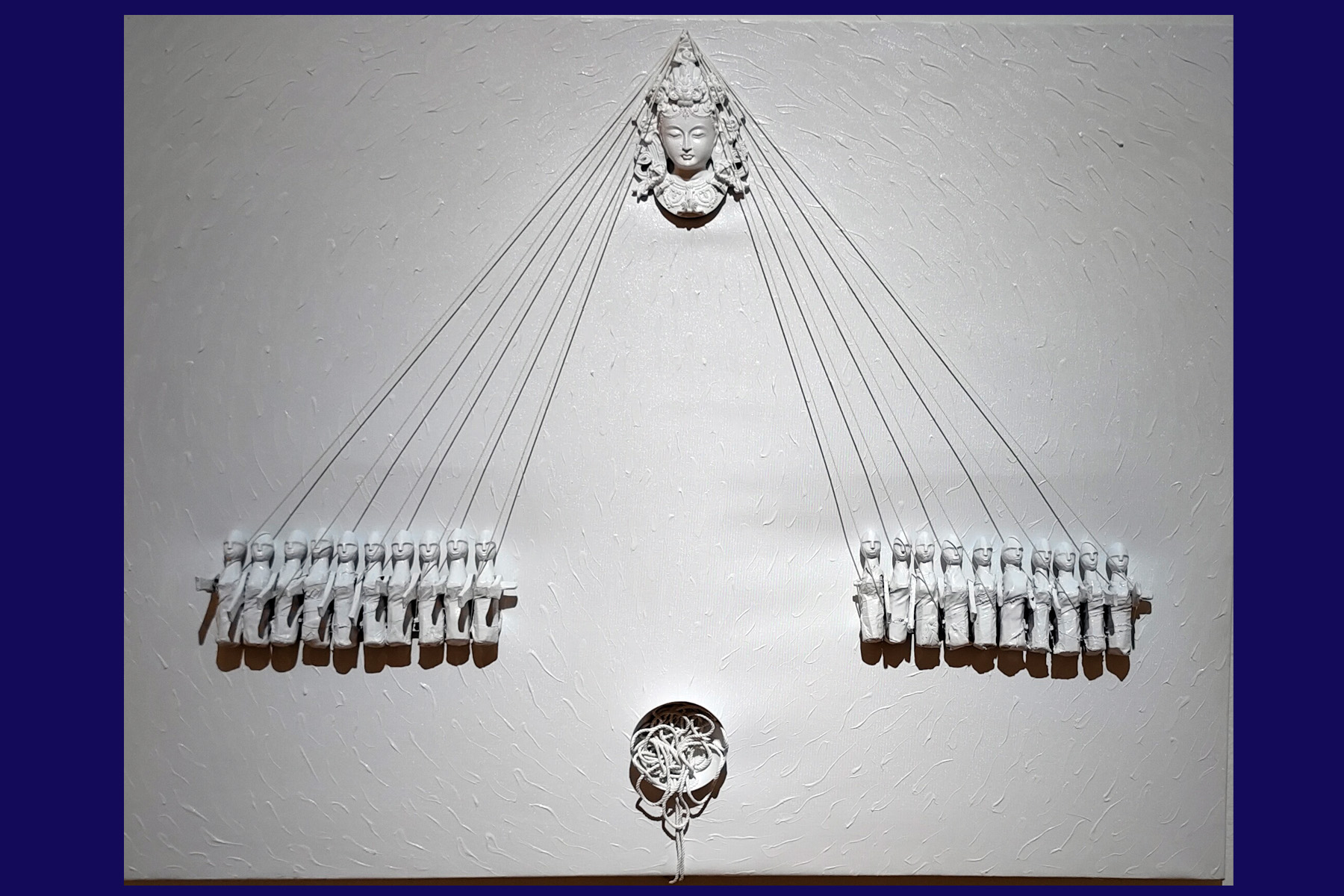
In the adjacent hall, a large mural of Matsyendranath by the talented artist Sushila Singh is displayed. This hall also features a piece by Suresh Doyla, depicting the tradition of carrying deities during festivals. Additionally, artist Jyoti Prakash presents an experimental work where deities are manipulated by strings like puppets, symbolizing the idea that human life is directed by unseen forces, and free will is an illusion.
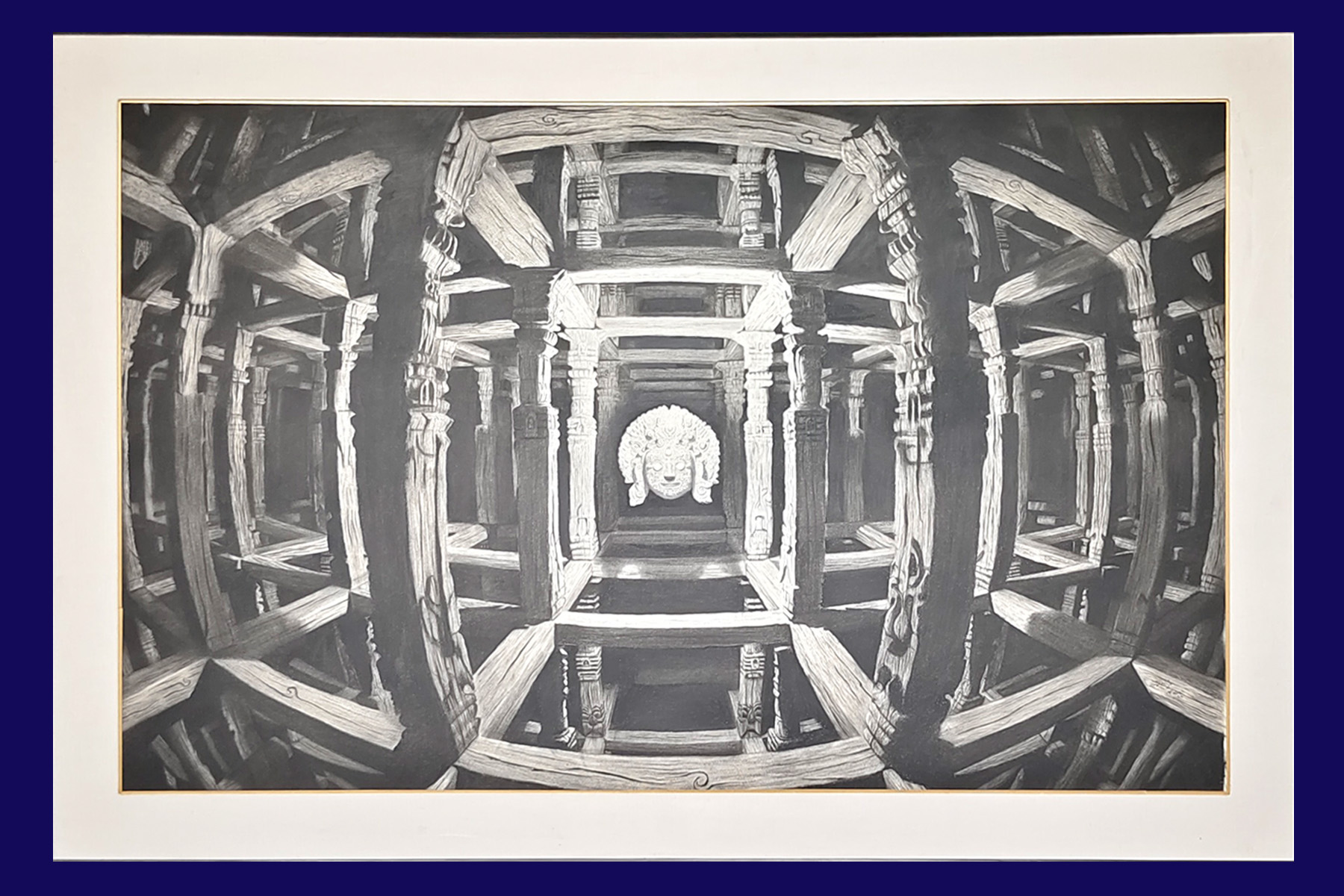
On the first floor of the gallery, upon entry, you will encounter another installation by Sushila Singh. This piece represents the narrow, small-doored alleys commonly seen in Kathmandu Valley and its neighboring districts. Just behind it is an intricately crafted Shiva Linga by artist Chandra Shyam Dangol. This gallery space features various deities, all skillfully created by talented artists. At the entrance of the gallery hall, you will find a large canvas that appears as a 3-D image of Bhairava, crafted by the young and promising artist Manish Dhoju. Set against a black background, this pencil-sketched image holds a distinct and prominent place in the exhibition.
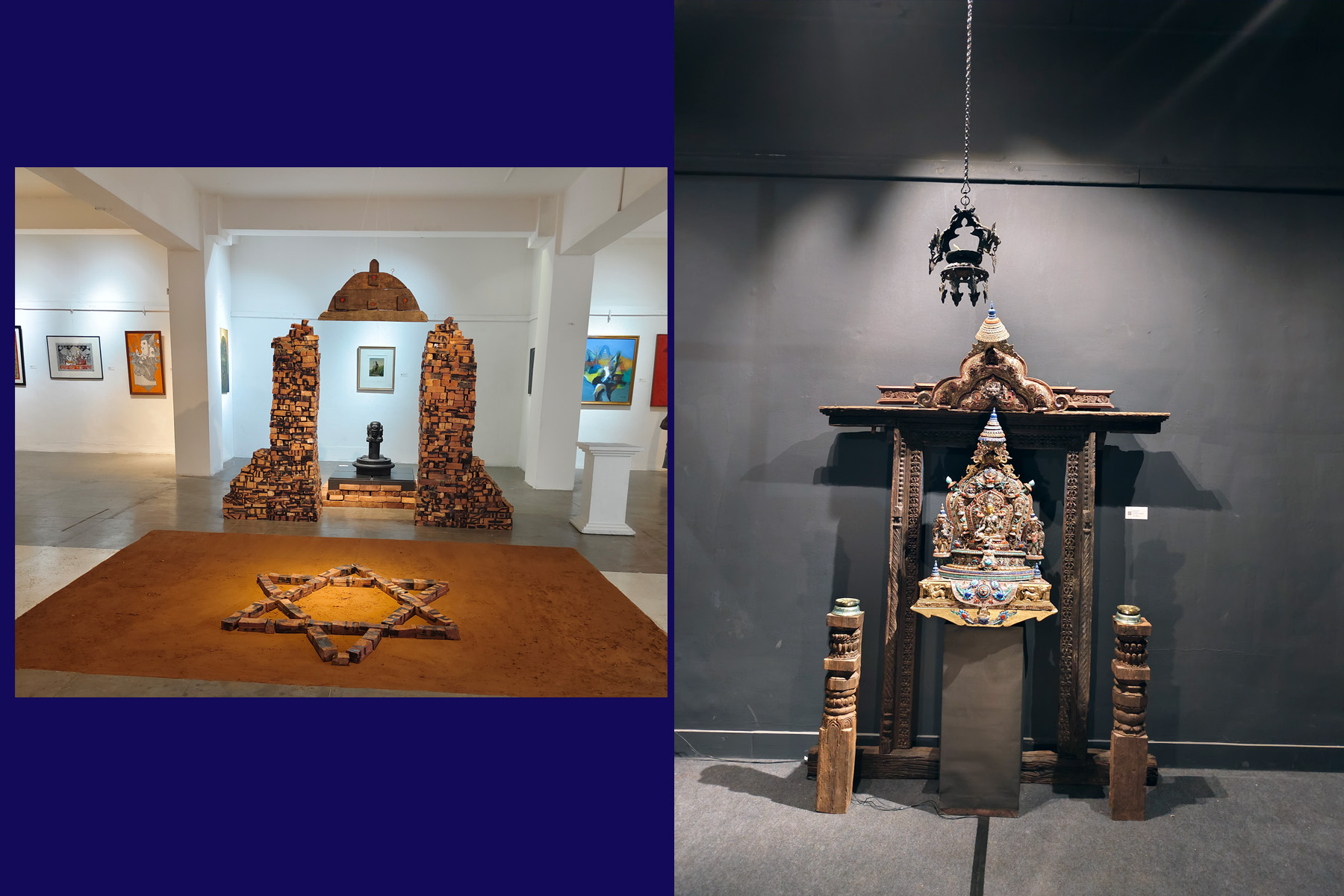
Similarly, the works of artists such as Jeevan Rajopadhyay, Ragini Upadhyaya, Naresh Sainju, and S.C. Suman are also featured on this floor.
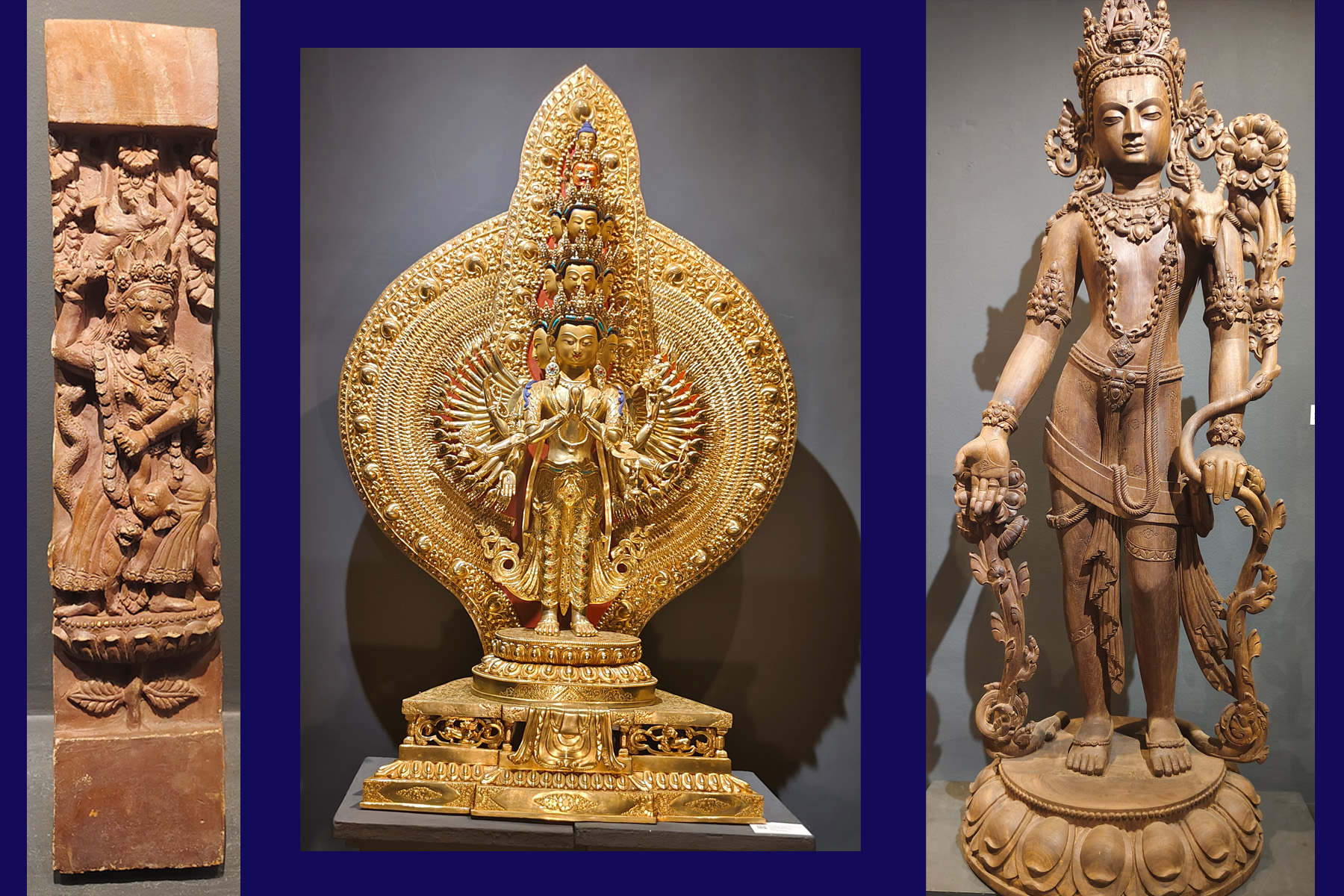
On the next floor of the gallery, you will find installed images of deities that inspire a deeper level of contemplation. The displayed idols are unique, each possessing its own distinct style. Works by artists such as Bijay Maharjan and Pradeep Shakya, among others, are featured here. On the top floor, a documentary on Nepal’s lost-wax technique, produced by the Rubin Museum, is also on display. This one-of-a-kind exhibition runs until June 10th. Be sure to visit the Nepal Art Council to experience the entire collection in person.


Leave A Comment