






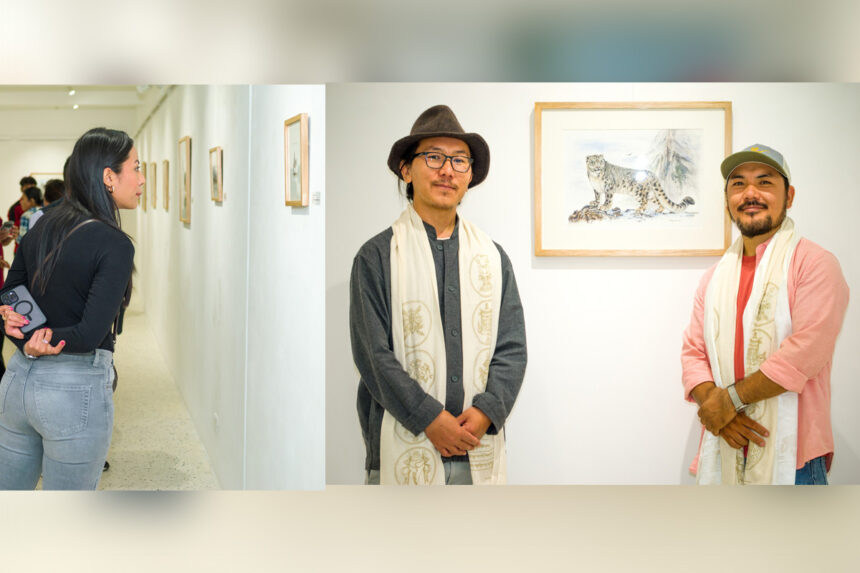
Echoes of the Highland is not merely an exhibition-it is a quiet prayer, a visual meditation on the delicate harmony between people, nature, and culture in the highland realms of Nepal. Each brushstroke carries the breath of the mountains, the murmur of grazing winds, and the unspoken stories of those who still live close to the earth. Inspired by the rhythms of nature and rural life, the works capture identities that are gradually fading into memory, their roots entwined with the rugged landscapes they call home. In these remote sanctuaries, life flows in rhythm with the seasons; rituals blend seamlessly with survival, and nature is not a backdrop but the very essence of existence The exhibition is going on at the Takpa Gallery, Lazimpat from 11th o f October till the 8th of November.
Among those who paint these echoes are Pasang Dolpo and Wang Lama, two artists bound by the spirit of the highlands. Pasang hails from the remote and mystical Upper Dolpo, where the winds carry the scent of juniper and yak bells echo across the ridges. His childhood unfolded amidst the stone-built houses and grazing pastures of his ancestral land before he journeyed to India to study art. Years later, he returned to Nepal-carrying with him both the refinement of formal training and the raw essence of the Himalayas. For Pasang, Echoes of the Highland is deeply personal; it is a homage to home, to memory, and to a way of life slipping quietly away.
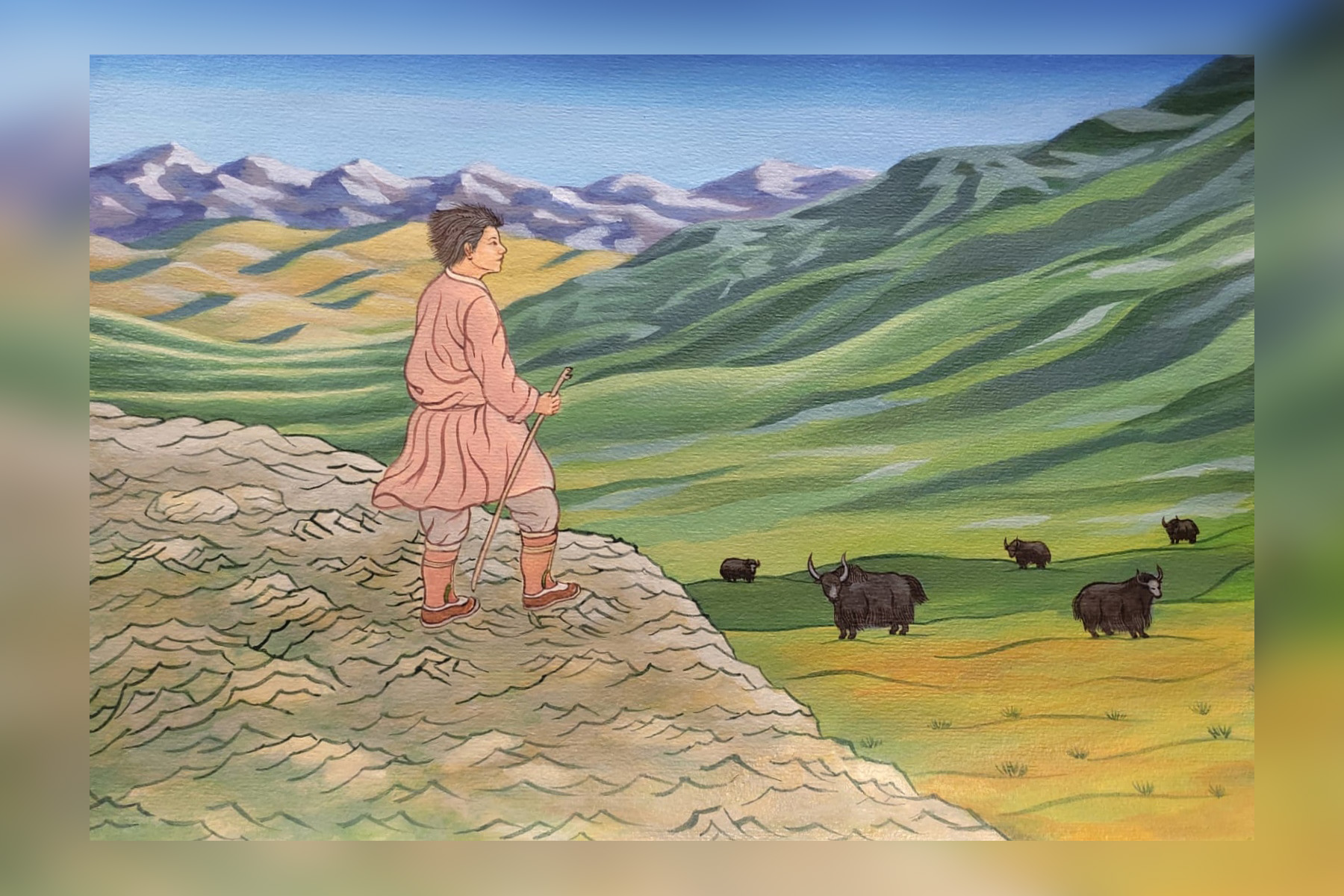
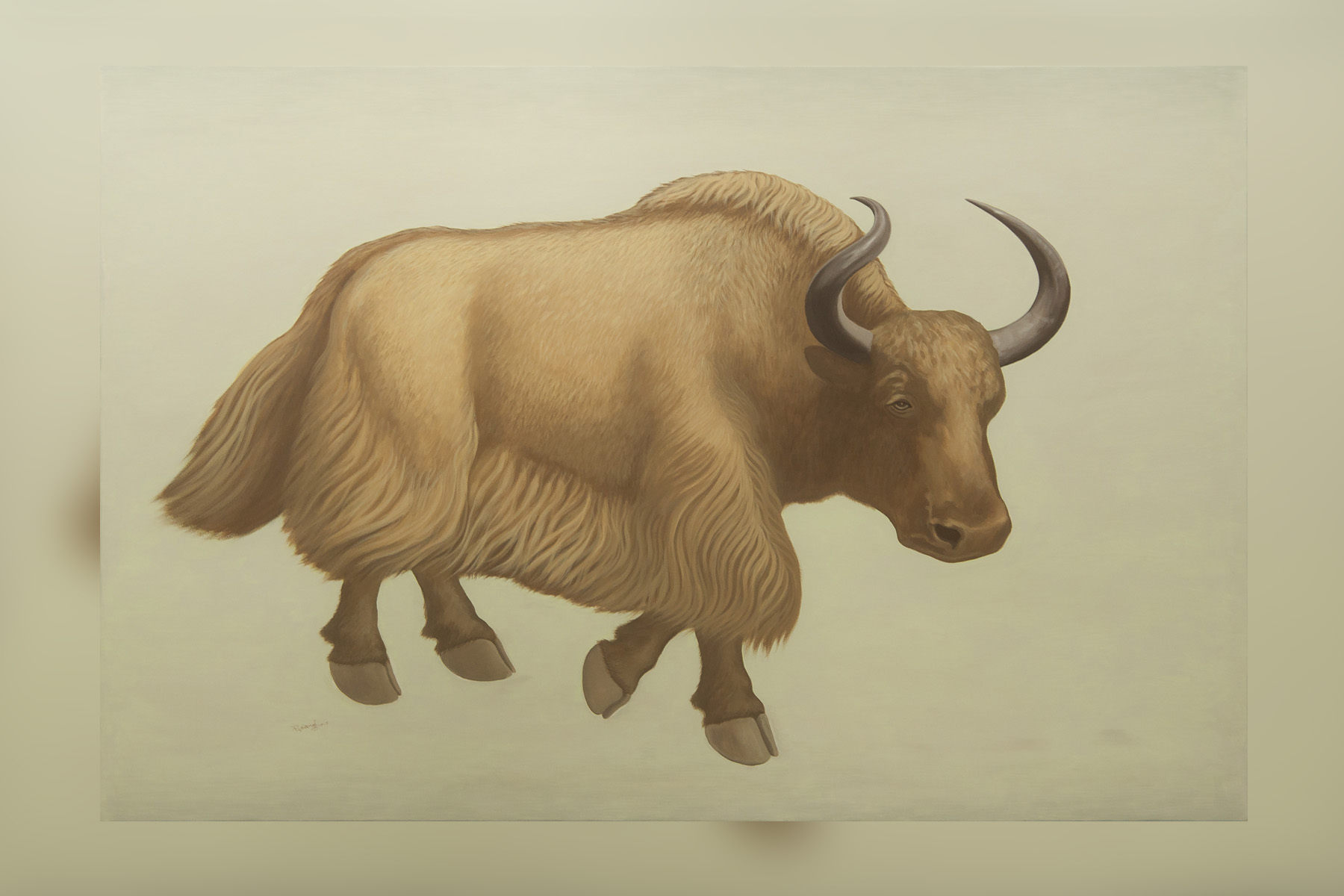
In Dolpo, yak-grazing is more than livelihood—it is tradition and communion. During summer, families ascend to the high pastures for six months, living beneath the open sky while herding their animals. These panoramic landscapes, vast and unbounded, find their way into Pasang’s canvases-paintings that breathe the stillness of the highland and the pulse of its people. His involvement in the film Sambhala also reflects this spirit of continuity. During the lockdown, filmmaker Min Bahadur Bham, searching for cast and crew in Boudhamath, met Pasang, and their collaboration bridged cinema and painting-both seeking the sacred essence of Himalayan life. This exhibition marks Pasang’s official debut in Nepal, though his art carries the weight of generations.
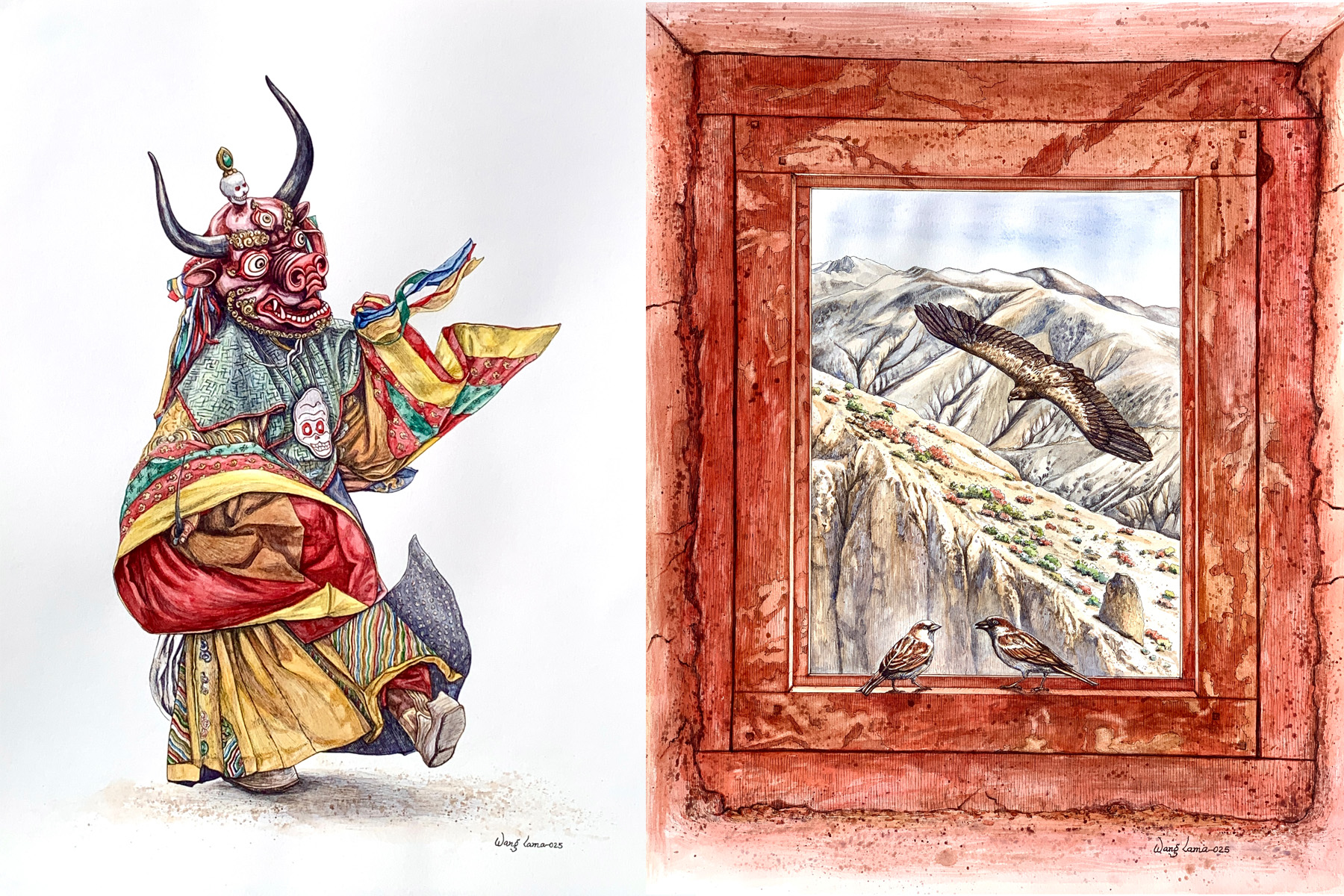
Beside him stands Wang Lama from Humla, another remote yet vibrant highland. A graduate of Kathmandu University, Wang’s work is deeply rooted in the landscapes and rituals of his upbringing. He recalls the mask dances of his village—their vivid colors, the ritual gestures, the way elders tied their hair before donning sacred masks. These living traditions, now on the brink of disappearance, reappear in his paintings as symbols of memory and resilience.
As a travel-based artist, Wang’s journeys through Mustang awakened new visions. Once, he encountered an ancient tree standing solitary amid the vast expanse—a witness to countless storms and seasons. To him, the tree became a metaphor for endurance; if nature could survive so many tempests, so too could humankind. In another of his works, he frames the view of Mustang through a red window—inside which a golden eagle, now endangered, soars over a valley where sparrows still flutter close to human dwellings. The eagle speaks of wilderness; the sparrow of intimacy. Together, they form a delicate balance—nature and humanity entwined.
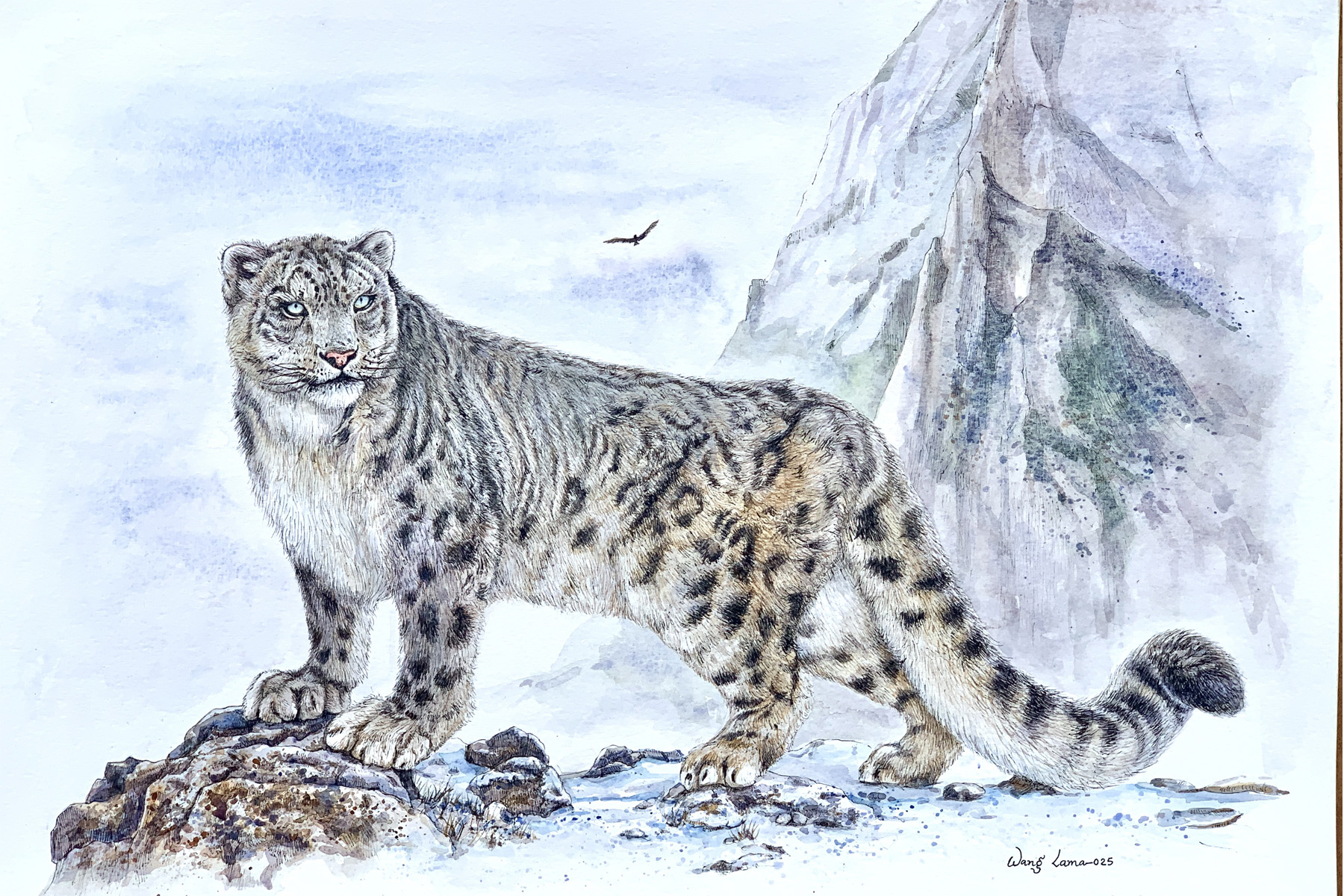
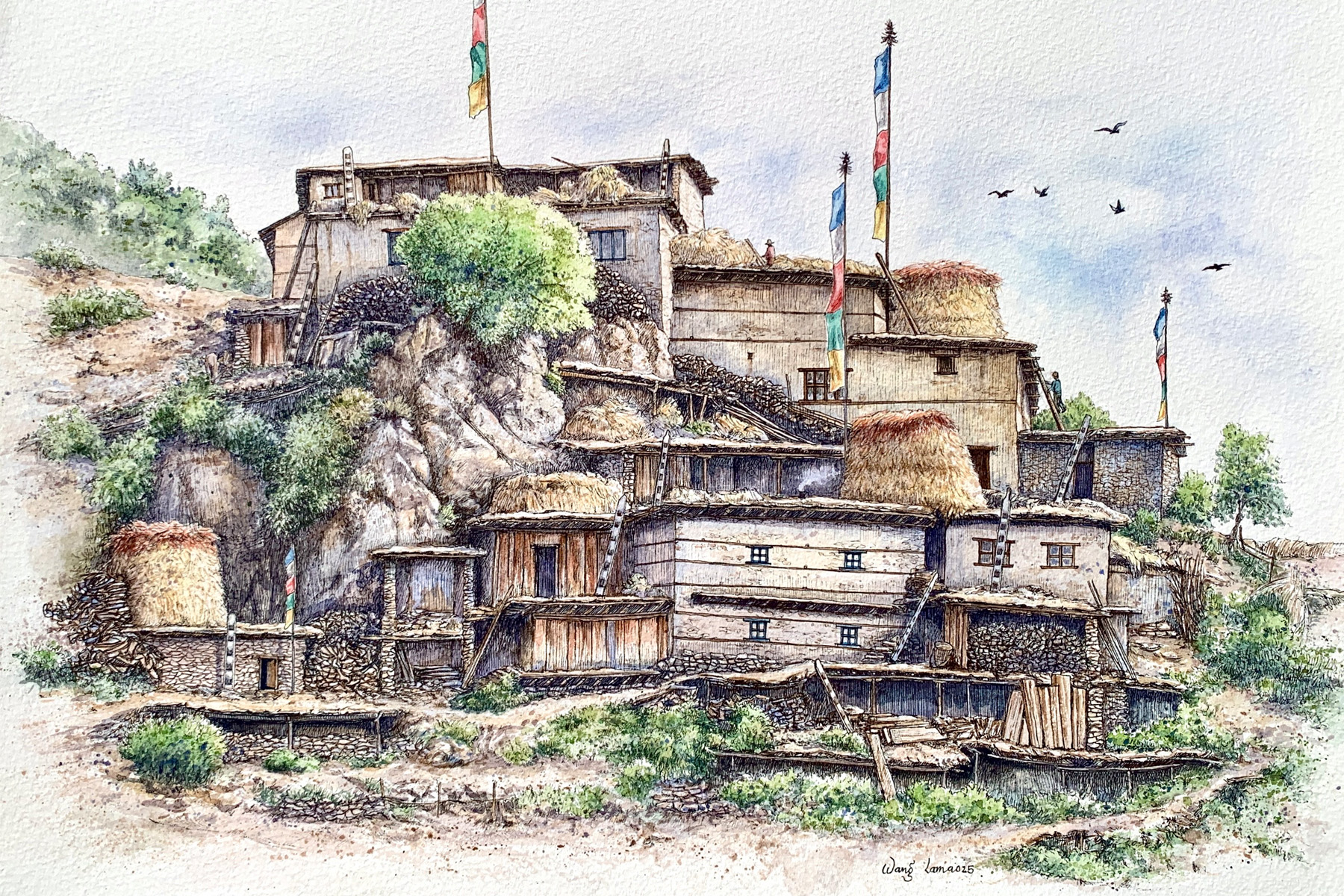
His painting of the snow leopard, inspired by an October sighting in the highlands, embodies the soul of the mountains. The snow leopard, elusive and regal, is the keeper of ecological balance-its presence a reminder that even the fiercest beauty depends on harmony. Wang also captures the architecture of Humla, where homes rise from sloping land, built layer by layer with wood and mud, testaments to human perseverance. Yet, with migration and modernization, these homes stand empty, their walls echoing with silence—the very silence his art seeks to awaken.
One of the visitors at the gallery, Mr. Sergio Couto, had all but praise for these artists duo, he stated, ‘these highlands of Upper Dolpo and Mustang region is always dear to me and to see the reflection of the artists and their creativity is very much inspiring.’
Echoes of the Highland is thus both a tribute and a lament. Through texture, color, and form, Pasang and Wang weave stories of belonging and loss-urging us to remember what is vanishing. Their art reminds us that when our bond with land and lineage frays, what remains are only whispers-faint echoes carried by the wind from the highlands.

Leave A Comment