

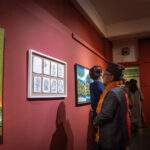





Landscapes in Contrast unfolds as a quiet yet evocative exchange between two artistic worlds that seem far apart, yet are tethered by a shared sense of place. Bringing together the works of Akash Budha Magar and Manoj Tamang, the exhibition reflects on how urban rhythms and rural stillness gently shape the way we see, remember, and locate ourselves in the world. Through contrasting materials, moods, and visual languages, the artists trace a delicate conversation between motion and pause, sprawl and settlement-inviting viewers to sense how the restless city and the grounded village coexist within a single, evolving idea of home. The exhibition is on view at Takpa Gallery, Lazimpat, from December 13 to January 10.

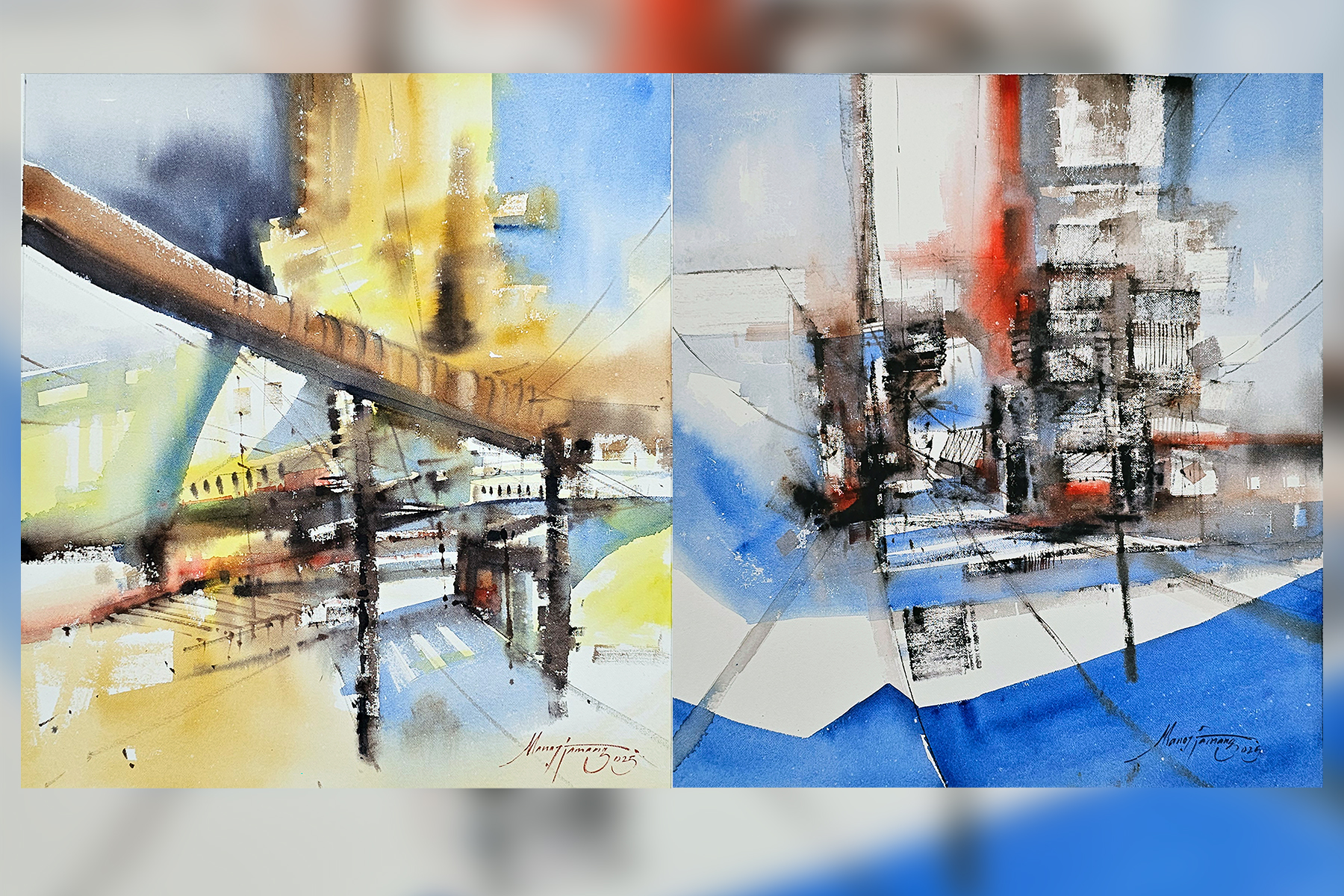
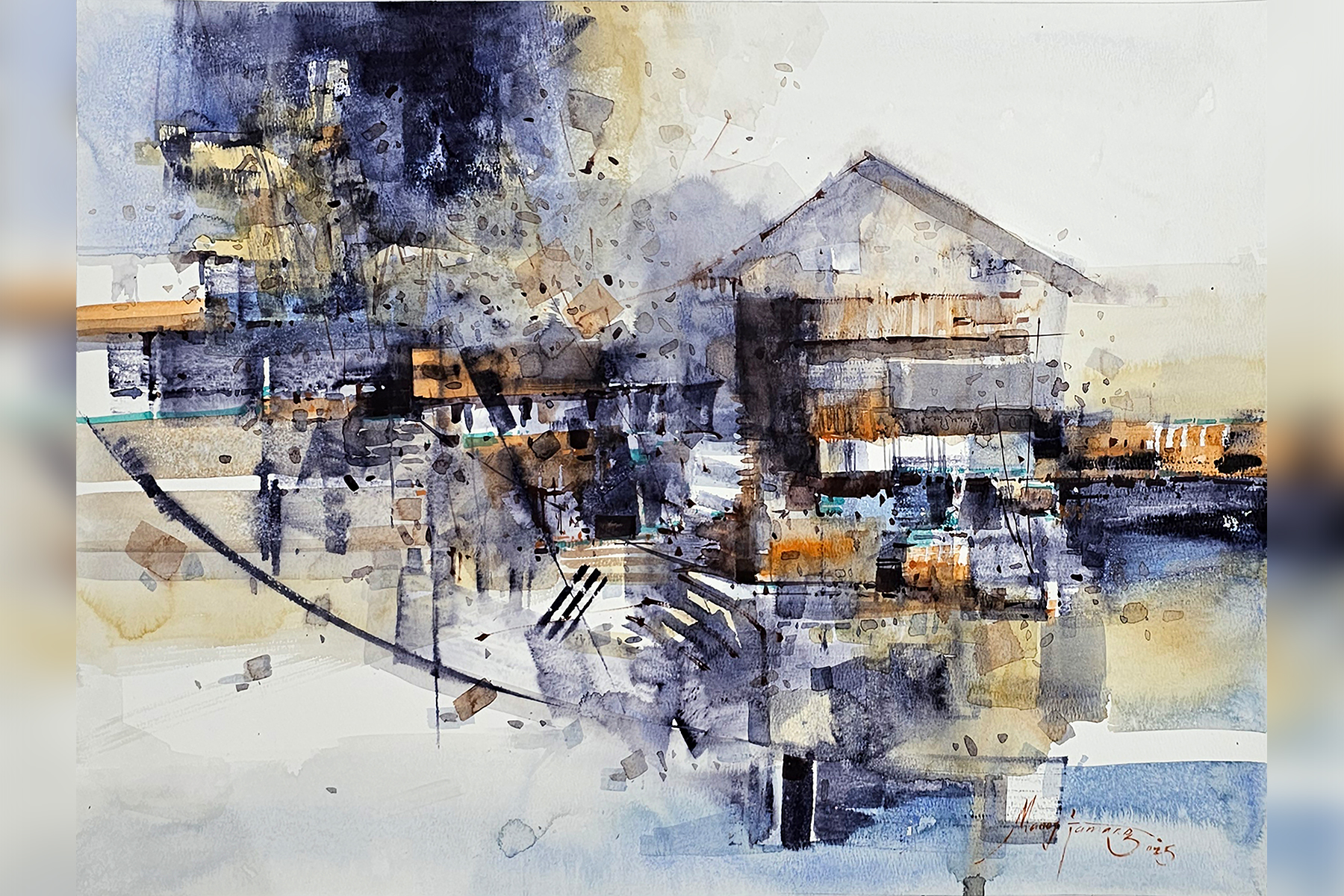
Manoj Tamang’s watercolours emerge as lyrical reflections on the pulse of city life. Through layered washes, fractured lines, and fluid geometries, metropolitan spaces appear in a state of perpetual motion. Rather than documenting recognisable streets or structures, Manoj translates the city’s inner rhythm-its density, glow, and ceaseless reinvention-into movements of colour and cadence. His cityscapes seem to breathe and quiver, revealing the urban world not as a fixed form, but as a living, shifting presence shaped by transient moments and fleeting impressions.
In quiet counterpoint, Akash Budha Magar’s acrylic paintings turn toward the rooted intimacy of rural life in eastern Rukum. His canvases dwell in kitchens, courtyards, windows, and humble interiors-spaces shaped by repetition, tradition, and the slow passage of generations. Bathed in earthy hues and softened light, these works honour the tactile poetry of village life, where familiarity gathers gently over time and memory settles into the everyday, carried by objects worn with use and care.
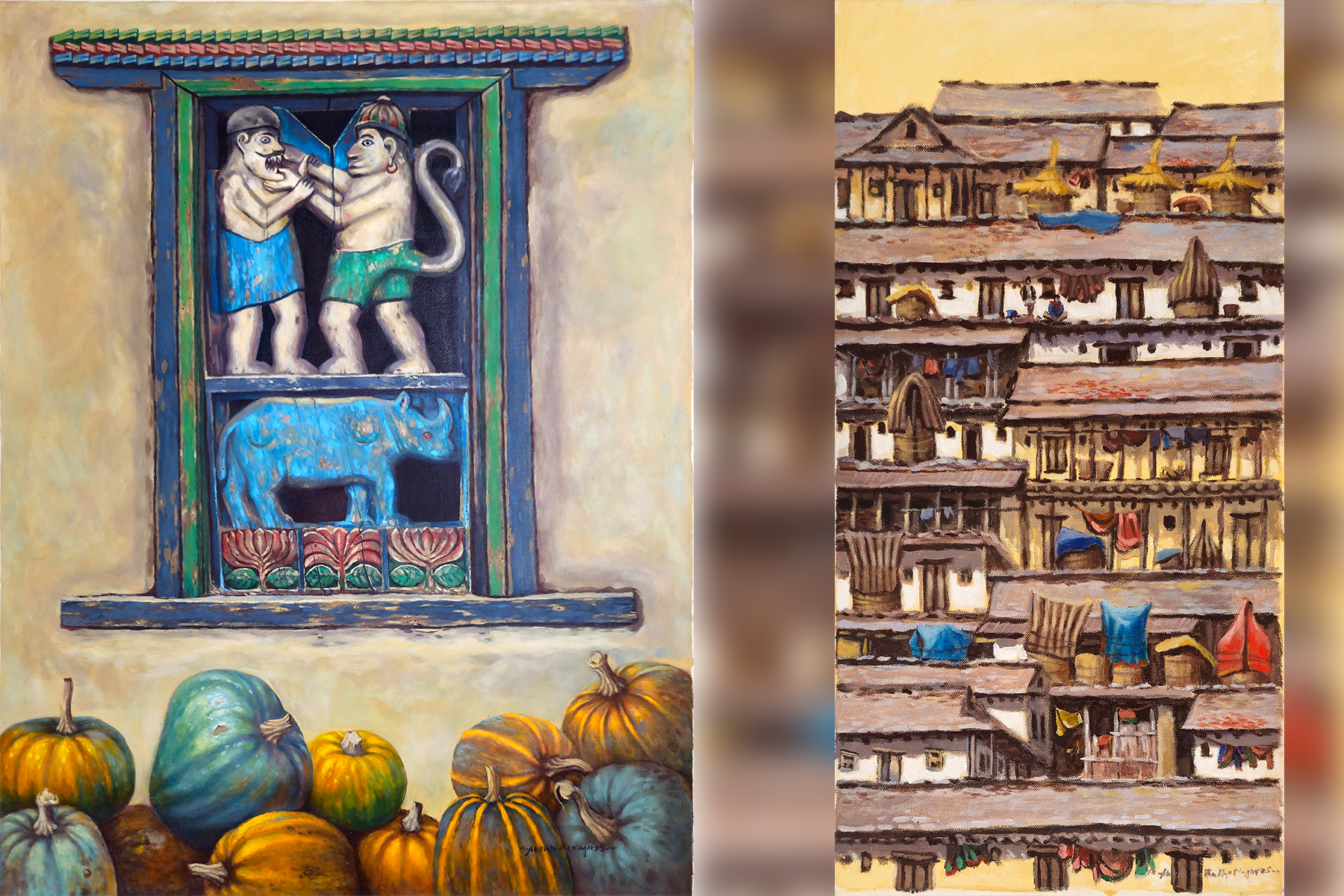
One canvas lingers on winter kitchen utensils, arranged with a quiet precision that transforms the everyday into something gently lyrical. Another frames a window beside ripening pumpkins, evoking a moment when a newly built house- then the only one brushed with colour- stood apart in the landscape. The pumpkins, native and unmistakable to the region, emerge as emblems of place, carrying both familiarity and a sense of quiet distinction.
In Takshera Village, Akash turns his gaze toward a terrain shaped by maize, the lifeblood of the region. Stored in every reservoir, the grain defines both sustenance and scenery. The painting reveals a distinctive architectural intimacy, where one home’s roof becomes another’s floor, forming a layered settlement that is at once practical and visually compelling, shaped by necessity and communal rhythm.
In another work, the recurring motif of the window returns, this time revealing a local practice in which mud is applied over wooden frames to guard against infection and decay. The gesture is humble yet deeply resonant, speaking to an inherited wisdom-an understanding of environment, care, and survival passed down through lived experience.
Together, Manoj Tamang and Akash Budha Magar offer more than a contrast of perspectives. Their works converge into a shared meditation on how landscapes—whether built of concrete or formed from earth—inhabit our inner worlds. Landscapes in Contrast invites viewers to reflect on how the velocity of the city and the stillness of the village quietly shape memory, identity, and the many meanings we attach to home.

Leave A Comment