
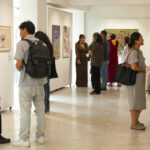
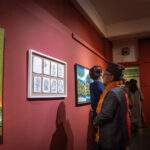
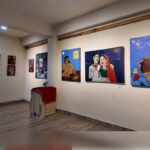
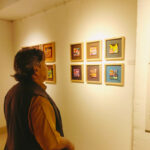

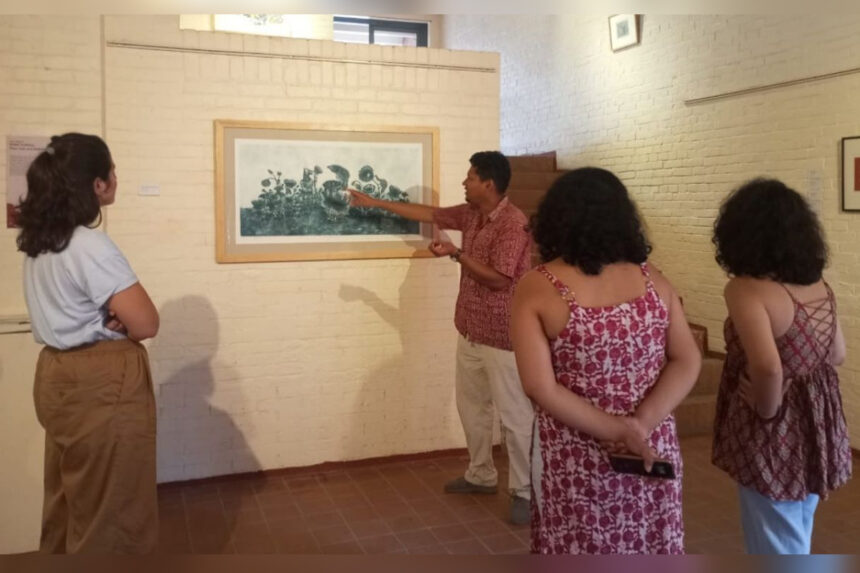
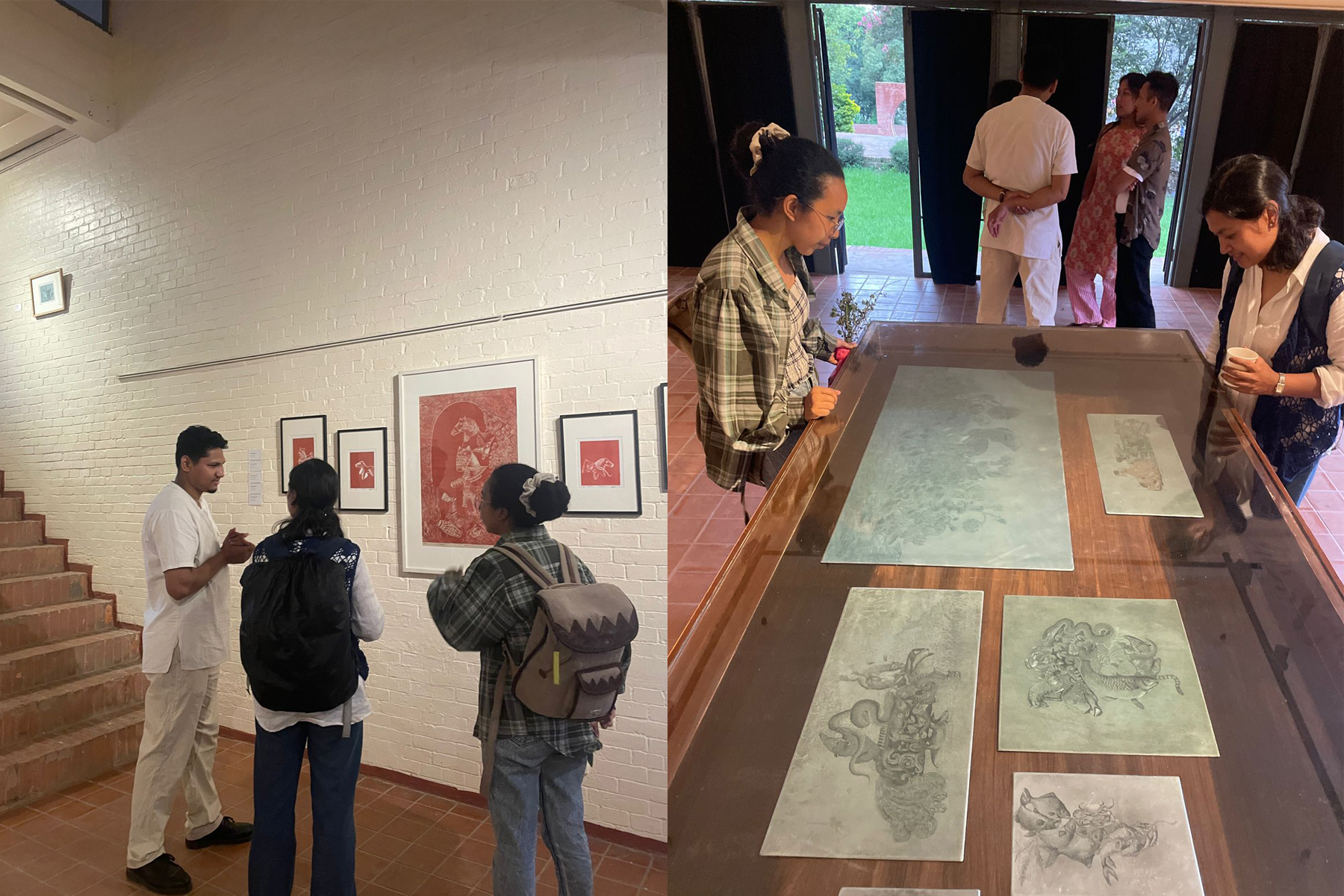
Taragaon Next has come alive with the vibrant energy of a new exhibition, showcasing the evocative works of Artist in studio Manu Kumar Chaudhary, entitled ‘Etched Traditions: Tharu roots and rhythms’. Hailing from the southern plains of Nepal-specifically the culturally rich town of Birgunj-Chaudhary carries with him the deep-rooted heritage of the Tharu community, one of the country’s indigenous groups whose oral histories and symbolic traditions pulse through his art.
A recent graduate in Studio Art and Printmaking from Kathmandu University, Chaudhary has spent the past months immersed in the creative atmosphere of Taragaon’s studio space. During his residency, he has meticulously crafted a series of powerful print images that breathe life into the narratives, rituals, and daily rhythms of his community-stories often whispered across generations but rarely seen on gallery walls.
This exhibition, which commenced on the 3rd of July, stands as a testament to his journey as both an artist and a cultural narrator. It invites visitors into a visual dialogue that spans memory, identity, and belonging. The showcase will remain open to the public until the 16th of July, offering an intimate glimpse into a world where tradition and contemporary artistry converge.
The print-works on display stir a quiet curiosity in the hearts of visitors, drawing them into a delicate dance of image and narrative. Each piece becomes a whisper-half-seen, half-felt-where stories unfold not in words, but in textures, shadows, and lines that echo the soul of a people.
These are not just pictures-they are inherited memories, born from the rich oral tapestry of the Tharu community. Manu Kumar Chaudhary does not merely create; he listens. As an artist rooted in the studio, he reaches inward, tracing the myths, rituals, and rhythms of the lives he has known since childhood. The stories he grew up hearing around firesides, under starlit skies, or through the voices of elders now rise again in ink and form, reverberating across paper like ancestral chants.
The exhibition also opens a window to his earlier creations-fragments of his artistic journey that still hum with the same earthy resonance, forming a quiet continuity with his newer works. Together, they beckon viewers to not only look, but to feel-to lose themselves in a space where the personal becomes communal, and memory is made visible.
This moment marks a profound milestone for Manu-it is his very first solo exhibition, and his spirit brims with quiet excitement and humble pride. With every print on the wall, he opens a window into his world, inviting visitors to step into the sacred and storied landscape of his roots.
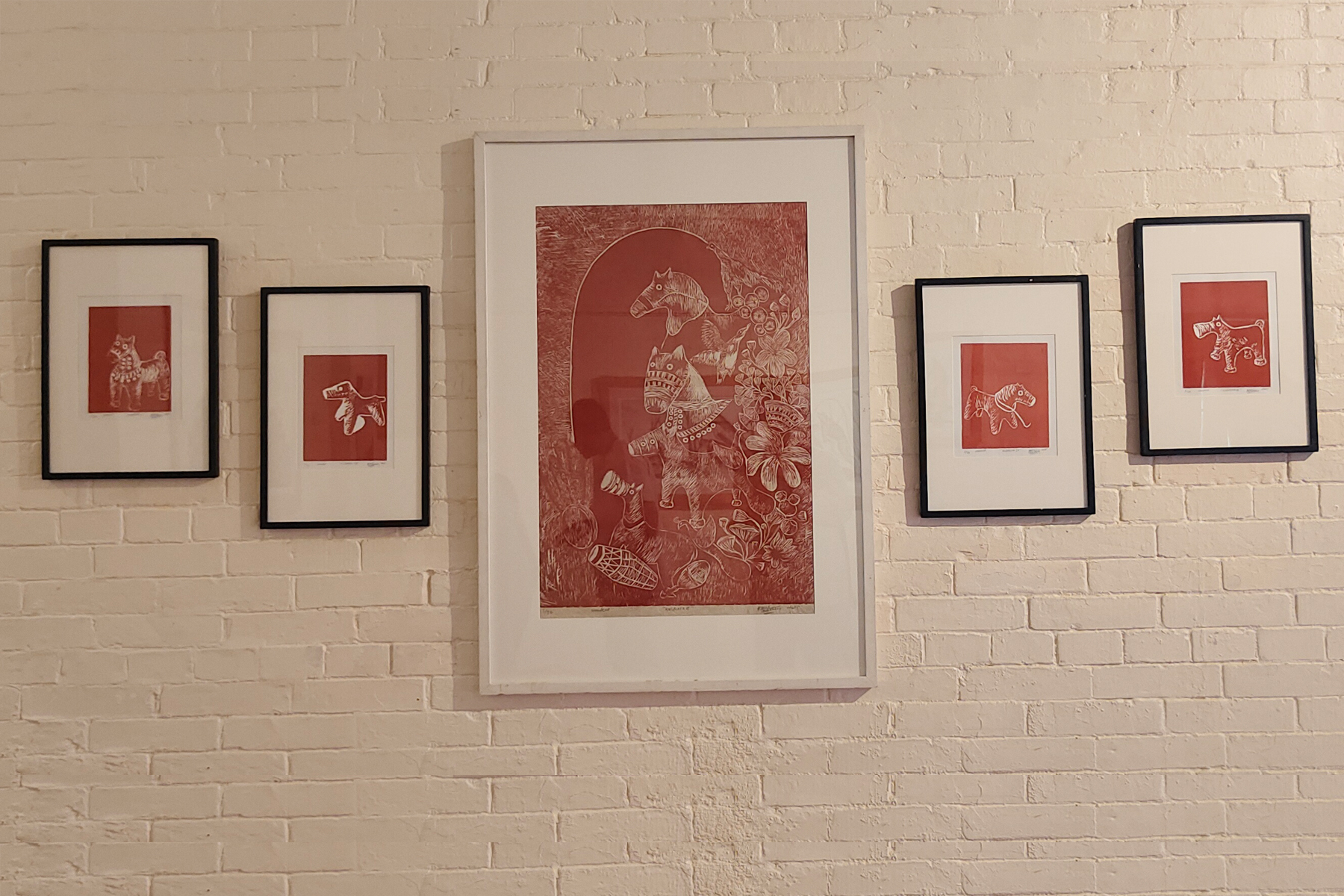
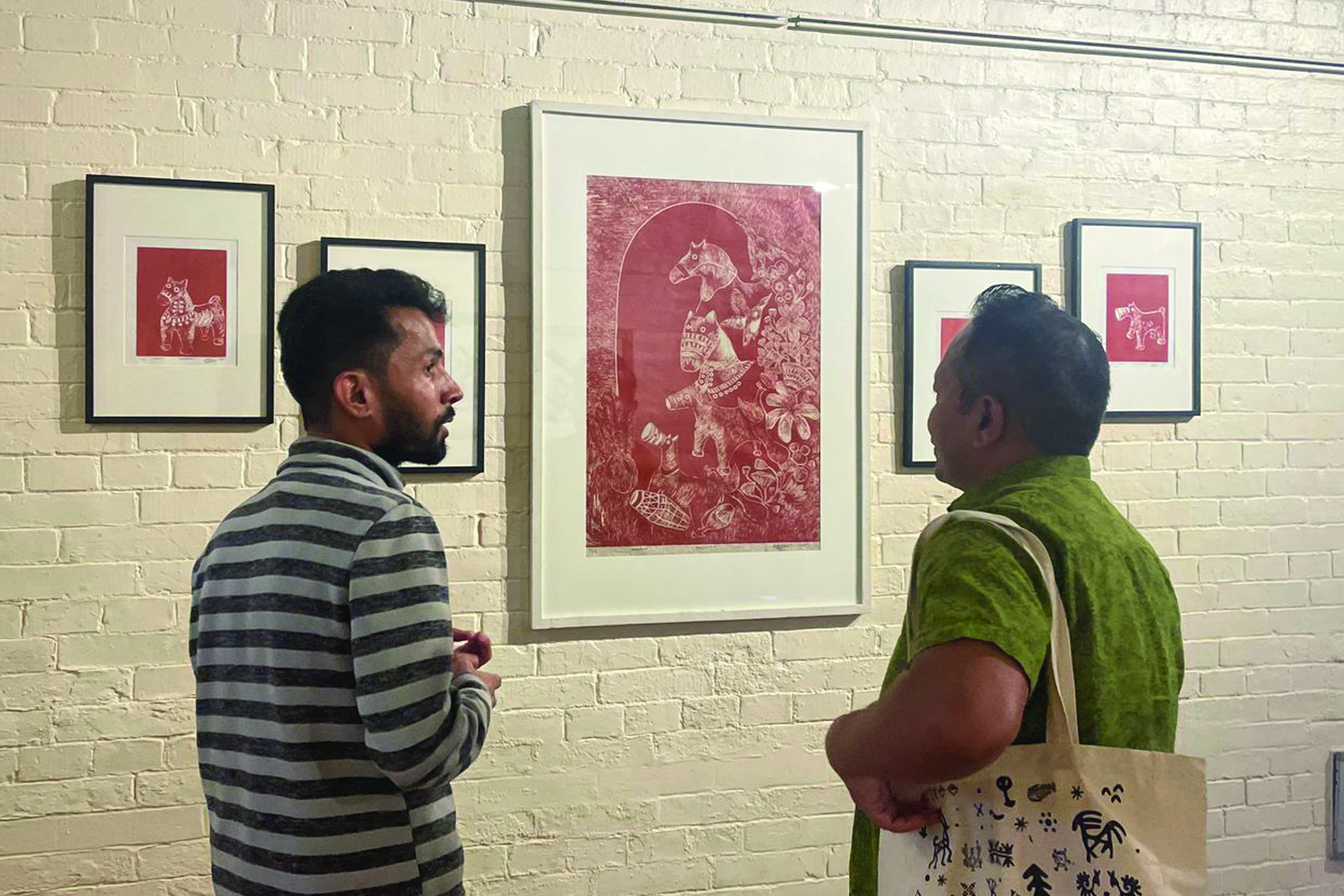
Among the many works that speak of ancestral echoes and whispered myths, one motif gallops forward with striking presence-the red horse. Not merely an animal, but a guardian spirit, the kul devata, revered by the Tharu community as the protector of bloodlines and memory. Manu breathes life into this sacred symbol through the age-old process of etching, rendering the crimson figure with reverence and detail, its form shaped by tradition, its posture infused with meaning.
The red horse emerges again and again-its body bold, yet imbued with spirit-just as it has long existed in the ritual art and collective imagination of his people. In these prints, the horse does not just stand still; it watches, it guards, it remembers. It becomes a bearer of the past galloping into the present, reminding each viewer that myths are not lost-they are simply waiting to be reawakened through art.
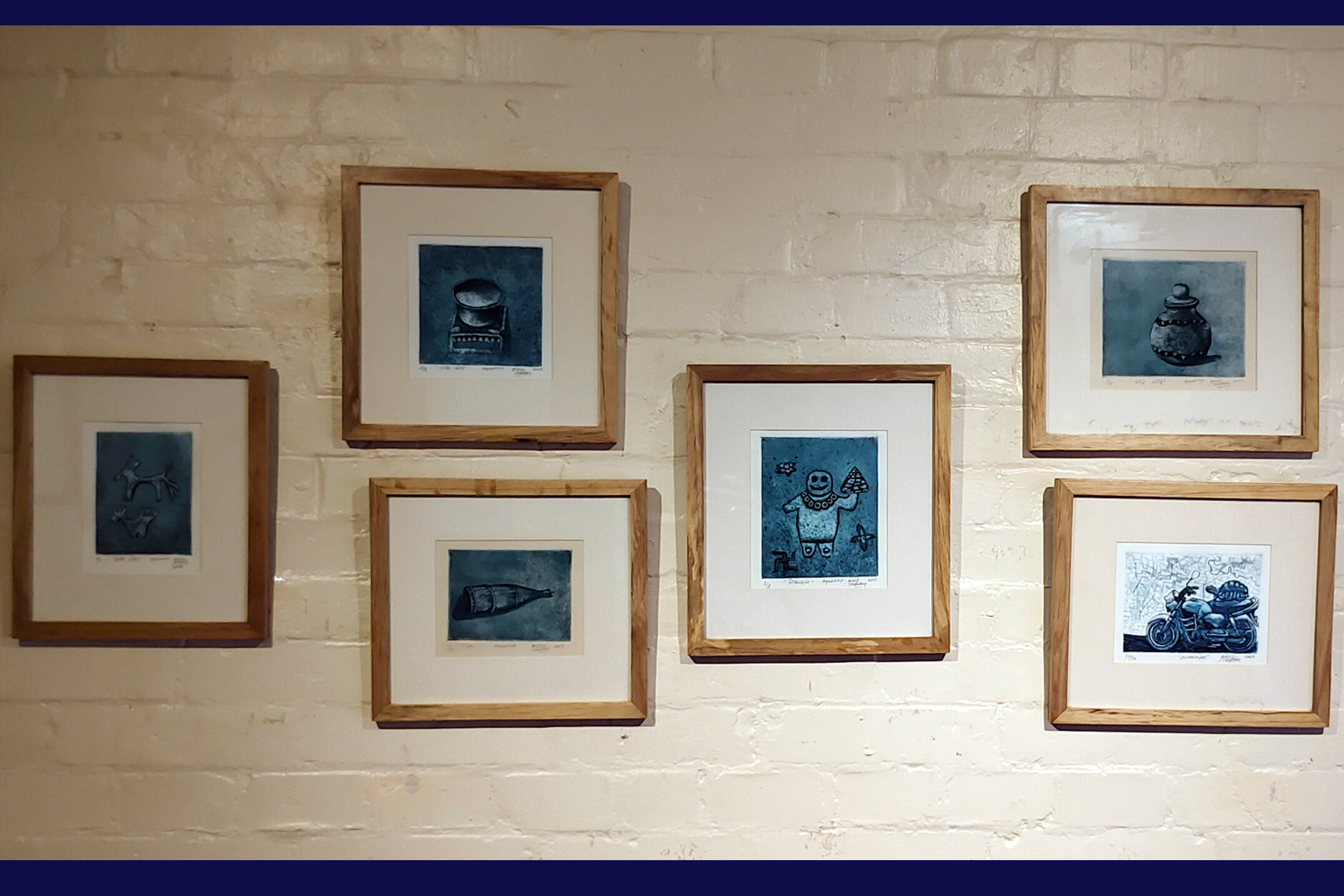
Another captivating piece in the exhibition draws the eye not through grandeur, but through the poetry of everyday life-a quiet tribute to the humble agricultural utensils of the Tharu household. Etched with care, this artwork captures the age-old practice of tucking these tools beneath the sloping roofs of village homes, a method both practical and poetic. “It’s a way to save space and keep things within reach,” Manu shares, his voice laced with the familiarity of lived experience. What may seem mundane to some is, through his eyes, transformed into a symbol of ingenuity and rhythm of rural life.
Woven throughout the exhibition are stories that pulse with the heartbeat of the Tharu community’s daily rituals-their labor, their traditions, and their intimate relationship with the land and water. Among these narratives, their deep bond with the river world emerges vividly. Fishing, an integral part of their sustenance and culture, finds graceful expression in Manu’s work. The segmented forms of fish-rendered in deliberate, almost sacred arrangements-speak of more than just survival. They evoke a sense of belonging, of being in harmony with the river’s flow, and of honoring the life it gives.
Together, these artworks become more than visual records; they are vessels of memory and meaning, preserving the tactile beauty of a community’s way of life.
In much the same spirit of quiet observation, Manu found himself captivated by the ancient water systems of the Kathmandu Valley upon moving here. The artist, accustomed to the flatlands of Terai, was drawn to the stone spouts and communal taps that dot the city-each not merely a source of water, but a sculptural wonder infused with myth and symbolism. In his artworks, he tenderly inscribes these sacred guardians of the valley’s waters: serpents coiled with silent vigilance, the fierce wings of Garud, the enigmatic faces of Xeppu. These elements do not merely adorn-they protect, embodying a spiritual ecology where water is life and sacred lore flows just beneath the surface.
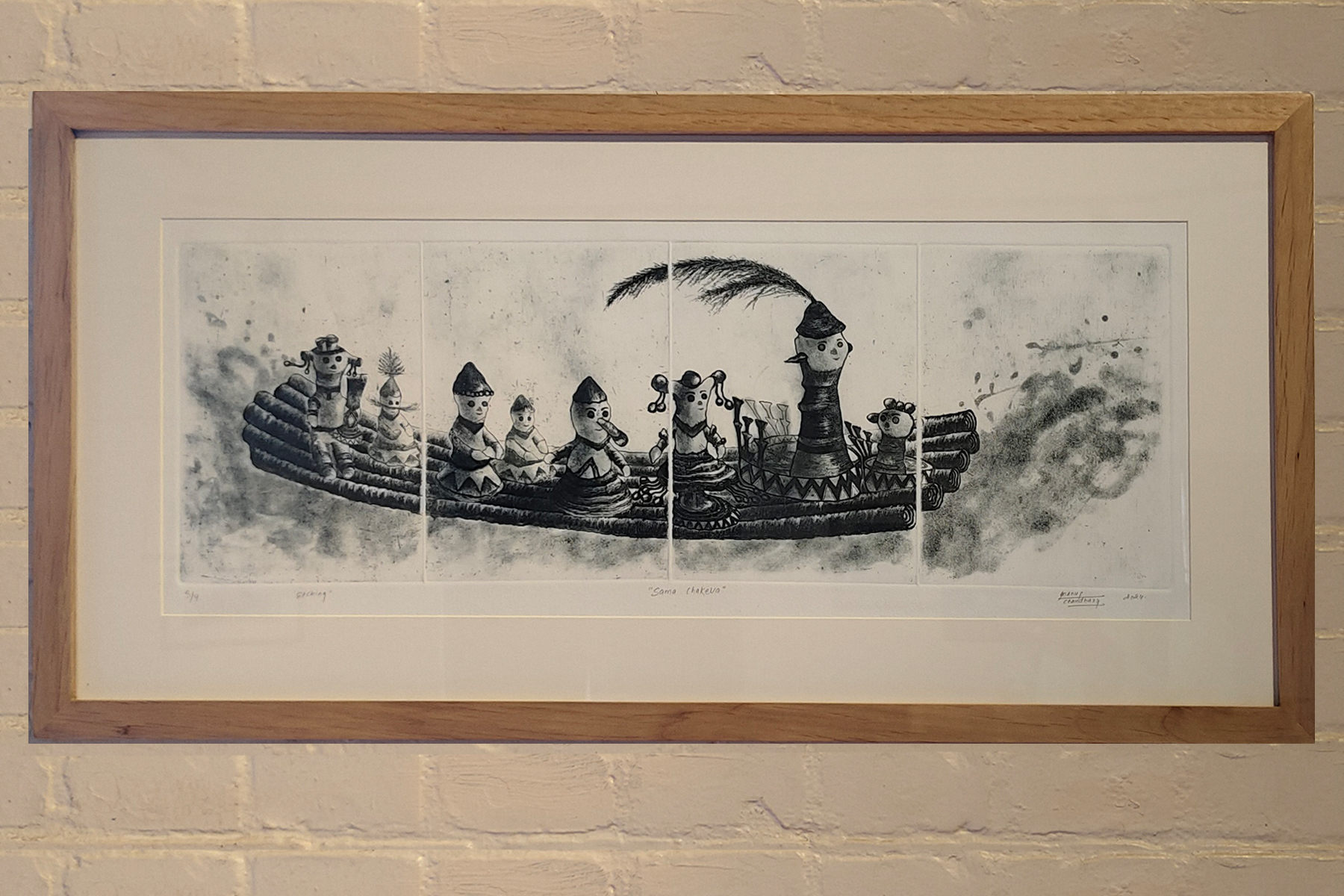
This reverence for tradition continues in his portrayal of the musical instruments of the Tharu community. Rendered in his own distinct visual language, these instruments rise from the canvas like relics of sound-quiet yet resounding. Drums, flutes, and stringed pieces appear not just as objects, but as carriers of rhythm and memory, evoking the beat of feet in ritual dance and the echoes of communal gatherings.
In this way, the exhibition becomes a living bridge between the sacred and the everyday, between the distant murmur of rivers and the echoing courtyards of Kathmandu. Manu’s works remind us that music, like water, flows through the veins of civilization-binding us, carrying us, and telling our stories long after words have faded.
“I feel deeply connected to the monochromatic works Manu has created,” shares gallery visitor Mr. Samir Bohora, his gaze lingering on a delicate etching. “Having witnessed the communal life of the Tharu people myself, his art feels instantly familiar-like stepping into a memory I didn’t know I still carried. Each sketch is crafted with such sensitivity and intention.”
Indeed, Manu’s visual language-subtle, raw, and evocative-speaks to those who have felt the pulse of community life, the rhythm of shared rituals, and the quiet dignity of tradition. His works do not shout; they hum with a timeless resonance.
The exhibition remains open until the 12th of July, nestled in the serene corners of Taragaon Next. For those who hold a love for art, culture, or the stories that live between ink and silence, this is a show not to be missed. Come witness the journey of Many Kumar Chaudhary-a rising artist who paints not just with pigment, but with memory, myth, and heart.

Leave A Comment