
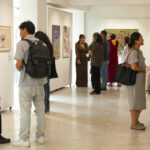
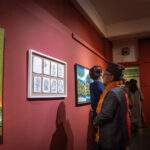
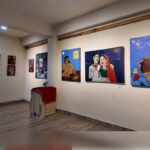
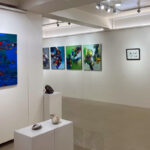
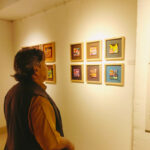

For the past eight years, each September has unfurled the Festival of Himalayan Art—a luminous gathering where artists, steadfast in their devotion to the Nepali art scene, converge to share the hues of their visions, the cadence of their emotions, and the language of their craft. Year after year, this celebration blooms, not merely as an exhibition, but as a journey to discover the evolving tastes and quiet longings of Nepali art collectors. At its heart lies a belief—that Nepali art must find its way beneath every roof, so that it may open doors to new dimensions of thought and beauty. This year, the six-day odyssey began on the 8th of August, continuing its graceful course until the 14th, within the storied halls of the Nepal Art Council, Babarmahal.

This year, the paintings find themselves cradled in generous space-each allowed to breathe, to speak, and to be heard in its own quiet language. For this, gratitude flows to the curatorial duo, Sagar Manandhar and Pratima Thakali, whose vision and thoughtful placement transform the gallery walls into a harmonious dialogue of colors and forms.
The Kastamandap Group, now woven deeply into the fabric of Nepal’s art history, stands as a collective of steadfast and spirited creators. Day after day, they navigate the boundless terrain of imagination, their artistry and optimism kindling inspiration in countless others. This year, their call to create resonated widely-drawing more than 120 artists to lend their hands, hearts, and visions to the exhibition.
This section turns its gaze toward a few of the exhibition’s most arresting works. Though the canvas of this article could easily stretch longer, only a select few pieces are lingered upon-each chosen for the distinct voice it lends to the festival.

Among them, the work of Jeevan Rajopadhyay stands quietly luminous. Known for his abstractions, Rajopadhyay lets colors and forms drift in gentle currents, allowing figures to emerge almost as whispers from the depths. “I did not know what would come of it when I began,” he reflects. “But as I worked, this figure simply appeared.” His process is as much a surrender as it is a creation.
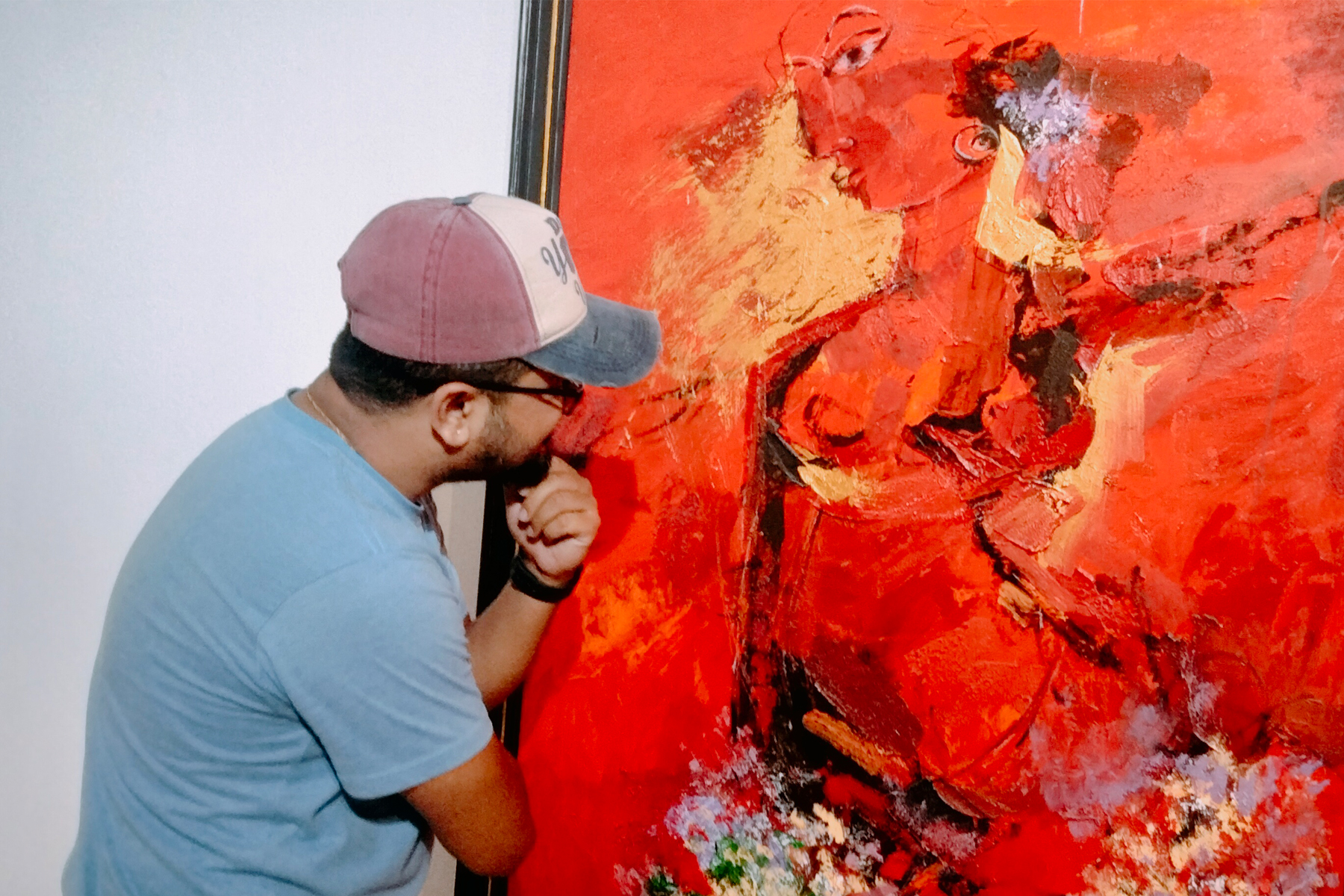
Equally captivating is the contribution of Kiran Manandhar, celebrated for the freedom of his strokes and the vibrancy of his palette. Here, his iconic female form rises from a rich red field, bathed in a subtle golden aura-an interplay of presence and mystery, color and silence.
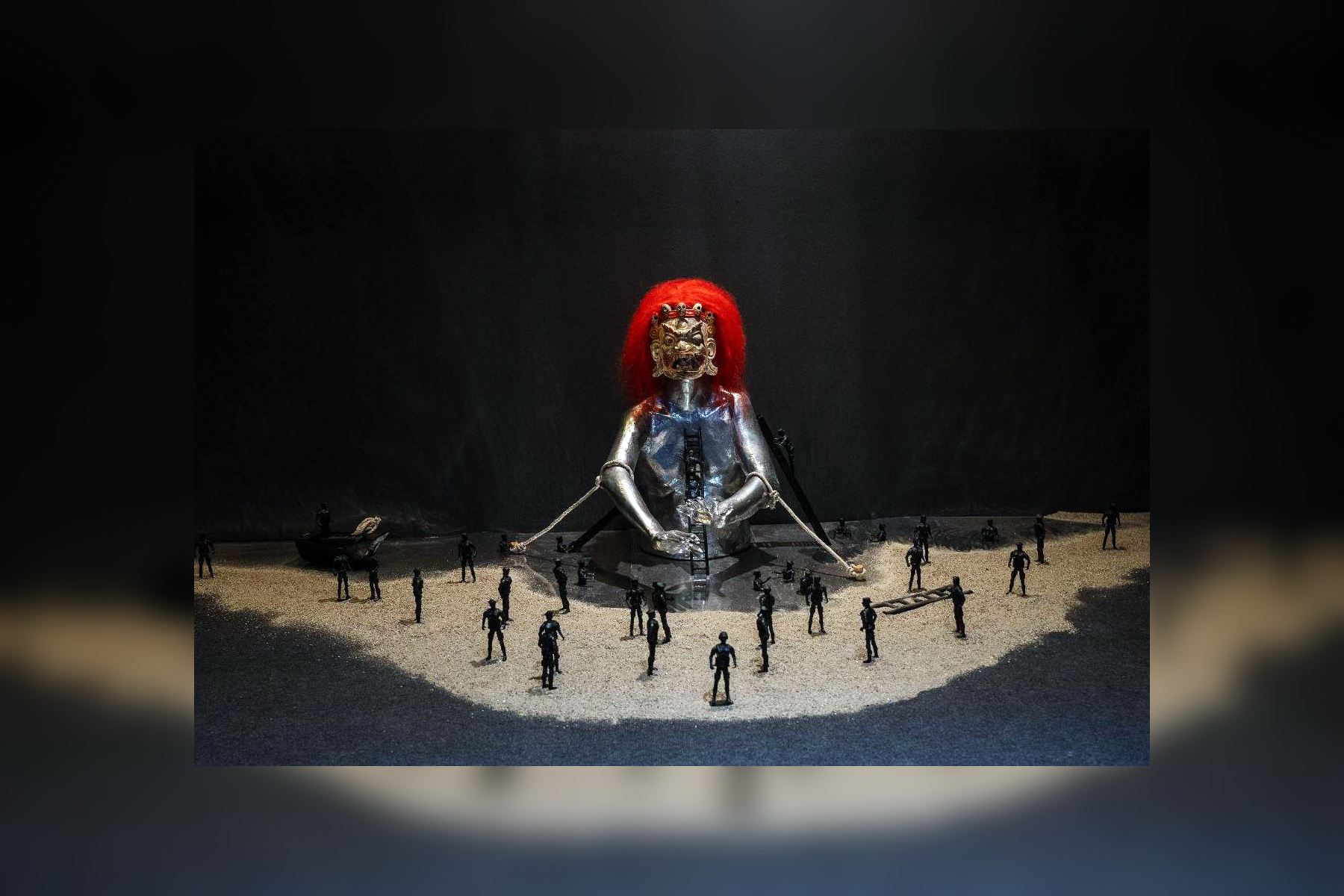
Then there is Sashank Shrestha, whose hands have shaped clay into a cultural echo of Lakhey and Bhairav. His work is less a sculpture and more a vessel of heritage, carrying forward a spirit that has danced through the streets of Kathmandu for generations.
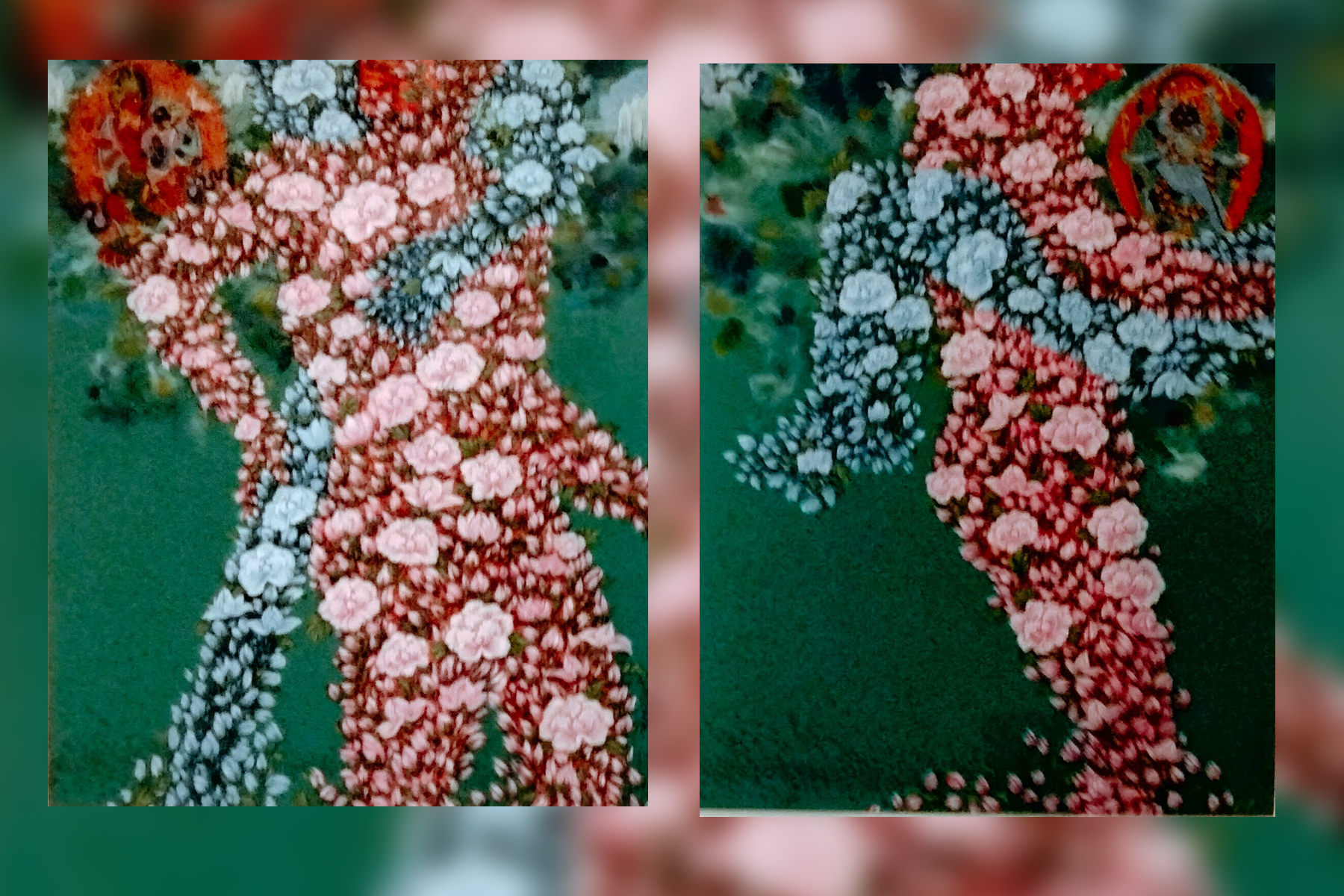
This year, celebrated artist S.C. Suman offers a vision unlike his past creations-a luminous homage to the Kalpavriksha, rendered in the vibrant soul of Mithila art. This mythical tree, ancient as time itself, is said to bear any fruit the heart desires, a living emblem of abundance and divine generosity. In Suman’s hands, it becomes more than a tree-it becomes a dream rooted in soil and sky.
A quieter, more reverent corner of the exhibition honors the memory of the late Prashant Shrestha, a cherished member of the Himalayan Art Festival. Here, his works stand like gentle echoes, carrying forward the grace of his vision. As part of this tribute, the festival continues its tradition of nurturing new talent, bestowing awards upon three outstanding art students from Tribhuvan University’s Srijana College of Fine Arts.
Meanwhile, artist Bidhyaman Tamang-renowned for his distinct printmaking-unveils a whimsical yet thought-provoking piece: a council of frogs, gathered as though in solemn deliberation. Their meeting feels almost human, a quiet satire on the ways of our own assemblies, captured with Tamang’s singular wit and craft.
Printmaker Teesha Shrestha breathes new life into Nepal’s cultural heritage through her distinctive visual language. Her prints, rich in imagination and steeped in tradition, draw visitors in like moths to a flame- many lingering before her work as if caught in its quiet spell.
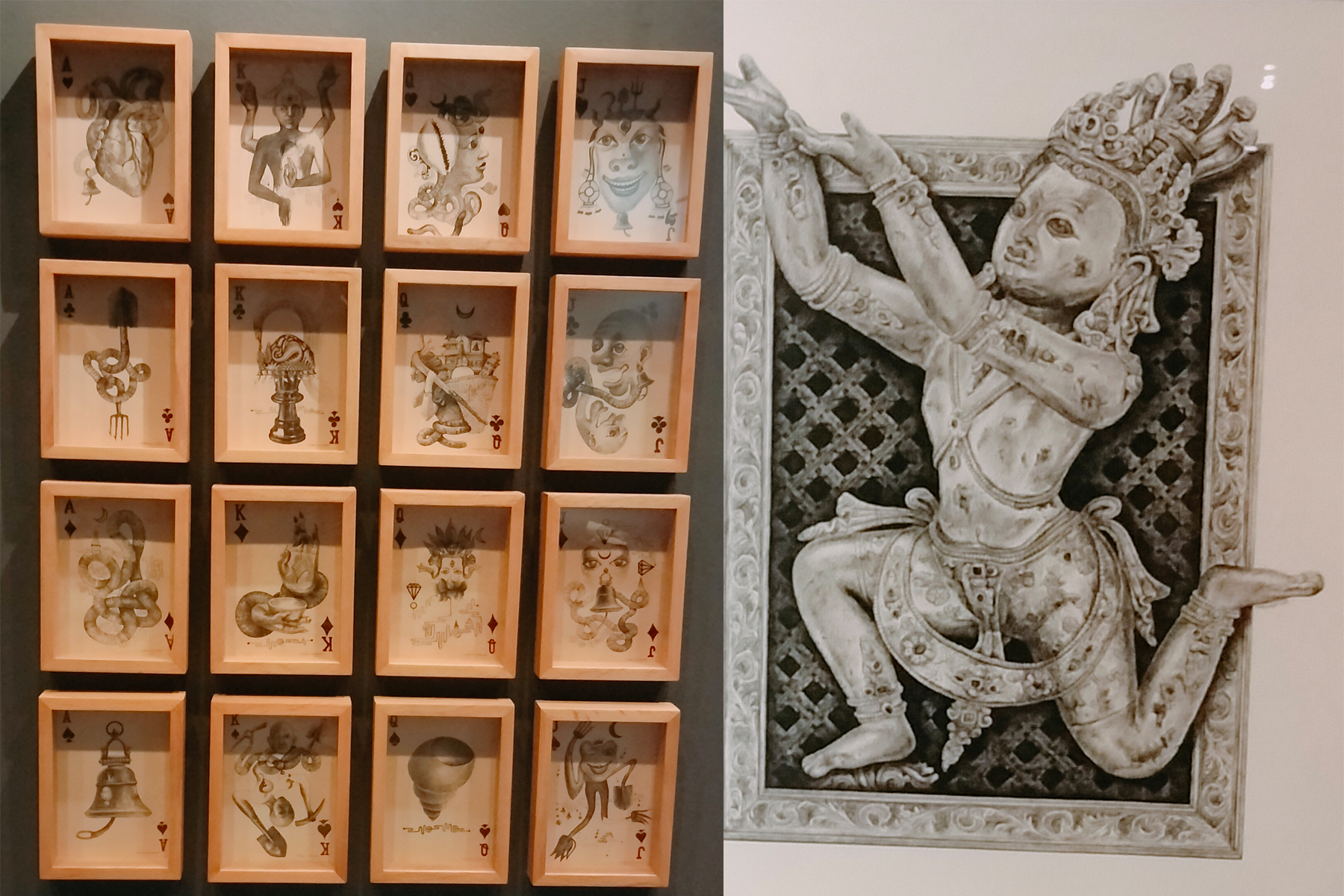
Equally captivating is the creation of Anil Shahi, artist and art educator at Kathmandu University, who has distilled Nepal’s cultural essence into a delicate glass-shaped frame. This intimate yet striking piece stands as a jewel within the gallery, drawing curious eyes with its unusual form.
Roshan Bhandari, a familiar presence in the gallery’s artistic life, offers a restrained yet potent vision of Karna. Against deep black tones, black arrows pierce through the composition, while the reflection of the sun spills grayish beams upon Bayujit-the legendary white horse of Karna. With minimal strokes, Bhandari conjures a visual force that speaks volumes in silence.
On a softer note, Sandhya Silwal turns to a pink canvas to chart her spiritual journey. Known previously for her intricate paper-cut works, she now embraces a serene openness, inviting viewers into a more meditative space—one that many find deeply resonant.
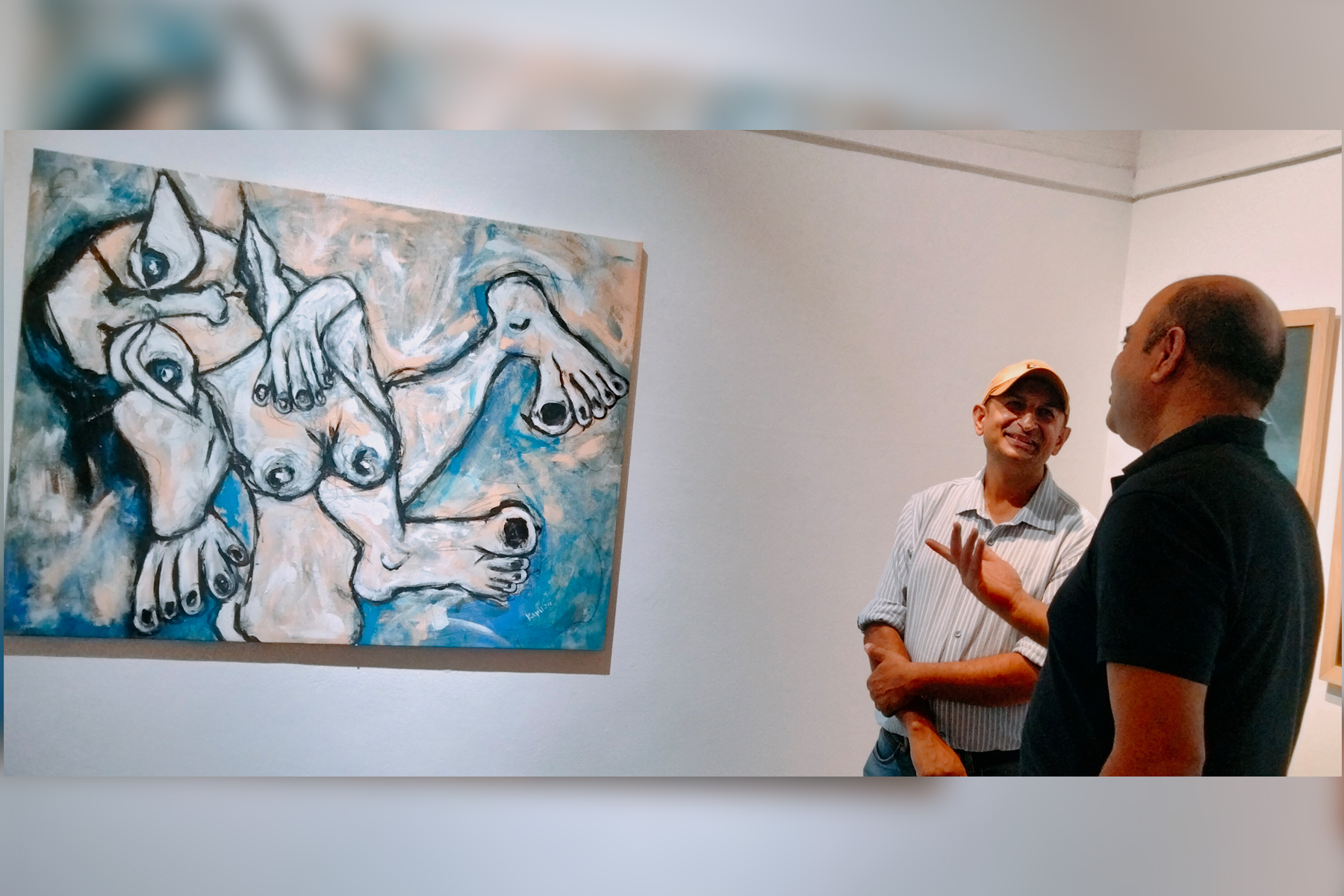
Completing this constellation of talent is celebrated artist Kapil Mani Dixit, whose mastery of “nude expressions” is well-known in Nepal. In his latest piece, a vibrant yellow backdrop cradles the gaze of disembodied eyes and the presence of a woman—melding the intimate and the surreal into an image that lingers in memory.
The art work Erina Tamrakar is equally more striking as she presents her famous third eye series where feminine figures are presented in a brick shaped background. Her painting resonate an equally powerful tone in the gallery hall.

“All the renowned artists of Nepal are unveiling their latest works here,” shares art enthusiast Manoj Prajapati, his eyes alight with inspiration. “For me, and for others aspiring to be artists, this is a rare gift. I am closely observing which pieces find buyers-so that I might one day create works that resonate just as deeply.”
Among the talents on display is the gifted Sangee Shrestha, whose semi-abstract style has been honed through years of steady evolution. Her canvases shimmer with a unique interplay of colors, symbols, and ornate motifs—each element a quiet testament to her artistic journey.
The commanding work of Mukesh Shrestha captures Bhairav in a dynamic dance, his presence radiating raw energy. Not far away, Rabindra Shrestha offers a contemplative blend of painting and installation: the façade of an ancient temple and an installation of a singing bowl, upon which a human fingerprint is imprinted. This juxtaposition whispers a profound truth-that while humanity shares the same red blood and beating heart, each of us carries an identity uniquely our own.
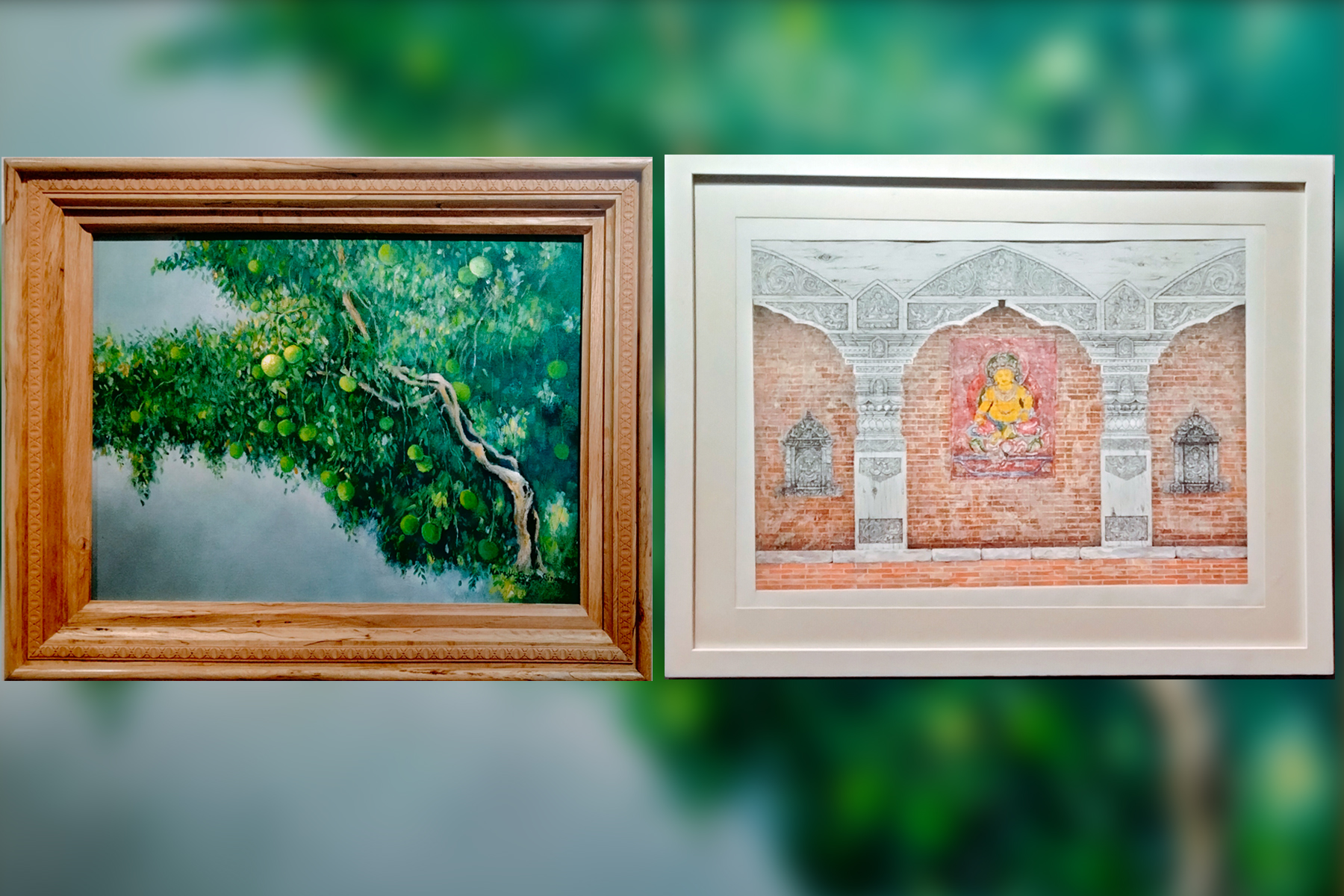
Sabita Dangol’s vibrant canvas sings with the image of a woman, a recurring comb motif nestled within-an emblem she has long explored in her art. Its presence here is both familiar and fresh, lending her work a distinctive signature amid the collection.
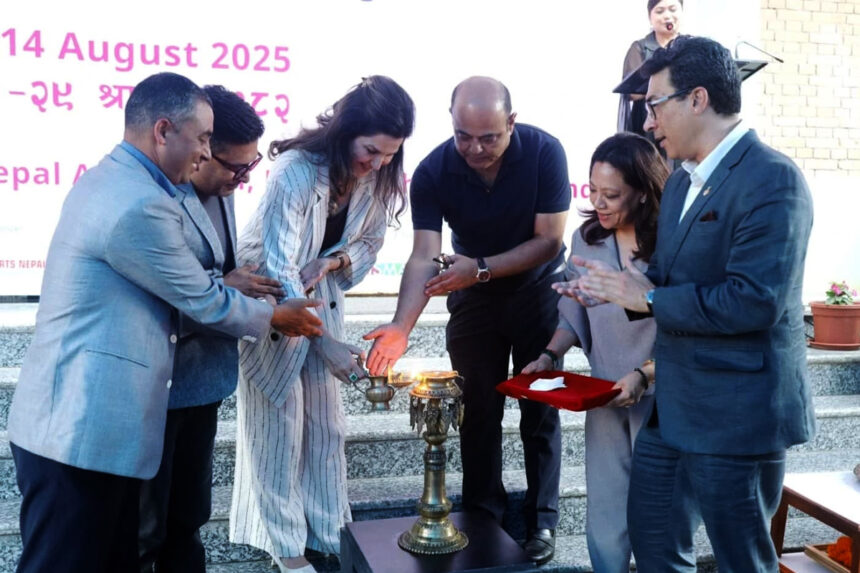
Altogether, the exhibition has become one of the most talked-about events in the city. Each day, the halls of the Nepal Art Council swell with art lovers eager to witness this grand convergence of vision and craft. Adding to its allure, this year’s opening was marked by a rare sight-the five “Shark Tanks” of Nepal joining together to inaugurate the festival, merging the worlds of art and enterprise in a single moment of celebration.



Leave A Comment