
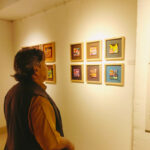

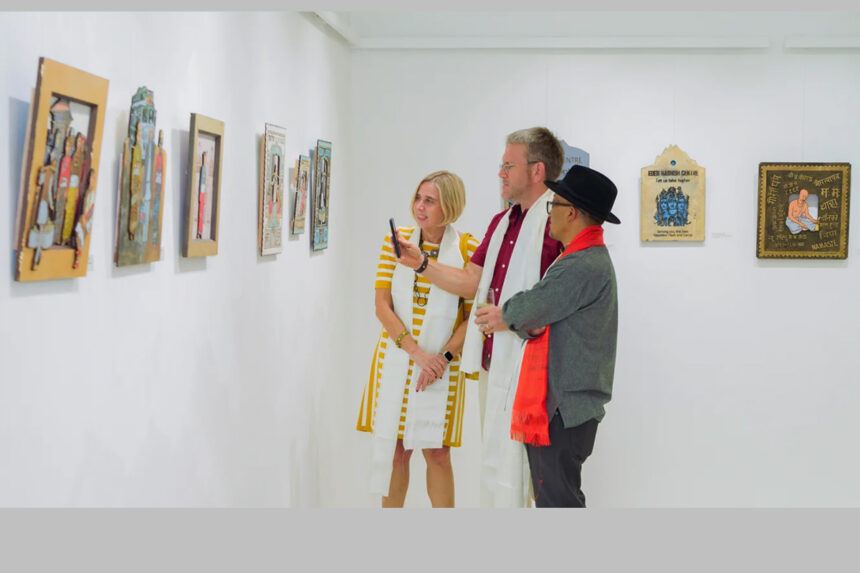
A long time ago, Kathmandu had its own unique richness, with the people of the valley deeply rooted in their distinct cultural and traditional norms. Yuvak Tuladhar, a renowned Nepali artist, traveled to India in the early 1970s to pursue his passion for art. He studied at Banaras Hindu University, where he earned a degree in art. Upon returning to Kathmandu, he gained recognition as an esteemed artist, exhibiting his works in local galleries. In the early 1990s, Siddhartha Art Gallery featured his creations. Following that exhibition, he moved to the United States as a Fulbright Scholar and has resided there since.
After moving to the U.S., Yuvak Tuladhar began exploring various artistic techniques and ventured into different fields of life. No matter what he pursued, aesthetics remained central to his thinking. After completing his degree in Fine Arts, Tuladhar envisioned expanding the role of art into areas like architecture and design. He even worked as an electrician during his time there. “For a long time, I took a break from making art,” he recalls. “I felt I had no stories to tell during those years.”

In 2010, however, something changed. Watching his son grow sparked a renewed passion for creating art. Inspired, Tuladhar returned to his craft, relearning techniques by watching YouTube videos. This period of rediscovery reignited his creative spirit and helped him reconnect with the artistic skills that had once defined his life.
Yuvak Tuladhar vividly recalls his time in Varanasi, where a chance encounter with an astrologer left a lasting impression on him. The astrologer, after studying the lines on his hands, made a striking prediction: Tuladhar would only return to his art later in life. At the time, it seemed like a curious and distant idea, but years later, the prophecy appeared to ring true.
As he reflected on this memory, Tuladhar felt a shift in his creative journey. From that moment onward, he began experimenting with various artistic mediums to express the emotions and stories he had accumulated over the years. He found himself drawn to unconventional materials—working with pine wood planks, woodcuts, and traditional canvases to convey the narratives he felt compelled to share with the world. Each medium allowed him to explore a different facet of his creativity, offering new ways to channel his artistic vision. His work became not just a means of expression but a deeply personal journey of reconnecting with himself and his past.
The years of experimentation marked a new chapter in Tuladhar’s life, where art was no longer just a profession but a profound medium for storytelling, reflecting both his personal evolution and the timeless cultural heritage he carried with him.
Many of Tuladhar’s paintings are rooted in the nostalgic memories of Kathmandu that he had carried with him for years. One recurring theme in his work is the vivid recollection of everyday life in the city during the early 1980s. For example, he captures the iconic moment when Krishna Pauroti, a bakery, was first established. He fondly recalls the sweet aroma of freshly baked bread being sold from tricycles on the streets. Vendors would slice loaves in half on request, carefully cutting each piece with a knife—an image etched in his memory.
This simple yet evocative scene is among the moments showcased in his exhibition, offering a glimpse into the past and a tribute to the ordinary yet cherished aspects of life in Kathmandu.
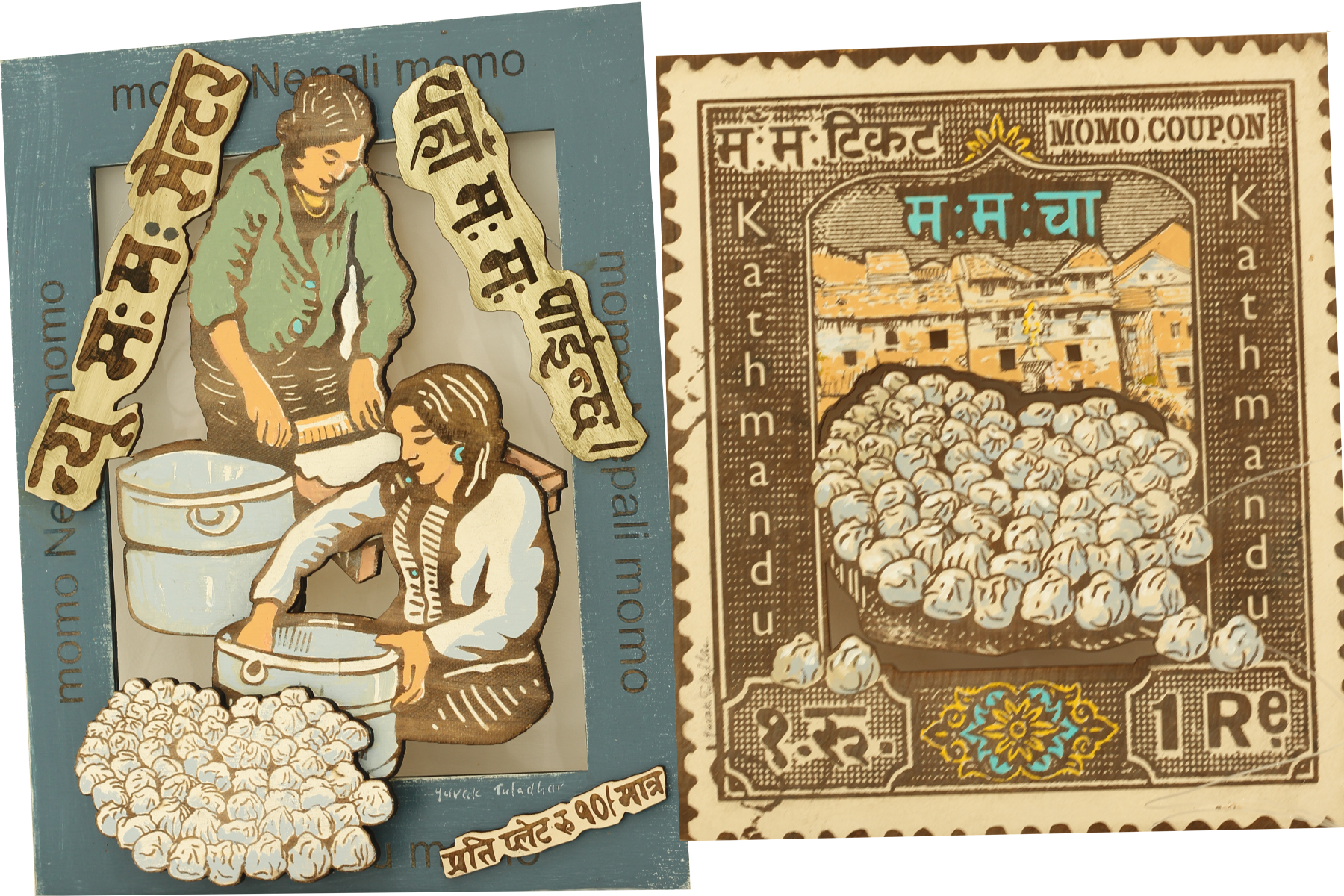
In another of his paintings, Tuladhar captures the story of MoMos, a beloved delicacy from his Kathmandu days. Back then, a plate of MoMos cost around 10 rupees, and the taste was something people savored deeply. These dumplings were a cherished part of Newari cuisine, and he reflects this memory in his art. The same MoMos that once delighted the people of Kathmandu are now immortalized on pine wooden planks in his U.S. exhibition, bridging the gap between his homeland and his present life.
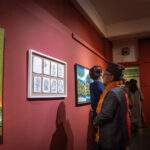
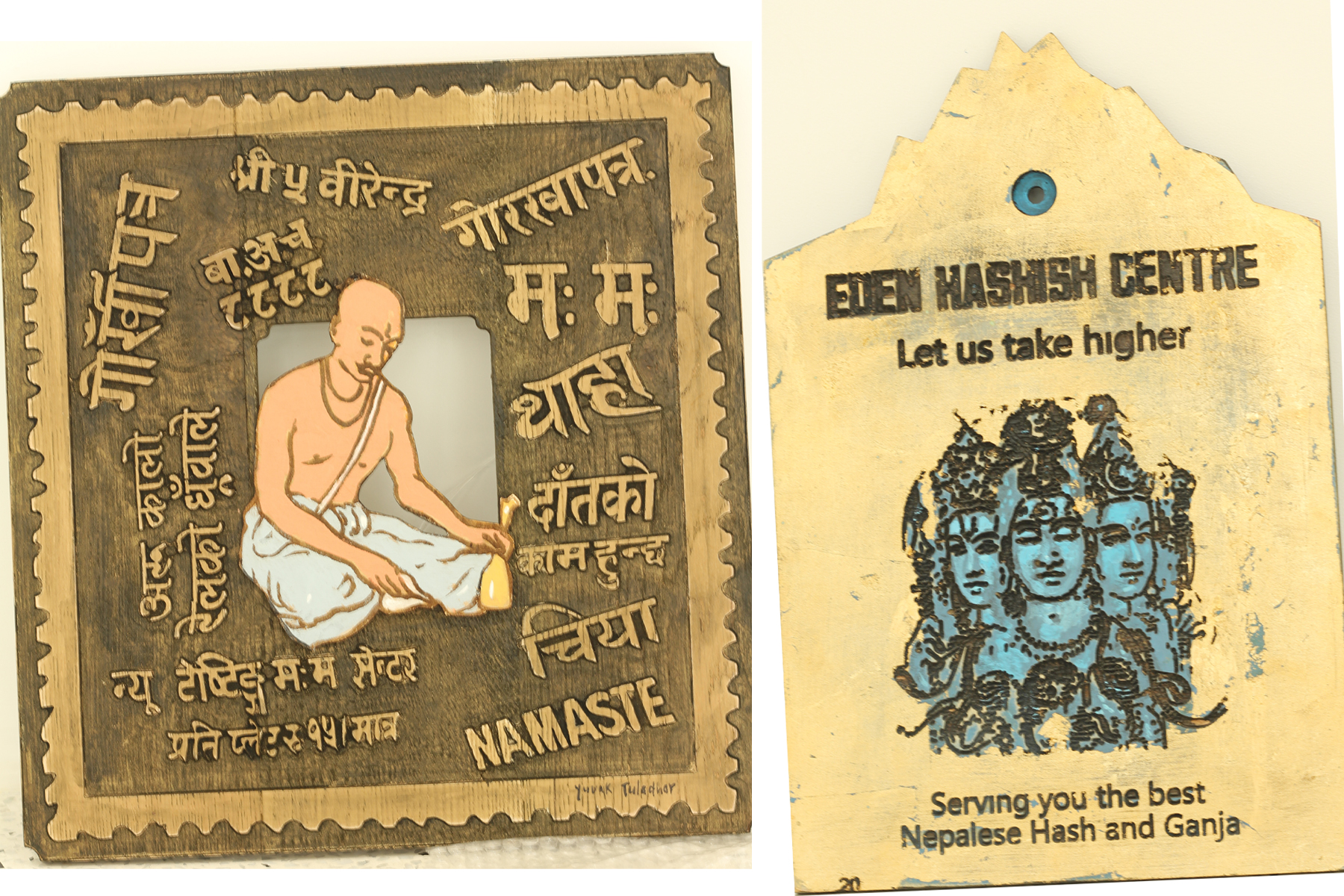
Some of the wood planks featured in the exhibition are crafted to resemble postage stamps—symbolic of a bygone era. These stamps, once an essential part of communication, have faded from use with the rise of the internet. Tuladhar cleverly integrates this idea into his artwork, using the imagery of long-lost stamps to evoke a sense of nostalgia for things that have disappeared with time. Both the MoMos and the stamps become powerful symbols of a fading past, beautifully intertwined in his paintings, reflecting the cultural stories that shaped his life.
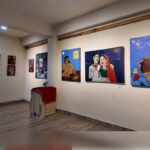
Another striking piece in the exhibition features the late King Birendra, depicted in a three-dimensional form that makes him appear to stand within the painting itself. The king is portrayed at a gate, a symbolic figure watching over, evoking a sense of regal presence and historical memory.

Alongside this, the exhibition also touches on the everyday struggles of life in Kathmandu, particularly the water shortages that plagued the city during those times. People often relied on natural water sources, a task that required effort and perseverance. These challenges are poignantly reflected in the artwork, capturing the hardships of daily life. The ladies of Kathmandu used to share their giggle and chitchats while they used to wash their clothes and these are reflected in his canvas.
One of the visitors, Sangeeta Thapa, became nostalgic as she viewed the exhibition. Reflecting on a painting, she remarked, “The Bagh Chap vehicles are one of my childhood memories. Back then, there were only a few cars on the roads, and the ones with the tiger-skin emblem were unforgettable.” Similarly, in the early 1970s, Jhhochee (an area in Kathmandu) was known for being a hub of hippies. Yuvak Tuladhar recalls that he used to refer to any foreigner as a “hippie” rather than a tourist, as the term had become synonymous with all foreigners visiting Nepal at the time.
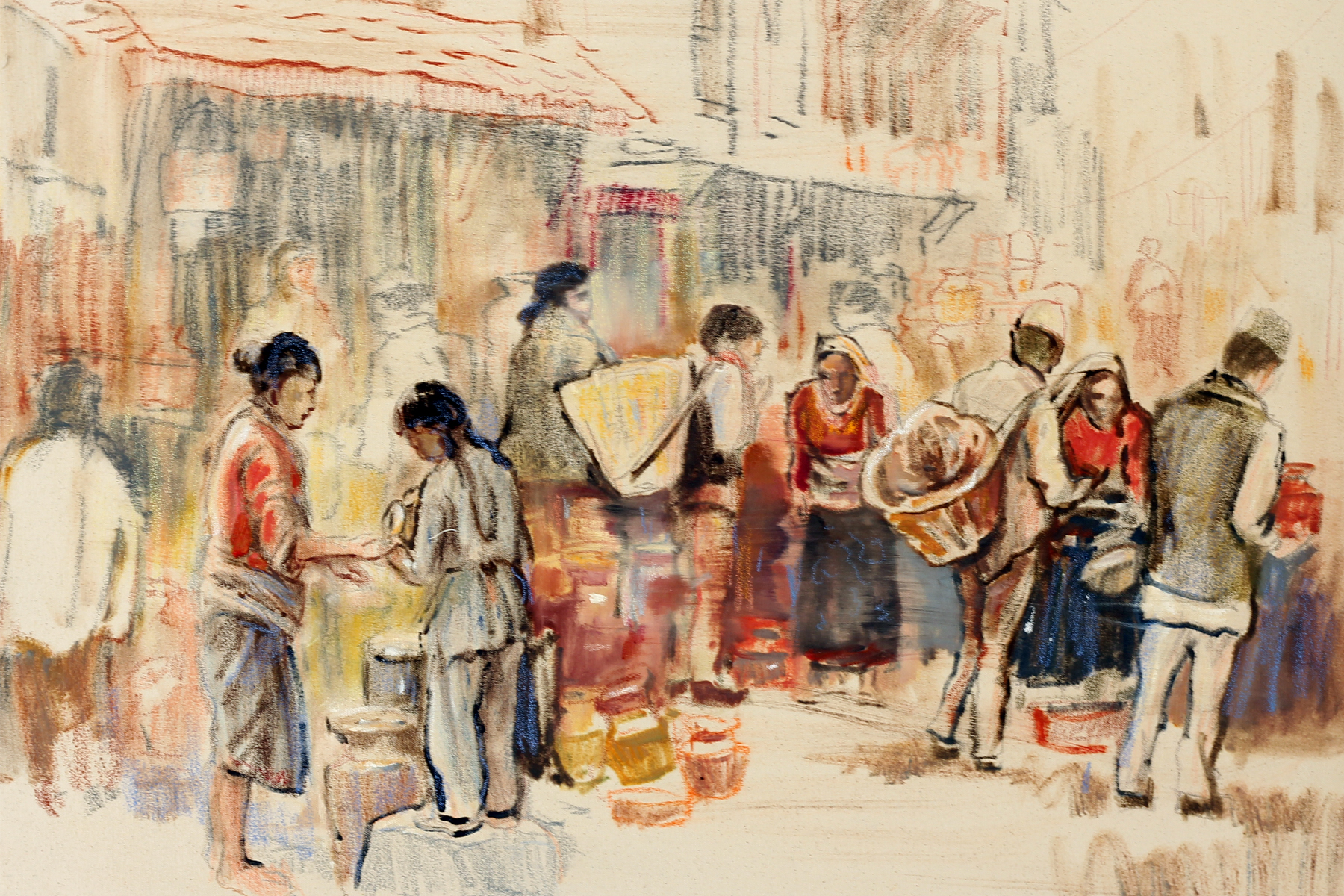
The bustling energy of Asan, one of Kathmandu’s famous marketplaces, is also depicted in some of his paintings, where scenes of people buying and selling fruits and vegetables bring the vibrant street culture of the city to life. These snapshots of everyday moments capture both the changing and enduring aspects of Kathmandu, as seen through Tuladhar’s eyes.
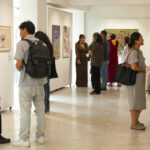
The show is on till the 29th of October.
Event: Art Exhibition
Where: Takpa Gallery, Lazimpat
Entrance : Free
Date: 6th October to 29th October, 2024
*The gallery remains closed every Monday.

Leave A Comment