

Asking him, “How many nude figures have you created so far?” is like asking a tree how many leaves it has. Over a journey spanning more than two and a half decades, he has created numerous nude figures, establishing himself as one of the leading contemporary artists, Kapil Mani Dixit.
After completing his intermediate-level studies in Nepal, he received a scholarship to pursue his under- graduation in the United States. During his time there, he unknowingly developed a fascination for nude painting. “But that wasn’t the only thing I did there,” shares Dixit. “I also gained experience in ceramics and other forms of art.”
After returning to Nepal, he delved deeply into creating nude figures, earning the title of “Nude Artist.” Initially, he found the label annoying, but over time, he grew to embrace and enjoy the title.
The artist Dixit is widely known for his jovial nature. At first glance, when you start discussing his artwork, he may come across as a superficial artist. However, as you delve deeper into his creations, you begin to notice the intricate details and a meditative essence within his paintings. The cheerful and seemingly carefree Dixit transforms into a serious and contemplative artist through his work.
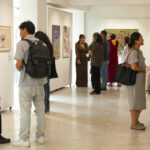
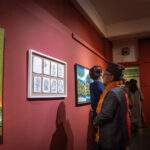
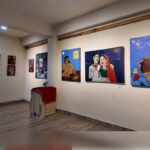
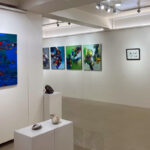
His latest artworks from 2024 are being showcased at the Takpa Gallery in Lazimpat from January 4 to February 1, 2025. For Kapil Mani Dixit, there is a significant distinction between nudity and nakedness. He explains that nakedness is often associated with vulgarity, whereas nudity is more aligned with aesthetic quality.
For Kapil Mani Dixit, everything is nude, and he strives to capture the sublime beauty inherent in every nude figure. There was a time when the artist required models to pose nude for his paintings. He describes this as a “win-win situation,” where the artist gained inspiration, and the models found healing for their deep-rooted wounds. Many individuals, particularly those who had experienced sexual violence or struggled with body-related insecurities, agreed to model for him. Dixit recalls touching moments when models cried in front of him, expressing that the experience had healed their wounds.
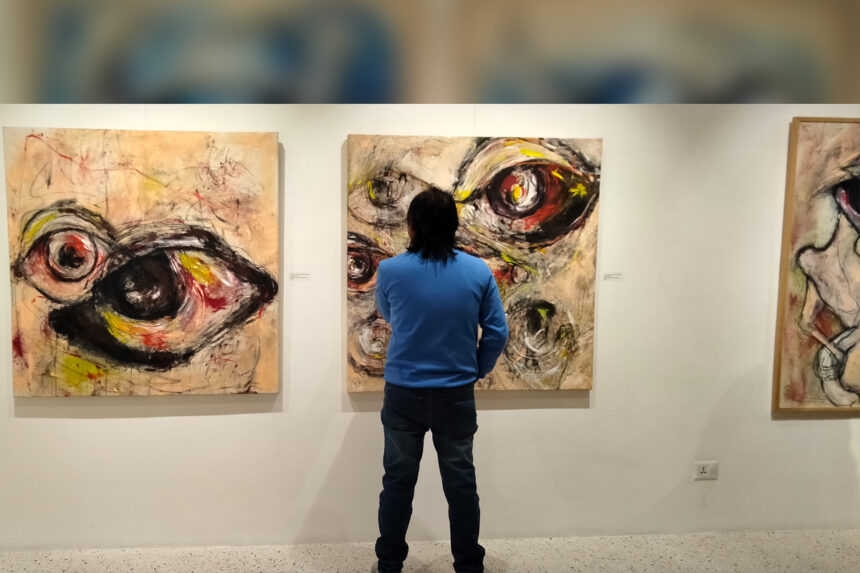
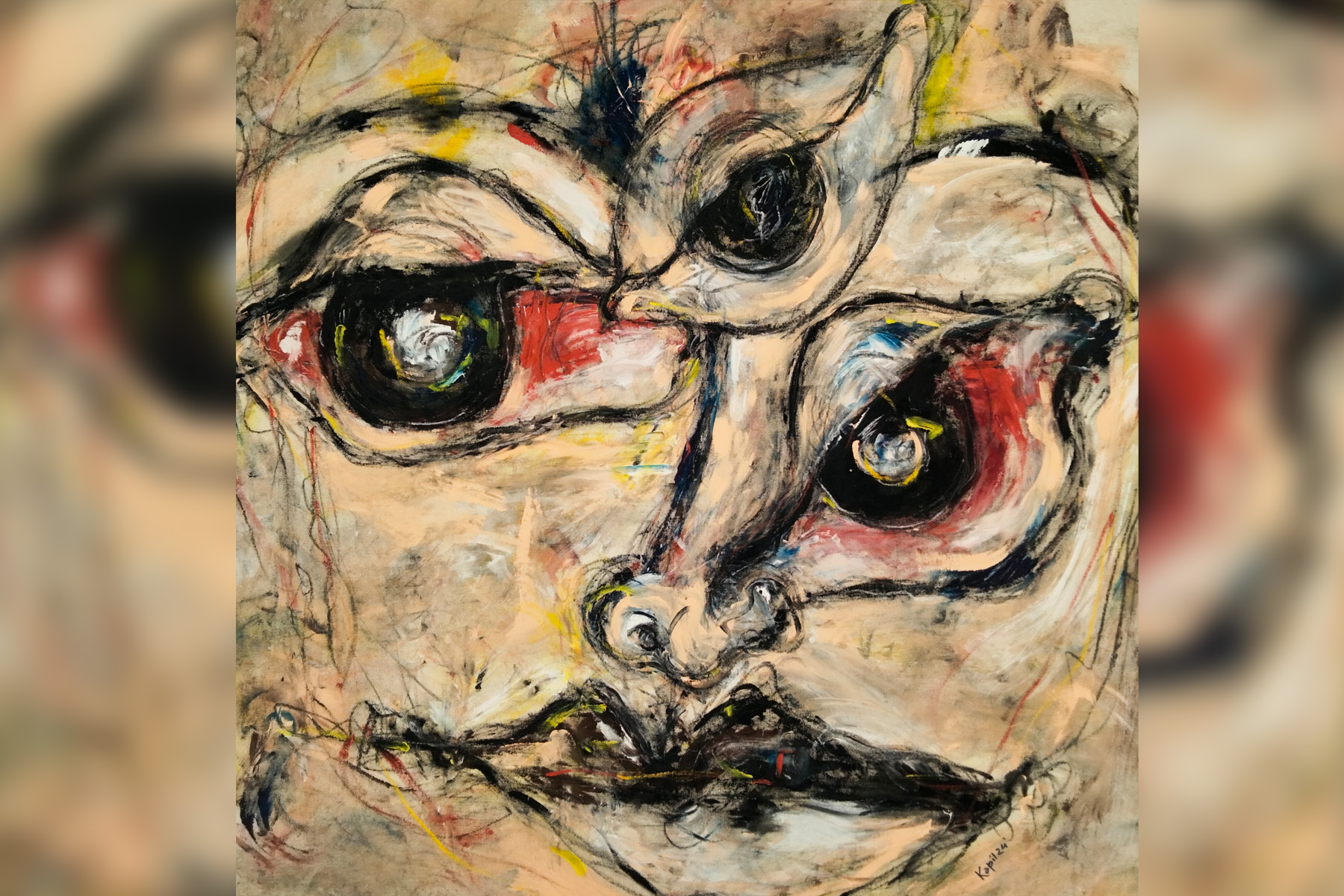
Over time, however, Dixit no longer requires models for his work. He sees nudity everywhere—in the natural world, from dogs to other animals, and even in human expressions. For him, nudity transcends the physical; it can be found in the eyes, the nose, and the very lines within his paintings. His latest works are deeply rooted in this philosophy.
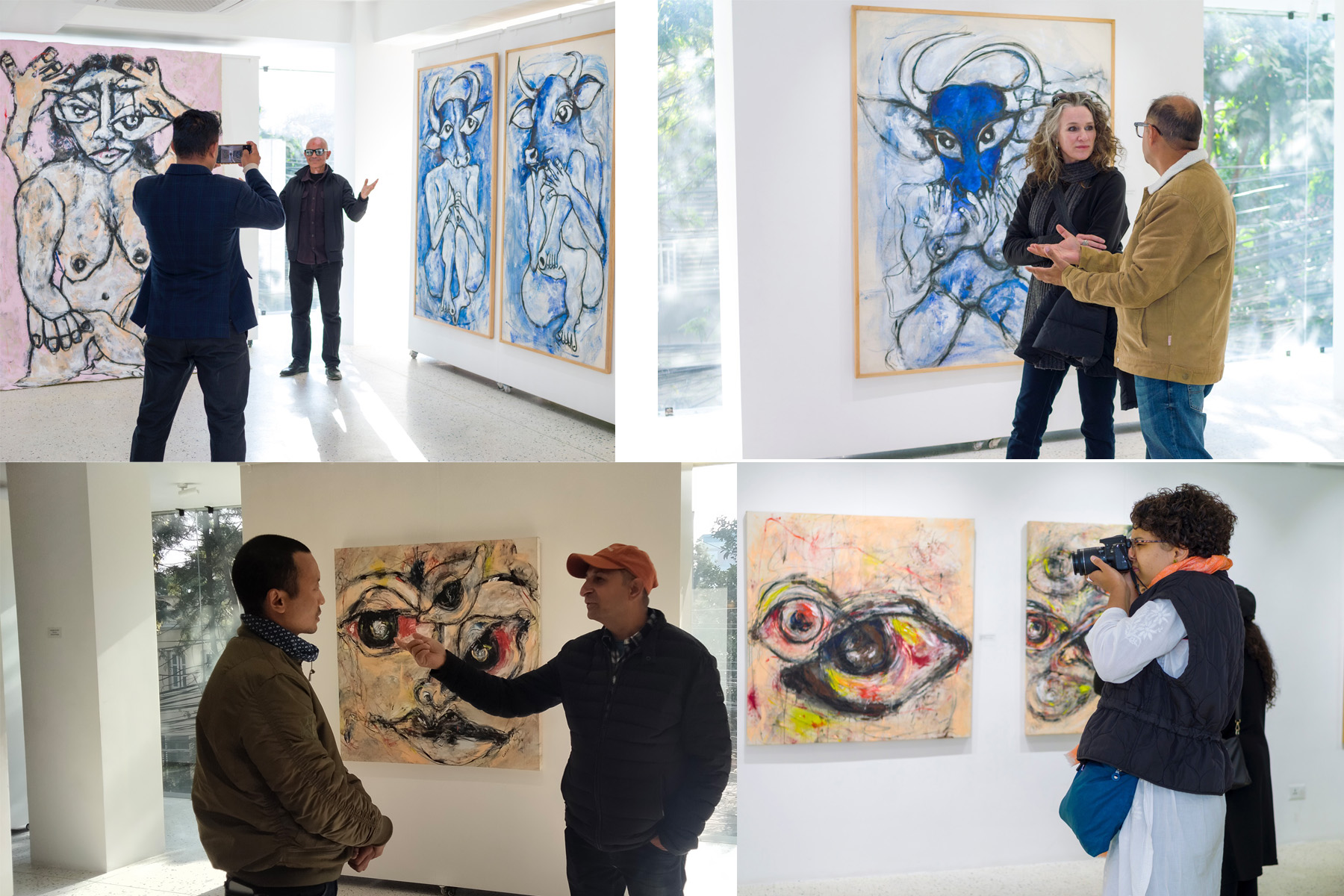
Roshan Mishra, the curator of the show, remarks, “His artworks transcend conventional representations of gender and identity, delving into the universal concept of the ‘self.’ The minimal strokes evoke raw, unfiltered emotions, transforming the intangible into the tangible.”
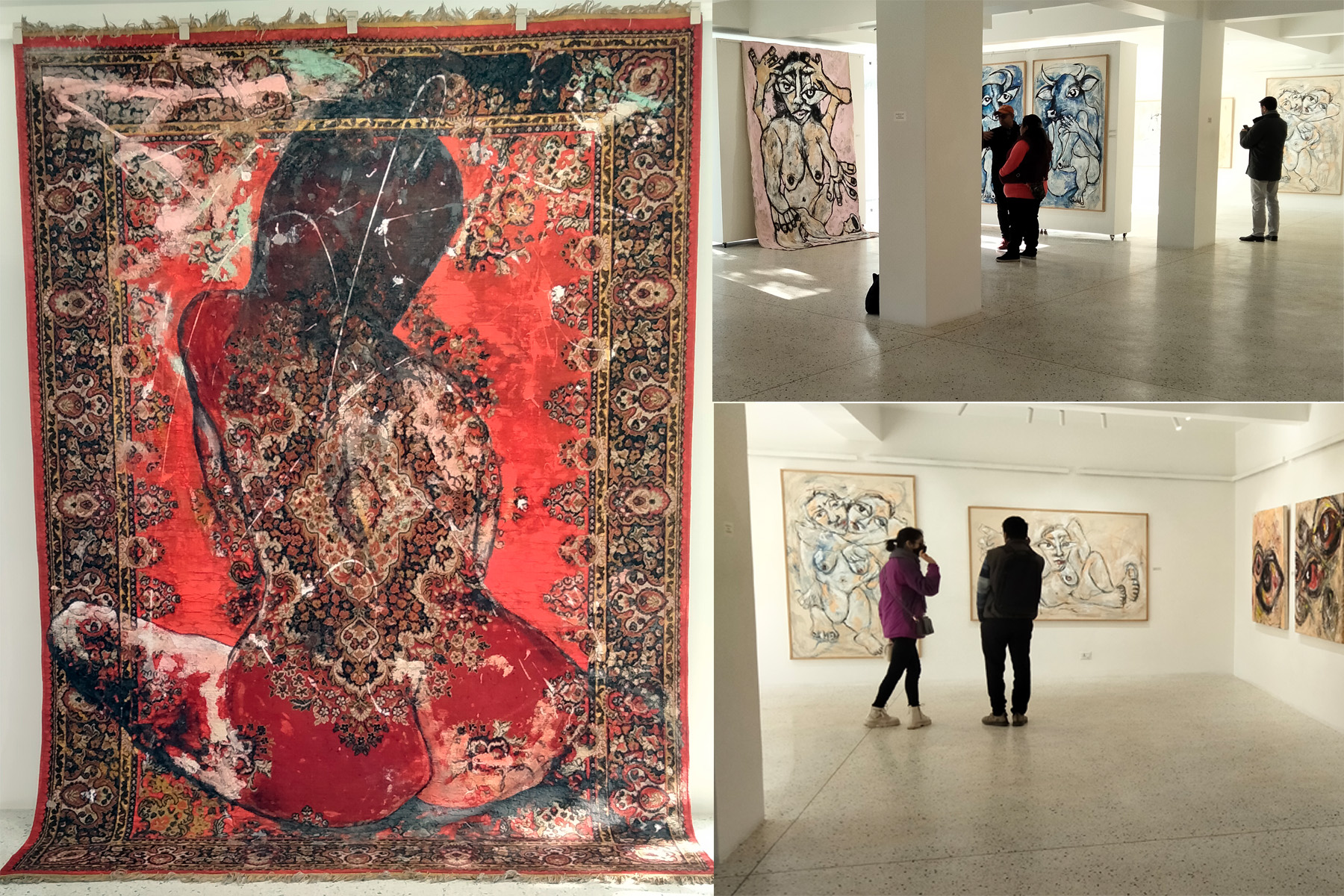
In the gallery this time, the artworks can be categorized into three basic types. The first type features pieces created on ordinary red carpets. One such artwork depicts a nude figure of a woman sitting on the carpet, viewed from the back. The carpet itself is rich in colors, and the central figure—a woman in a pensive mood—draws the viewer’s attention.

Interestingly, the wall on which the carpet is hung is not large enough to accommodate it fully, leaving a small portion of the carpet resting on the floor. The artist explains that he finds this arrangement more beautiful, as it adds a unique dimension to the presentation, blending the wall and floor seamlessly into the artwork’s display.
The second type of his paintings leans toward a more contemporary style, bearing some resemblance to the works of Cubist artist Picasso. In these pieces, certain parts of the body are elongated and emphasized, creating a distinctive aesthetic. In many of his paintings, the eyes are rendered in this unique style.
Previously, the artist often worked with yellow tones, but this time, most of his artworks in the exhibition are dominated by blue hues.
Commenting on one of the paintings, gallery visitor Suresh Maharjan shared, “I find the yellow color very mystical, and in his paintings, the line-work feels incredibly powerful. This kind of artwork can only be achieved through years of experience.”

The third type of painting presented at the exhibition showcases the mastery of line work. One such painting features a female figure carrying a male counterpart, capturing a mix of celebration, pain, and various other emotions in a single piece. The background is a soft whitish-yellow, with every line meticulously drawn by hand, without the use of brushes. In the background, numerous figures are hinted at in an un-proportional way, as if they were not fully painted. The rough, unfinished lines are presented in a way that highlights their inherent beauty.
“Once the traits are learned, beauty and its meaning can vary,” the artist shares with a smile. “For me, beauty lies in these unfinished and raw lines.”
If you are an artist or a budding artist, contemporary artworks of this scale and nature will be a rare sight for you. The level of courage and commitment required to create such large, intricate pieces is not something many artists are willing or able to muster. The sheer proportion of the works on display in this exhibition, combined with the raw, emotive lines and unique compositions, reflect an artist’s ability to push boundaries and step outside conventional comfort zones.
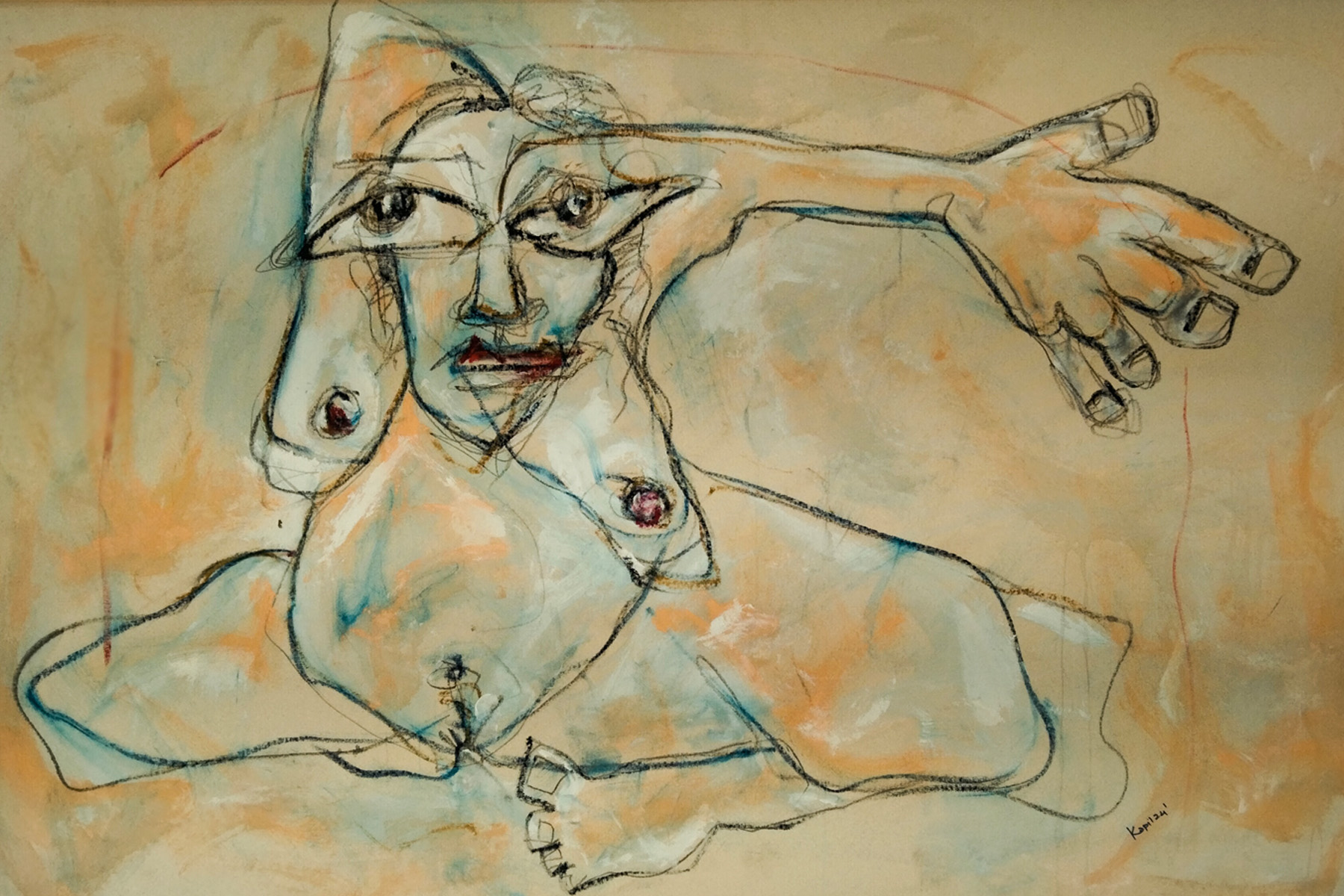
For many artists, especially those just starting, the idea of working on such a vast scale, both physically and conceptually, can seem daunting. It demands not only technical skill but also the emotional resilience to express complex feelings through an expansive canvas. As such, the artist’s ability to maintain this kind of vision and precision, while taking risks with form and structure, makes this exhibition an inspiring and rare experience for both established and emerging artists alike. It serves as a reminder that true innovation often requires courage to break away from the norm and embrace the unknown.
The delicate play of colors, the strong line work, and the imagery of animals and human figures are the highlights of the exhibition. If you’re in Kathmandu, this is a “must-visit” destination to enjoy the remarkable artworks on display.
Gallery Hours:
Tuesday -Thursday : 11 am to 6 pm
Friday-Sunday: 11 am to 7 pm
Please note, the gallery is closed on Mondays.

Leave A Comment