

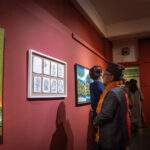
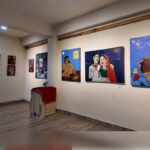

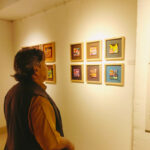

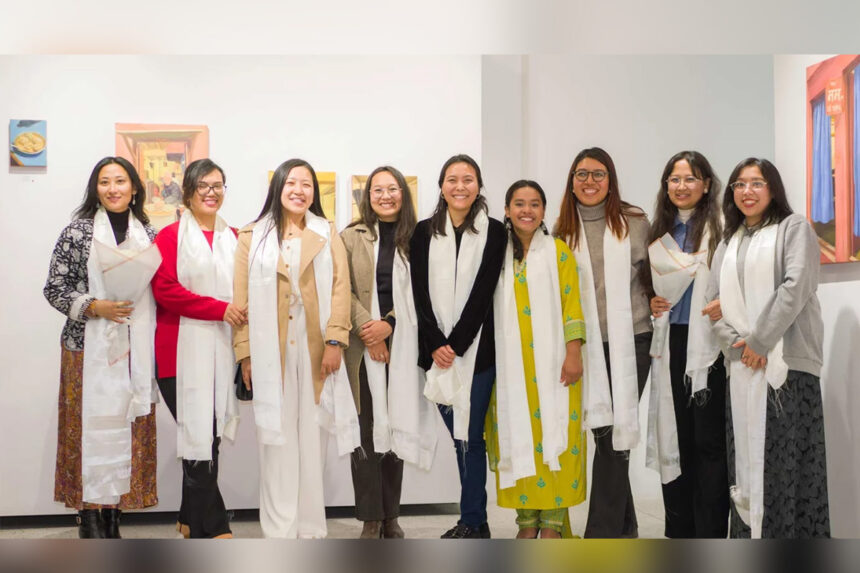
One new exhibition has popped up at the Takpa Gallery, Lazimpat. A group of female artists who have been working on different art forms are showcasing their artworks in group for the exhibition. The exhibition is from 8th February to 8th of March.
The curator of the art-exhibition Pratima Thakali shares: “I am rooted, but I flow” presents a fresh collection of works by emerging female artists, delving into the cultural landscape and its many connections. This exhibition explores how perspective and action shape our experiences, weaving together identity, culture, memory, and everyday life. Through movement, creativity, and engagement, we find inspiration, purpose, and joy. Celebrating art as a fluid and expressive force, the show brings together diverse materials and techniques, reflecting the ever-evolving nature of human expressions.
I am rooted, but I flow draws its title from Virginia Woolf’s The Waves, where the author explores the balance between inherent stability and our ever-evolving nature. Similarly, this exhibition explores deeply rooted concepts that connect endless narratives, allowing them to unfold through the artists’ thought processes and craftsmanship. The works of Anmari Tamang, Kripa Shakya, Kripa Tuladhar, Krisha Tamrakar, Pooja Duwal, Priyanka Singh Maharjan, Sony Rai, and Sumitra Baral investigate the use of various mediums to build compelling narratives. Together, their stories invite us to navigate, rethink, and reinterpret the cultural landscape we are collectively shaping.
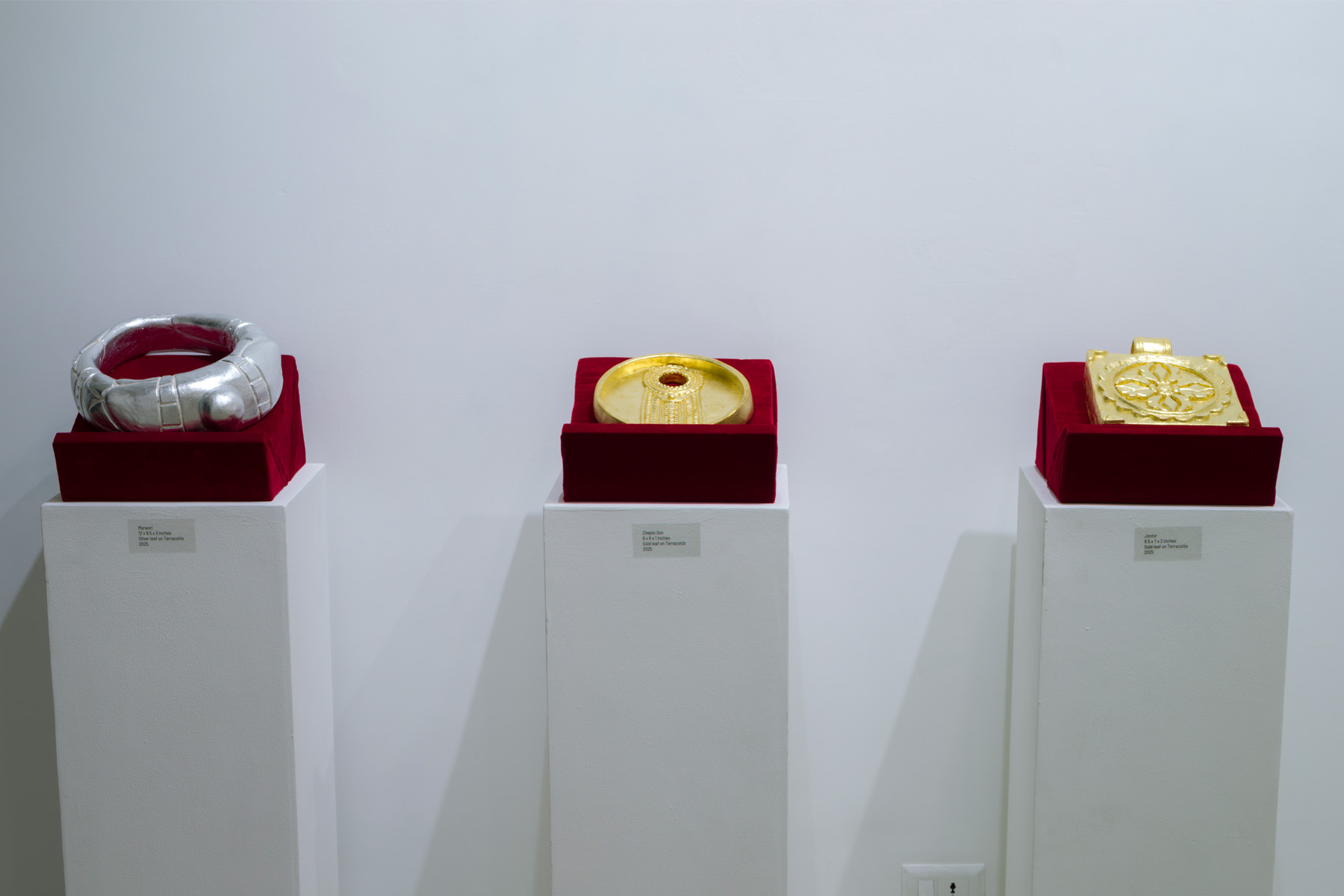
Anmari Tamang’s work breathes new life into culturally and spiritually significant ornaments, traditionally worn by the women of her community. More than mere adornments, these objects hold deep connections to faith, tradition, nature, and identity. Through sculpture, she honors their beauty and meaning, preserving their legacy in a tangible form.
Working with clay, she seeks to capture the essence of these ornaments, carefully sculpting each piece based on existing designs rich in history and symbolism. Her minimalist carving technique ensures clarity, allowing the intricate details to speak for themselves. By reinterpreting these objects through sculpture, she not only safeguards their cultural heritage but also transforms them into enduring expressions of identity, belief, and artistic tradition.
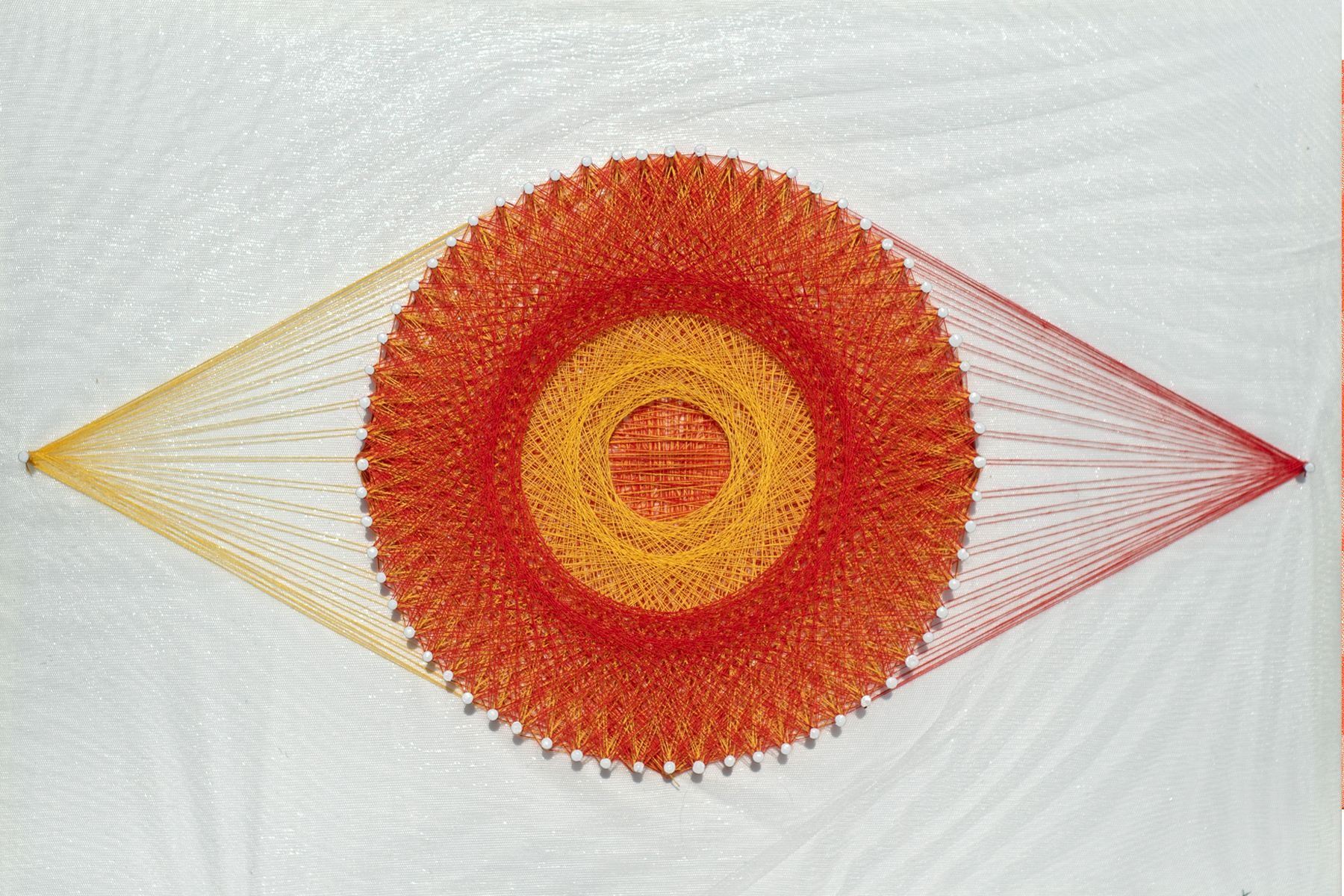
Kripa Shakya’s Warmth of Embrace series delves into the profound connection between a mother and her two daughters, capturing the invisible threads that bind them across generations. Though time and distance shape their individual identities, their relationship remains a dynamic interplay of influence, responsibility, and shared purpose.
Through her work, Shakya visualizes the emotional energies that emerge within this bond—acceptance, understanding, and a shared spiritual consciousness. The series becomes a meditation on how love and connection evolve despite differences, revealing the unspoken forces that hold a family together.
Kripa Tuladhar’s Remembrance of Shadows is a visual meditation on Ason, a historic heart of Kathmandu, where memories are etched into the walls, streets, and facades. Her work unfolds like a walk through its alleys—where past and present blur, and the weight of history lingers in every corner.
She steps through the bustle, pausing in a quiet courtyard where life weaves itself into shared moments. A tea stall hums with conversations that rise and dissolve with each sip. Layers of forgotten posters peel away on an old brick wall. Faded curtains flutter from windows that once framed a home. Doors open to nowhere, leading only to echoes of the past.
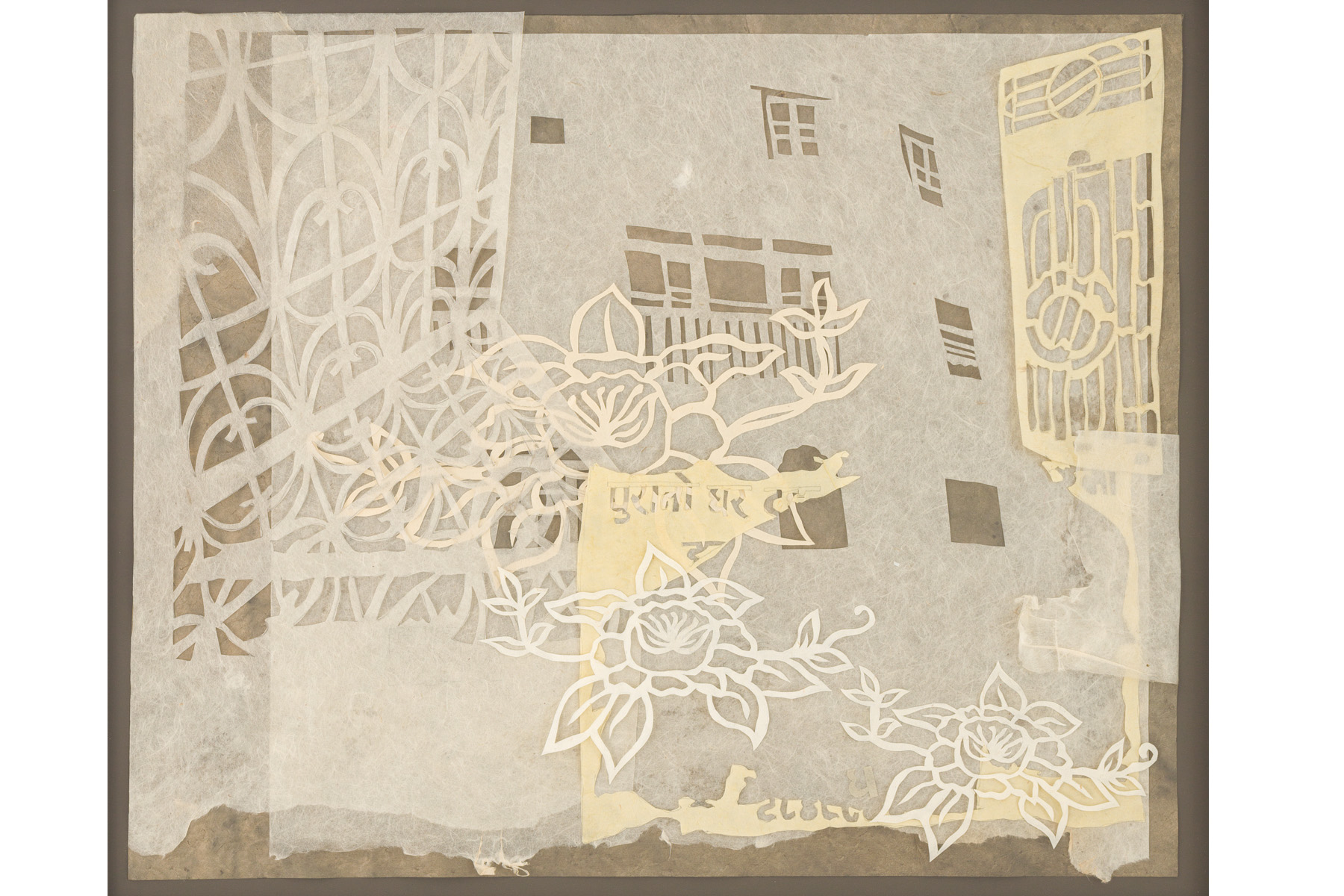
Ason’s cityscape is a living archive, marked by generations of footsteps and shifting tides of change. Time leaves its signature in crumbling bricks, fading signs, and the relentless push of the new against the old. Tuladhar captures these traces by cutting and layering paper, mirroring the city’s own layered history. In delicate, fleeting shadows, she preserves the memory of spaces that continue to shape and be shaped by those who pass through them.
Krisha Tamrakar’s work is a meditation on transformation—of spaces, memories, and personal identity. Rooted in themes of growth and change, her art examines how modernity and consumerism reshape once-familiar environments, subtly erasing their original essence.
In her series Between Colors and Spaces, she uses watercolor pencils to weave together vivid, artificial hues with soft, earthy tones, visually capturing the tension between past and present. The contrast creates a sense of fragmentation, mirroring how places she once knew become layered with new identities, caught in a constant state of flux.
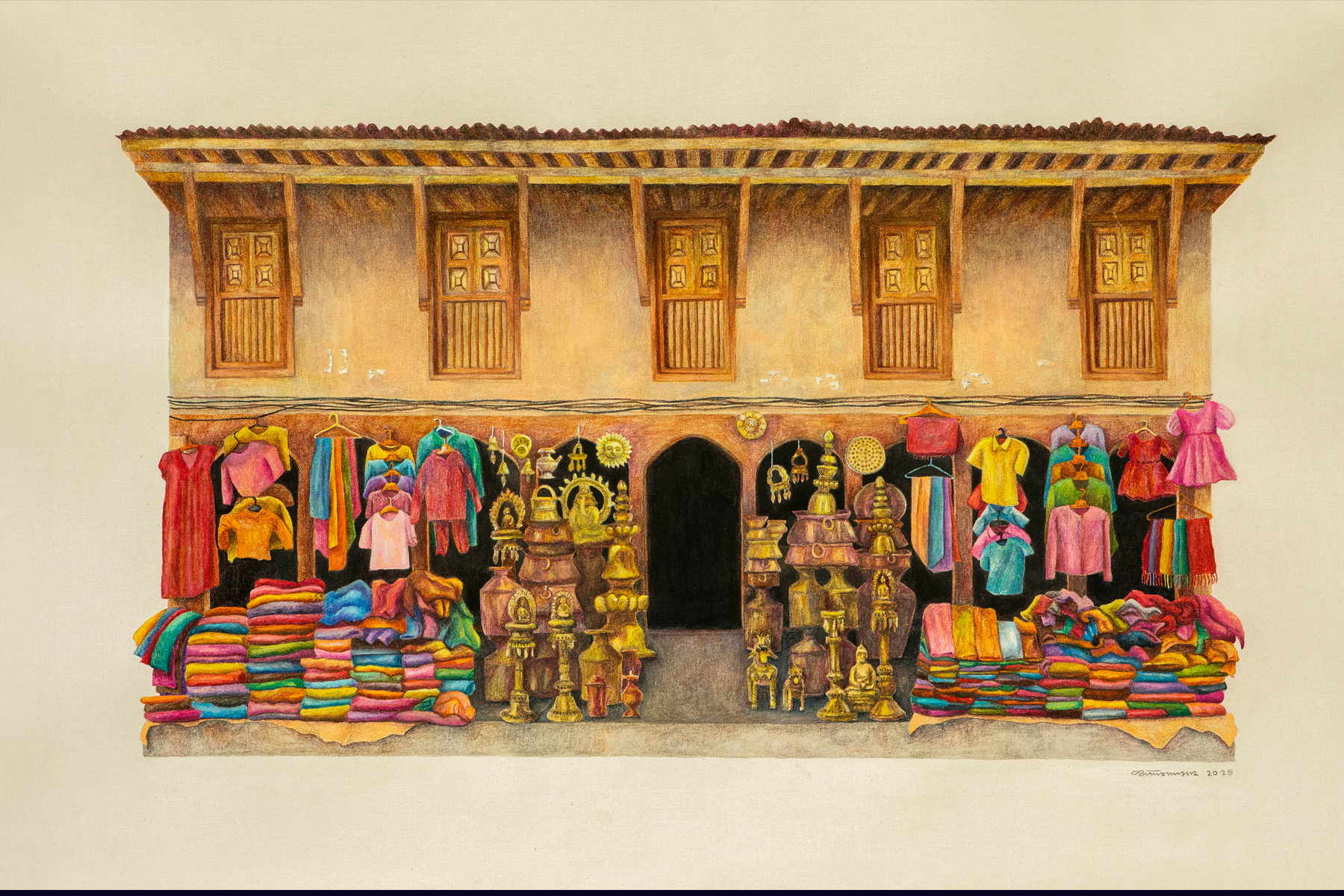
Her process is one of careful observation, deconstruction, and reinterpretation. By mapping these shifting landscapes, she exposes the fragility of memory and the delicate push-and-pull between tradition and modernity. Through her work, she invites viewers to reflect on their own evolving spaces, exploring how change shapes not just the world around us, but our very sense of belonging.
Krisha Tamrakar in her painting explores the cityscape of Patan. With modernity, a lot has changed in the city itself. When she was growing up, in her locality, she used to listen to the sounds of the making of copper utensils. But with time, a lot of new shops are opening in the area. Some of the old shops are still there yet some are being replaced by fancy shops which are being presented by the artist for the exhibition.
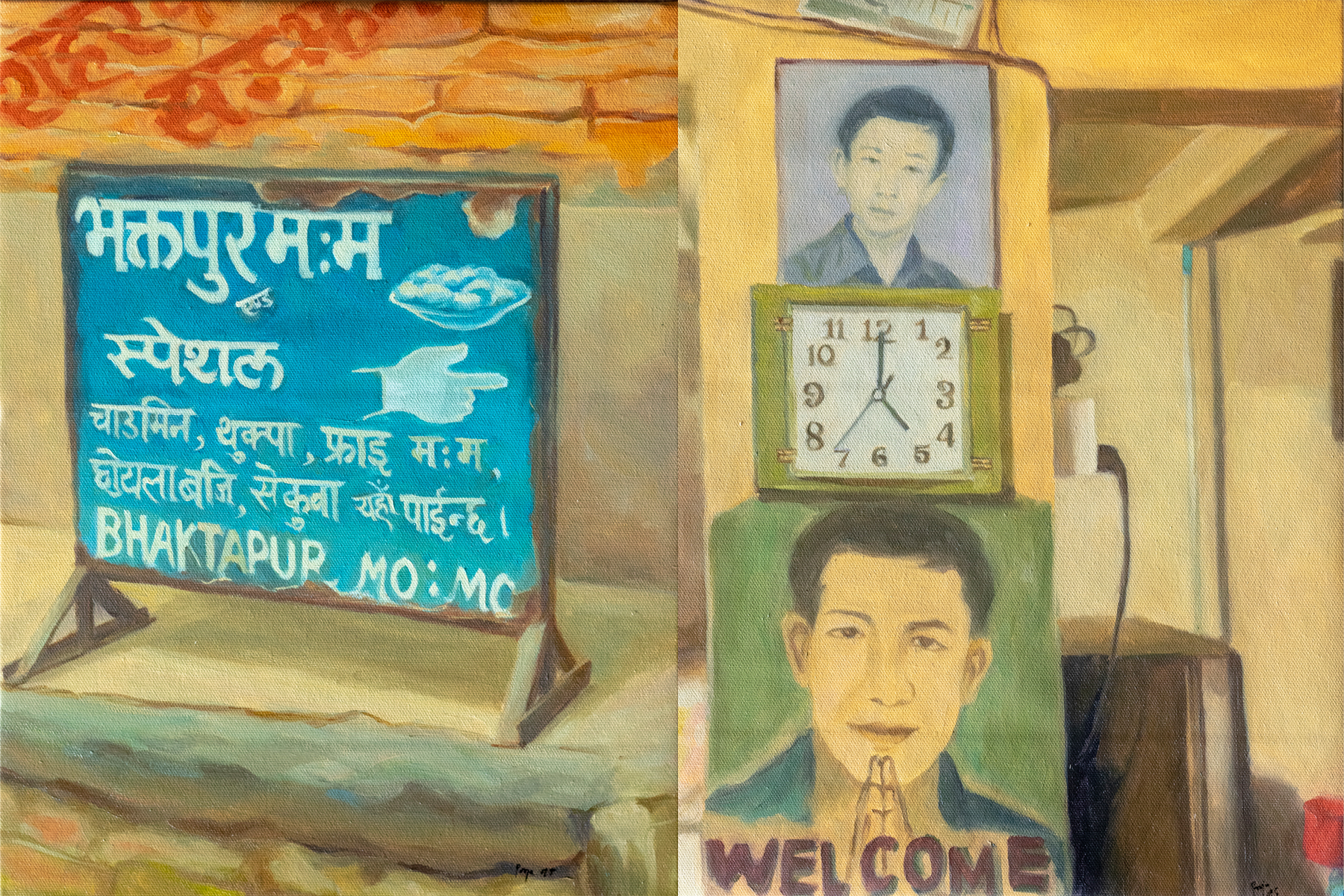
Pooja Duwal’s Amidst the Wafts of Steam captures the quiet soul of a local momo shop in Bhaktapur, a small yet enduring space steeped in memory and routine. For over three decades, the shop has gathered its own character—shaped by timeworn objects, cherished recipes, and the quiet temperament of its owners.
Steam rises in gentle swirls, wrapping itself around conversations, laughter, and the occasional hush of solitude. The shop breathes in the rhythm of its patrons—some lingering over familiar comfort, others passing through in fleeting moments of hunger and nostalgia. The clatter of steel plates, the scent of simmering broth, and the warmth of shared space create an atmosphere that lingers far beyond the taste of the food itself.
As the city around it transforms, the shop remains a quiet witness to change, its history etched into the walls, its presence measured in the relationships it fosters. Duwal’s paintings pay homage to these intimate, everyday sanctuaries—Na: Pasa:—that persist through shifting times, offering a familiar refuge in an ever-evolving world. Through her work, she invites us to pause, observe, and appreciate the delicate dance of tradition, time, and human connection that gives these spaces life.
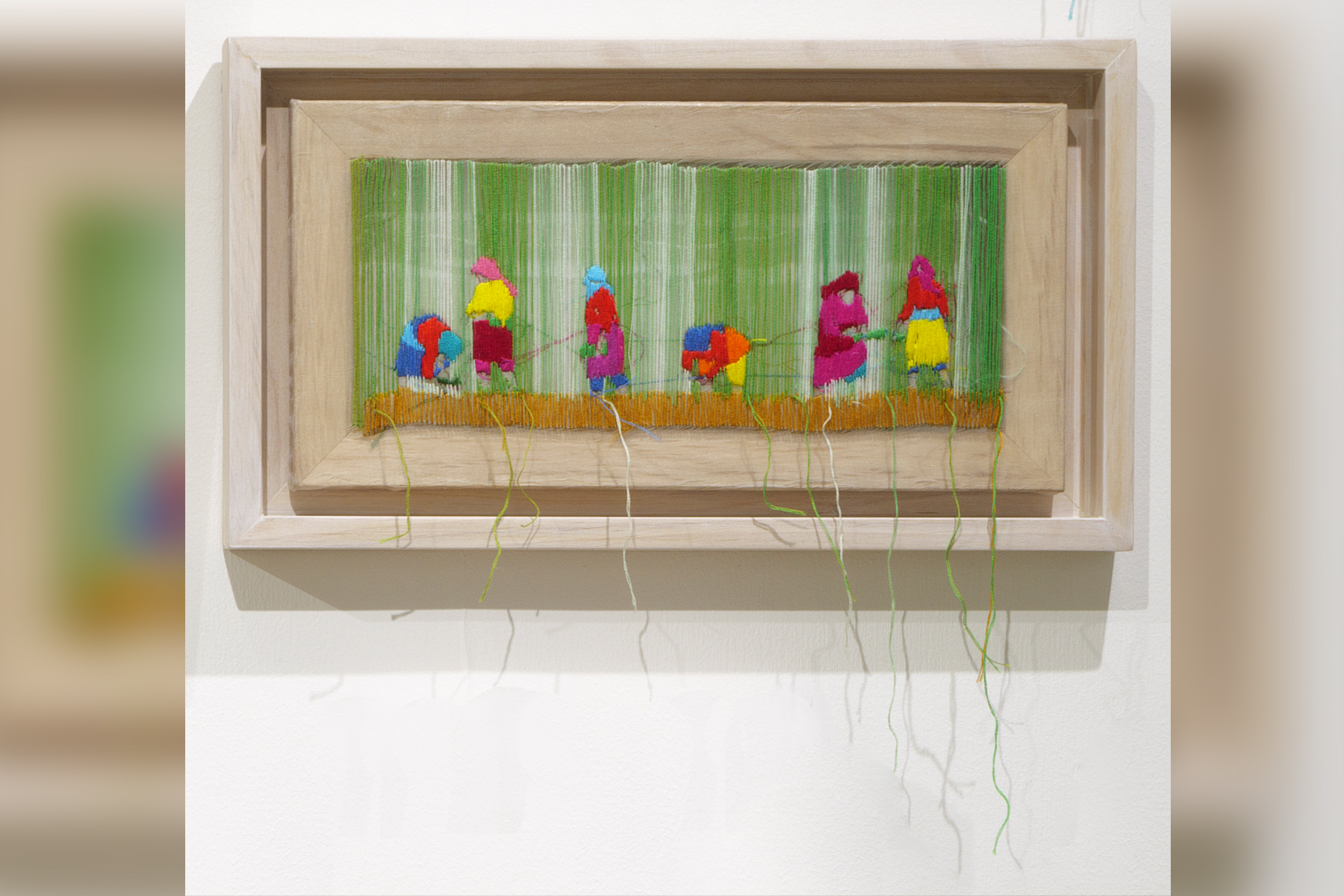
Priyanka Singh Maharjan’s To All the Women Who Came Before Me is a tribute to the quiet, often invisible labor of women—mothers, grandmothers, and generations of caretakers who sustain daily life through endless cycles of chores and side hustles. Their work, essential yet overlooked, forms the backbone of families and communities.
This series illuminates their resilience and perseverance, honoring the strength woven into everyday acts of care, sacrifice, and survival. Through her art, Maharjan seeks to give visibility to these women, recognizing their invaluable contributions and the profound impact of their labor on the world around them.
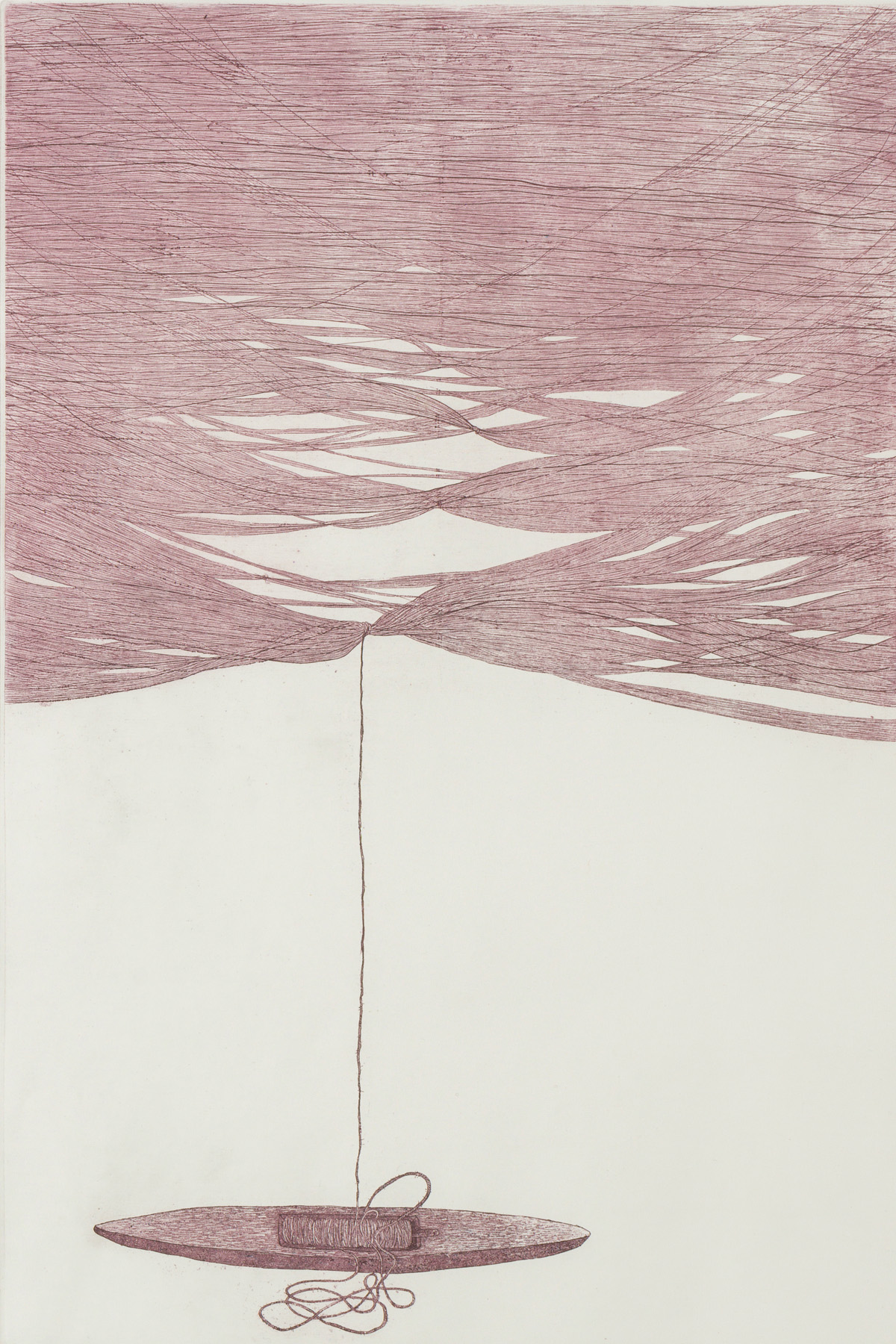
Sony Rai’s work explores the symbolic power of thread—a connection that weaves together past, present, and future generations. Shelter, food, and clothing were once deeply intertwined with the simple rhythm of life, yet in today’s materialistic world, these essentials are often overshadowed by fleeting desires. Despite this, she believes that life remains fundamentally simple, filled with both joy and hardship, sweetness and sorrow.
Her reflections trace back to her ancestors, who embraced thread not just as a material, but as an art form—crafting beautiful, intricate works that carried their skills, creativity, and traditions forward. This thread serves as a lifeline, linking us to figures like Tayama and Khiyama, who passed down their artistry through generations.
Thread holds significance beyond the tangible; in mythology, it carries stories of resilience and rebirth. One such tale tells of Tayama using Taan to weave her sister Khiyama back to life, embedding sacred Mundum songs into her patterns—a testament to the deep spiritual and cultural ties within this craft.
Through her series, Rai honors this legacy, celebrating thread not just as a tool, but as a vessel of expression for generations of women. Her work sheds light on the often-overlooked elements of tradition that shape our understanding of culture and identity. In doing so, she invites viewers to reflect on the beauty and significance of the threads that bind us all.
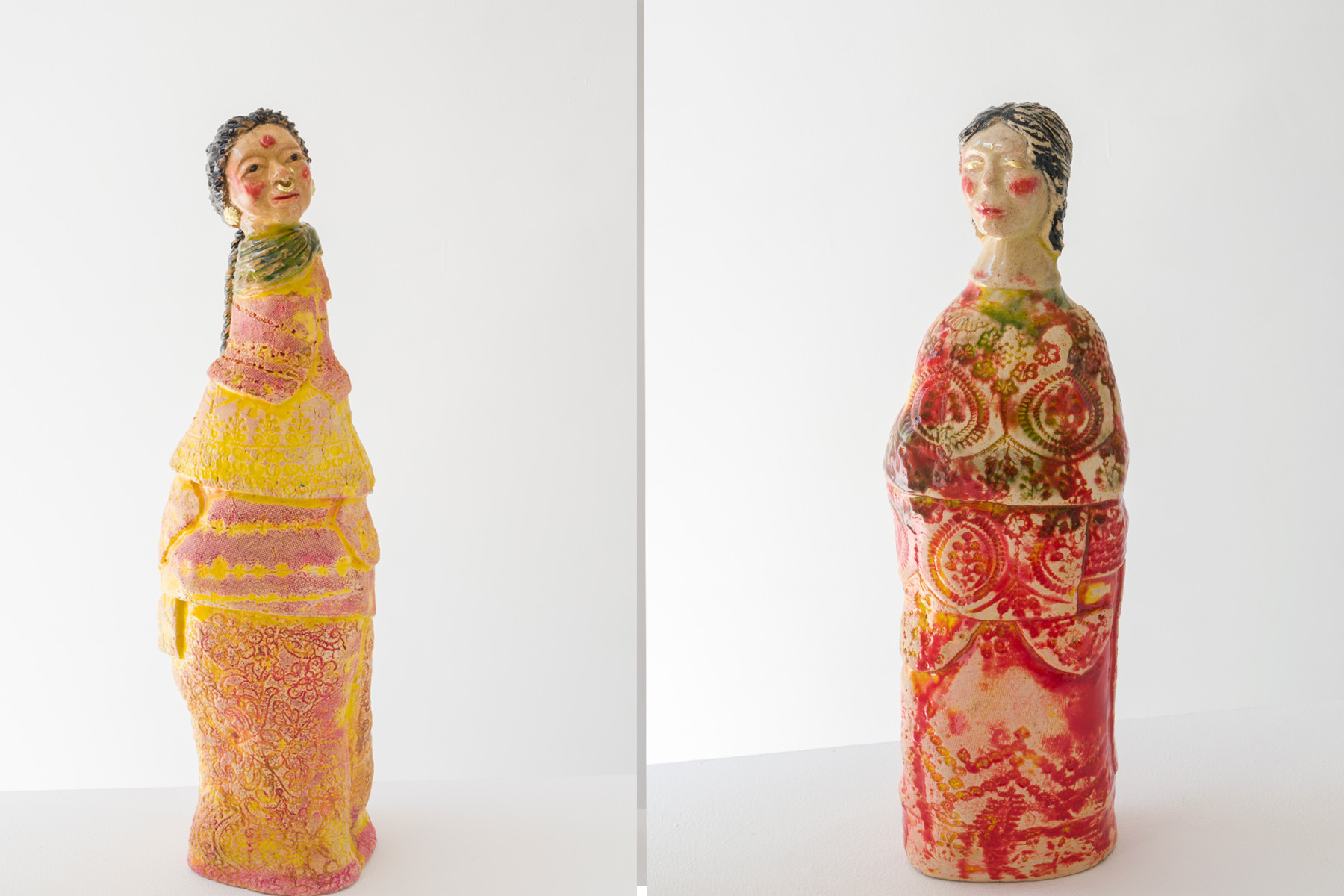
Sumitra Baral’s sculptures merge the grace of traditional craftsmanship with the bold spirit of modern aesthetics, unfolding layers of history, emotion, and identity. She reimagines fashion not as mere adornment but as a profound expression of inner artistry and cultural heritage.
Her work delves into the soul of The Aesthetic of Fashion, revealing garments not just as fabric but as living narratives—woven with human emotion, tradition, and the passage of time. Every texture and pattern carries its own voice, whispering stories of identity, personality, and cultural evolution.
At its core, this exploration is a dynamic conversation between time, culture, and aesthetics. Baral’s sculptures bridge past memories, present self-expression, and future aspirations, creating an ever-evolving cycle where history and modernity continuously intersect. Through her art, she invites us to see fashion not just as something we wear, but as a reflection of who we are and where we come from.

Leave A Comment