

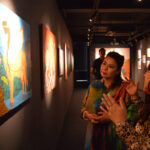
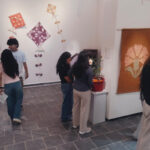

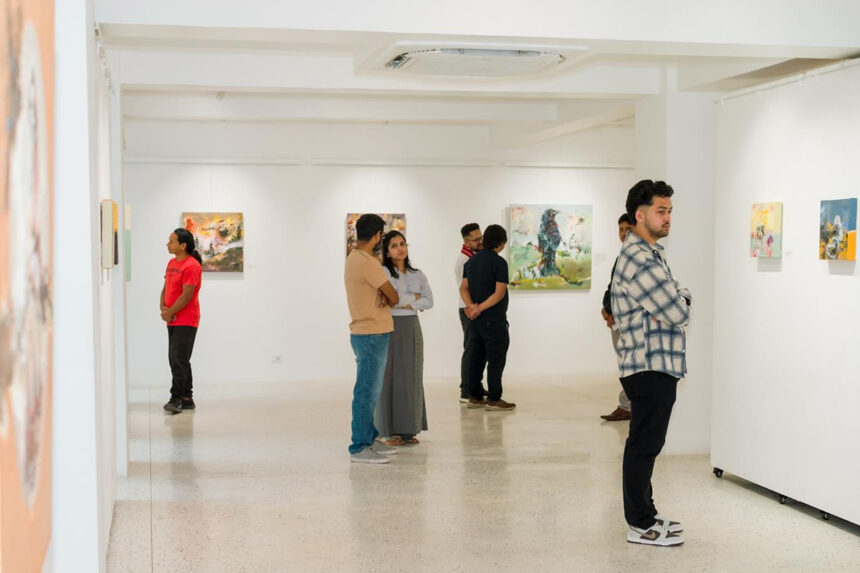
A story is not just a narrative—it is a visual metaphor for life itself. This series of artworks draws inspiration from age-old folk tales, passed down through generations, evolving with each telling. As times changed and technology crept into daily life—through television screens and mobile phones—these stories found new forms of expression. In this exhibition, they are reborn on canvas.
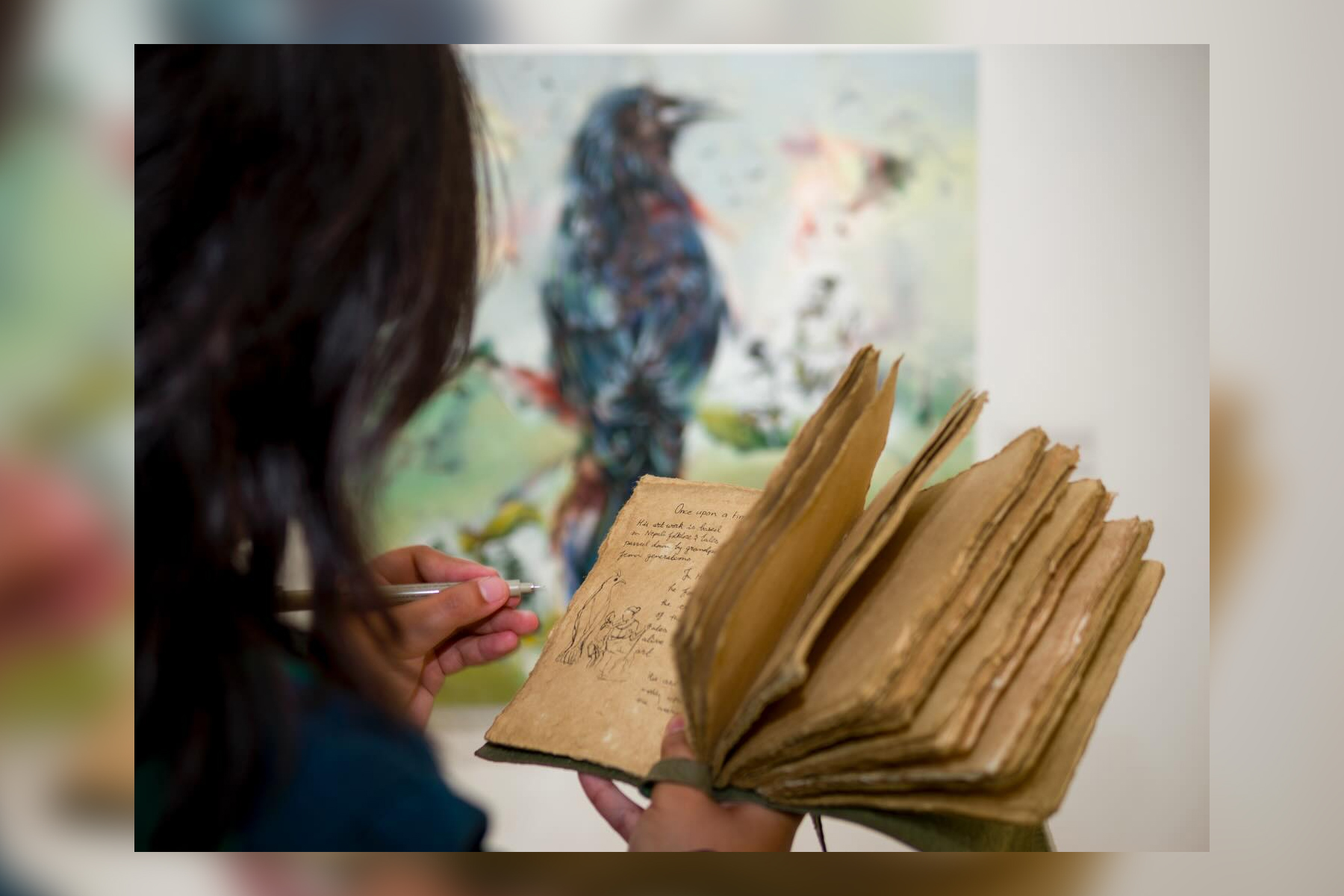
The artist, Roshan Bhandari, who is displaying his art works at the Takpa Gallery, Lazimpat, speaks with a quiet smile, by revealing his creative process:
“After reading a story, I let it sit in my mind. I don’t rush. I visualize the scenes, the moods, the colors—letting them brew in my imagination. Only when the vision becomes clear do I begin painting.”
His journey starts with spontaneous splashes of color across the canvas—an intuitive dance of pigment and possibility. He then steps back, letting the paint rest, breathe. A day later, the real transformation begins.
“That’s when I truly started to see it—my version of the story. The second layer brings the narrative to life. That’s when the painting truly begins.”
And so, the exhibition takes form—a vivid tapestry of memory, imagination, and reinterpretation, where ancient tales meet contemporary expression.
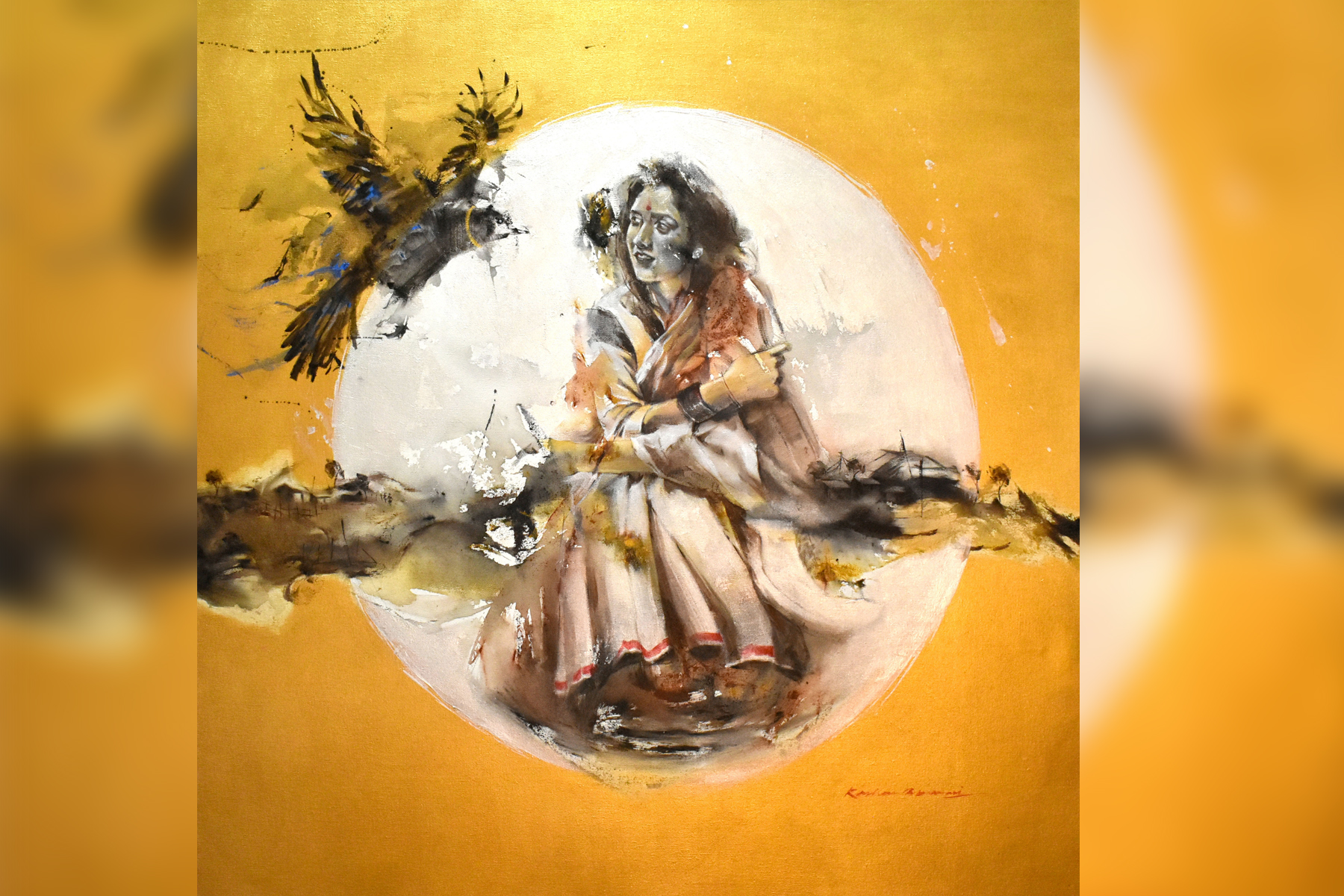
The first painting tells the tale of a remarkable woman who can understand and speak with animals. In this circular composition, a cunning fox and a watchful crow lean into whisper secrets of hidden treasures. Excited by these revelations, the woman shares the locations with her family—only to be accused of witchcraft by her husband and father-in-law. They banished her from their home.
Meanwhile, the disbelieving men set out to the places she named and discover vast wealth buried there. Realizing their mistake, they return—but by then she has married another. The painting’s round frame emphasizes the unbroken cycle of suspicion, discovery, and regret, capturing both the woman’s unique gift and her family’s tragic blindness.
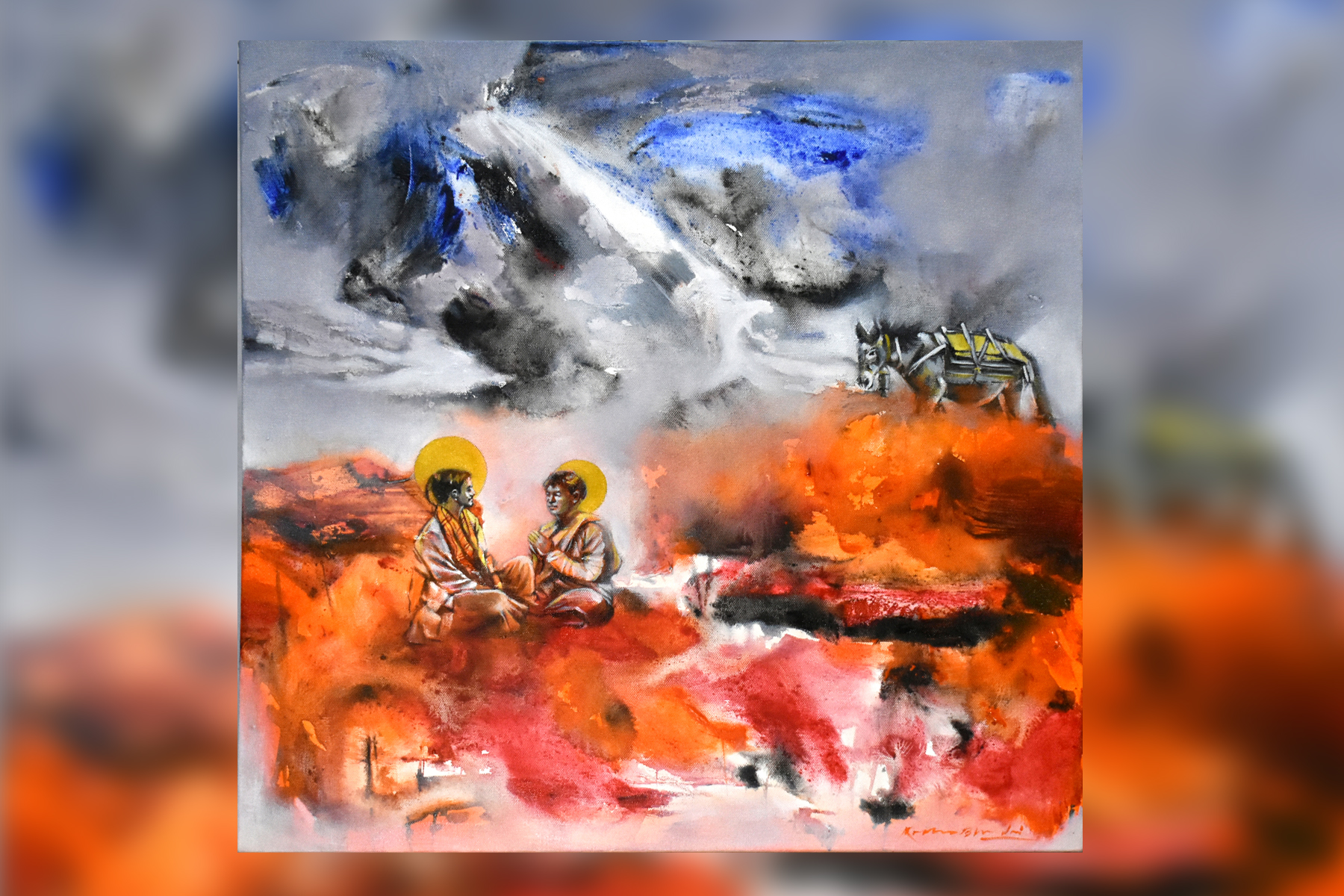
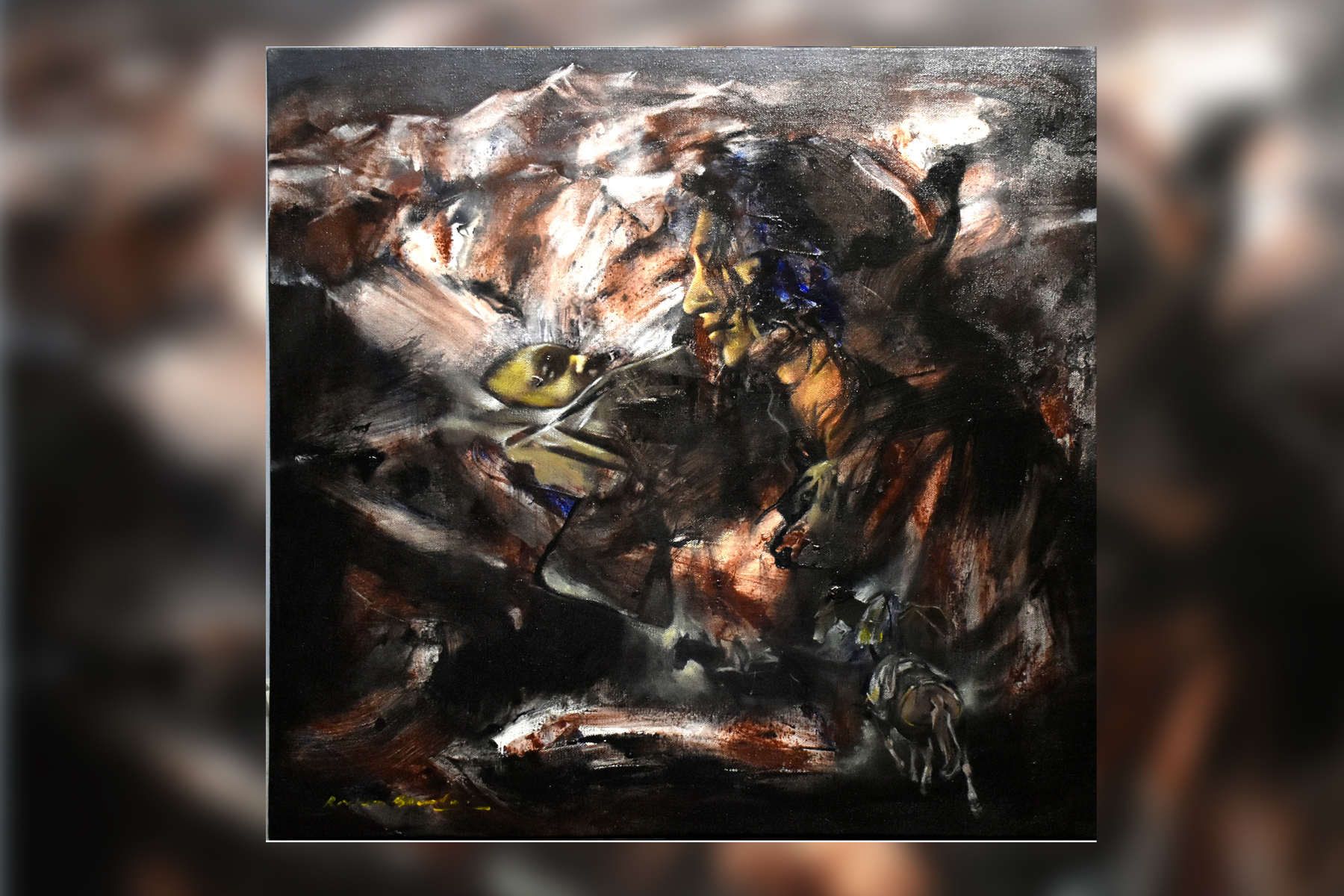
Another striking figure in the series is that of a cow—frail, fading, and full of meaning. This cow was the only thing given to the youngest brother by his elder siblings, a half-hearted inheritance barely alive. By the next morning, the cow had died. Yet, the younger brother, determined or perhaps desperate, dragged the lifeless animal to a nearby field and tied it there.
When the field’s owner discovered the dead cow on his land, he reacted with fury, hurling a stone at it. Ironically, this act led to compensation being paid for the animal—as if its value was only realized in death. The youngest brother used this “seed money” to change his fate. In a dark twist of retribution, he ultimately took the lives of his brothers, fueled by the same neglect that once left him with nothing but a dying cow.
Describing his process, the artist reflects:
“Much like sculpture is shaped by subtraction, my painting begins with chaos. I create freely—almost nonsensically—letting the canvas overflow. Then, I begin to reduce, to carve away, until the central figure emerges with clarity. It’s a process of removal, of finding meaning by taking away.”
The result is a painting layered with irony, sorrow, and the quiet violence of being forgotten.
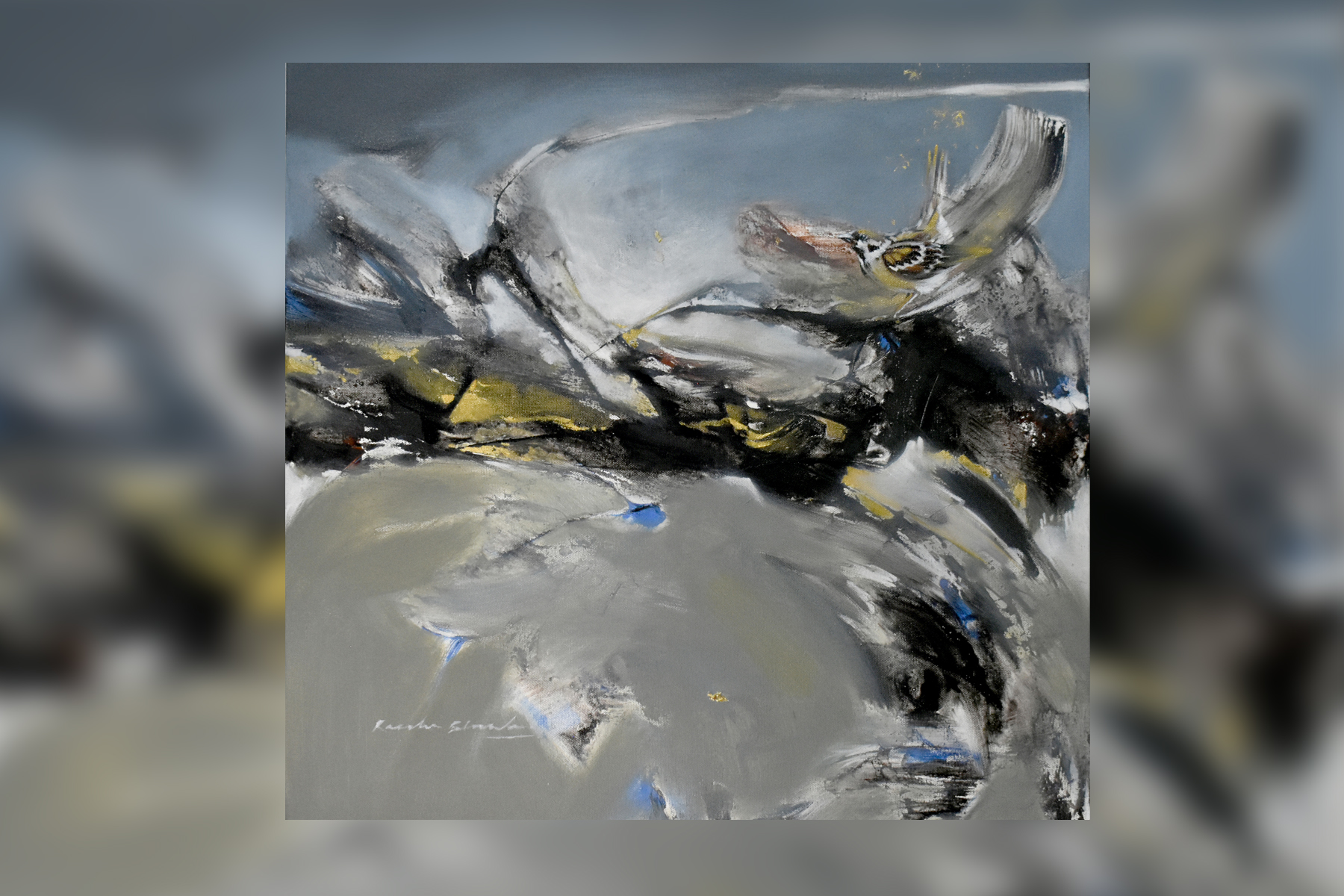
The next painting captures the delicate and bittersweet tale of a sparrow and a boy. One day, the boy finds a small, abandoned egg and brings it home. His wife, quick-tempered and harsh, dismisses it. Undeterred, the boy builds a nest for it in the quiet of the backyard. In time, the egg hatches, and from it emerges a sparrow—small, bright-eyed, and, magically, able to speak.
The boy forms a quiet bond with the bird, but trouble brews in his absence. One day, while he is away, the sparrow teases the quarrelsome wife in jest. Enraged, she cuts out its tongue. Mute and wounded, the sparrow flees.
When the boy returns and asks about his feathered friend, the wife simply shrugs: “It flew away.” Time passes, heavy with silence.

Then, on a walk through the woods, the boy is startled when the sparrow—now recovered and living in a forest abode—appears before him. Unable to speak, the bird gently leads him home and, through gestures and scenes, shares all that had happened. Before the boy departs, the sparrow gifts him two mysterious bags—symbols of quiet loyalty and truth revealed.
The painting, infused with soft lines and forest hues, evokes themes of kindness, betrayal, and the silent endurance of those who are wronged.
A defining feature that runs through most of his paintings is the playful, almost mischievous use of color. Hues dance across the canvas—sometimes bold and striking, other times tender and subdued—each chosen not just for visual appeal but to echo the emotional undercurrents of the story being told.
The artist possesses a rare gift: the ability to distill the soul of a tale into brush-strokes. Each canvas becomes a narrative space, where myth and memory unfold not through words, but through tone, texture, and rhythm. To evoke the right mood, he masterfully aligns color, composition, and form. One particularly striking technique he employs is the use of a single, shared background hue that extends into the central figure itself—an intentional merging that blurs the boundary between the story and its subject.
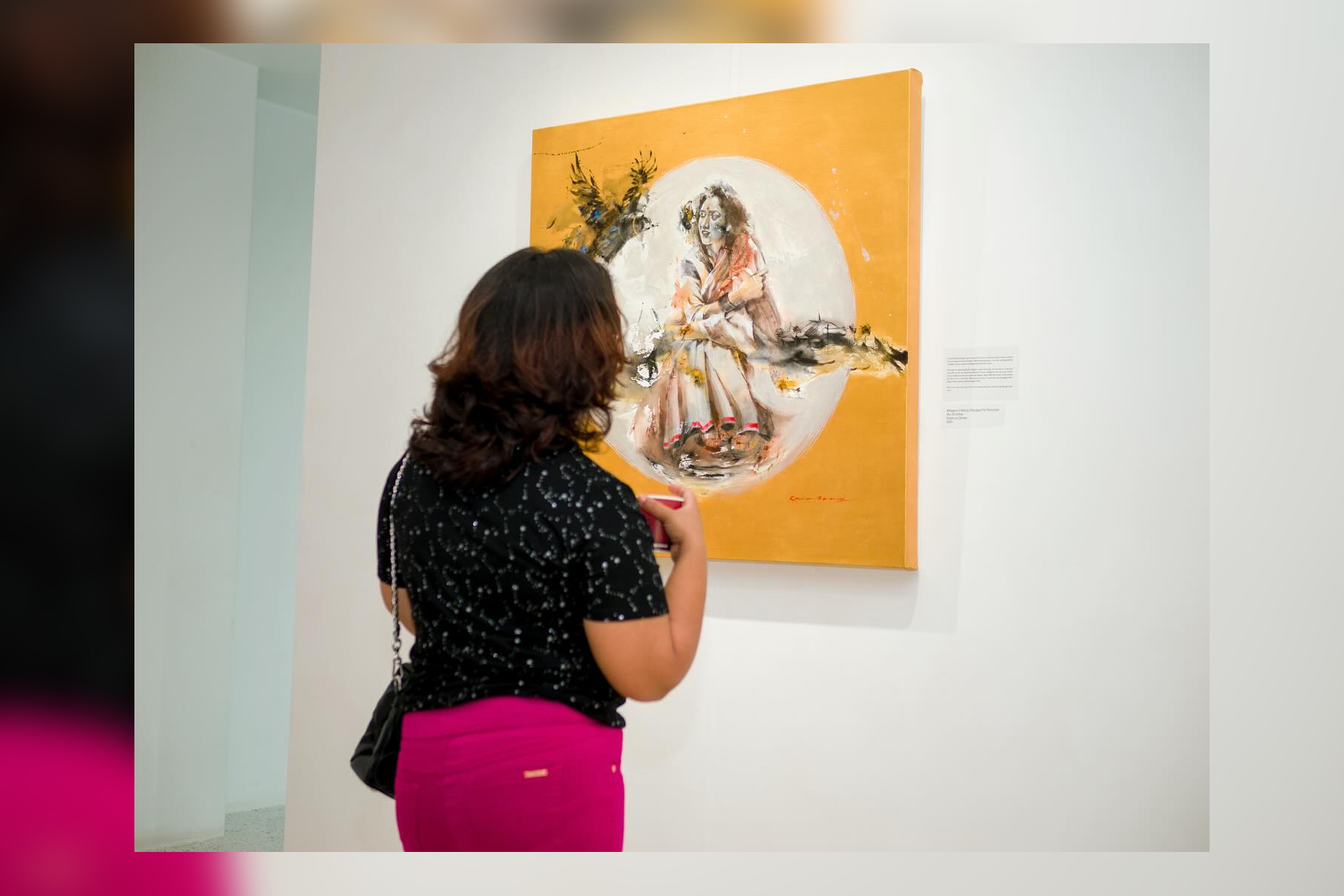
This subtle yet powerful blending not only creates harmony within the painting, but also draws the viewer inward, as though the figure is not merely placed within the world, but born from it. Through this balance, the painting breathes—alive with emotion, meaning, and movement.
Folklore has a magical way of transporting us to worlds where even animals and birds find their voice—where the natural and the human exist in harmony, speaking a common language of wonder and wisdom. Sadly, in today’s fast-paced world, many children are growing up without access to this rich imaginative heritage. Stories once shared by the hearth are now fading, leaving a void not just in entertainment, but in emotional and cultural grounding.
Art, then, becomes a vessel—not just to tell these stories, but to reflect the emotional landscapes of the past. Mental health, memories, and the quiet rhythms of life from another time all find expression in paint and form. Each generation carries its own tales—some preserve them in books, others share them online—but at the core lies a timeless message: coexistence, compassion, and community.
These stories are not merely for amusement. They are mirrors, revealing the values, struggles, and dreams of those who lived before us. They help us reconnect—not only to tradition, but to ourselves.
“If I weren’t an artist, my life would have taken a very different course which I cannot even think of at the moment, but this time, I’m reshaping my style, evolving to meet the people where they are.”
Stories, he believes, keep us rooted. They cultivate empathy, creativity, and a deeper kind of understanding. They convince us—gently, persistently—that we belong to something greater than ourselves.
After completing this series of work, the artist steps forward with quiet conviction—believing that culture will not vanish so easily. As long as stories are told and art continues to breathe life into memory, heritage will endure: resilient, evolving, and alive in every brushstroke and hue.
About the exhibition:
Venue: Takpa Gallery, Lazimpat
Date: 25th May-21st June
Entry: Free
Time: Tuesday -Thursday =11 am to 6 pm, Friday-Sunday= 11 am to 7pm
The gallery remains closed every Mondays.

Leave A Comment