

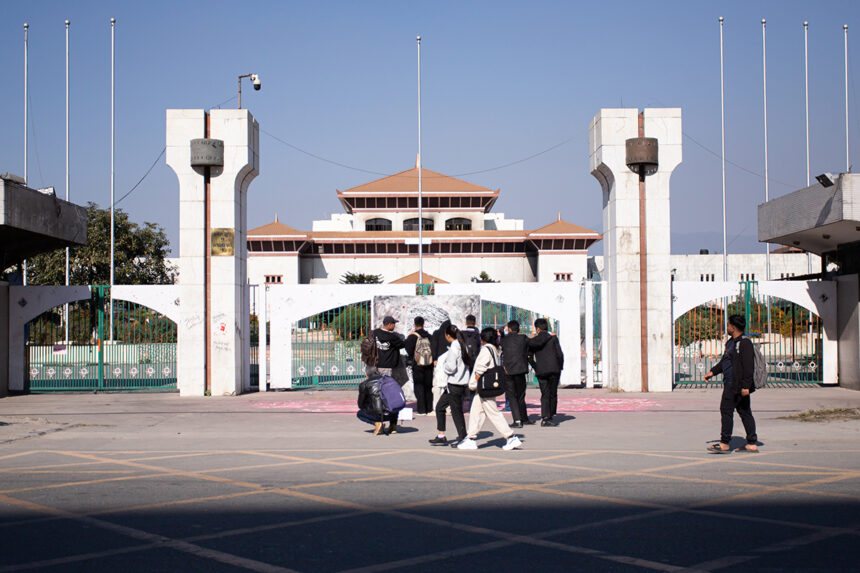
Amid the constant hum of traffic and hurried footsteps in New Baneshwor, an unusual stillness began to gather outside the BICC Hall. Passersby slowed down, drawn by a large canvas bearing an oversized fingerprint—bold, unmistakable, and quietly unsettling. What began as curiosity soon turned into conversation, as clusters of onlookers gathered around the work and engaged directly with its creator, artist Rabindra Shrestha.
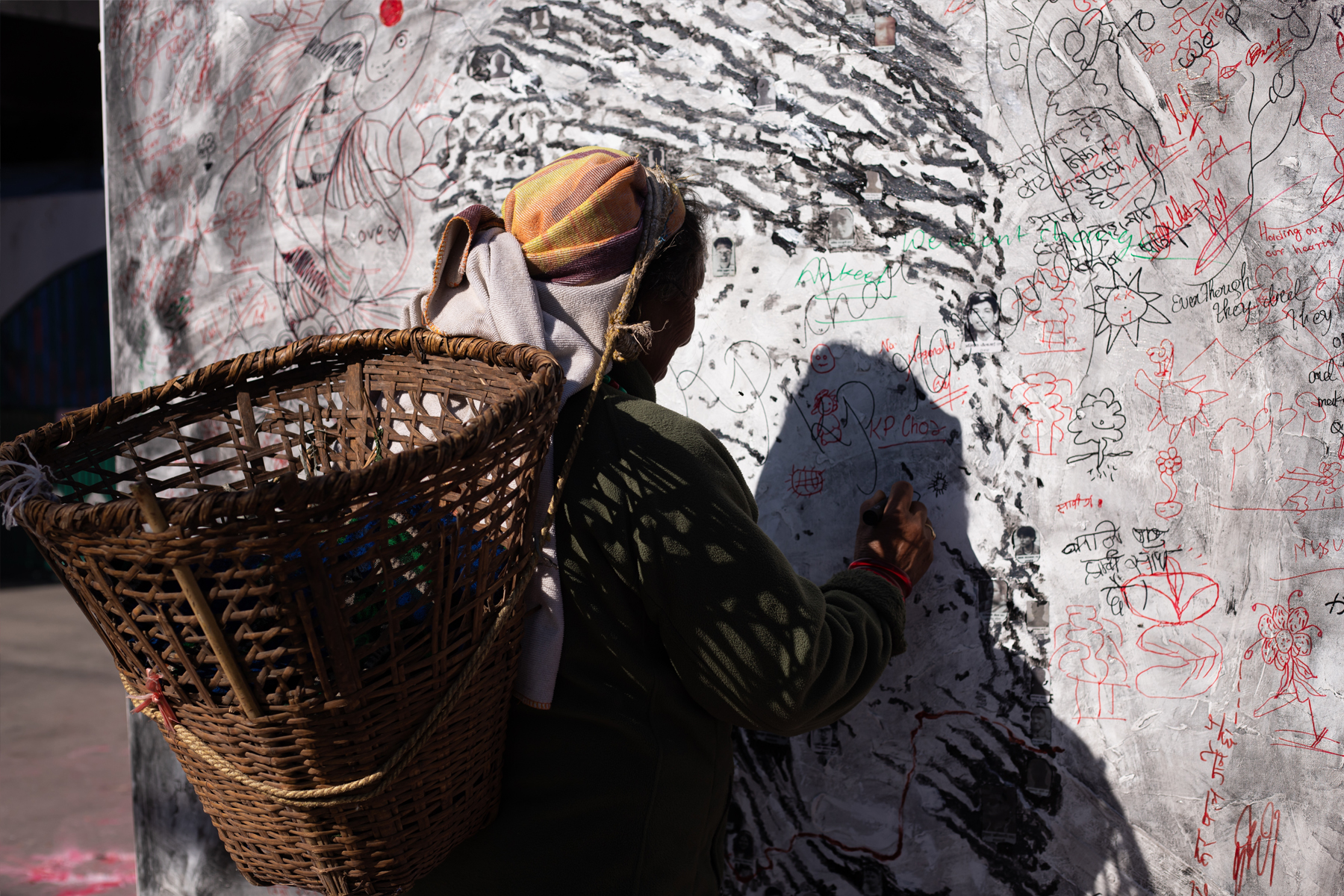
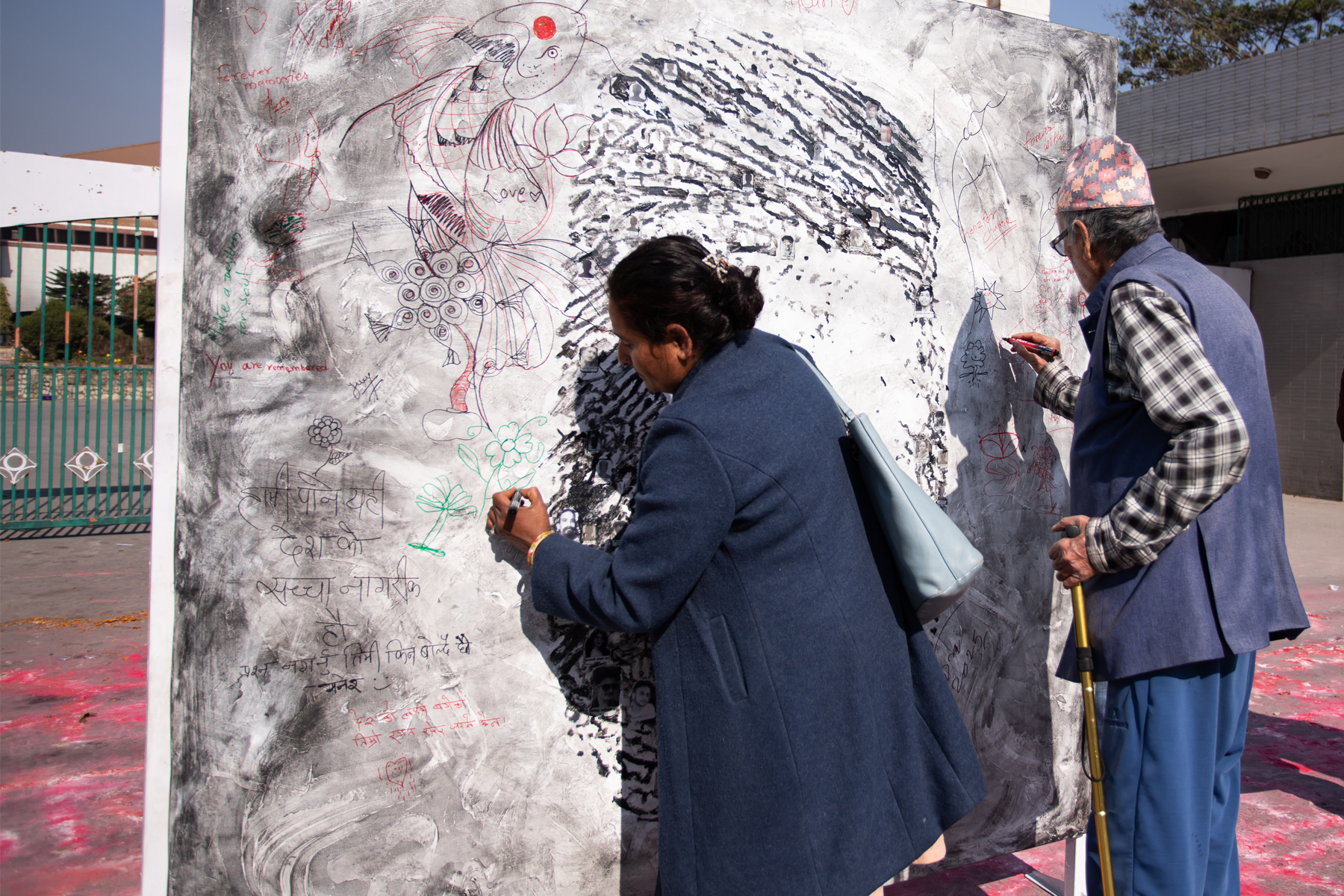
Set on ground where lives were recently lost during public demonstrations, the artwork transforms a busy urban passage into a space of remembrance. Shrestha’s painting does not ask to be merely observed; it invites participation. Viewers are encouraged to sketch flowers onto the canvas—each mark an offering, a gesture of memory for those who lost their lives in the protests. Slowly, the canvas evolves, becoming a collective memorial shaped by many hands.
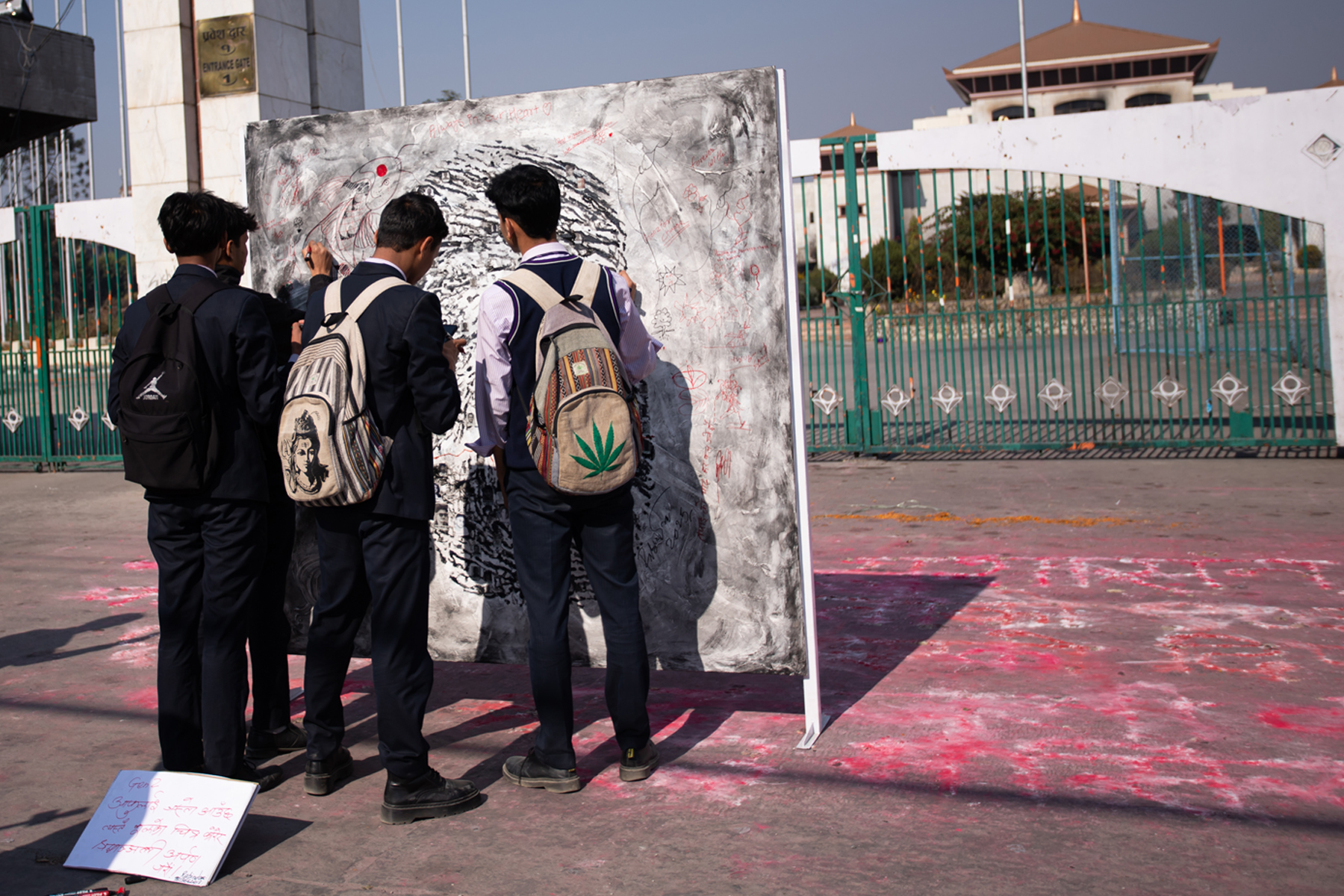
The memory of September 8–13 remains fresh. During those days, the streets filled with voices raised against corruption, with young people—particularly Gen Z—at the forefront. In Shrestha’s intervention, those same youthful energies return, not in protest but in reflection. Young passersby pause, draw flowers, write messages, and converse with the artist, turning the act of viewing into an act of shared witnessing.
Fingerprints have long been central to Shrestha’s artistic language. Traditionally, fingerprints signify identity—used in banks, land transactions, and legal documentation as proof of existence and ownership. Shrestha reclaims this intimate marker and asks a provocative question: can the very tool used to define identity also become a medium of art? In We Shall Rise, the fingerprint expands beyond the individual, symbolising collective presence, resistance, and remembrance.
The choice of location is deliberate. New Baneshwor, Shrestha notes, is not just another busy junction—it is the place where the nation’s constitution was shaped, and also where more than 70 innocent lives were taken. To place the work elsewhere would dilute its meaning. Displayed here, in the open and among the people, the artwork confronts the public with a recent and painful history, refusing silence or distance.
This is not the first time Shrestha has challenged conventional expectations of art. His past works have often unsettled and provoked reflection. At a National Exhibition a year ago, he presented an empty canvas—an act that puzzled and intrigued audiences unaccustomed to such conceptual gestures. During Nepal’s civil war, he created haunting images of eyes using blood collected from both army personnel and Maoist fighters, collapsing divisions and foregrounding shared suffering.
In another notable project, Shrestha installed an old boat—once a vital mode of transport, later rendered obsolete by motorboats. Filling it with old coins, he transformed it into a space for tea and books, reimagining utility, memory, and community within a single form. Each project, like We Shall Rise, emerges from prolonged contemplation, surfacing slowly into public view.
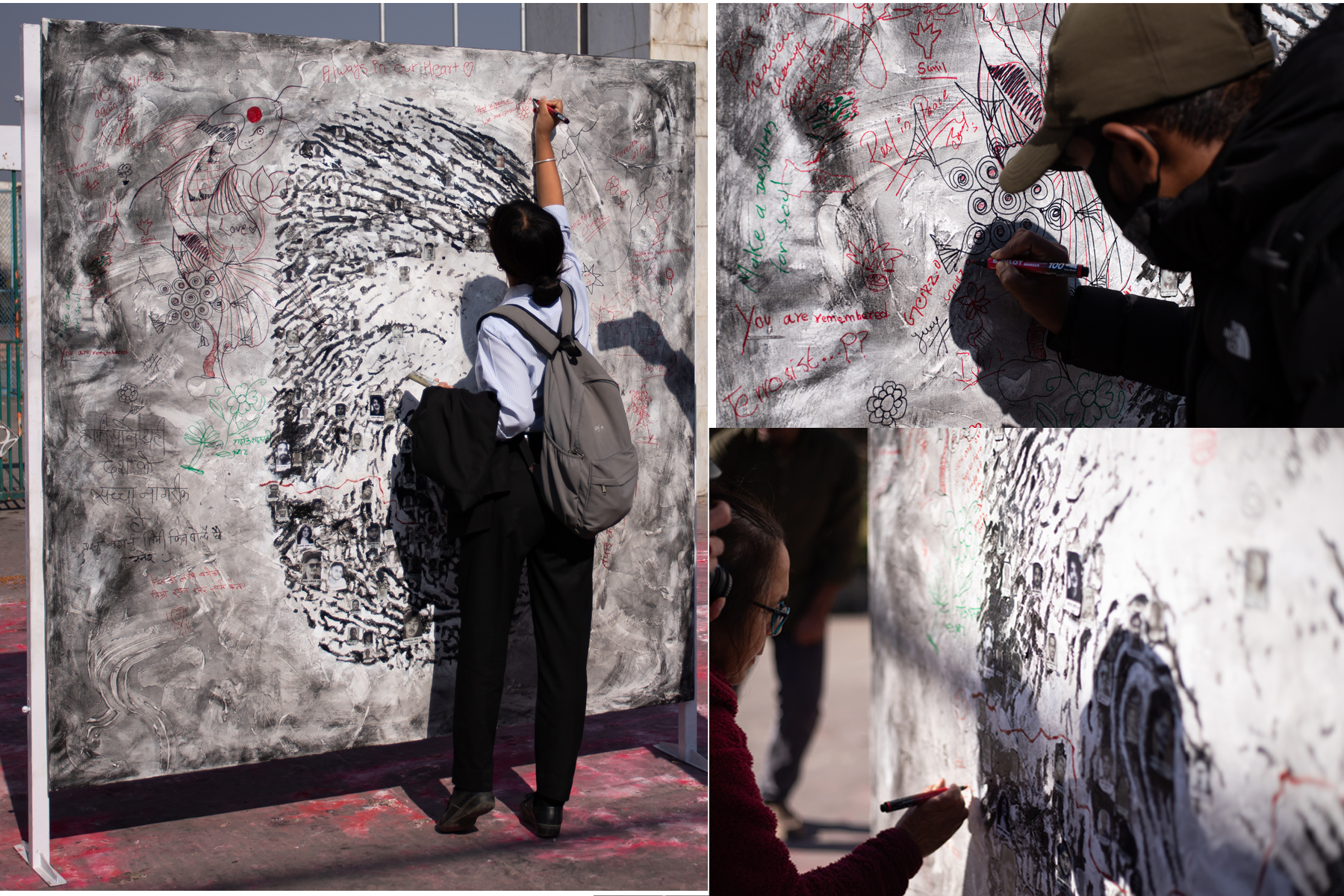
Shrestha’s work consistently asks viewers to reconsider what art can be—and where it can exist. By placing his practice in streets rather than galleries, and by inviting participation rather than passive observation, he opens art to dialogue, discomfort, and shared reflection. We Shall Rise stands not as a finished object, but as an evolving testament—one that urges its audience to pause, remember, and reconsider the many dimensions of art, identity, and collective responsibility.

Leave A Comment