
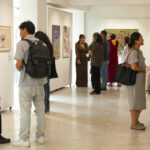
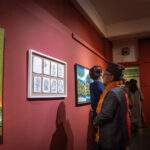
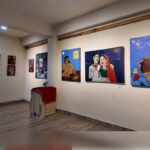
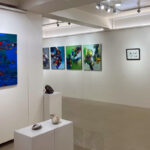
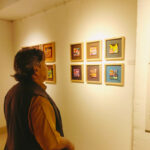

How does an abstract artist gather inspiration? The question has long intrigued viewers, for the images an abstract painter creates often feel elusive, layered, and open to endless interpretation. What finally meets the public eye in the quiet of a gallery hall is only the distilled outcome of an inner journey- an experience the audience absorbs through colour, form, and emotion rather than explanation.
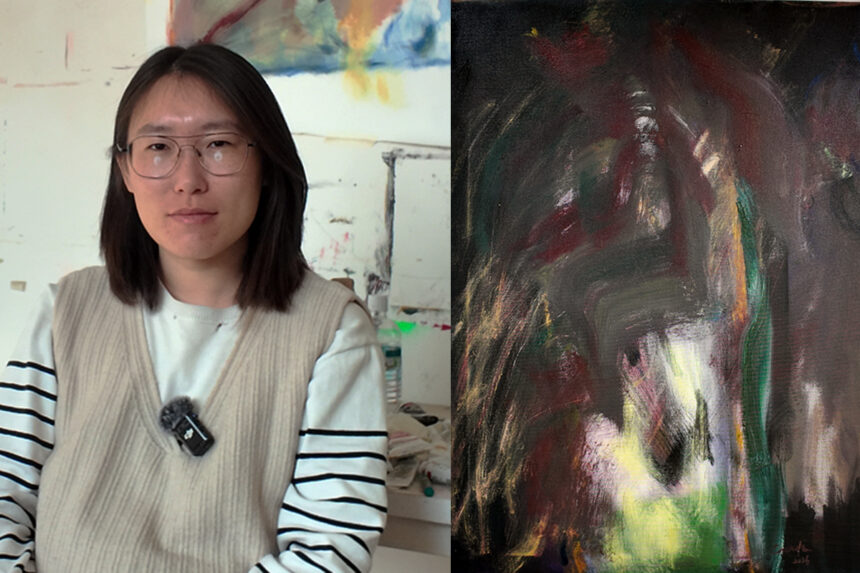
A similar dialogue unfolds in the recent works of Chenxi Xu, a Chinese artist who has just completed her artist residency at Gallery MCube. Her paintings possess a striking solidity, anchored by clear visual structures, yet they resist literal definition. At first glance, the compositions appear firmly abstract; linger a little longer, and a subtle natural picturescape begins to surface. Hints of landscapes, atmospheric shifts, and organic rhythms quietly emerge, as though nature itself has been reimagined through memory rather than direct observation.
Chenxi Xu’s works do not attempt to describe the natural world; instead, they evoke it. The canvases seem to hold fragments of places once seen or felt- echoes of terrain, light, and movement translated into abstract language. This balance between abstraction and suggestion lends her work a contemplative depth, inviting viewers to pause, sense, and interpret rather than simply observe.
The exhibition, which opened on 23 January, will continue until 30 January, offering visitors a brief yet immersive encounter with an artistic practice where abstraction becomes a bridge between inner vision and the quiet presence of nature.
Speaking about her creative process, the artist reveals that each painting emerges through the careful accumulation of multiple layers. The act of painting, she explains, draws her into a meditative state, where thought quiets and intuition takes over. Every splash of colour becomes a deliberate attempt to hold the subtle chaos she encountered in the Kathmandu Valley- a place where contrasts coexist with remarkable intensity. Smoke and fire, birth and death, grief and celebration unfold side by side, forming a rhythm that is both unsettling and deeply alive.
To her, Kathmandu is a city that never truly pauses. Life moves swiftly, crowded with rituals, processions, and daily struggle, yet beneath this restless surface lies a curious detachment from material obsession. It is this paradox-busyness without possession, intensity without excess- that finds its way into her canvases. Alongside these lived experiences, the valley’s natural beauty seeps into her work, quietly shaping the forms and moods that define the exhibition. These elements, she reflects, were the first to captivate her, eventually guiding her toward the body of work now on display.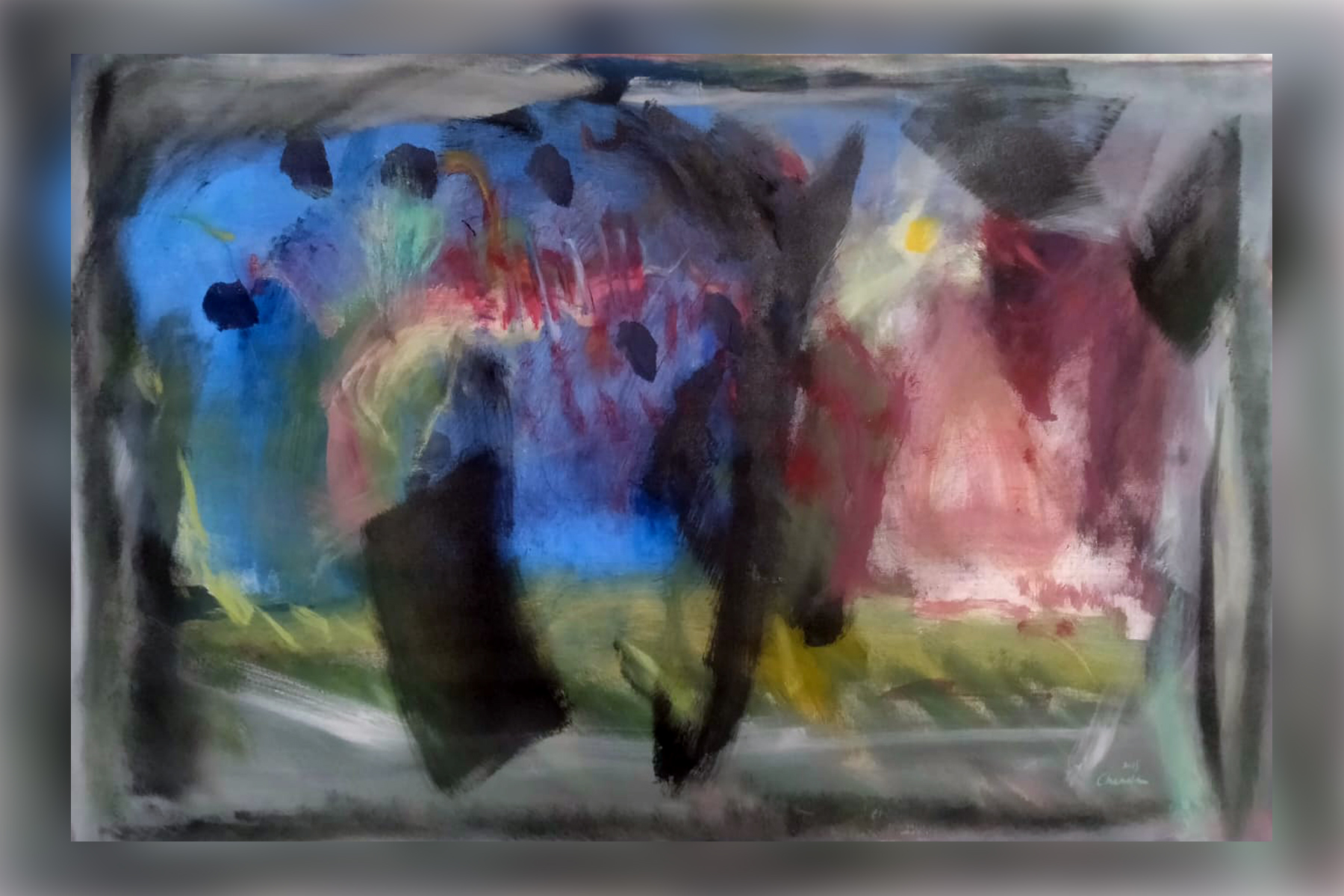
Beyond the canvas, the artist’s practice extends into personal experimentation. Art, for her, is not confined to stretched fabric or gallery walls. When the Khojpatra team met her at MCube’s studio space, a curious detail caught their attention: just beneath her eyes appeared a delicate drawing of a white form. Asked about it, she explained that it was part of a performance- an exploration of the idea that the artist’s own body can, at times, become an expanded canvas. In this gesture, the boundary between creator and creation dissolves, reinforcing her belief that art is not merely made, but lived.
This marks her second journey to Nepal, a return shaped by memory and quiet longing. She speaks vividly of her visit the previous year-to Pokhara and other panoramic landscapes- where vast skies, shifting light, and the hush of open spaces left a lasting imprint on her imagination. Those images, once encountered, refused to fade; instead, they settled gently within her, waiting to be translated into form. The gallery and residency space at MCube offered precisely the stillness and scope she needed. Over the course of a three-month residency, she began giving shape to those internalized landscapes, producing the body of work now unfolding within the gallery itself.
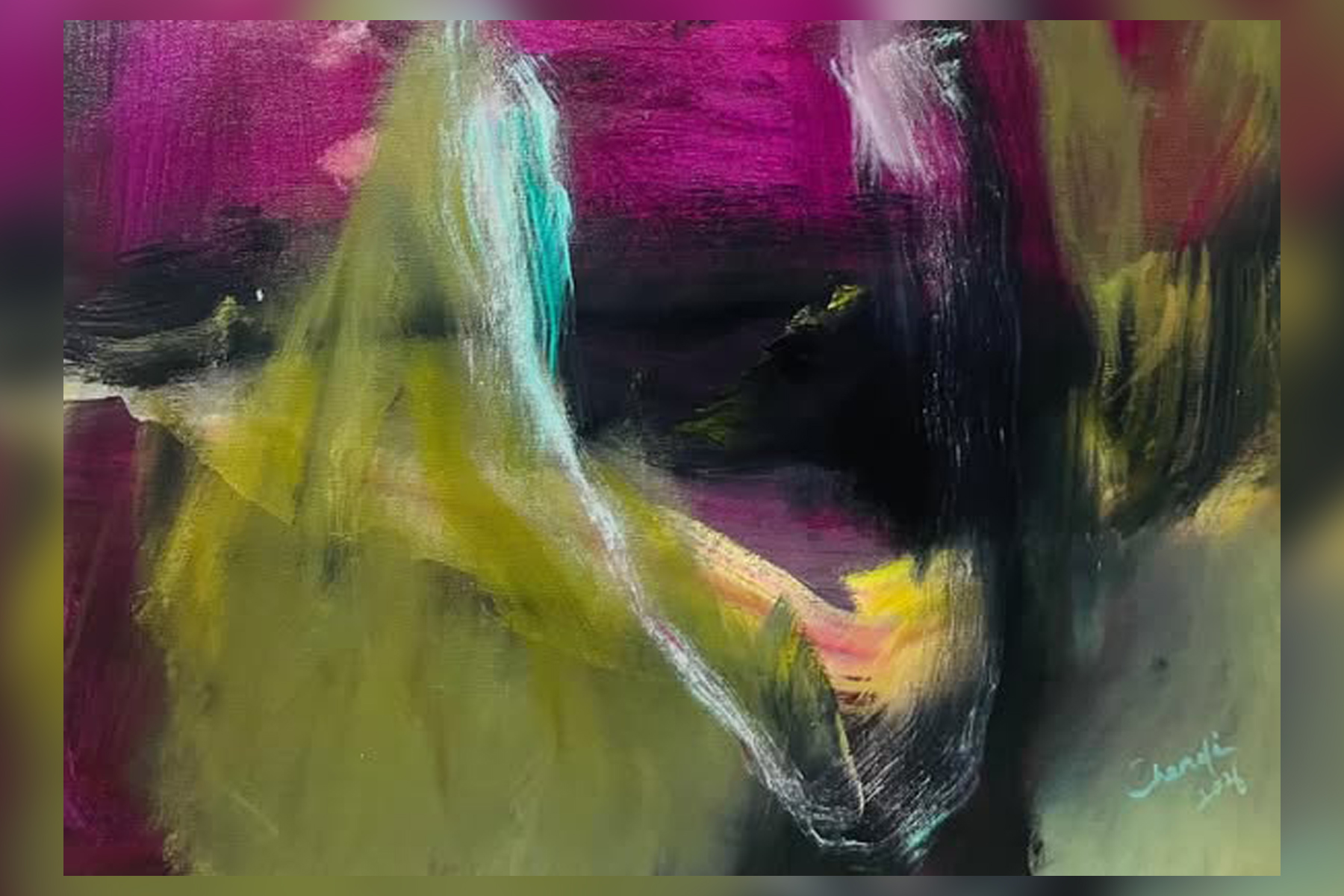
In one painting, a small strand from the brush remains embedded in the surface-a detail some might consider an oversight. Should it have been removed? She responds with a smile, disarming in its simplicity. The world, she reminds us, is not perfect, and neither are canvases. The imagery she wished to reveal is already complete; the stray hair alters nothing of its essence. In this acceptance of imperfection lies a quiet philosophy- one that resists polish in favor of honesty.
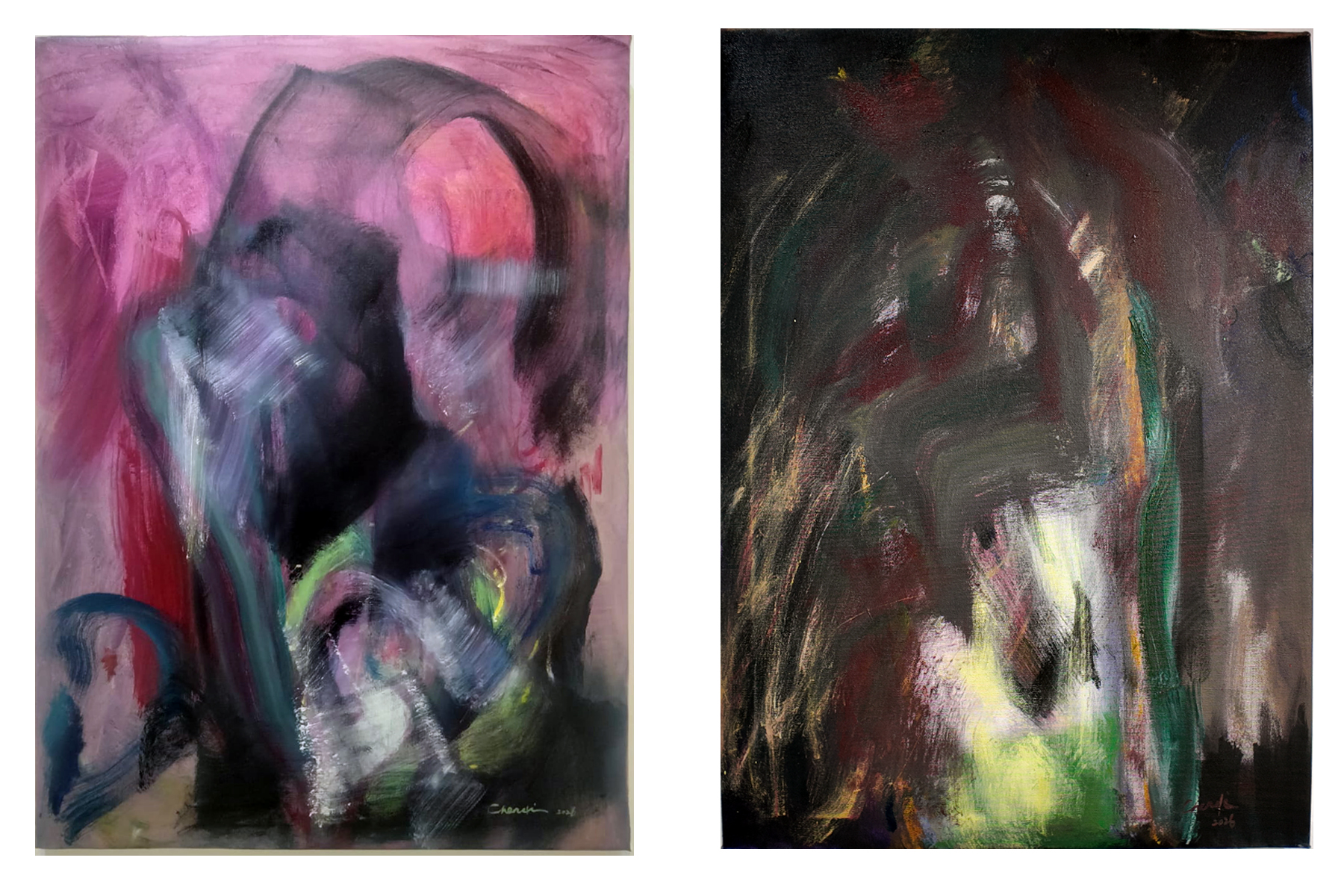
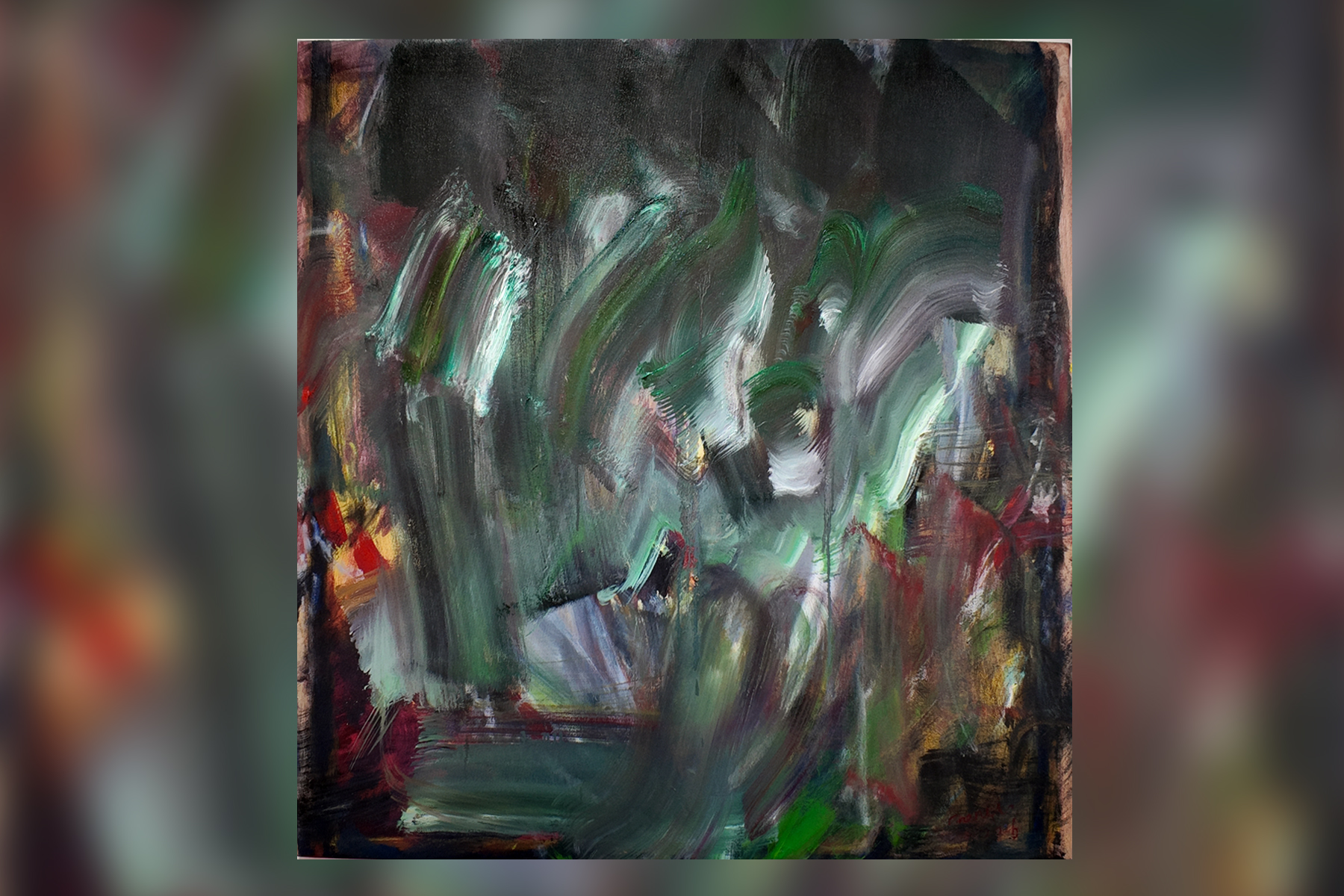
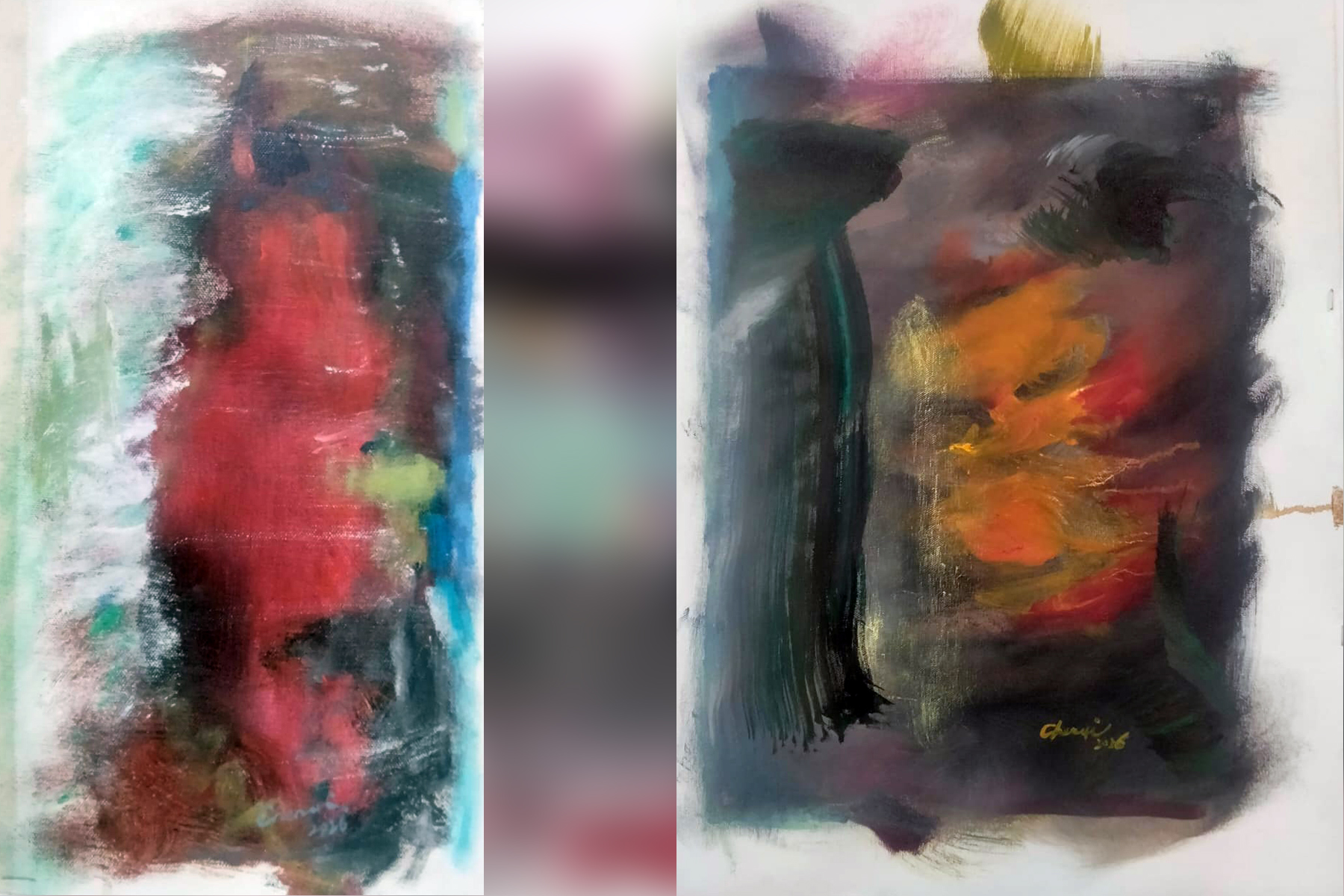
Her paintings are marked by confident brushstrokes, a finely tuned balance of colour, and wave-like forms through which faint glimmers of light cautiously emerge. These qualities recur across the canvases, evidence of a practice grounded in discipline and intuition alike. Her formal art education in the United Kingdom has undoubtedly shaped this visual command, guiding her toward the creation of works that feel both powerful and restrained.
Abstract painting, she suggests-implicitly through her work-is most potent when viewed from a distance. Step back, and the images breathe; move too close, and the spell begins to dissolve. It is an invitation to see differently, to allow space between the viewer and the work. For devoted admirers of abstraction, this exhibition offers a compelling encounter not to be missed.
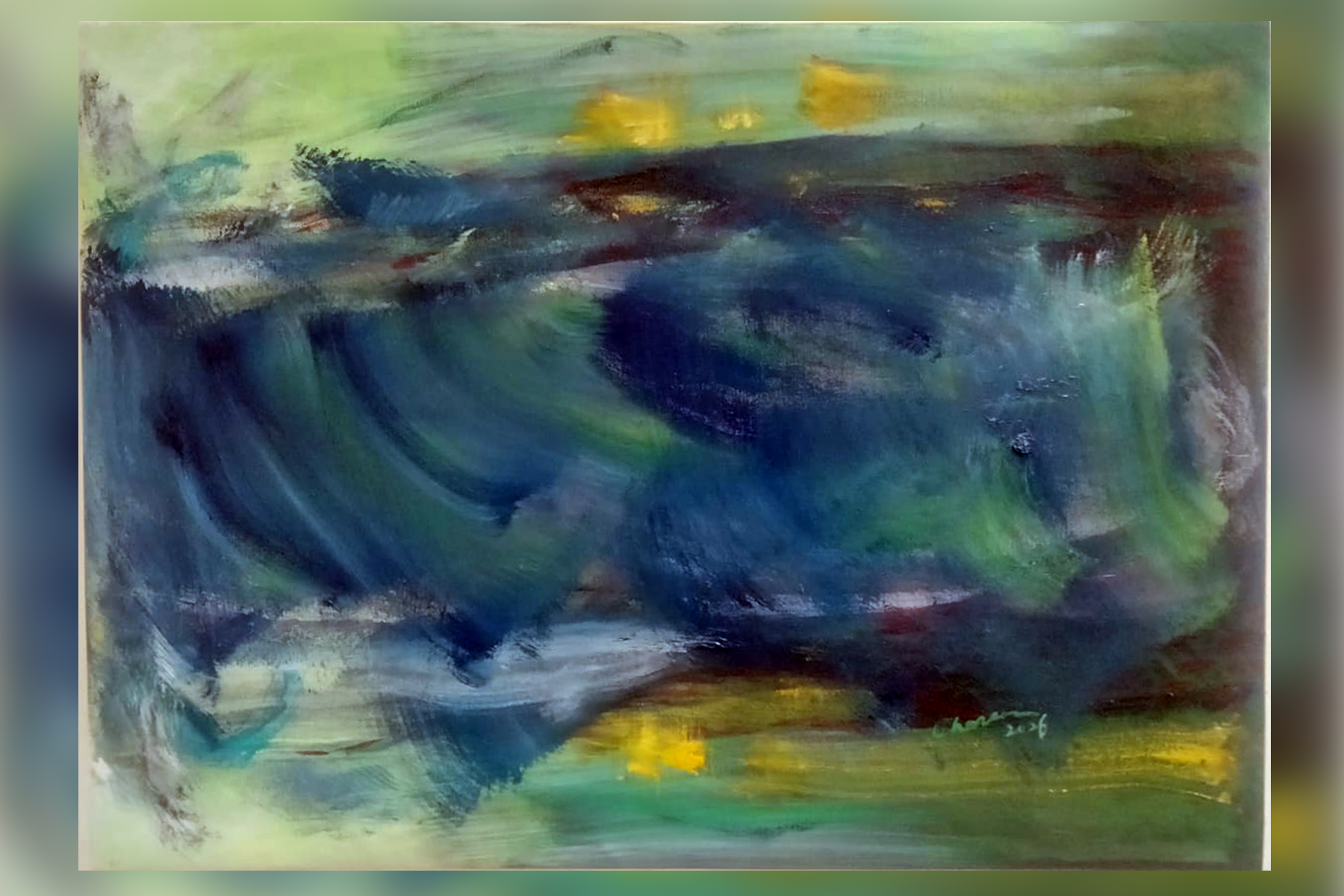
Her palette moves through greens, greys, blues, deep reds, and earthy yellows. At times translucent and layered, the colours are dragged across the surface, evoking nature in states of transition: vegetation half-lost in humid air, landscapes forming within mist, light fractured by dust, smoke, and moisture. Colour spreads like breath- released through bodily movement, then slowly dispersing toward the edges of the canvas. In smaller works, the hues tighten and compress, holding a denser emotional charge. Each surface is patiently built through acts of layering, erasing, dragging, and pausing-until the image, imperfect yet complete, quietly arrives.
If you find yourself anywhere nearby, let Gallery MCube be your next pause. Step inside to encounter the powerful, immersive world of abstraction that Xu Chenxi has brought to life-canvases that ask not just to be seen, but to be felt. And if fortune favors you, you may even meet the artist herself, opening the rare opportunity to speak with her directly and glimpse the quiet, meditative process behind these compelling works.

Leave A Comment