
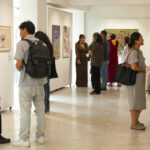
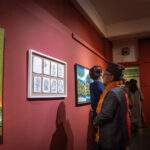
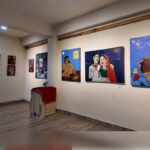
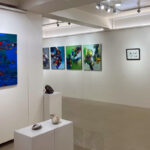
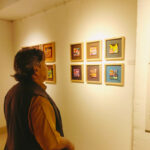

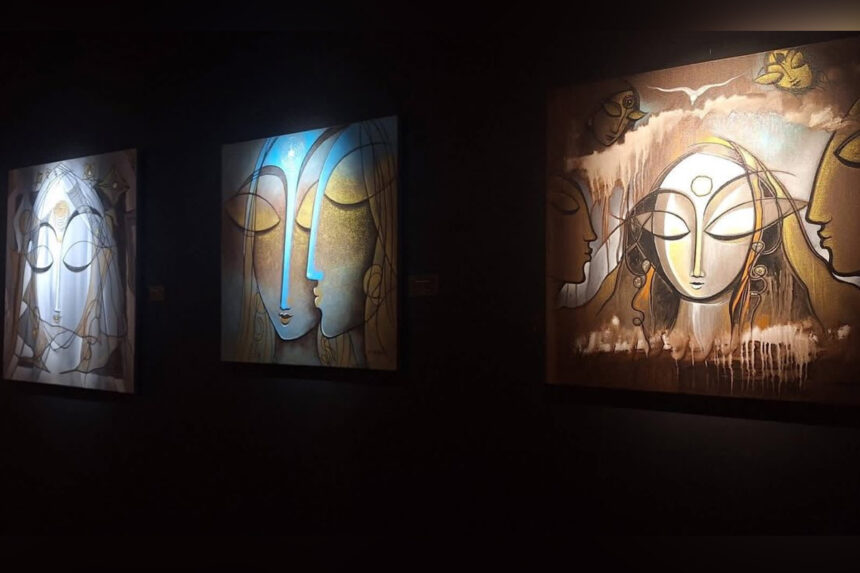
At 108 Gallery, artist Erina Tamrakar unveils a compelling series of paintings that move beyond portraiture into the realm of the spiritual and symbolic. In this body of work, the human face becomes a sacred terrain-an interior landscape where colour, texture, and form converge to articulate meditation, memory, and a subtle cosmic presence. Rather than offering direct likenesses, Tamrakar allows her figures to surface gradually, as though emerging from veils of darkness and light, their features suspended within layered atmospheres of pigment and silence.
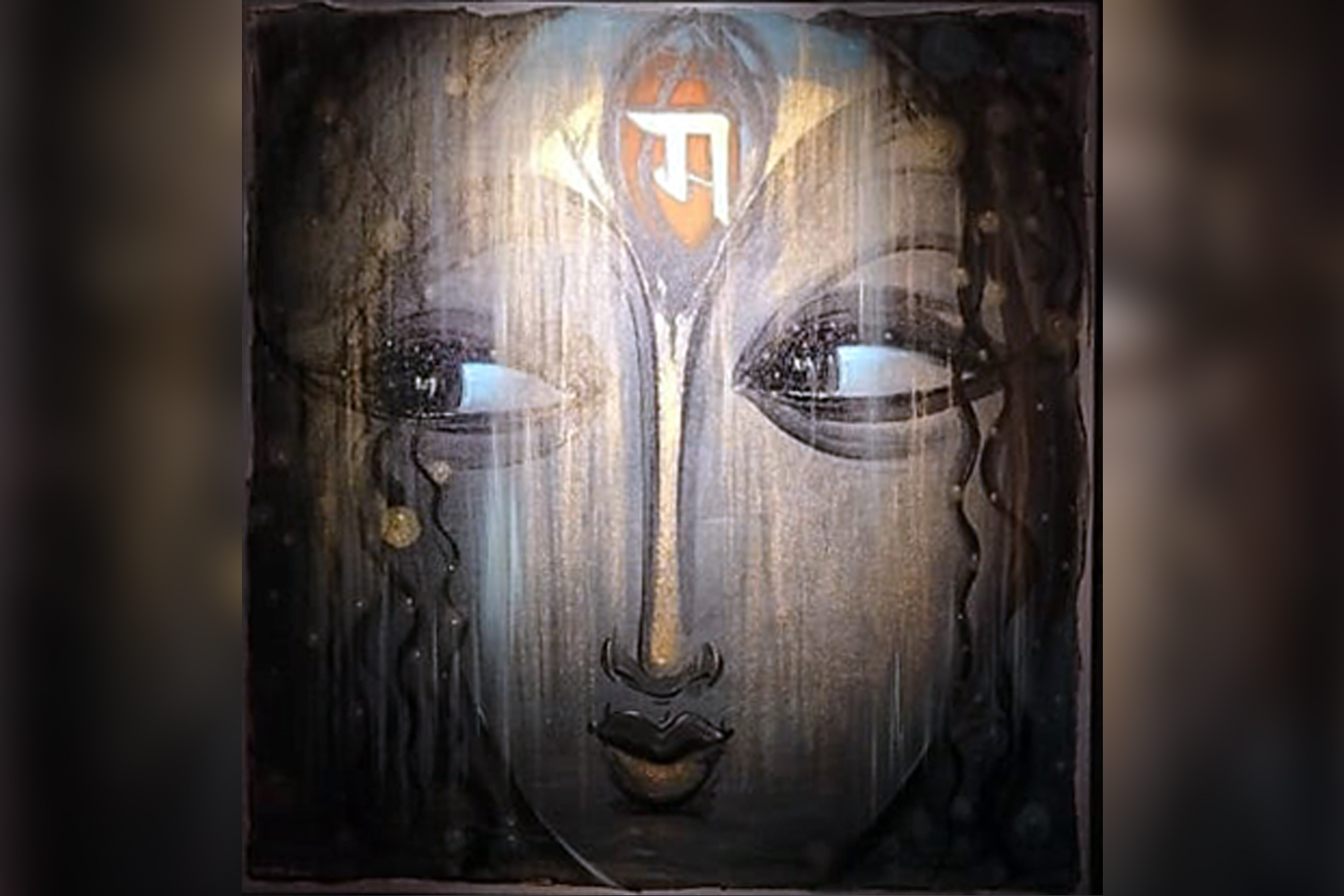
Titled “Ma–Myself,” the exhibition turns inward. The word Ma—meaning “myself”-signals an intimate unveiling, a quiet excavation of the artist’s own emotional and spiritual terrain. These are not simply faces on canvas; they are states of being, reflections of interior weather. Since opening on the 8th of March, the exhibition has invited viewers into this contemplative space, and it will remain on view until the 5th of April.
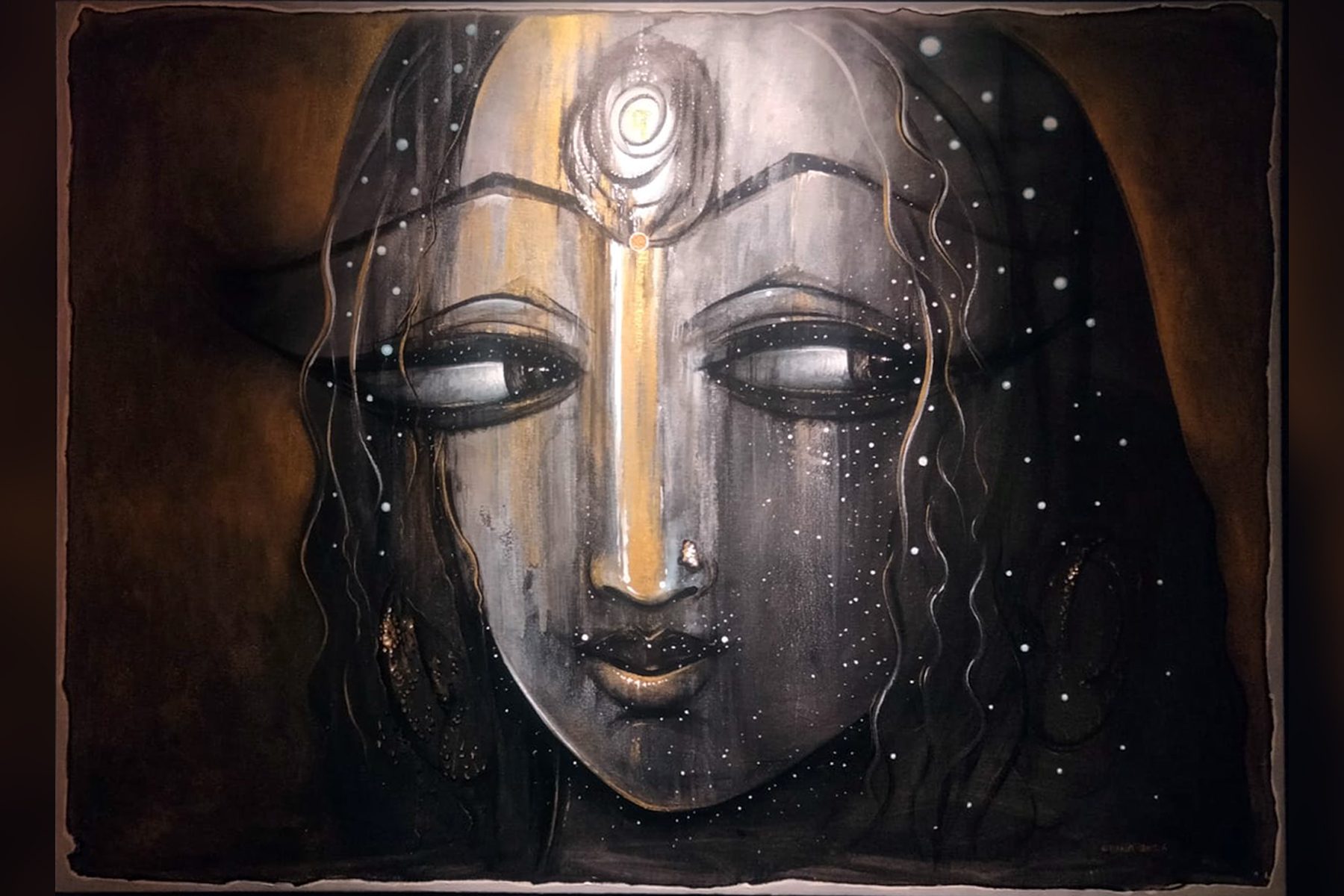
Across the series, Tamrakar employs a palette that is restrained yet deeply expressive. Earthy browns and smoky greys anchor the compositions, while deep blues and luminous golden tones infuse them with a mystical serenity. In certain works, gentle turquoise hues and soft whites introduce a cooler, almost celestial dimension, suggesting expanses beyond the earthly plane. Elsewhere, a vivid orange ground radiates warmth and intensity, heightening the spiritual aura that envelops the central visage.
Light plays a vital, almost sacred role. Golden highlights often gather at the forehead and trace the vertical bridge of the nose, creating points of quiet illumination. These accents seem to gesture toward awakening—toward an inner flame of consciousness or divine awareness. Through this delicate orchestration of shadow and radiance, Tamrakar transforms the face into a meditative field of energy, where the self is not fixed but continuously unfolding within the vastness of memory and cosmos.
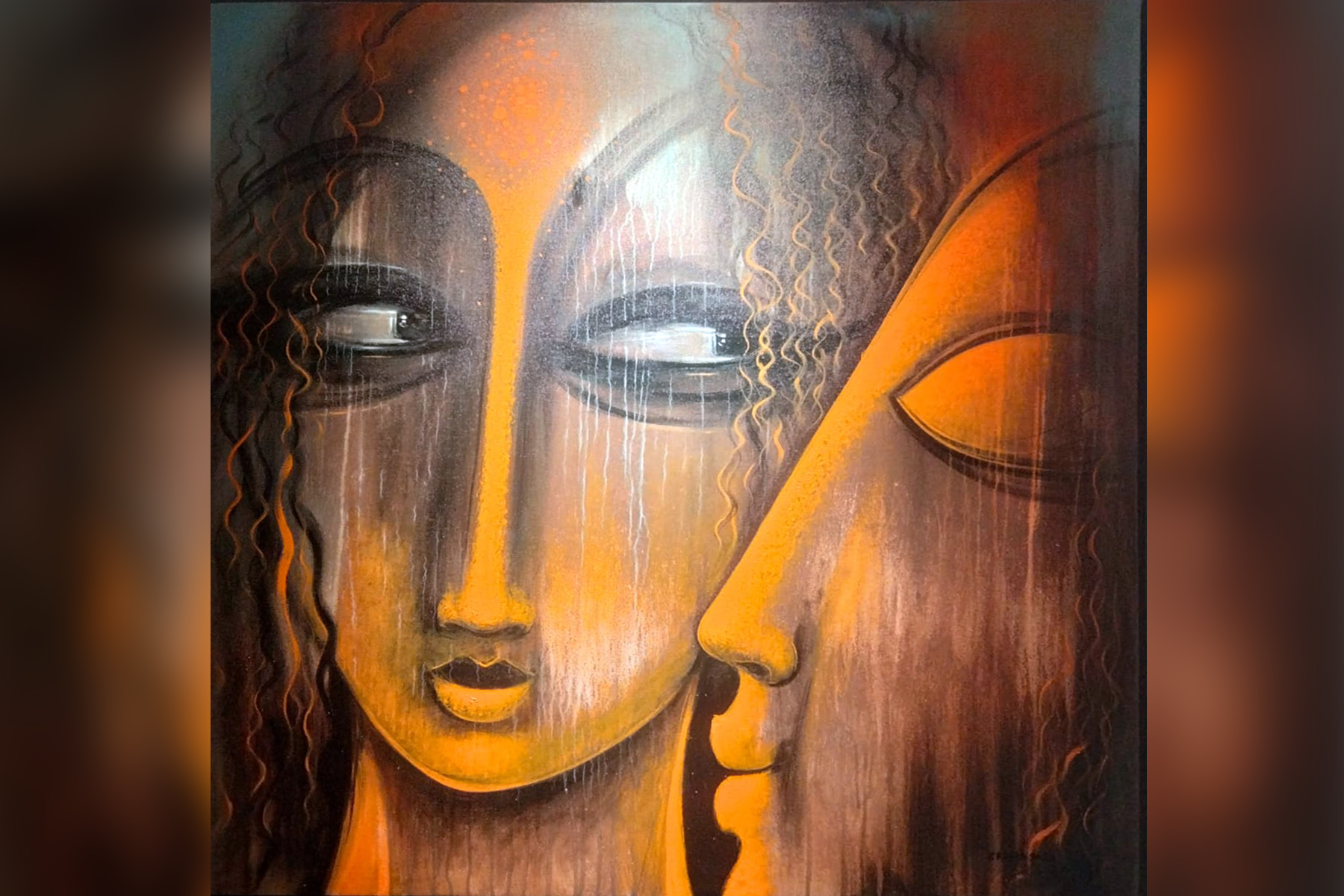
The brush in these paintings does not merely apply colour-it breathes. Fluid vertical strokes descend across the surface like whispered rain, like light slipping through a temple’s open threshold at dawn. At times they gather into soft drips, tender and unhurried, blurring the contours of the face so that it seems to waver between appearance and disappearance. The figure does not sit firmly within the frame; it hovers-dissolving into shadow, reassembling from radiance.
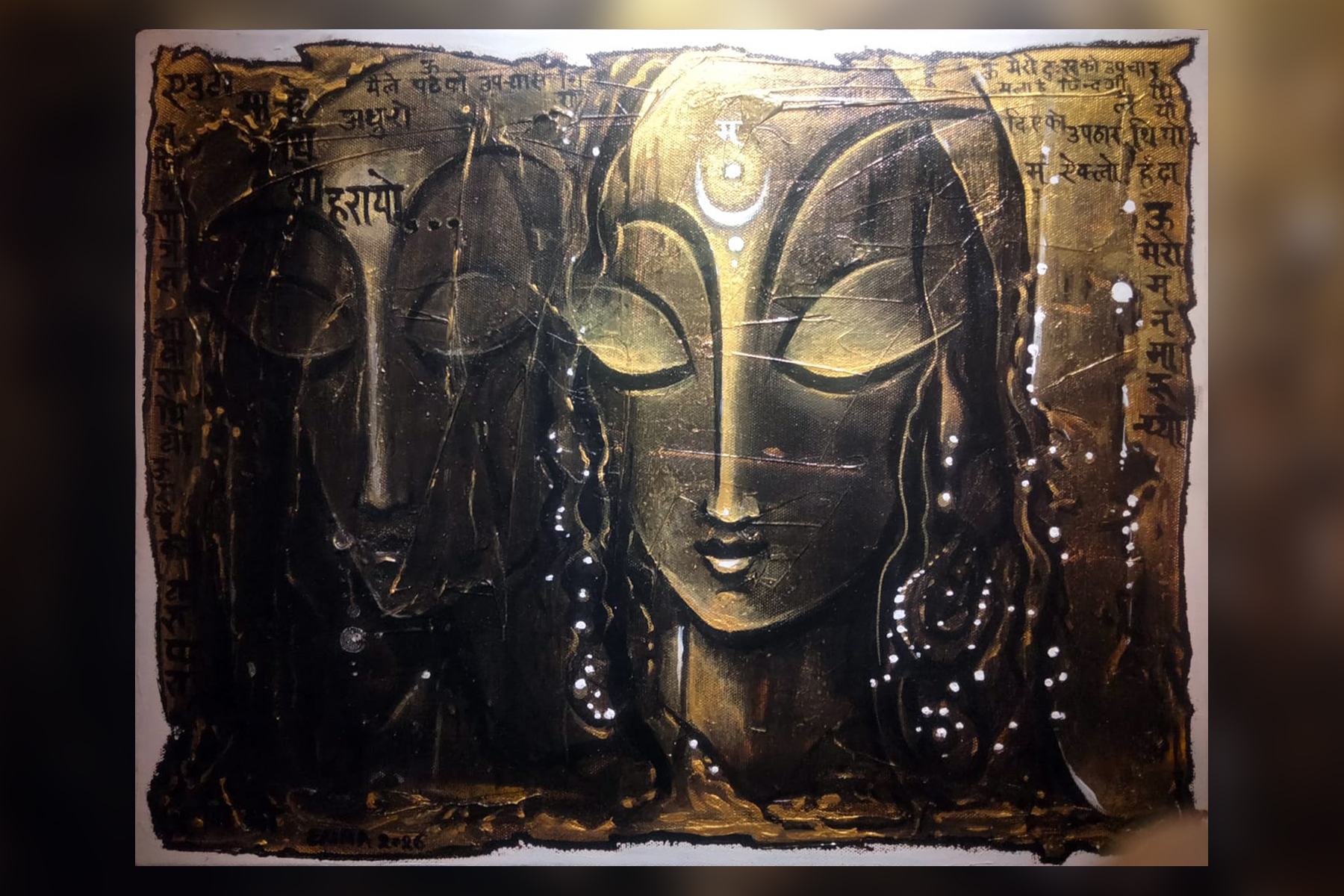
Elsewhere, the surface resists such gentleness. Roughened textures, etched scratches, and dense accumulations of pigment recall ancient murals weathered by time and devotion. The canvas feels touched by erosion, as though memory itself has left its fingerprints upon it. This interplay between silken flow and raw abrasion generates a quiet tension: fragility and force coexisting within the same breath. The paintings become at once delicate and elemental.
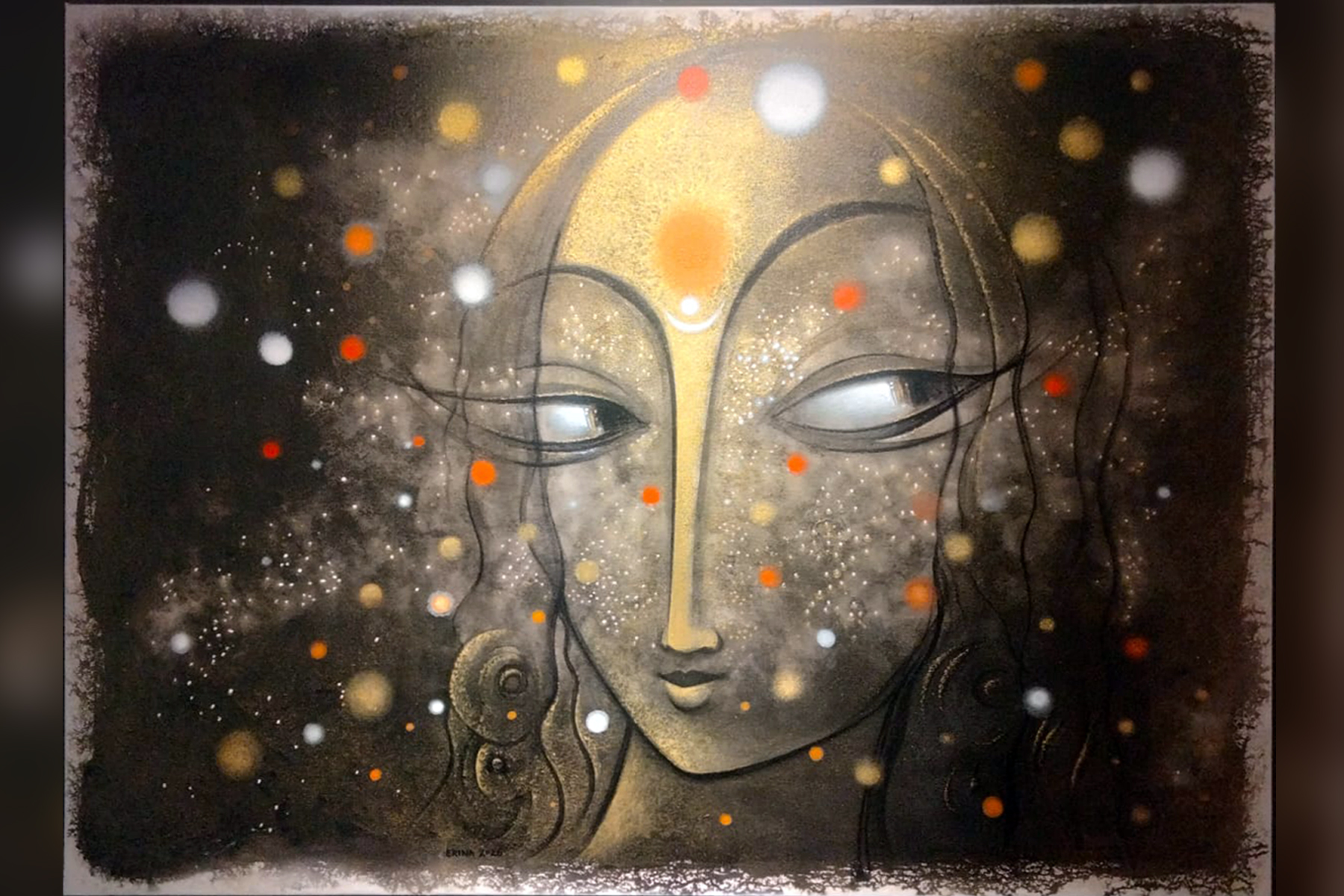
Compositionally, a solemn symmetry anchors many of the works. A central vertical axis-often traced by the nose and illuminated forehead-draws the eye inward, establishing a sacred equilibrium. The faces appear poised in meditative stillness, their elongated eyes half-closed in timeless introspection. In certain pieces, dual or overlapping visages emerge, faint yet unmistakable, suggesting reflection, duality, or the silent dialogue between inner and outer selves. The self is not singular here; it is layered, refracted, echoing.
Around these contemplative figures, subtle patterns ripple outward. Flowing lines curl and drift like strands of hair, currents of breath, or unseen spiritual vibrations threading through space. Scattered points of white, gold, and ember-like orange flicker across the canvas-stars suspended in an intimate cosmos, particles of awakening light. Fragments of Nepali script and ornamental motifs surface like relics, embedding the works within cultural memory while allowing them to speak in a distinctly contemporary cadence.
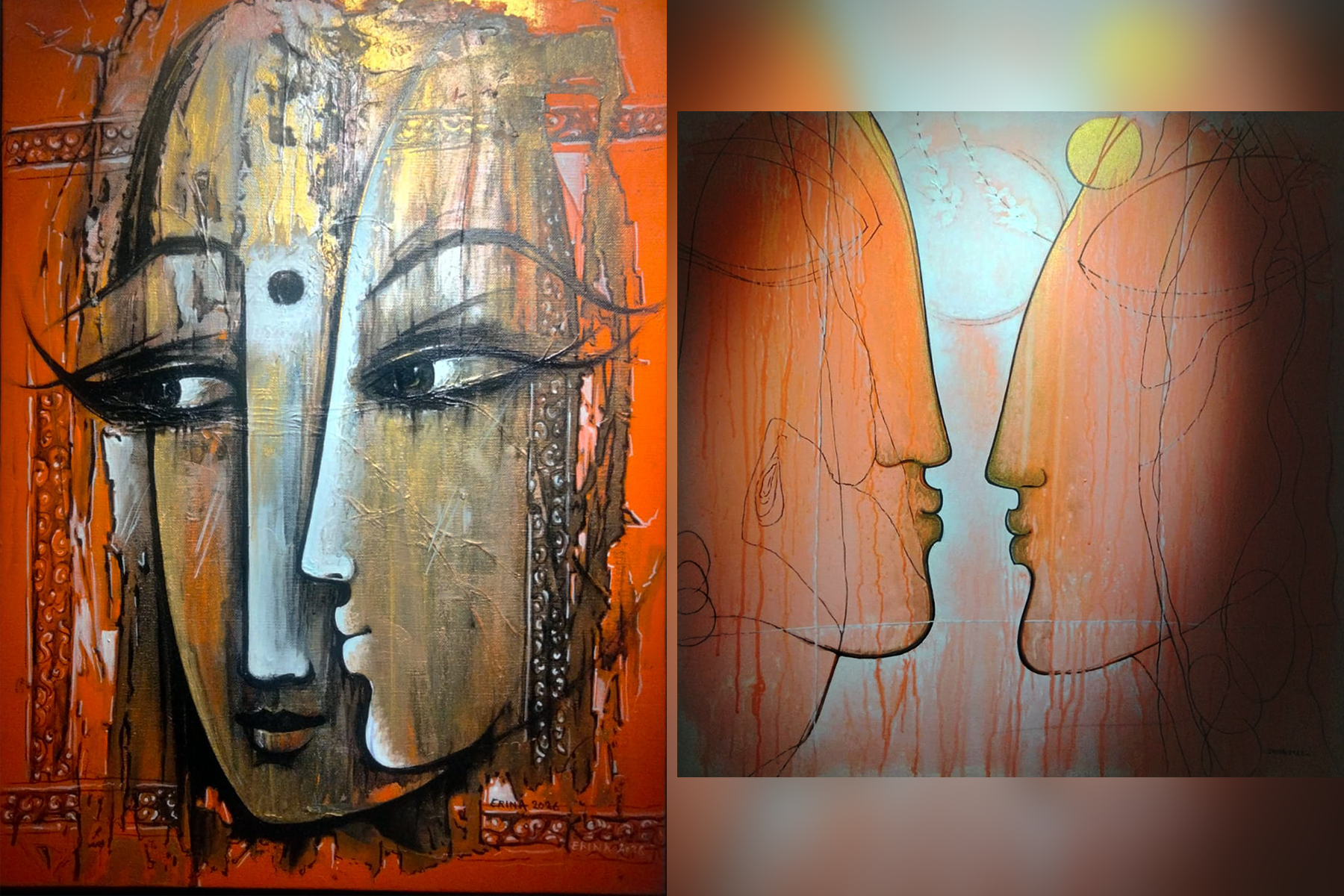
Together, these elements form a visual language that glides between inheritance and innovation. Tradition lingers, yet it is gently reimagined. The human face transcends portraiture and becomes a threshold- a site of meditation, of transcendence, of cosmic awareness. Through layered colour, tactile surfaces, and hushed symmetry, the artist offers not simply an image, but a pause: a space in which the viewer may encounter stillness, and perhaps, a fleeting glimpse of the infinite within.

Leave A Comment