
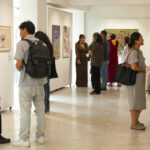

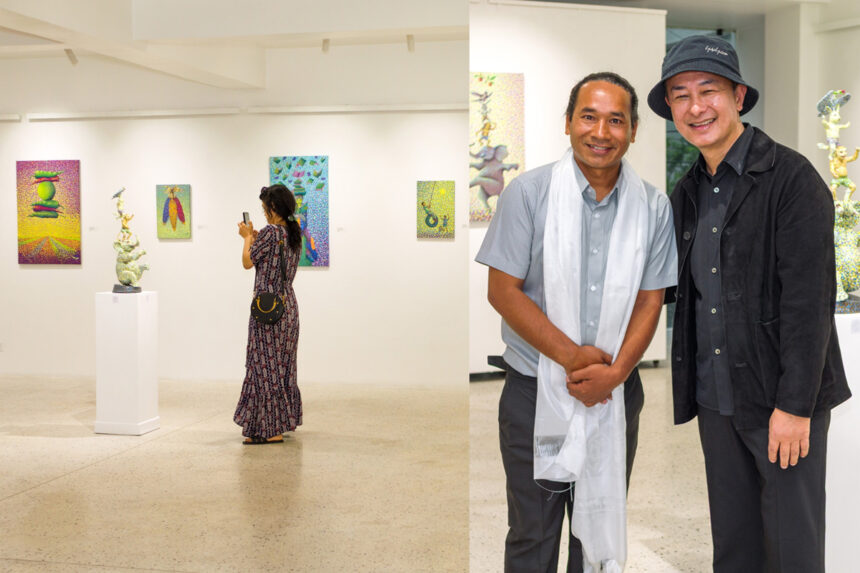
At a time when life is increasingly consumed by repetition and silent exhaustion, how often does one pause to notice the quiet poetry hidden within ordinary routines? Can moments of tenderness and joy still emerge amidst the weight of daily responsibilities and melancholic chores? These lingering questions find their answers in the evocative pointillist paintings of Nepali artist Min Thapa, whose latest exhibition is currently on view at Takpa Gallery from 9 May to 6 June.
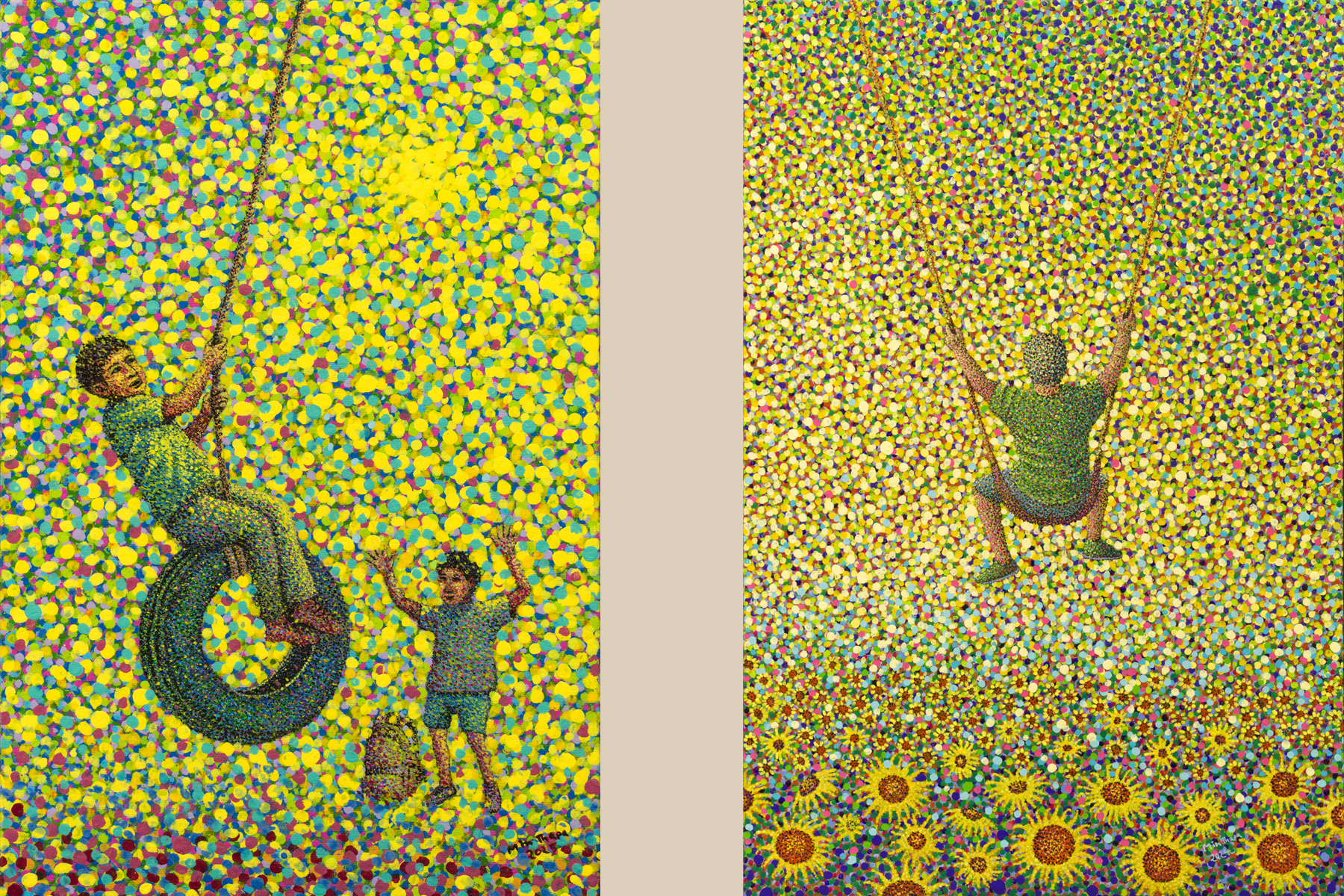
Through a remarkable collection of selected works, Thapa transforms fragments of everyday existence into deeply emotional visual narratives. His canvases do not merely depict people engaged in routine tasks; rather, they reveal the silent emotional landscapes concealed beneath ordinary life. The figures inhabiting his paintings appear immersed in familiar domestic and social rituals, yet each composition radiates an underlying sense of contemplation, longing, resilience, and, at times, unexpected warmth.
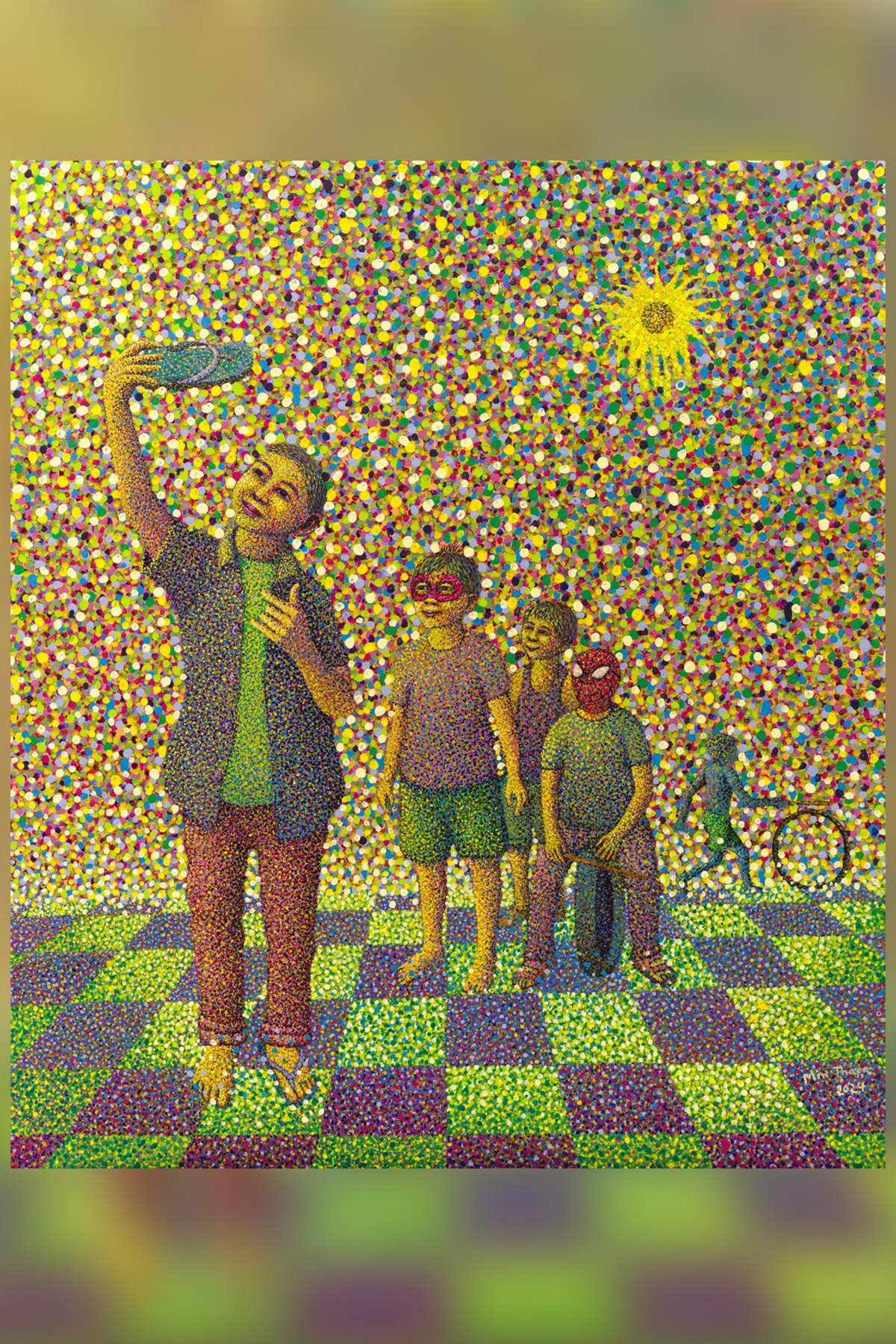
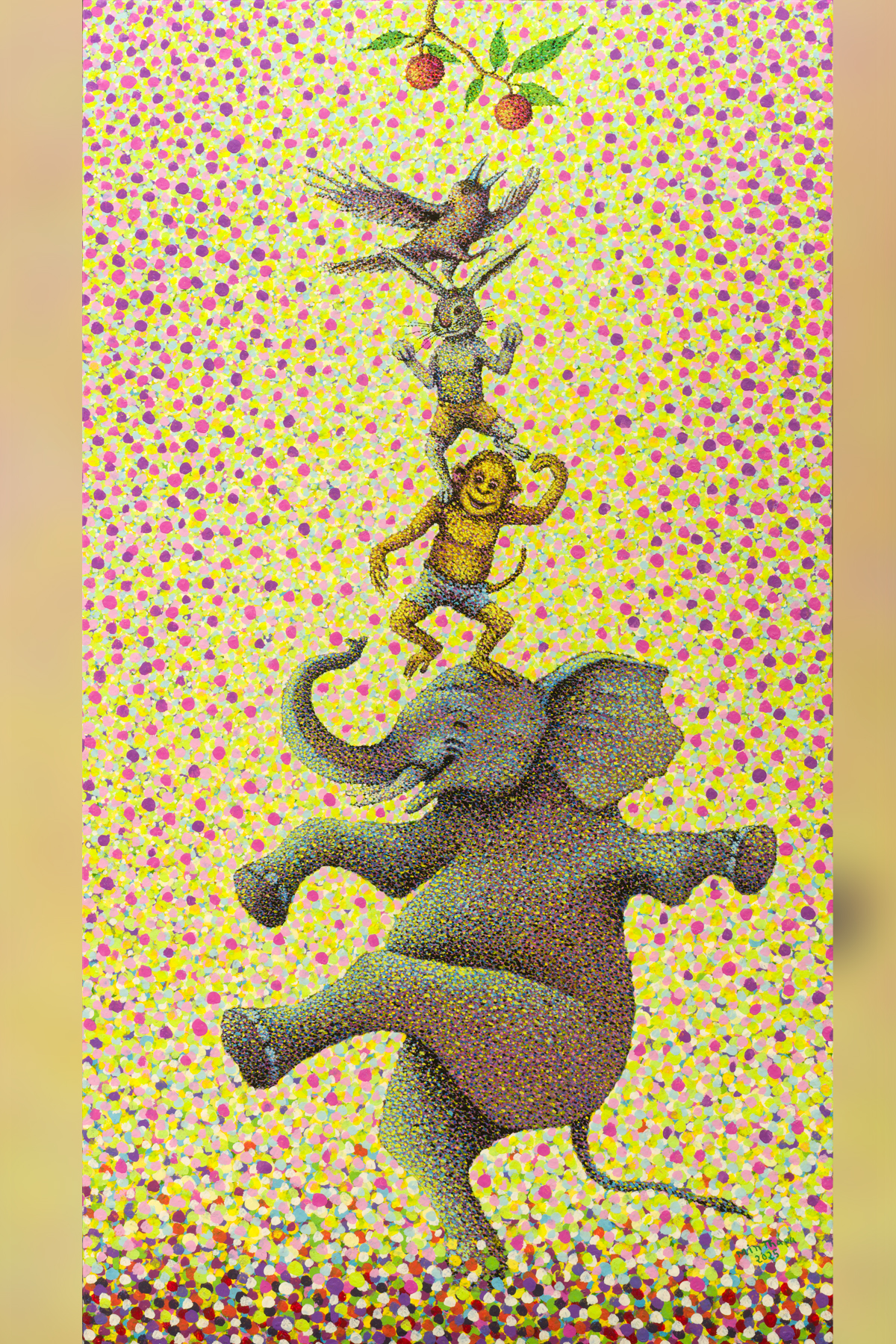
What makes the exhibition particularly compelling is the artist’s masterful use of pointillism – a technique that constructs images through countless tiny dots of color. Originating in Paris during the late nineteenth century, pointillism emerged as a revolutionary response to Impressionism. Pioneered by renowned artists such as Georges Seurat and Paul Signac, the movement challenged conventional painterly brushstrokes by allowing carefully placed dots of contrasting colors to visually merge and create luminous, vibrant surfaces. Instead of relying on broad expressive strokes, pointillist artists sought precision, rhythm, and optical brilliance.
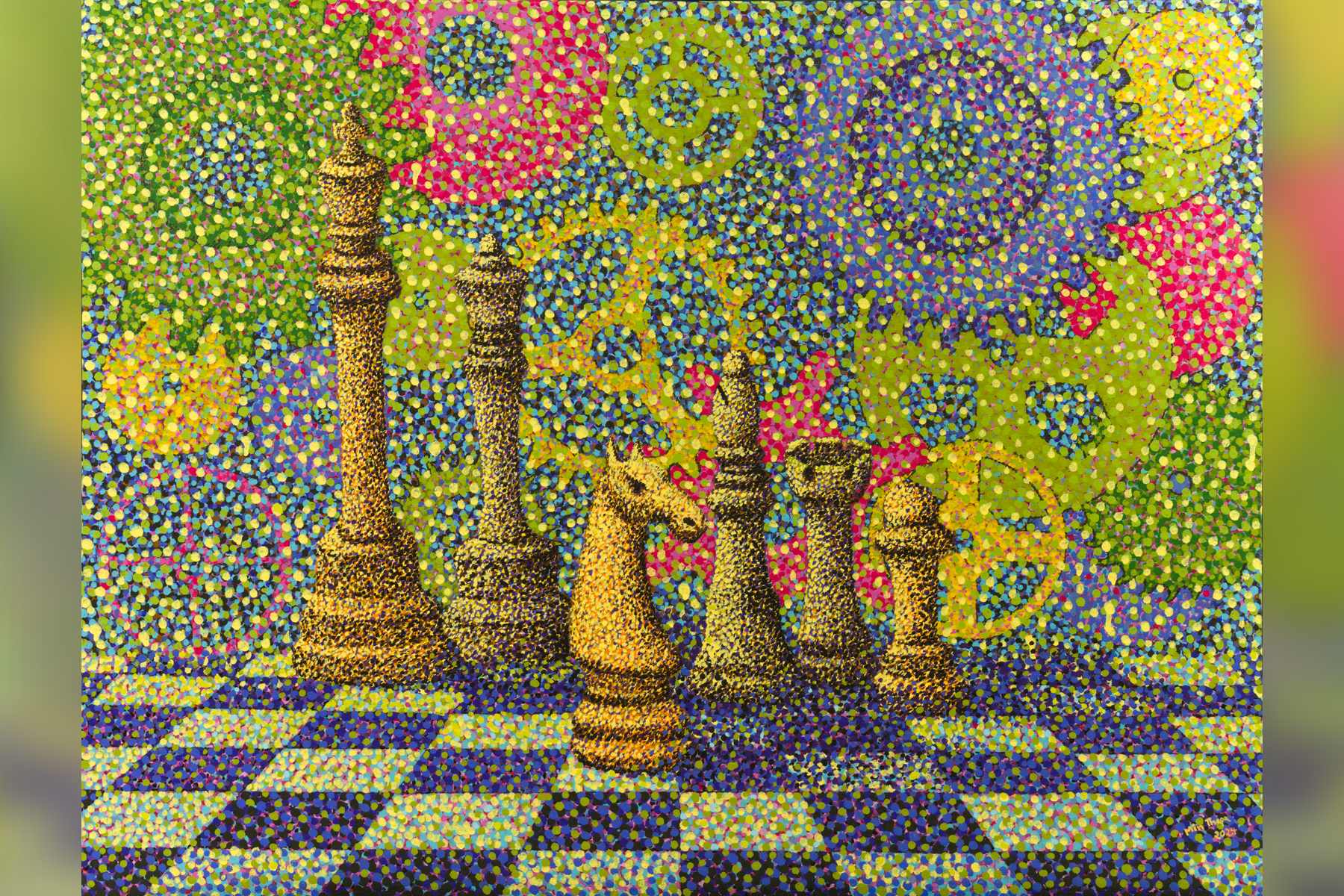
In Thapa’s works, this historic technique acquires a deeply personal and contemporary dimension. Thousands of meticulously applied dots come together to construct scenes that feel simultaneously fragile and alive. His paintings seem to pulse with movement and emotion, as though the scattered pigments themselves are carrying memories of human struggle and endurance. The artist predominantly employs radiant shades of yellow, pink, purple, and blue, allowing the canvases to oscillate between melancholy and celebration. Yellow often introduces warmth and hope, while cooler blues and purples evoke solitude, introspection, and emotional distance.
Yet despite the subtle sadness embedded within many of the compositions, the exhibition never descends entirely into despair. There exists within these paintings a quiet optimism – a recognition that beauty continues to survive even within monotonous routines. In the midst of labor, silence, and repetition, Thapa discovers fleeting moments of human connection and emotional light. His artworks gently remind viewers that even the most mundane corners of life possess color, rhythm, and meaning when observed with sensitivity.
More than an exhibition of paintings, the show becomes a meditation on contemporary human existence itself. Through the delicate language of dots, colors, and layered emotions, Min Thapa invites viewers to rediscover the unnoticed beauty hidden within everyday life.
Hailing from one of the remote villages of Nepal, Min Thapa carries the memories of hardship, perseverance, and quiet resilience into the heart of his paintings. Much of his artistic journey emerges directly from his own lived experiences — a life shaped by struggle, responsibility, and an unyielding pursuit of dreams. Balancing the fragile aspirations of becoming an artist while simultaneously carrying the burden of supporting his family has never been an easy path for him. Yet, amidst the exhaustion of survival, he continues to move forward with grace.
There is a profound emotional honesty in his works. Behind the smiling faces and vibrant compositions lies an unspoken narrative of endurance. Like many ordinary individuals whose sorrows remain hidden beneath everyday routines, the artist too conceals his pain behind a gentle smile and continues to work tirelessly. This delicate coexistence of suffering and hope becomes one of the most touching aspects of his paintings. His canvases do not dramatize pain; instead, they quietly illuminate the strength required to survive it.
One of the visitors at the exhibition, Karma Gurung, reflected upon the emotional depth of the artworks, stating, “Through simple imagery, he has beautifully portrayed the joyful everyday life of ordinary people. The technique he has employed in his paintings demands immense dedication. It is truly mesmerizing to witness how painstakingly he has worked on each canvas.”
Speaking about his fascination with pointillism, Min Thapa explains, “I have always been fascinated by the wildflowers that bloom during certain seasons in my village. From a distance, they create a very distinct feeling and atmosphere. I often wondered how those impressions and emotions could be transformed into paintings. The result of those memories and sensations can now be seen upon my canvases.”
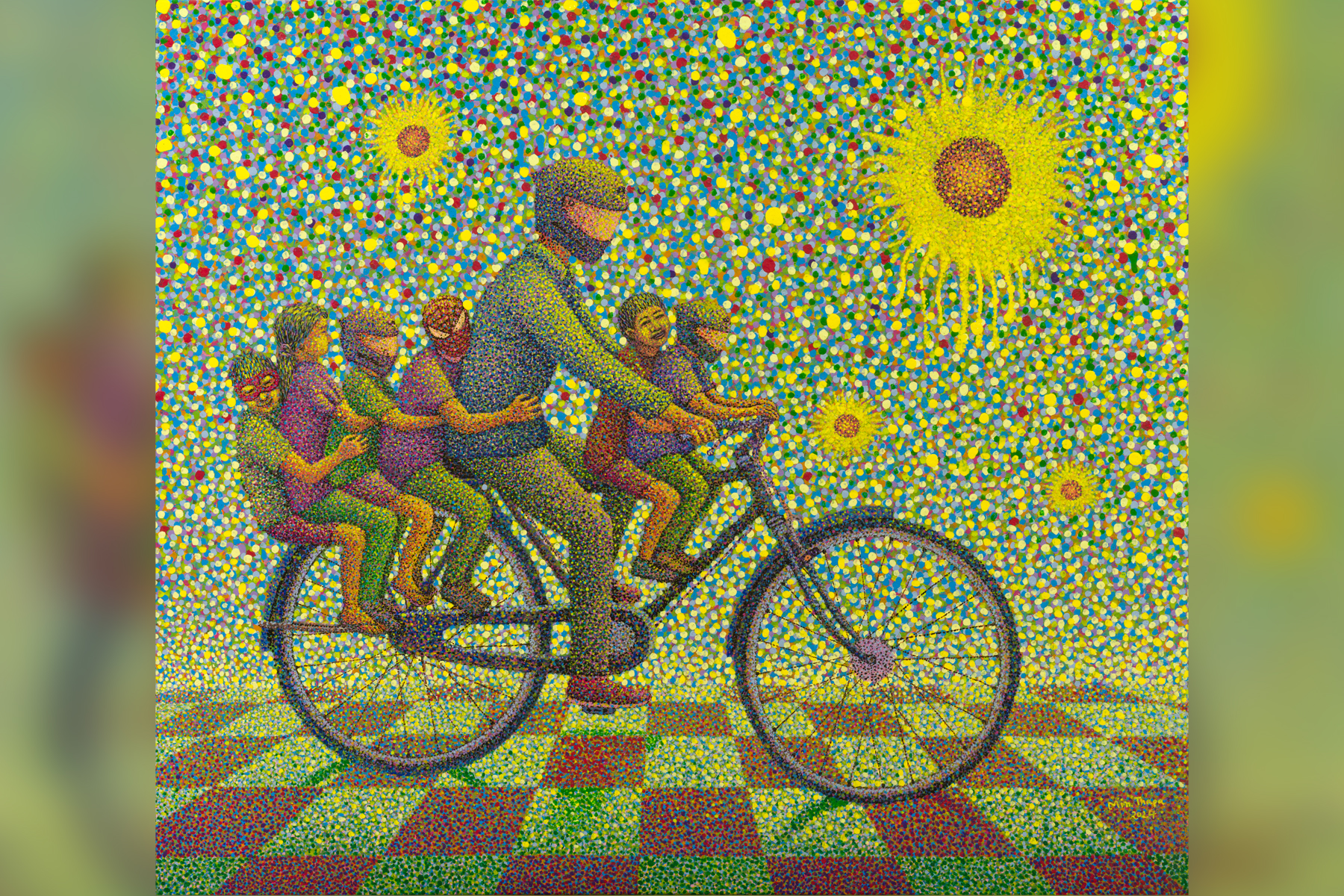
This intimate connection with nature becomes deeply visible throughout the exhibition. Much like scattered wildflowers merging into a vibrant landscape, thousands of delicate dots unite to create luminous scenes filled with emotion and rhythm. His mastery over detail is equally remarkable. In several paintings, chessboards and human figures appear with extraordinary precision, revealing not only the characters themselves but also the subtle shadows they cast. These reflections introduce an added layer of depth and symbolism, quietly suggesting the invisible emotional burdens that accompany human existence.
Through patience, precision, and sensitivity, Min Thapa transforms ordinary moments into poetic visual experiences, allowing viewers to witness both the fragility and beauty hidden within everyday life.
Further more, the maizes of different colors are also displayed in the canvas. On the series of dots, looking at the prominent maizes creates different meaning on the mind of the viewers.
Another interesting series of works are his familial relationship. The hardship and the struggles that the parents go through to raise the kids are shown in his paintings. Everyday is not a happy one in any kinds of family but the father, who has to provide everything for the family smiles through all those hardship and let the child grow into the full potential.
If you are nearby, visit Takpa Gallery in person to witness the work of this phenomenal artist.

Leave A Comment