
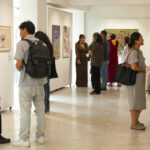
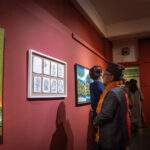
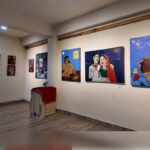
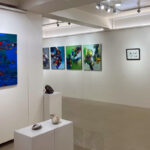

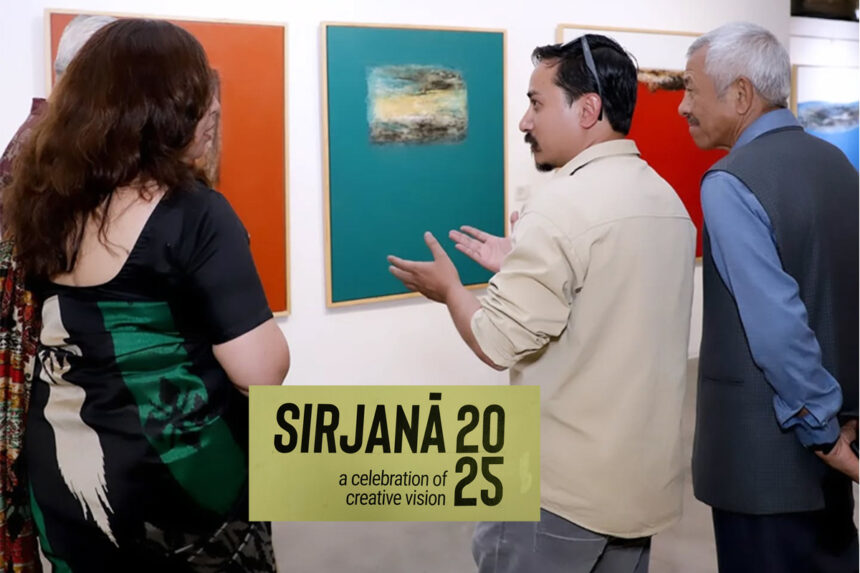
The Nepal Art Council is alive with vibrant energy as it hosts a groundbreaking exhibition featuring the creative talents of art teachers from Sirjana College of Fine Arts. This landmark event celebrates the visionary expressions of educators who continue to inspire the next generation of artists. On display are a diverse range of works, spanning figurative pieces, conceptual explorations, and captivating installation art. Don’t miss this inspiring showcase, open from May 7th to 13th.
At the exhibition’s opening, esteemed art critic and artist Madan Chitrakar reflected with grace: “There’s a quiet fascination in witnessing the creations of teachers — their visions stretch far and wide, enriched by time, shaped by experience, and steeped in silent dedication. Their artistic journey unfolds like a vast, evolving canvas.”
Prof. Dr. Sangeeta Rajbhandari, a Botany professor at the Central Department of Botany, Tribhuvan University, emphasized the need to extend art beyond the traditional canvas. She stated, “It is high time that artists’ work be featured on various forms of merchandise. This approach can help the general public develop a stronger connection with art.”
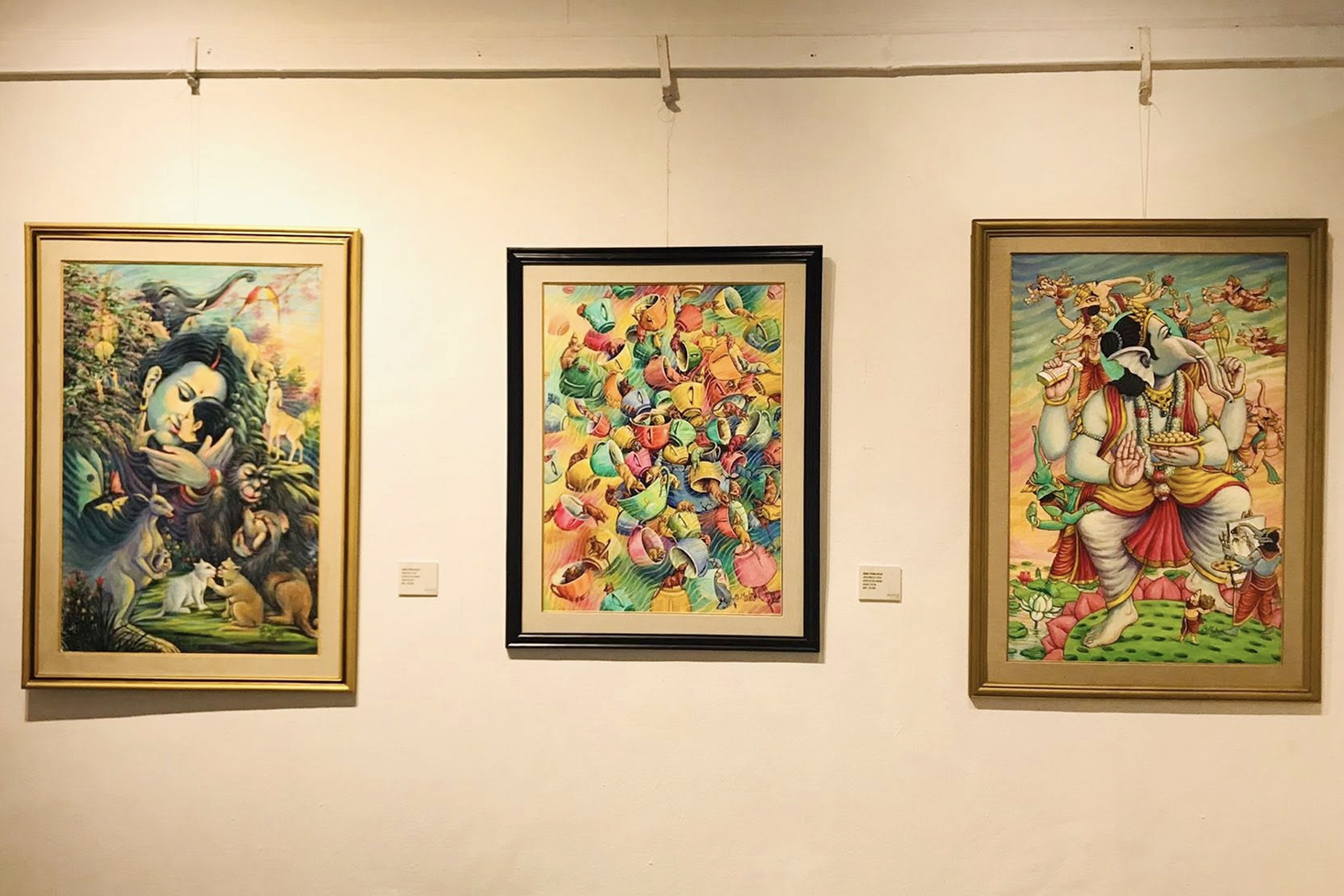
In the gallery, the artworks of all the faculty members are on display, each offering a unique voice and vision. Among them, one of the most poignant pieces is by Prof. Radheshyam Mulmi, whose distinctive style and unusual color choices continue to captivate. This time, he presents a mystic portrayal of Lord Ganesh. At first glance, the central figure of Ganesh dominates the canvas, but a closer inspection reveals a mesmerizing transformation—multiple forms of Ganesh subtly emerge from various body parts, some soaring through the sky, others materializing as if conjured into being. It is as though the artist himself has dissolved into his subject, becoming one with the divine imagery he depicts.
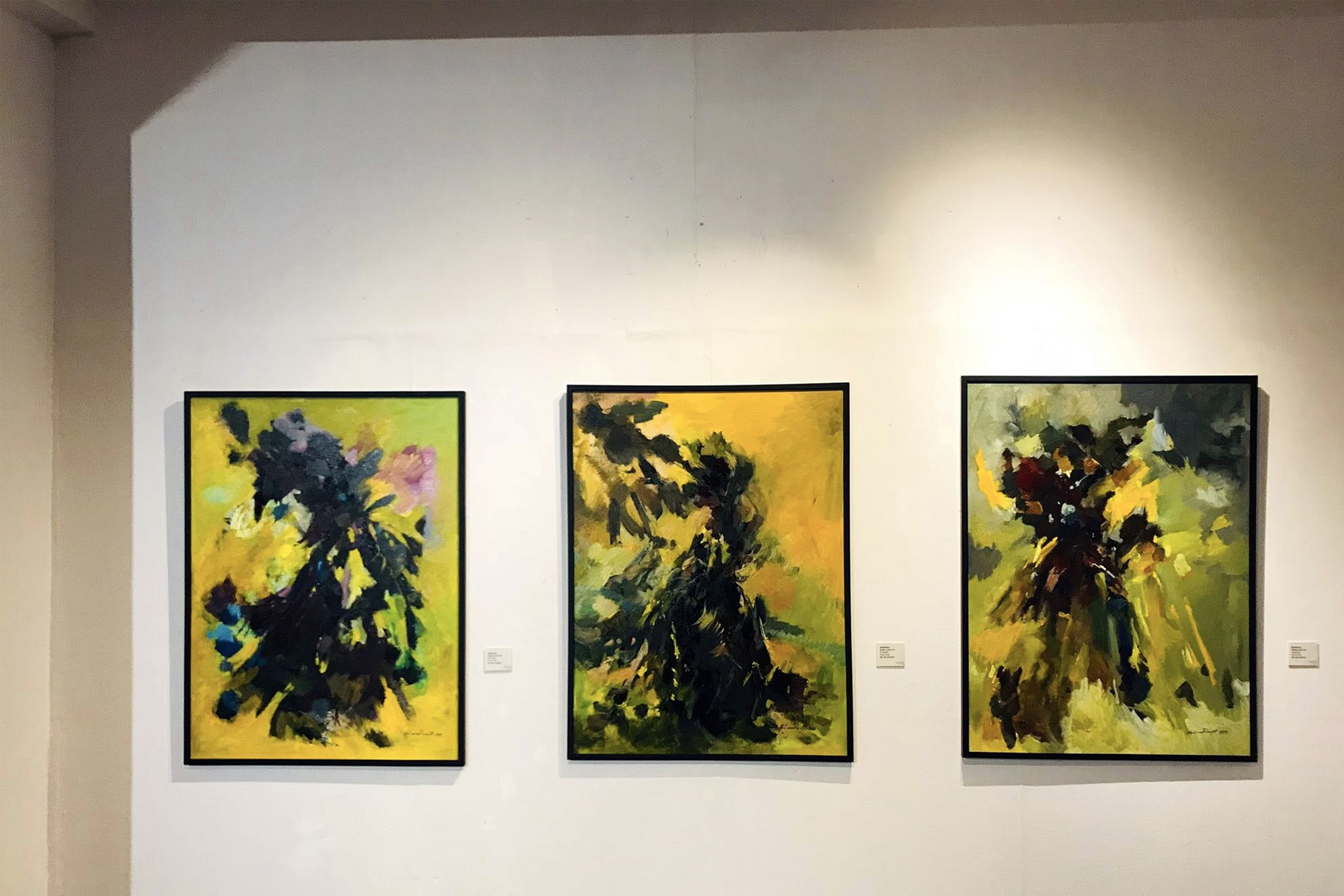
Another captivating work in the exhibition is by Sharad Ranjit, one of the founding members of Sirjana College of Fine Arts. True to his signature style, Ranjit brings a vibrant and unconventional use of color to the canvas—so fittingly titled Dancing Colors. His abstract composition pulses with energy, where colors flow and collide in a rhythmic symphony of fluidity and spontaneity. Viewers are left mesmerized, swept away by the dynamic movement and emotive force of his color play.
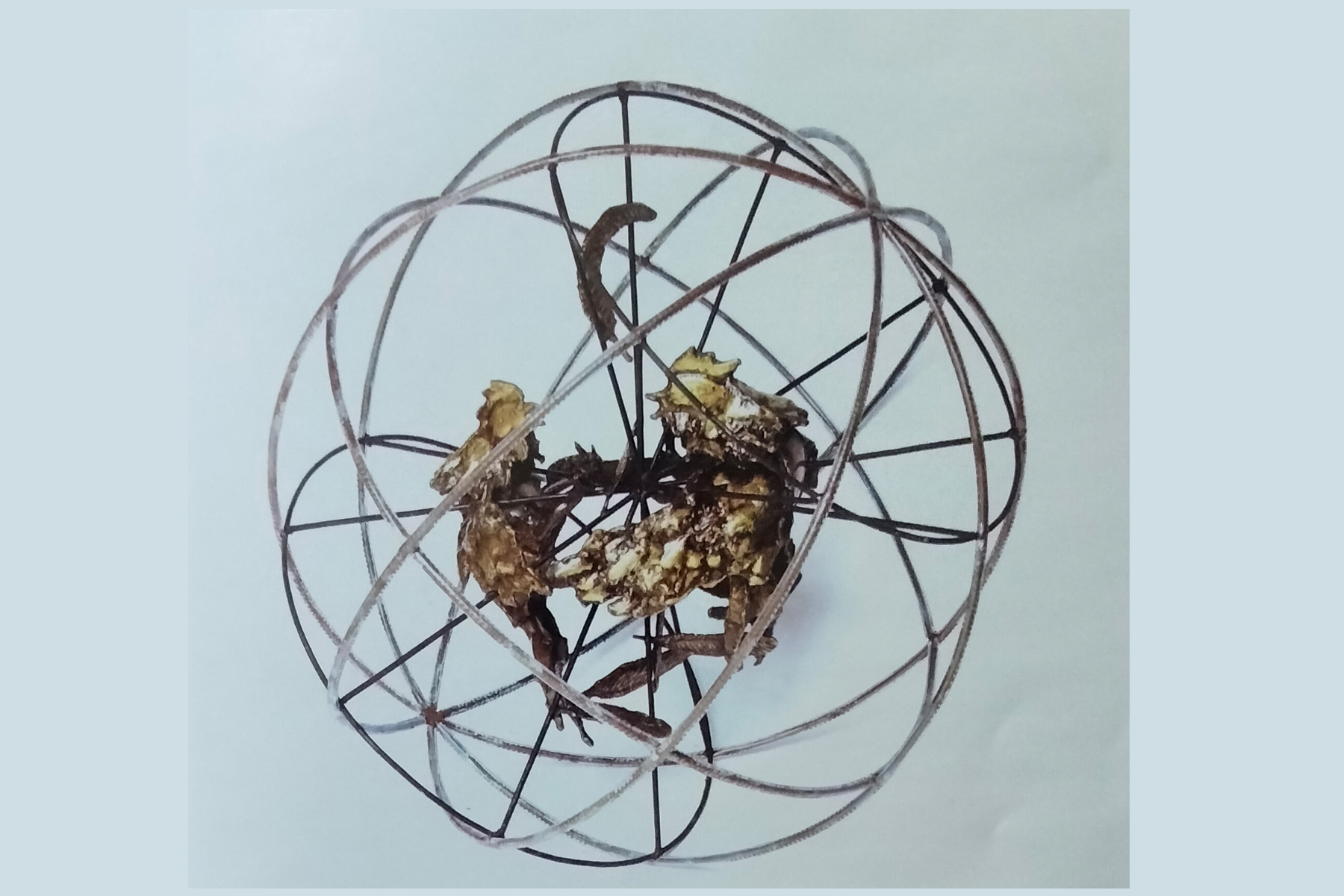
 Sharada Man Shrestha, another distinguished faculty member at the college, brings a unique and thought-provoking approach to art. Renowned for transforming waste materials into creative expressions, this time he presents a kinetic sculpture enclosed within a metal cage. Inside, two roosters seem to engage in an eternal duel, animated only when the circular cage is set in motion. Crafted entirely from metal, the installation blurs the line between art and interaction. With a gentle smile, the artist remarks, “Art should not only be admired for its beauty—it should be touched, played with, and experienced.”
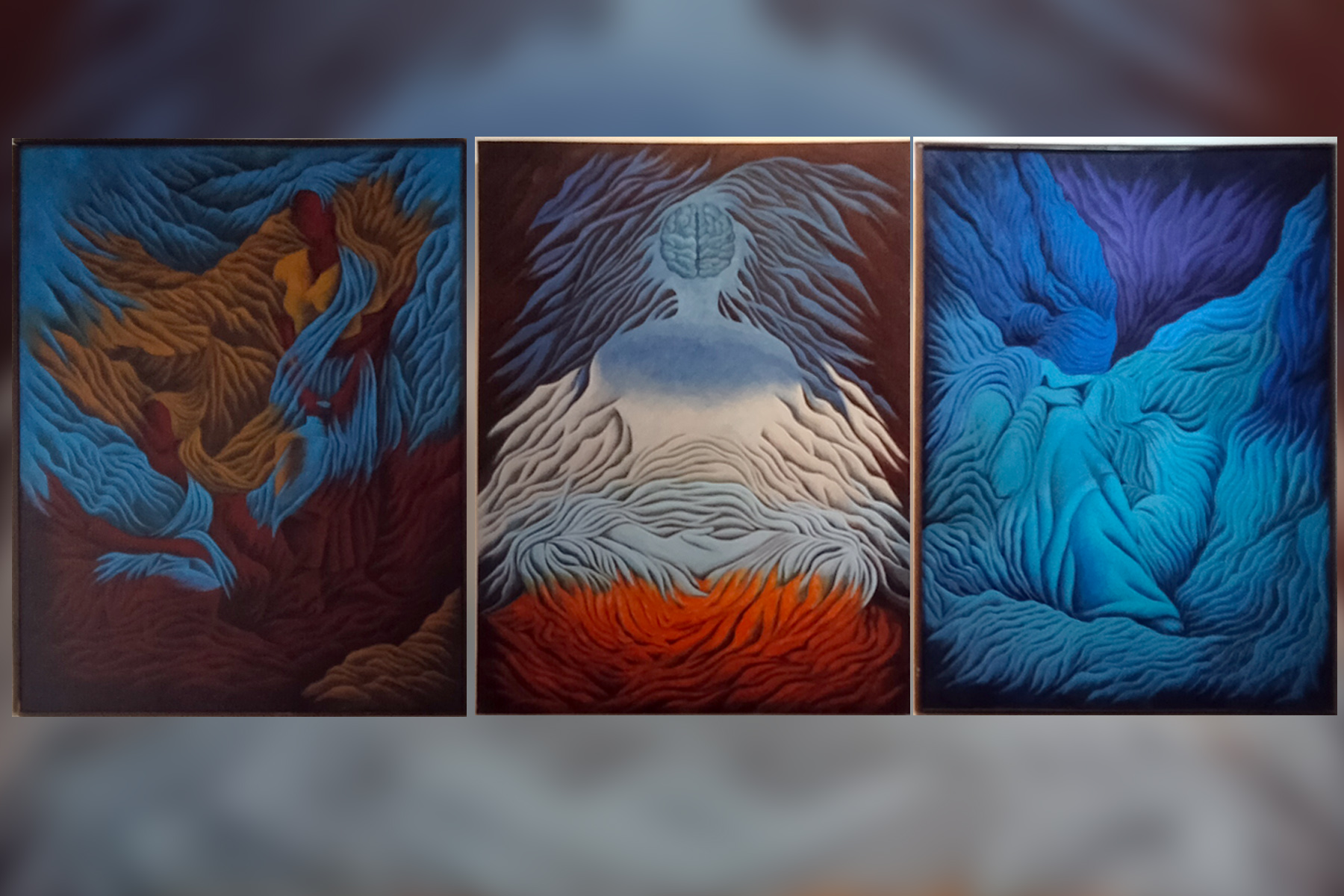
In contrast, artist and educator Gautam Manandhar offers a deeply emotive painting of a woman locked in timeless longing, as if waiting endlessly for her beloved. Rendered with delicate, flowing strokes, the figure blends seamlessly into the surrounding landscape, evoking the contours of a quiet, distant hill. The use of soft grays, muted reds, and gentle blues lends the piece a dreamlike quality, while his intricate line work speaks to a refined mastery of form and emotion.
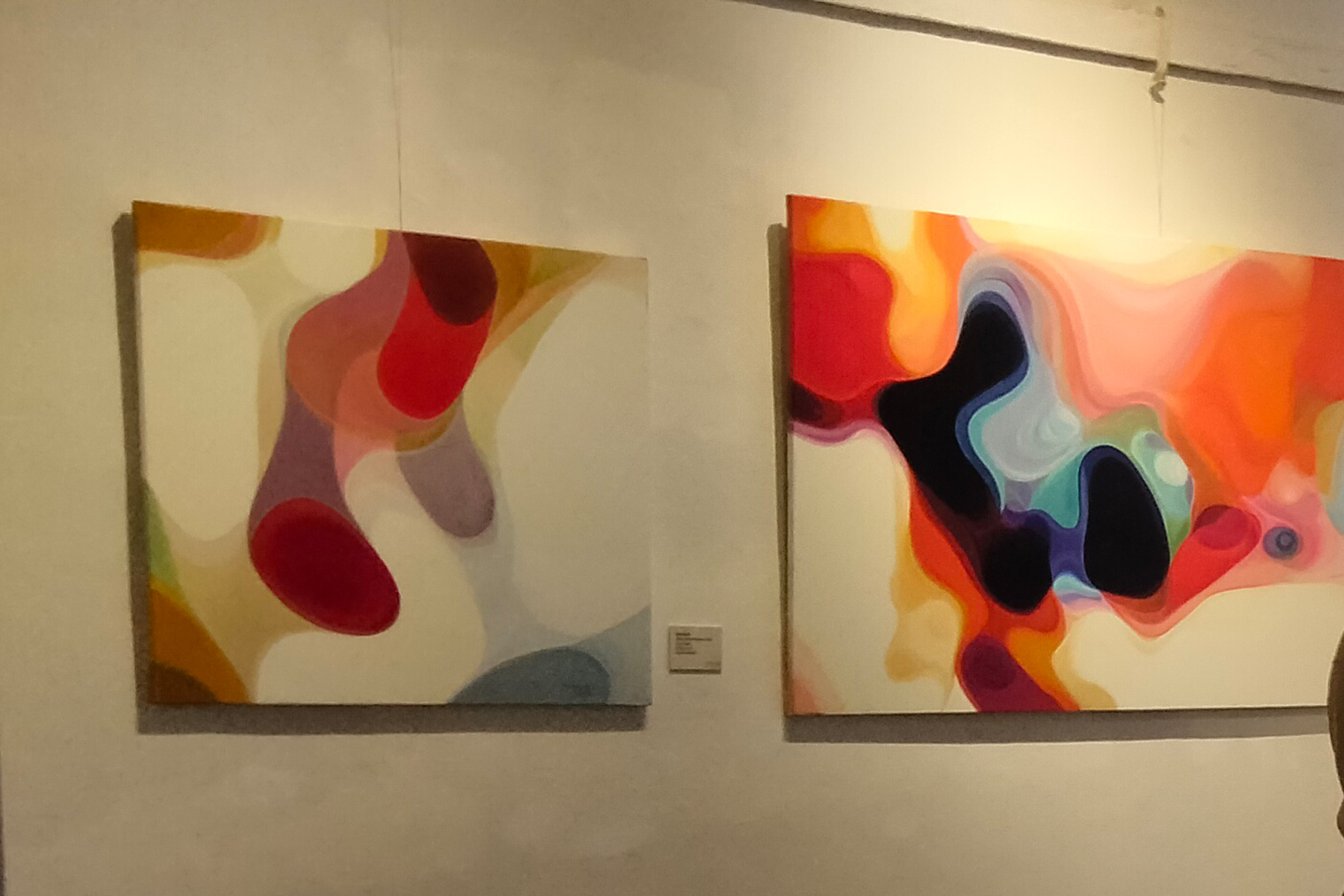
Sunil Ranjit, another esteemed faculty member, graces the exhibition with a serene and evocative composition titled Color Contemplation. His gentle flow of hues and the harmonious balance of form create a visual experience that is both distinctive and soothing—inviting viewers into a quiet moment of reflection through color alone.
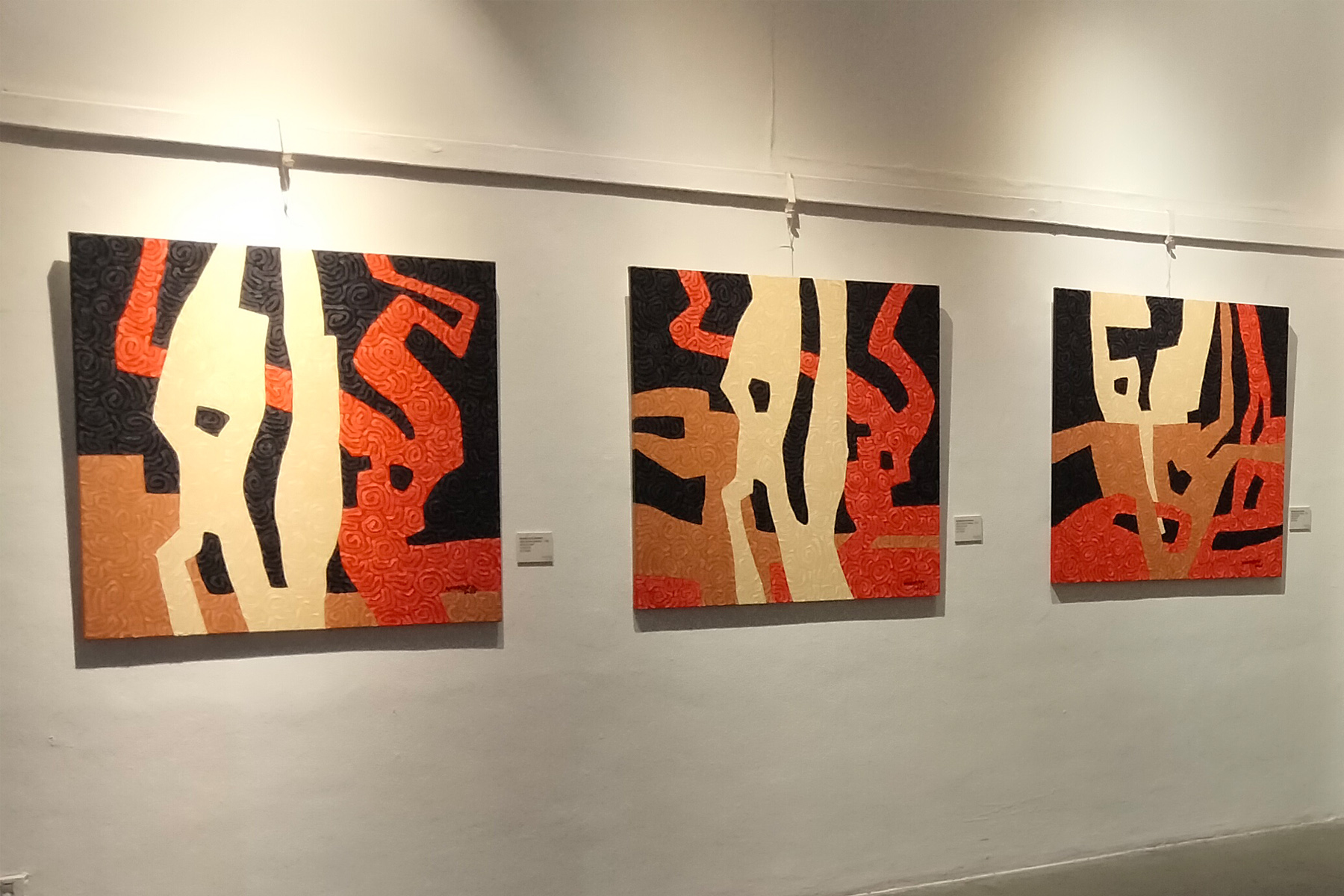
Equally compelling is the semi-abstract work by artist and educator Navindra Man Rajbhandari, titled Sarve Bhavantu Sukhina…—a Sanskrit phrase meaning “May all beings be happy.” Painted in a palette of yellow ochre, green, black, and white, the canvas is interwoven with intricate patterns that resemble winding roads and pathways, symbolizing journeys both literal and metaphorical. These subtle forms lead the viewer into deeper contemplation, echoing a timeless human quest for peace and unity. Rajbhandari’s work, rich in meaning and consistent in its exploration, feels like an ongoing dialogue with the universal mysteries that have stirred the soul of humanity for ages.
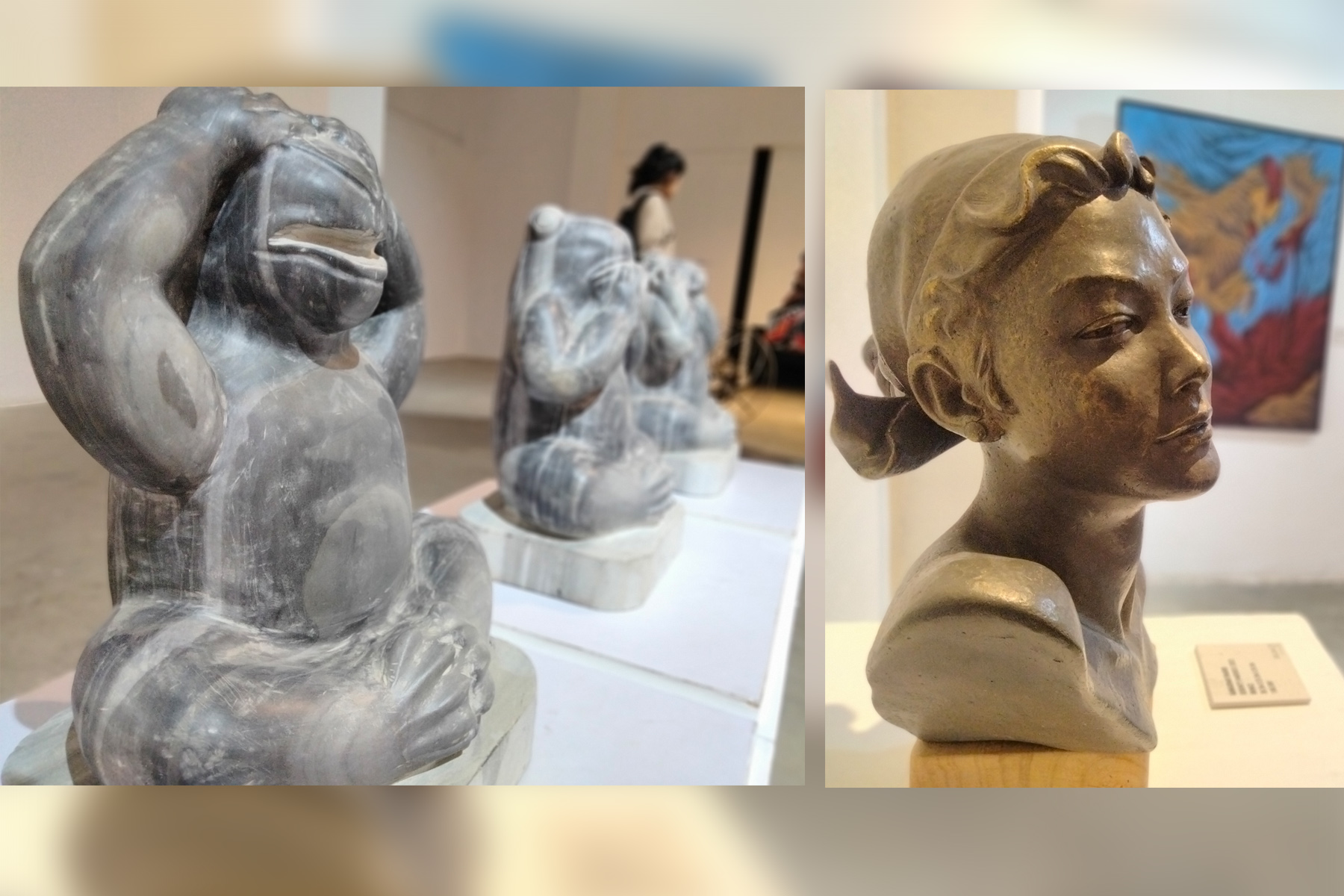
 Gangadhar Sharoo, a distinguished faculty member, offers a breathtaking sculpture of a woman—an embodiment of grace, beauty, and timeless aesthetics. His creation stands as a poetic tribute to feminine form, capturing the delicate balance of strength and serenity. It is a piece that quietly commands attention, resonating with a deep, silent elegance that lingers in the heart of every viewer.
Chandra Shyam Dangol, a respected faculty member of the college, presents a whimsical yet thought-provoking reinterpretation of the iconic “three monkeys” through the form of frogs. Once symbolic of Mahatma Gandhi’s message—“see no evil, hear no evil, speak no evil”—these reimagined creatures offer a fresh and playful perspective on an age-old philosophy, blending cultural homage with creative flair.
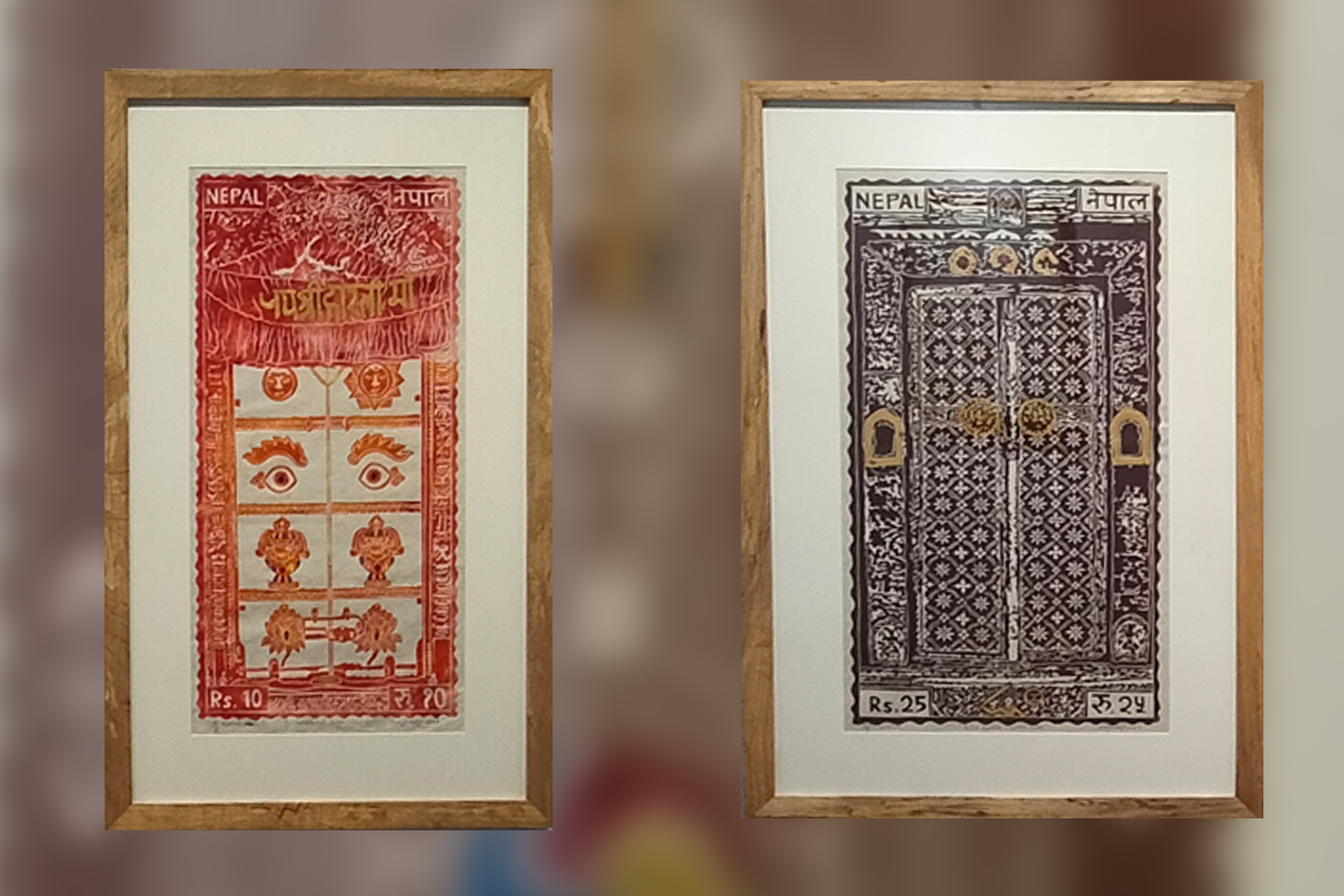
Samjhana Rajbhandari, also a faculty at Sirjana College, brings a touch of nostalgia to the exhibition through her evocative printmaking series inspired by vintage postal stamps. Her work is deceptively simple, yet profoundly stirring. In an age dominated by emails and instant messages, her art gently reminds us of a bygone era—when handwritten letters carried not just words, but emotions across distances. Through her thoughtful recreation, she rekindles forgotten memories and bridges generations with quiet, enduring power.
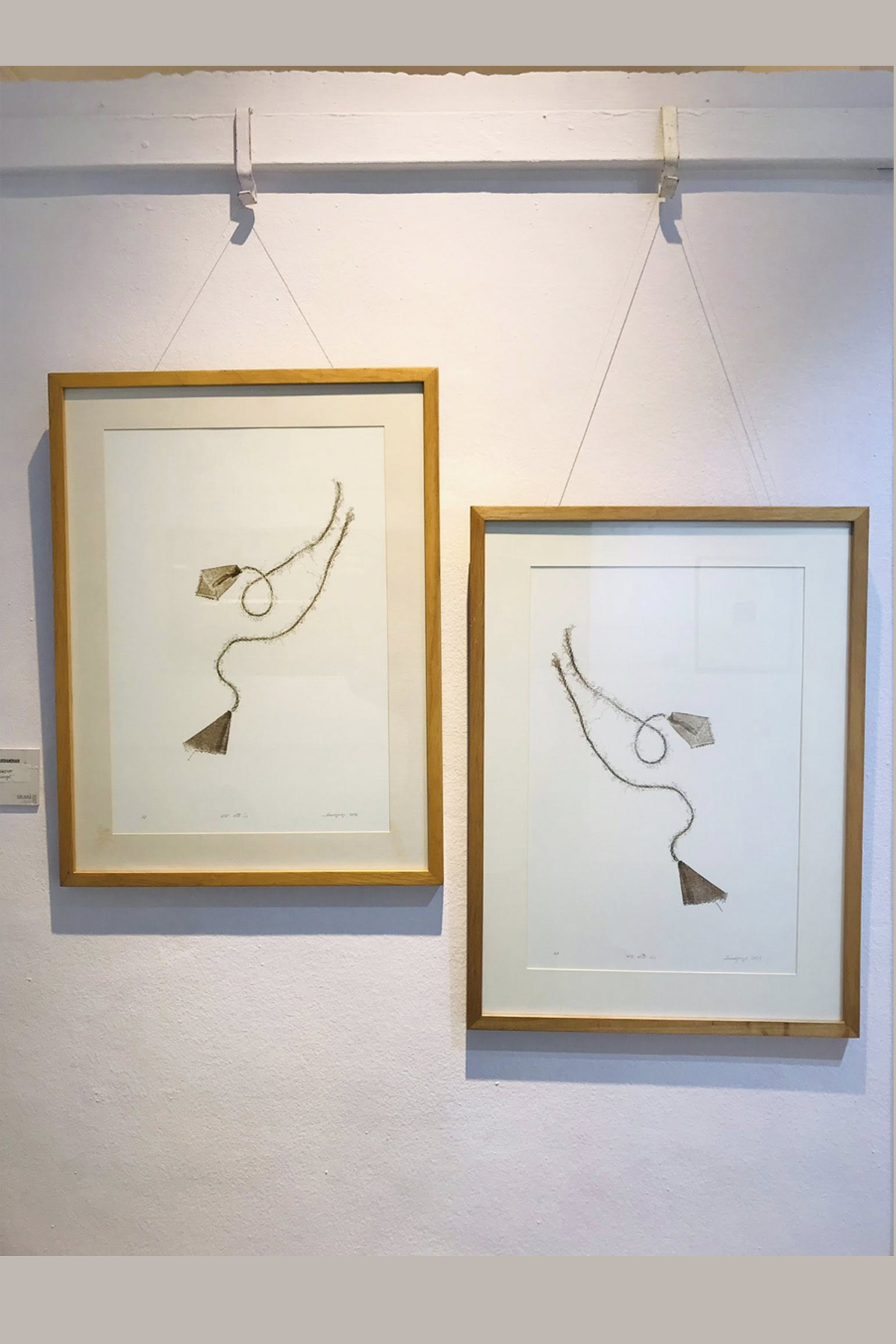
In contrast, Saurganga Darshandhari brings an ethereal touch to the exhibition through her exquisite etching works. Centered around the motif of the Thaili—a traditional cloth purse used to hold cherished valuables—her composition places it delicately atop lotus petals, watched over by a solitary bird. The image evokes a sense of sacred guardianship, weaving together symbolism and surrealism to transport viewers into a dreamlike world where objects become vessels of memory, protection, and quiet reverence.
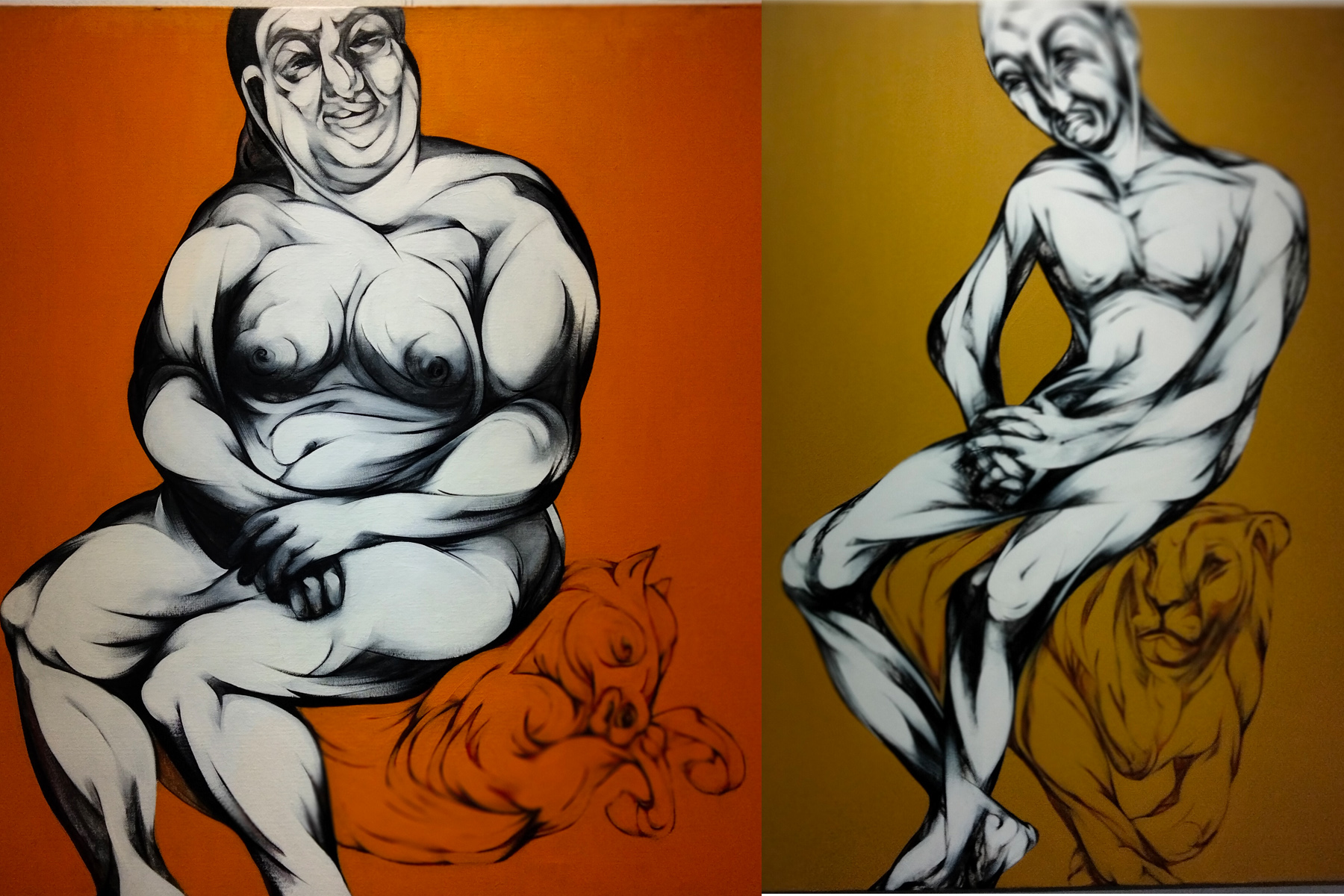
 Equally compelling is the work of Mukesh Shrestha, an artist and educator whose piece titled Sarcasm offers a bold commentary on societal perceptions of beauty. Against a backdrop of yellow ochre, he presents the figure of a full-bodied woman clad in white—radiant, unapologetic, and serene. In a world where beauty is often narrowly defined, his artwork challenges convention, reminding us that true beauty resides in the eye of the beholder and that grace can be found in all forms.
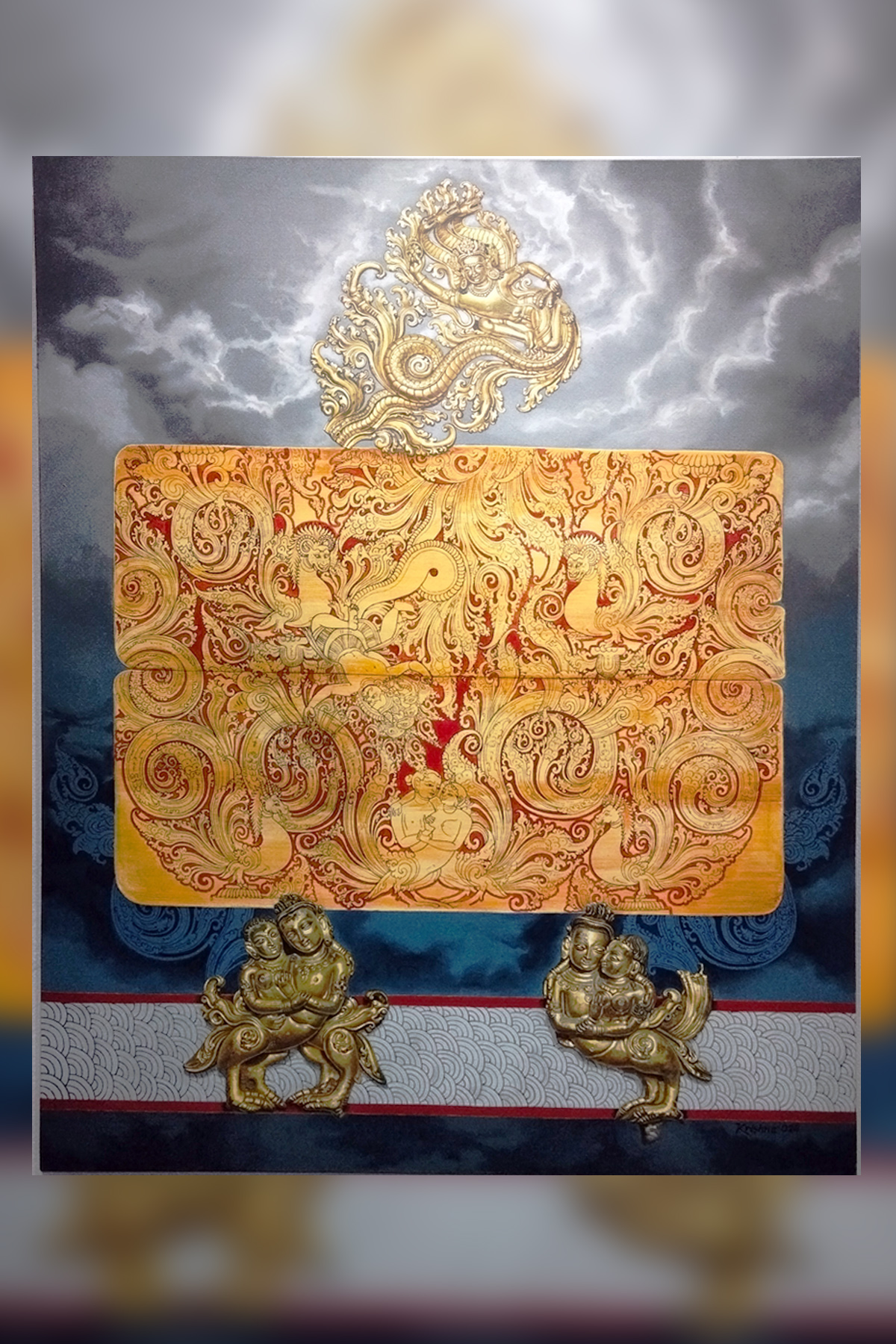
Krishna Gopal Shrestha, a dedicated faculty member at the college, brings a mythical dimension to the exhibition with his Archetype Series. At the heart of his artwork lies a water reservoir, safeguarded by Jala Manasa—a mystical guardian spirit of water. The painting resonates with a quiet reverence for nature, weaving mythology and symbolism into a visually captivating narrative that honors the sacredness of our natural resources.
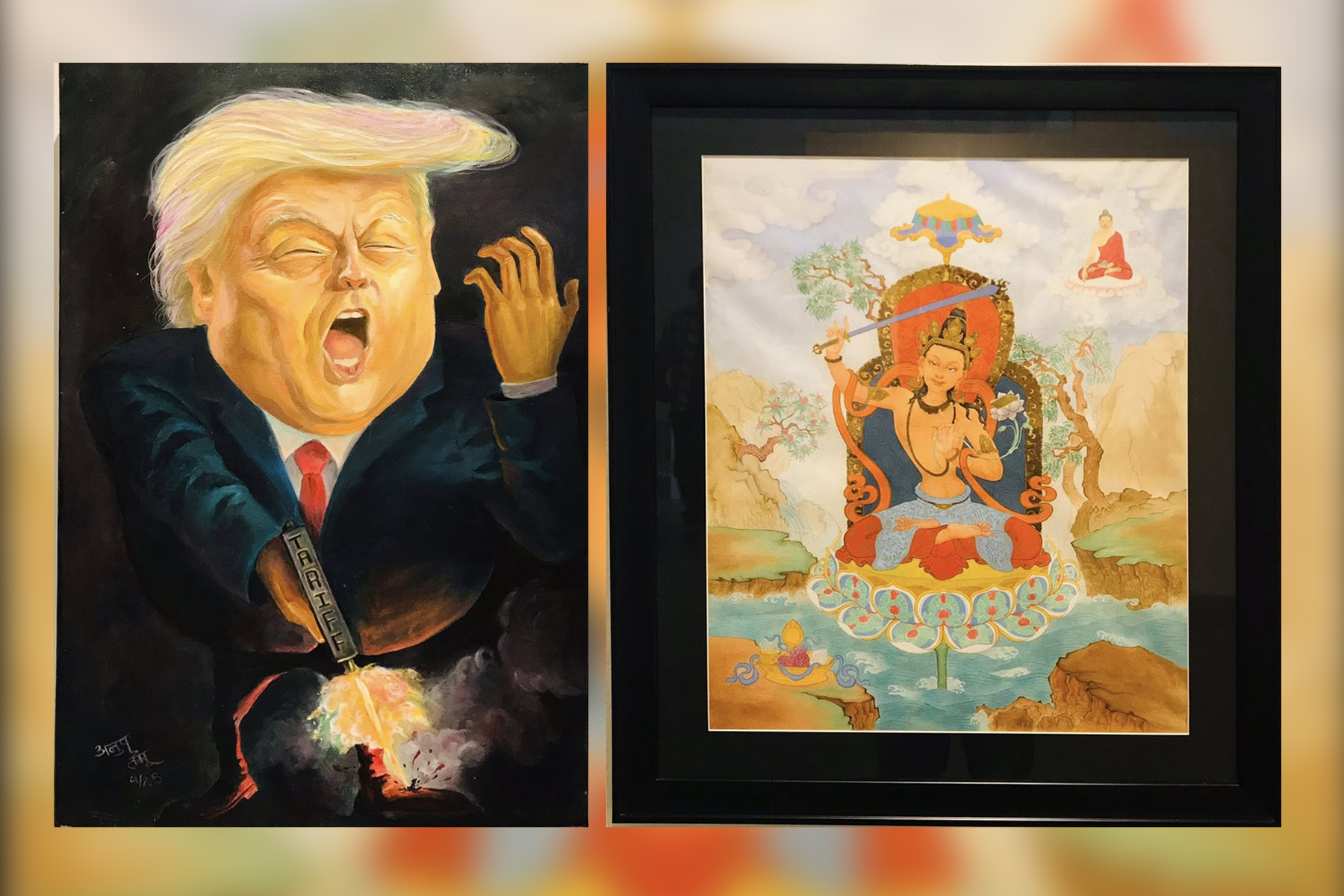
Kuldip Jung Bahadur Gurung, a visiting faculty member, offers a sharp and satirical take on global politics through his comic-style artwork. In the piece, the President of the United States is depicted aiming a gun—labeled Tariff—at his own foot. With wit and irony, Gurung captures the paradoxes of political decision-making, using humor as a powerful lens to reflect his deep political consciousness on canvas.
Sugat Shakya, a seasoned artist and educator, channels divine energy into his masterfully detailed depiction of Chaturbuja Mahakala. The artwork radiates a commanding spiritual presence, rendered with such precision and care that it leaves viewers in awe. His reverence for traditional iconography, fused with artistic mastery, creates a powerful visual experience that resonates deeply with those who encounter it.
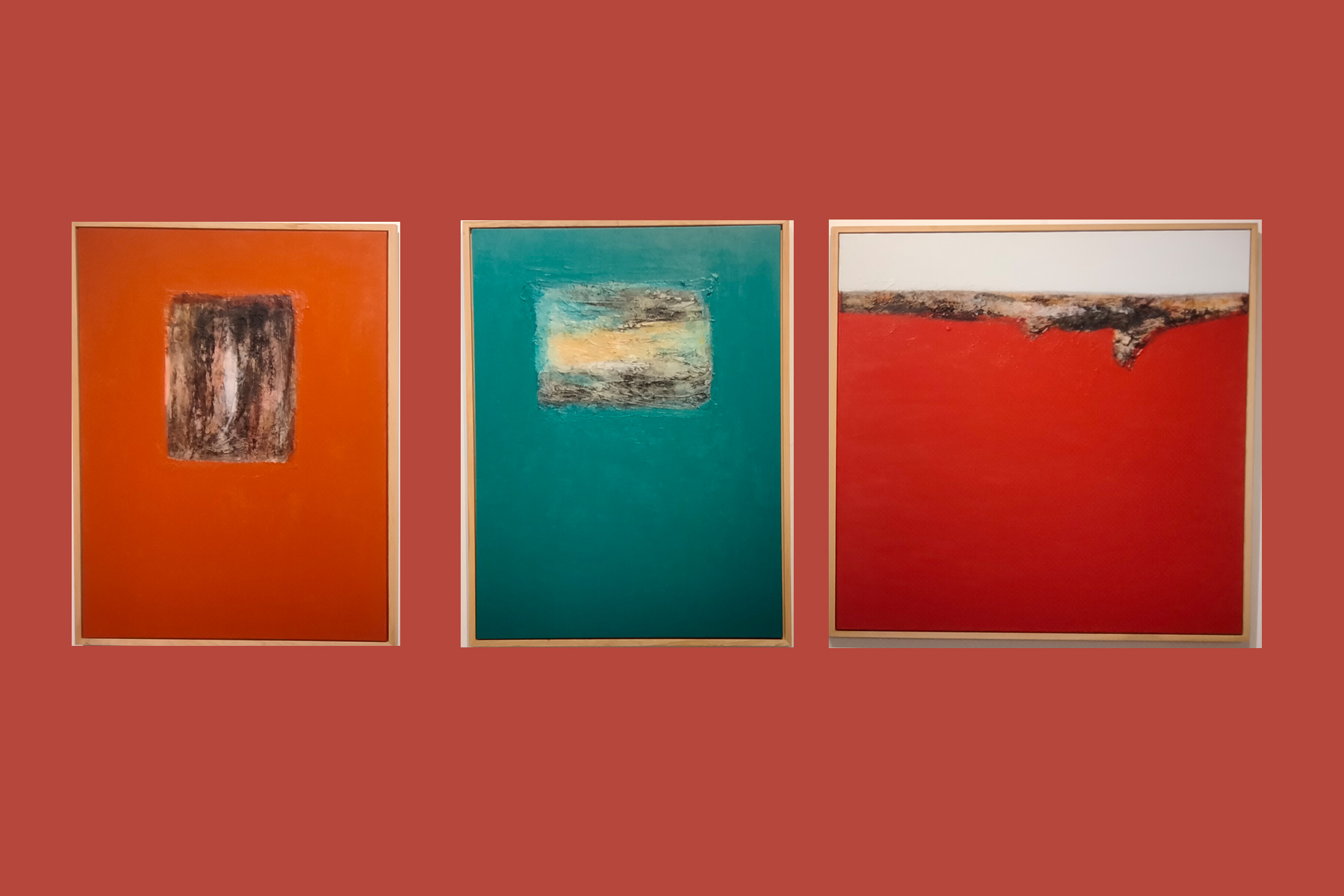
 Bijay Maharjan, another faculty artist, presents a striking series titled The Vestiges on large-scale canvases. Utilizing mixed media, his compositions feature floating, ice cube-like forms suspended in fields of single-toned color. Minimal yet evocative, these works signal a notable shift in his artistic direction—toward a quieter, more meditative exploration of form, memory, and the remnants of what once was.

Leave A Comment