
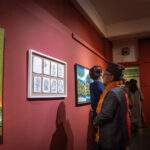
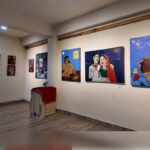
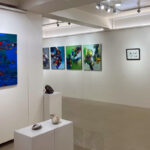
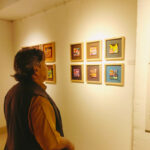
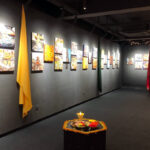

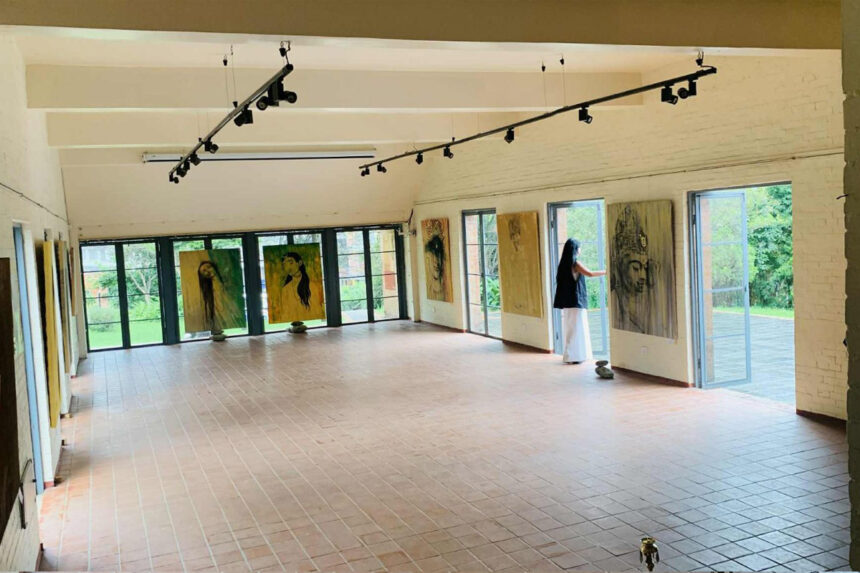
The first thing that captures your attention in Guru Mai Ram is the calm depth of her green, serene eyes and her slender frame-a presence as striking as her art. An artist from Lithuania, she now brings her creations to life at the Taragaon Next Museum, where her exhibition started on the 6th of September.
Nearly three decades ago, in her early twenties, she journeyed to India. In those days, Varanasi was still unburdened by the press of the crowds it now carries. Stepping onto its ancient soil, she felt an uncanny familiarity, as though she had returned to a home she had always known. It was there, in that timeless city, that she immersed herself in the Aghora sadhana, entering the sacred rhythm of the guru–shishya parampara.
Her sadhana was carried out with such intensity that the needs of the body often slipped away—there were times she even forgot to eat. Language, too, seemed to dissolve in that sacred space. Though her mother tongue, Lithuanian, was far removed from the words of her Guru, she felt no barrier. To her, the silence between them spoke more profoundly than speech itself; their communion needed no language at all.
When her years of sadhana reached fulfillment, she herself emerged as a master—guiding seekers, healing those in need, and carrying forward the wisdom she had received. Time became a rare jewel, divided between teaching, tending to the suffering, and penning her insights into books. Yet, in the quiet spaces between these callings, she turned to painting. Entirely self-taught, her canvases breathe with a raw sincerity, as though each stroke were drawn directly from her heart, forging an instant, intimate bond with those who stand before them.
This visit to Nepal marks her second pilgrimage to the land she reveres as the abode of Gorakhnath, Machhindranath and countless ascetics whose presence lingers in the air. Unlike her earlier journey, this time she began to paint—her canvases unfolding as extensions of her inner vision. Some works echo the fierce and transformative energy of the ten Mahavidyas, while others drift toward abstracted impressions of Shiva himself. In the depths of her meditation, visions would arise, and she would translate them, stroke by stroke, onto canvas.
On the eve of her exhibition, a Buddhist monk stepped into the gallery. His gaze fell upon one of her drawings, and he lingered, moved by its quiet force. With reverence, he inquired about its price. She hesitated, uncertain how to respond, for she sensed the depth of his sincerity. Yet she knew that every rupee from the sale would be offered in service—to help raise a new Ashram building in India, a sanctuary for seekers like herself.
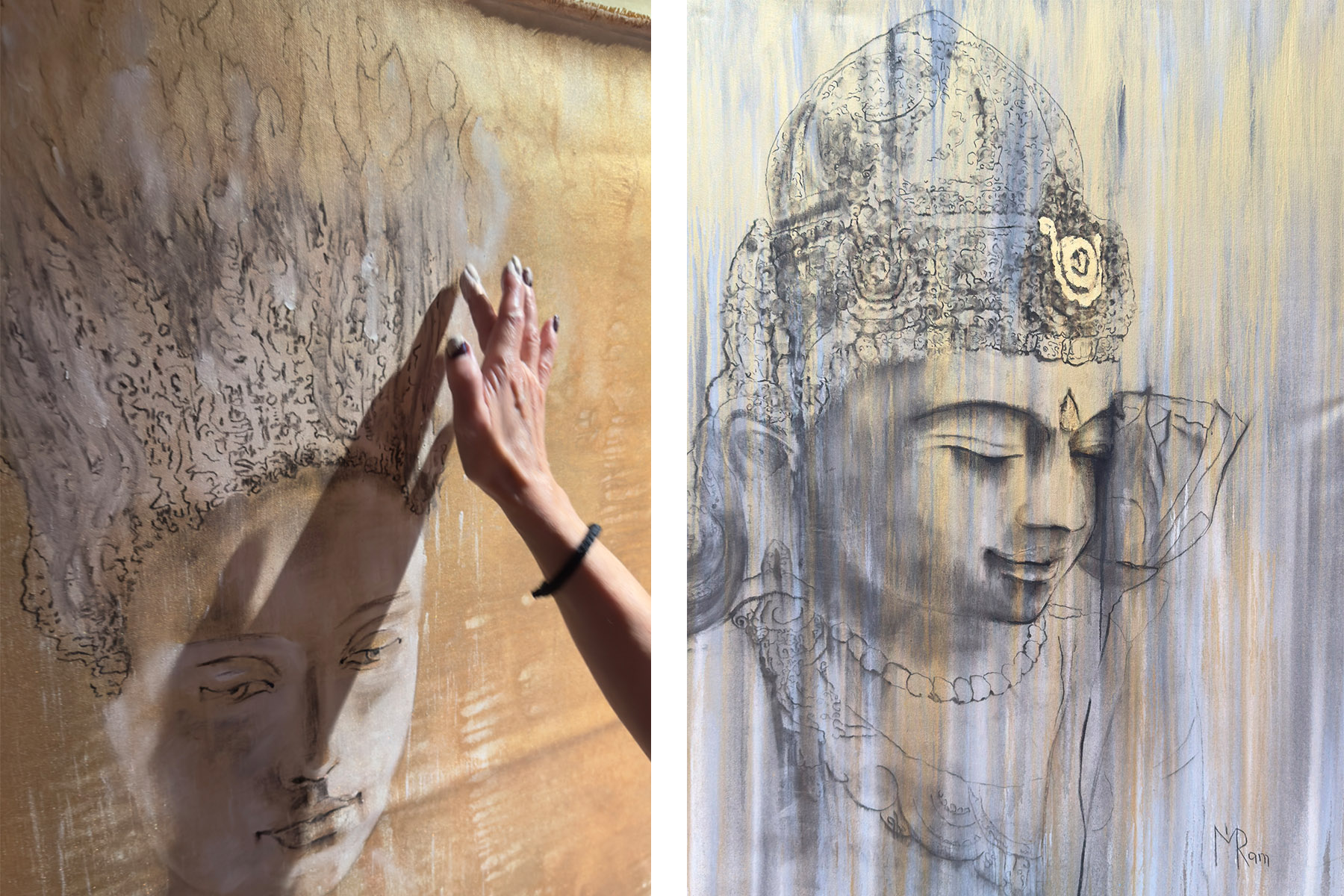
Gazing upon her paintings, and sensing the gravity with which they are created, one cannot help but feel they are destined to find their way into the right hands.
Her very first work portrays the back of a woman draped in a flowing red cloth. When asked about its meaning, she explained that the canvas embodies the feminine essence of Devi—the unseen yet deeply felt presence of the divine feminine.
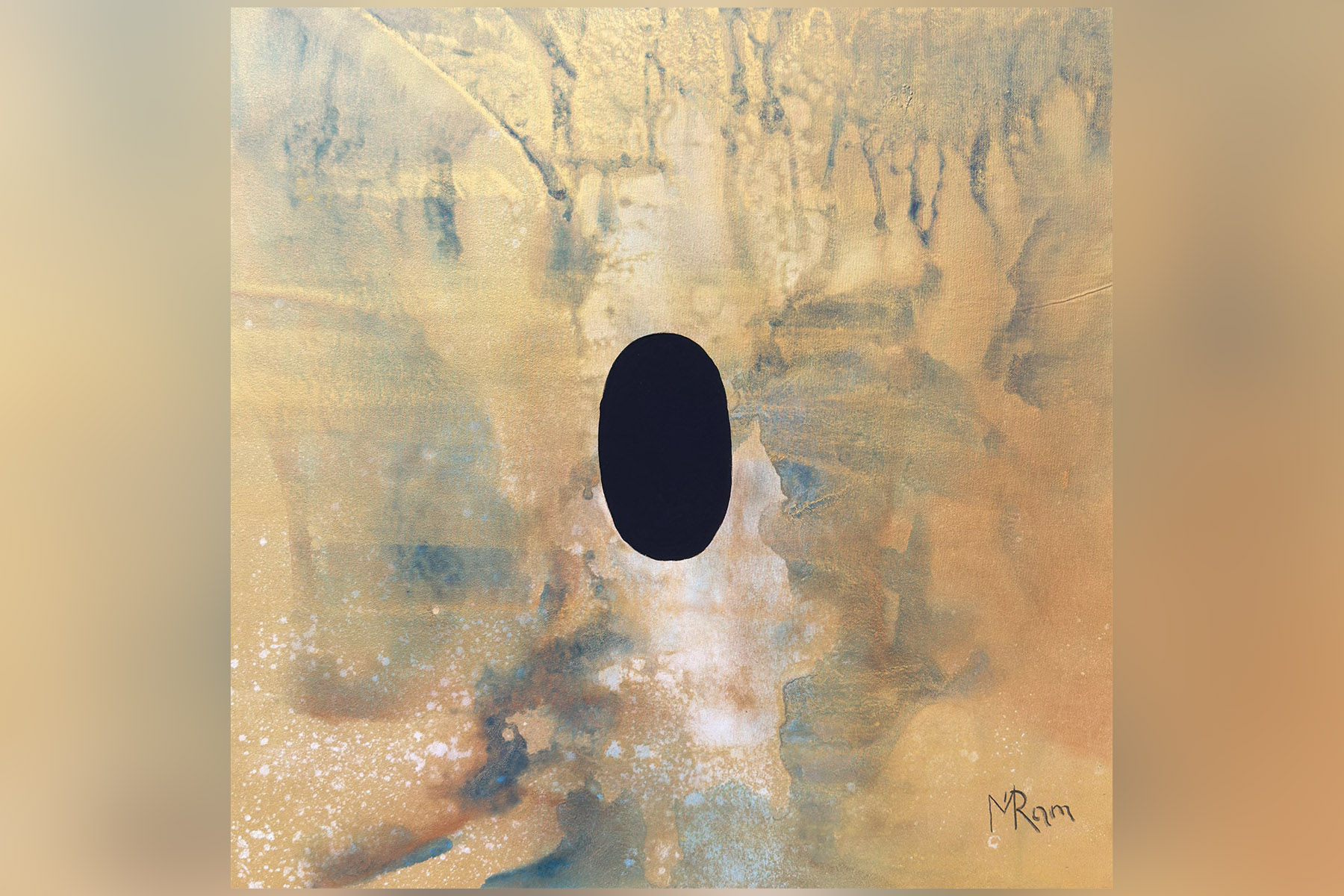
Another striking piece on display is a vision of Lord Shiva, depicted in the form of a black, Linga-like shape. Around it, waves of energy unfurl in free-flowing strokes, suggesting the boundless aura of the deity. This work stands apart in its singularity; those who pause before it often describe a quiet yet undeniable sense of divinity emanating from within the canvas itself.
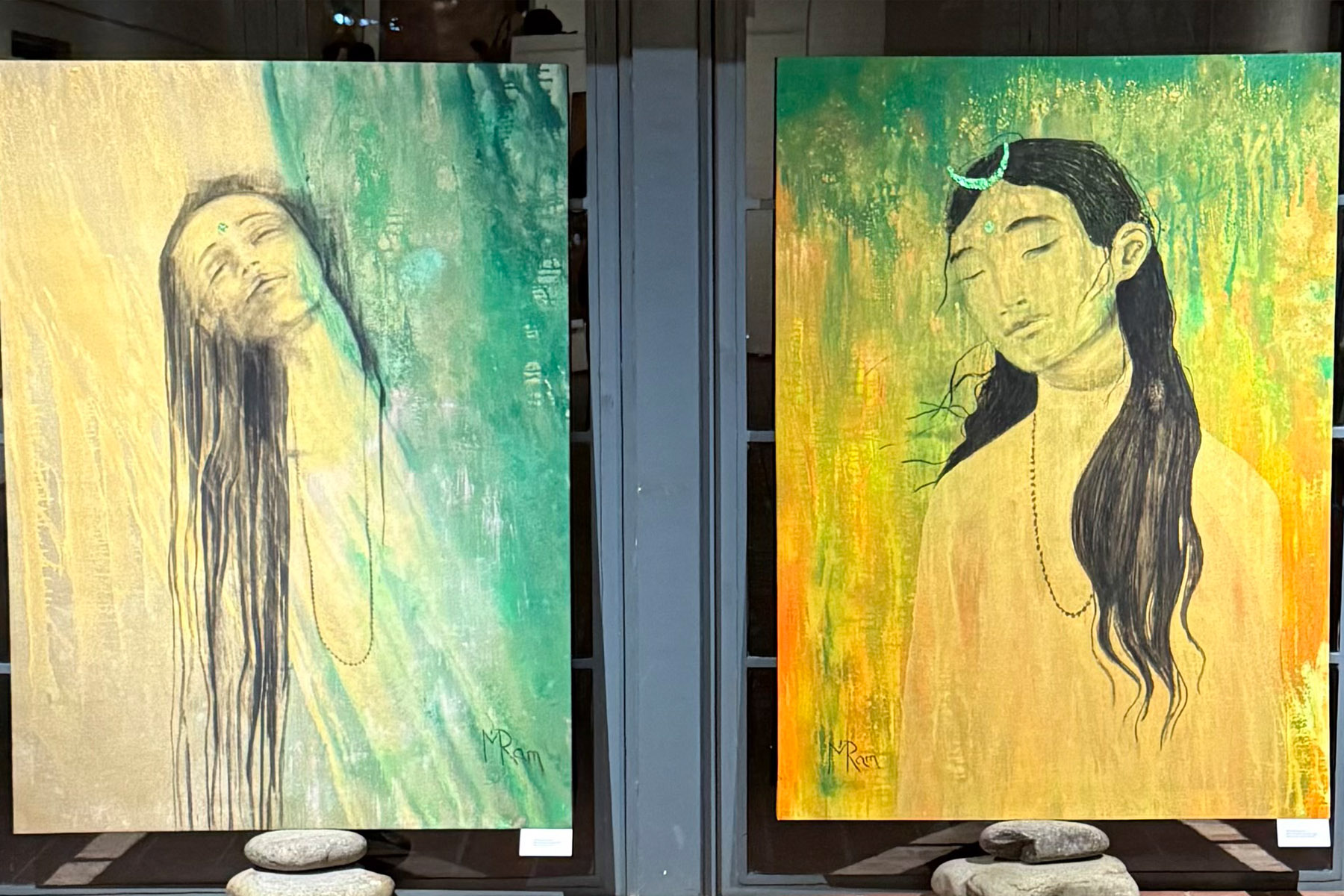
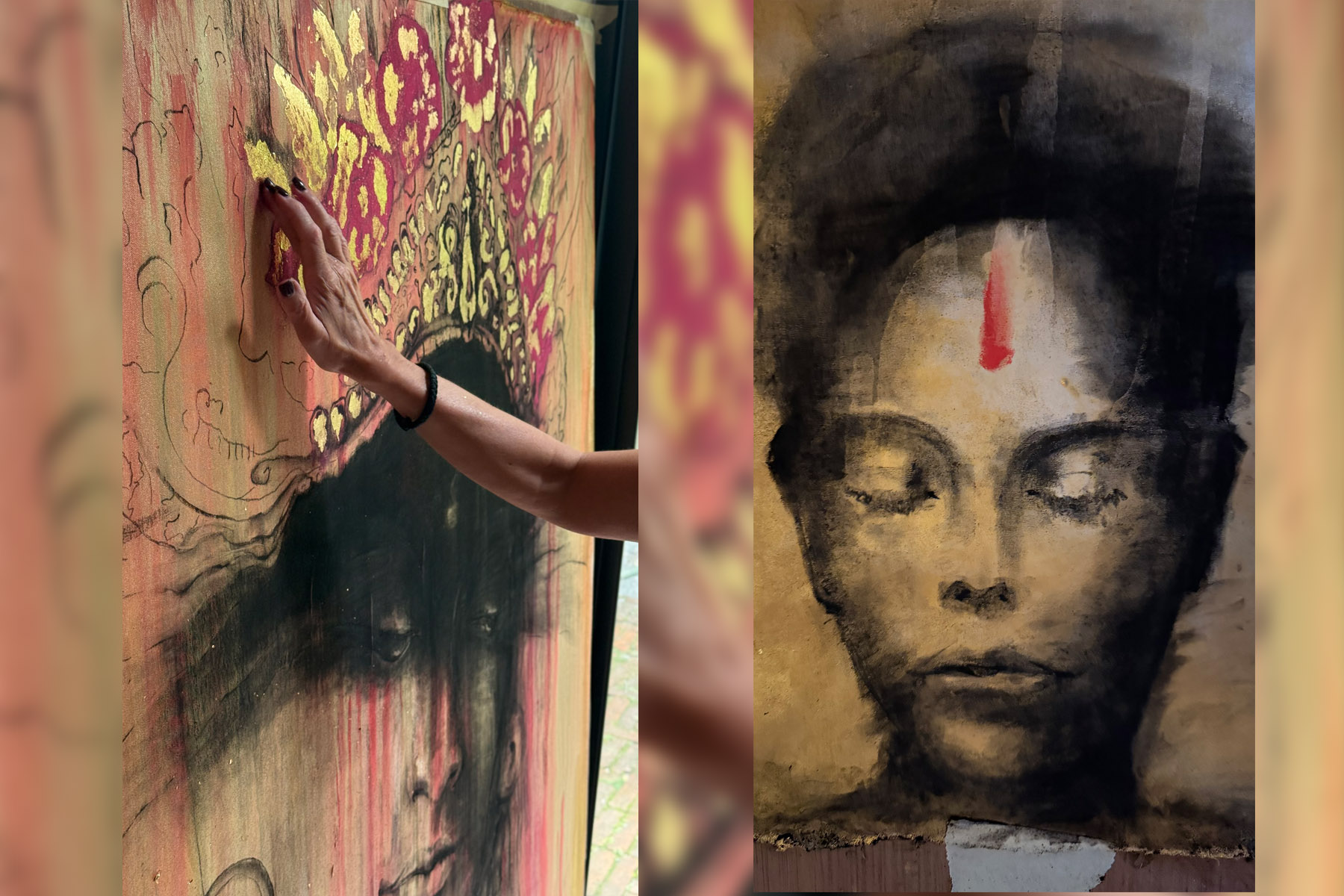
The seriousness of her artistic spirit is evident not only in form but in the very mediums she chooses. In one piece, Devi’s face is rendered in soft, fading lines, while intricate adornments crown her figure with vibrant presence—an interplay of absence and fullness that makes the goddess come alive with palpable vitality. Elsewhere, charcoal drifts across the canvas as if suspended in air, creating an image that seems to float, serene and tranquil, inviting the viewer into silence.
Her works hold a rare power—collectors often remark that bringing them into their homes transforms the space, opening doors to new layers of understanding. It is this dual resonance, speaking both to the heart of the art lover and the soul of the spiritual seeker, that makes her exhibition so compelling.
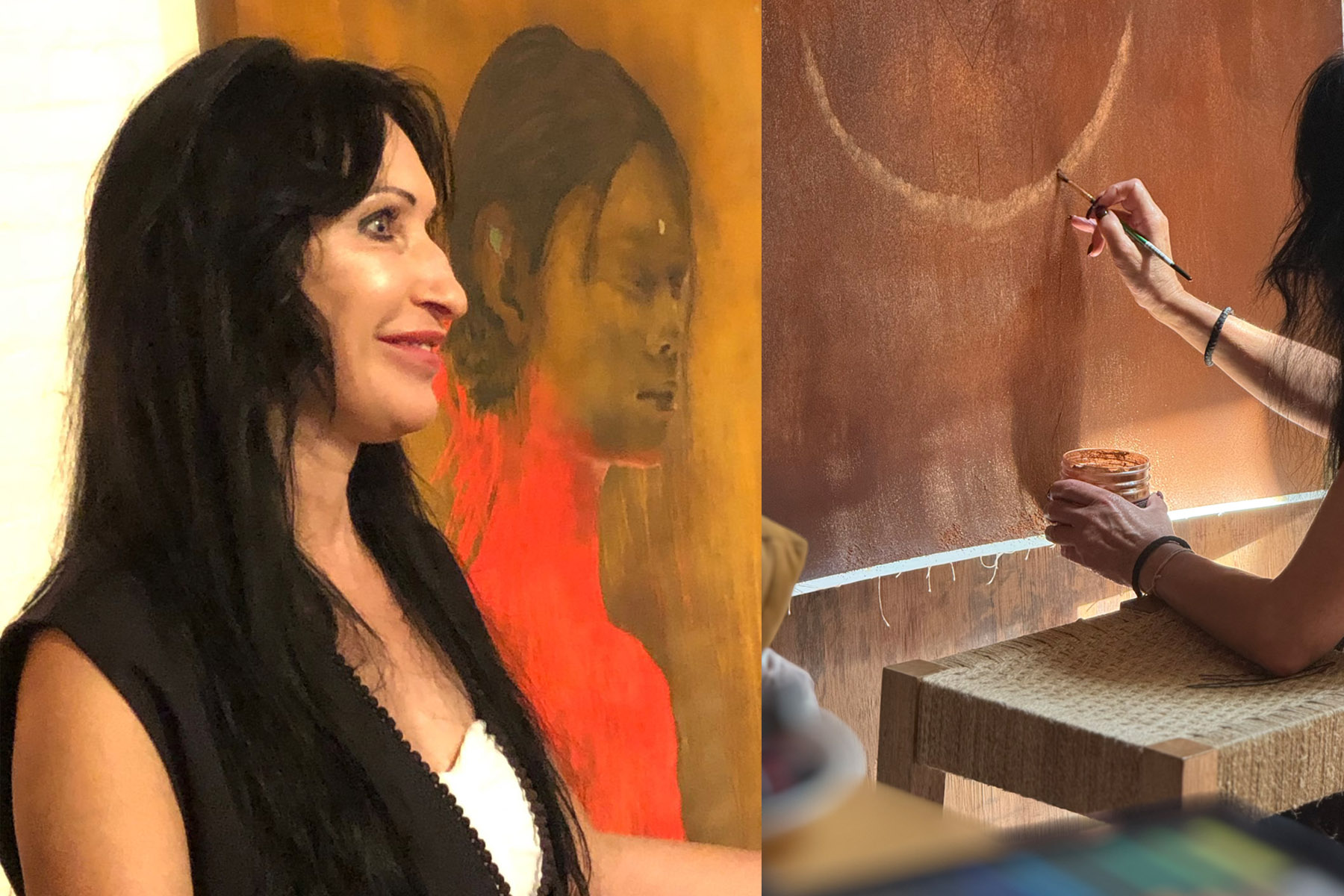
For those near Boudha, a visit to Taragaon Next is an invitation to step into this world of vision and devotion. The exhibition runs until 19th of September, offering a chance to witness paintings that do not merely hang on walls, but breathe, whisper, and awaken.
In most of the cases her paintings are interesting and most of her collectors feel that once they get in their home, they are going to create another level of understanding. An art lover and spiritual seeker, both are attracted alike in exhibition. If you are an art lover and are near Boudha, Taragaon next is a must visit place to witness the artwork and gain different insight in the painting itself.

Leave A Comment