
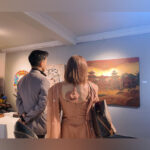
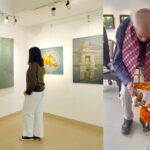


Bhaktapur stands as one of Nepal’s ancient cities, where artisans have upheld their rituals and traditions for centuries. Unlike areas like Kathmandu and Patan, Bhaktapur’s residents continue to preserve their cultural heritage in its most authentic form. Among these artisans is Sundar Sinkhwal, an artist whose work is richly infused with the imagery of deities revered across generations. This exhibition is his first solo showcase—a rare occasion, as creating each piece requires substantial time and there is often a waiting list of eager buyers. Known as Paubhas, these divine works beautifully portray sacred figures that carry profound cultural significance.
One of the oldest surviving Paubhas dates back to the 10th century, highlighting the deep historical roots of this revered art form. Early Paubha paintings, influenced by Nepali styles, have even been discovered in Tibetan caves, suggesting that the tradition likely thrived in Nepal long before formal records. It wasn’t until the 14th century, however, that Paubha artists began signing their work. This marked a turning point, allowing artists to take personal ownership of their creations while following a crucial rule: signatures had to be discreetly placed to maintain the sanctity of the depicted deities. This careful integration of signatures, preserving the divine essence, reflects the deep respect and reverence that has defined Paubha artistry through the ages.
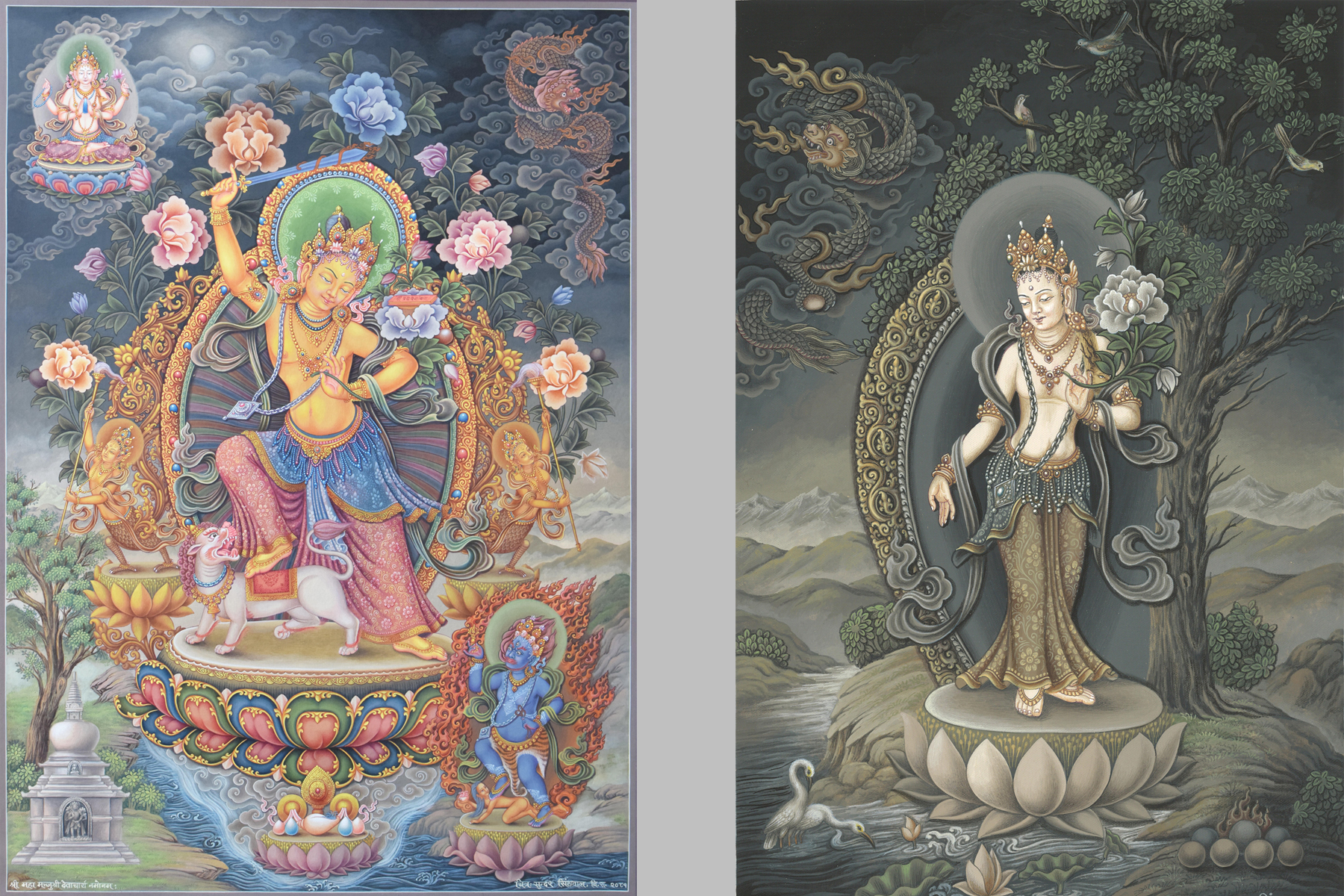
Growing up in Bhaktapur, Sundar Sinkhwal was drawn to art from an early age, particularly captivated by creating images of deities. His formal artistic journey began under the mentorship of master artist Purnyo Hyoju, where he delved into the complexities of Paubha art. Following his apprenticeship, he pursued oil painting with Srijan Kumar Rajbhandari, refining his skill in light and shadow. As Sinkhwal’s Paubhas gained popularity, they would often sell quickly, limiting his time for experimentation. However, during the quiet months of the COVID-19 lockdown, he had the rare opportunity to explore and integrate the techniques he had learned with Rajbhandari. This exhibition is the culmination of six to seven years of intense dedication and creative growth, showcasing the depth and refinement that have emerged from his journey.
A standout piece in the exhibition is a dynamic acrylic painting of Ganesh, rendered in vivid red and seated powerfully on a lion, holding a broken tusk. The artist shares that this portrayal captures Ganesh in his youthful, fiery form—a symbol of his strength and assertive nature, which, according to legend, led Lord Vishnu to break one of his tusks as a lesson in humility. Adding a unique element, barking dogs are depicted beneath Ganesh’s imposing figure, nodding to the Cho: Tha Ganesh form, believed to bring blessings to those who pray at night, particularly when dogs bark in the distance. This work masterfully combines bold visuals with layered symbolism, making it a highlight of the exhibition.
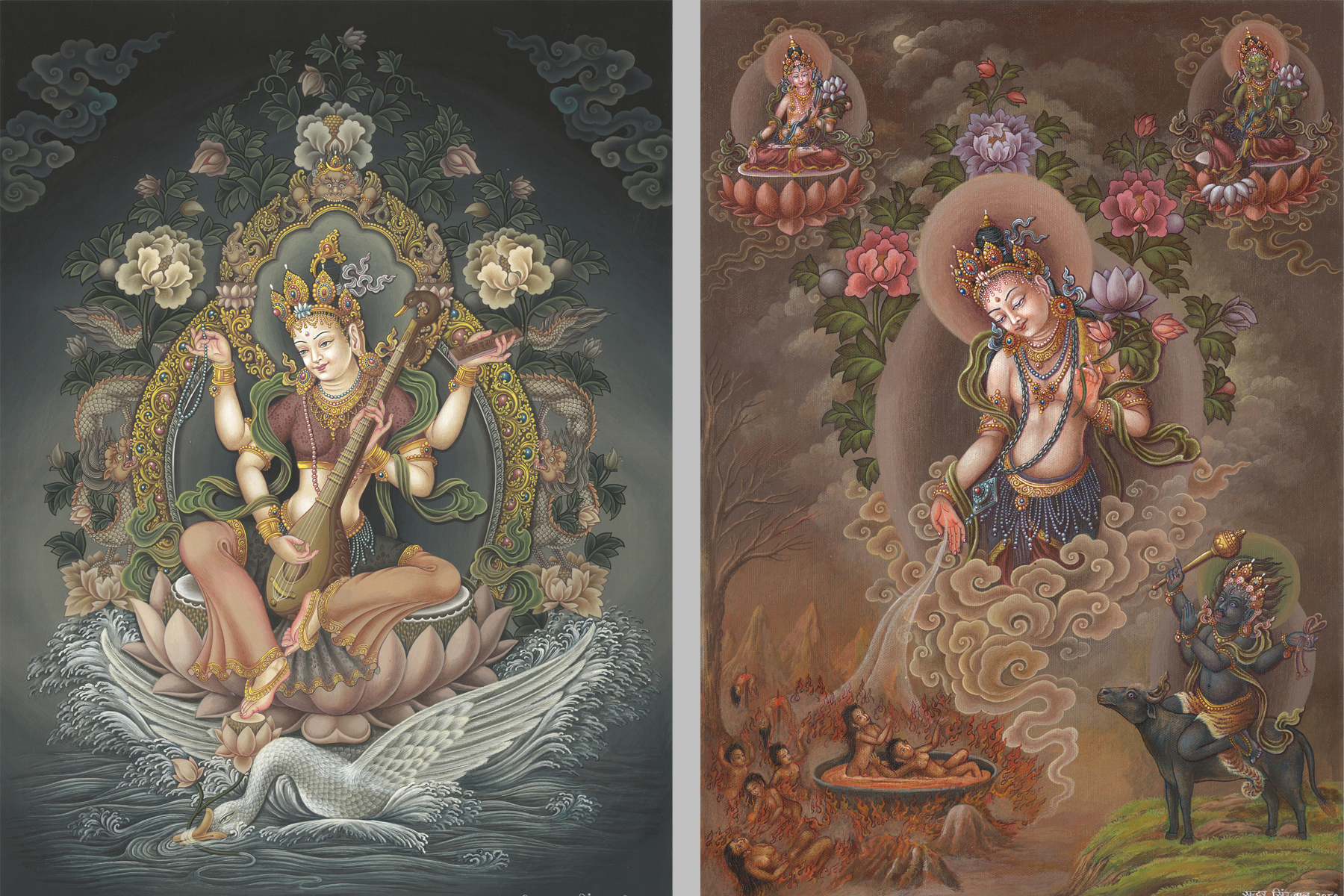
Another remarkable painting in the gallery illustrates the tale of Guhyeshwari. Artist Sundar Sinkhwal recounts how Lord Shiva would often disappear into secluded retreats, leaving Goddess Parvati to search tirelessly for him. Troubled by his repeated absences, Parvati decided one day to hide from Shiva herself. When she revealed her plan, Shiva, unaware of her intent, simply smiled, granted her permission, and returned to his meditation. Only the next day did he realize she was truly gone, and his frantic search ensued. His journey ultimately led him to Guhyeshwari, where he prayed fervently for her return. In answer to his devotion, Parvati reappeared, and they were joyfully reunited. This artwork beautifully captures the mysticism and emotional depth of the legend, standing out as a poignant piece in the exhibition.
Sundar Sinkhwal’s mastery of light and shadow infuses his paintings with a captivating vitality, breathing life into the Hindu and Buddhist deities he portrays. His work seamlessly marries traditional iconographies with his own creative interpretations, resulting in pieces that feel both timeless and refreshingly original. Each artwork is meticulously detailed, revealing subtle nuances that reflect his deep understanding of the spiritual essence embodied by each deity. These paintings are truly unique, inviting viewers into their mystical realms. For art enthusiasts in or near Kathmandu, this exhibition offers a rare opportunity to experience the profound beauty and depth of Sinkhwal’s work up close—an unmissable showcase of his artistry.
Where: Siddhartha Art Gallery, Babermahal
When: 24th October to 25th November
Time: Sunday to Friday : 11 AM to 5 PM,
Saturday: 12 PM to 5 PM
Entrance: Free.

Leave A Comment