



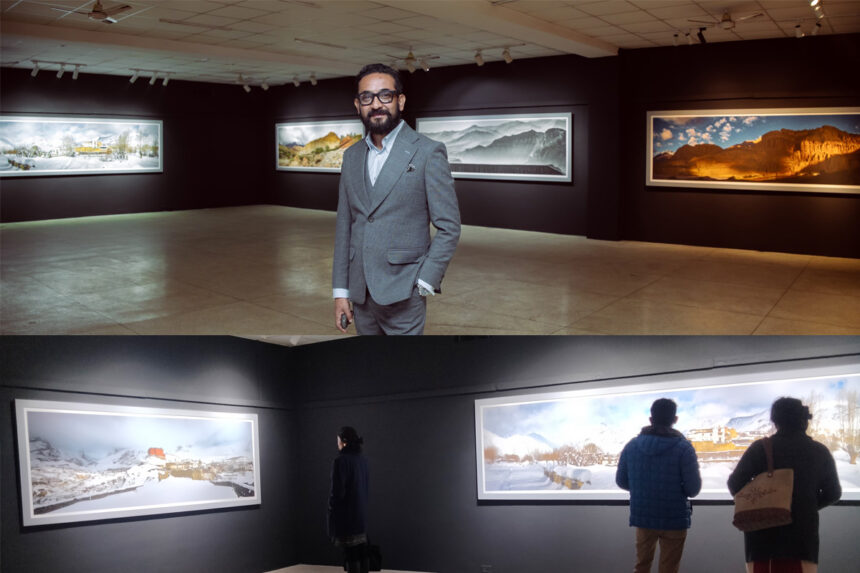
When was the last time you heard someone speak about photography as if it had a life of its own? “Photography depends on a person’s mood. If you’re feeling gloomy, your photographs won’t radiate happiness—unless you’re doing commercial works,” shares the photographer Kishor Kayastha during his exhibition “Mustang: Nostalgia: A two decade odyssey” at the Nepal Art Council, Babermahal. Kayastha has been visiting Mustang regularly for the past two decades, and all the photographs featured in the exhibition were captured during that period.
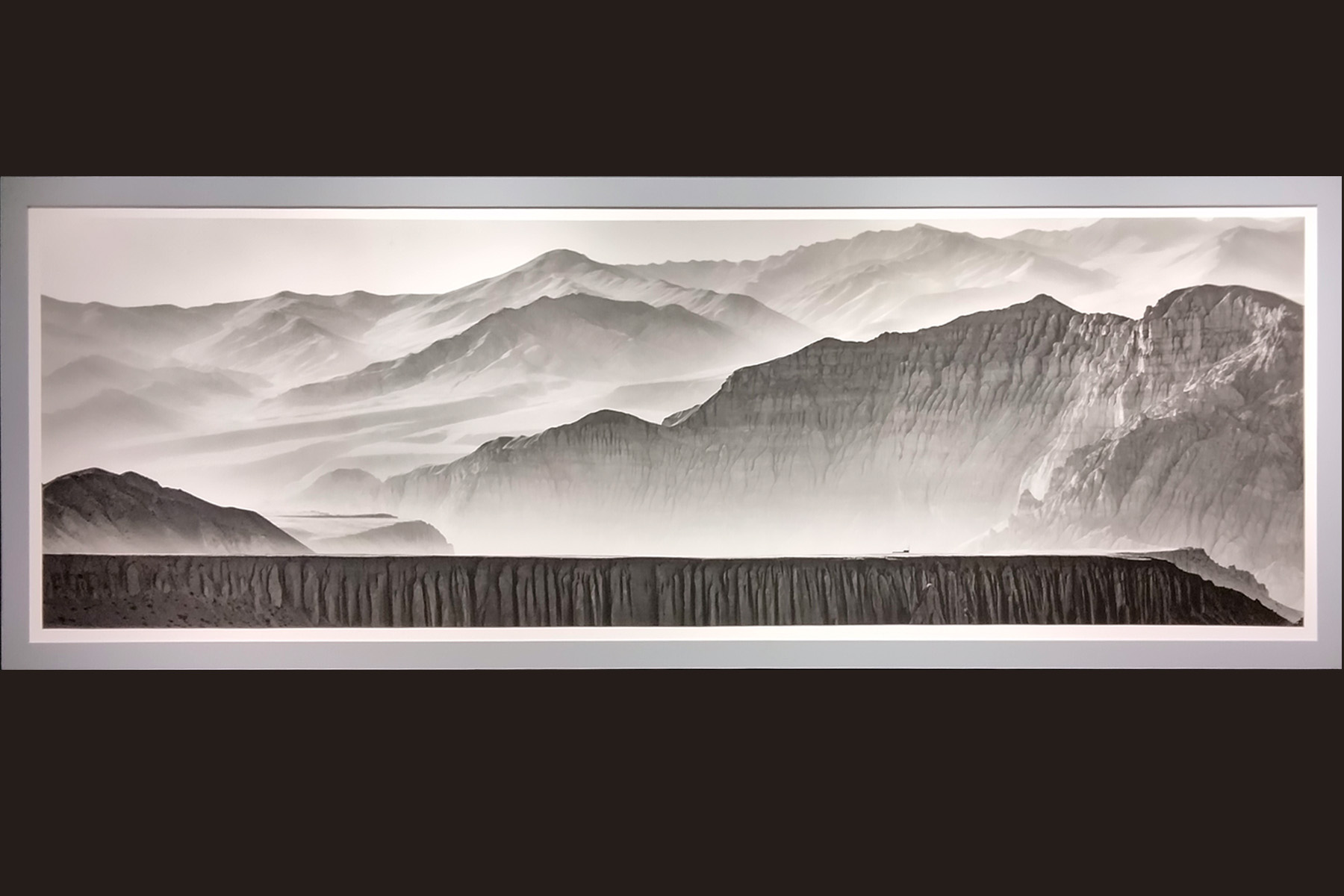
The photographs are printed in life-size frames, creating an immersive experience for the viewer. As one gazes closely at the images, they evoke a palpable sense of being transported to Mustang, as though standing amidst its rugged landscapes and serene beauty. The intricacy and depth captured in each photograph allow the audience to not just see but feel Mustang—the quiet vastness, the crisp mountain air, and the timeless aura of the region.
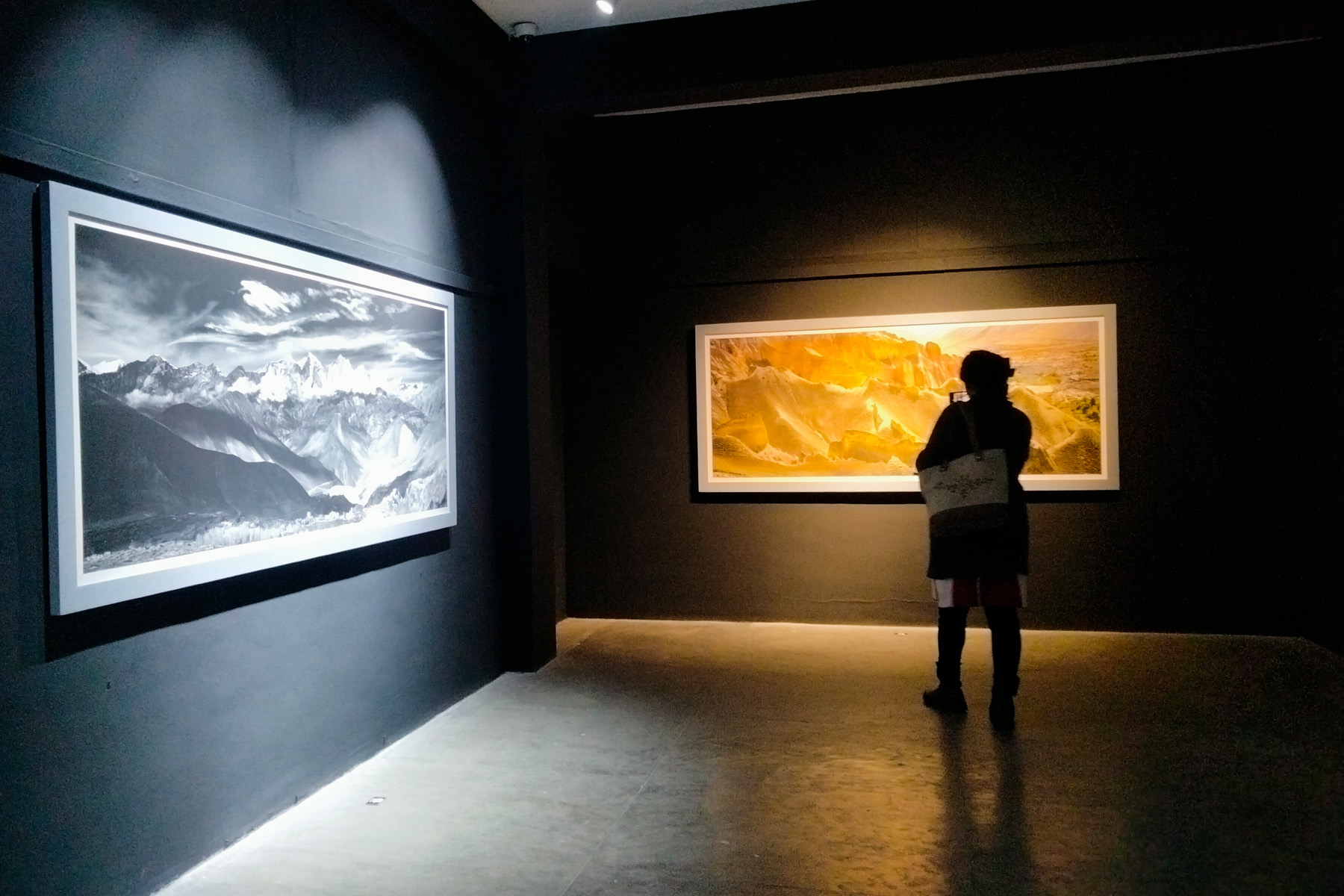
Interestingly, beside each photograph, a sign reads, “Do not touch the art.” This seemingly simple instruction subtly amplifies the reverence for the photographs, making one feel small in the presence of such powerful visual storytelling. It’s almost as if the photographs assert their dominance, reminding viewers of their delicate yet overwhelming nature, leaving them in awe.
The emotional intensity of the exhibition is undeniable. Many visitors find themselves shedding tears, experiencing a moment of catharsis as they confront the raw beauty and emotional depth conveyed in the images. These tears are not merely a reaction to the visual spectacle but a deeper emotional release—a testament to the photographer’s ability to connect deeply with his audience, stirring feelings of nostalgia, longing, and introspection.
Kayastha is a passionate photographer with a family heritage deeply rooted in the art of photography. He fondly recalls the days when his mother managed the family’s photography business and reminisces about the cherished moments of his childhood, capturing images with a block camera during those simpler times.
Strolling around Bhaktapur’s Durbar Square with his mother, attempting to capture the essence of that era through his lens, was a truly memorable experience for him. He has carefully preserved all those cameras and photographs from that time, keeping them as treasured mementos of his early journey in photography.
While growing up, money held significant value, and his mother, a teacher, instilled its importance by encouraging him to earn even his pocket money through hard work. This was her way of teaching him financial responsibility from an early age. Reflecting on his journey, he shares that he has experienced both the pinnacle of success and the depths of failure. It is these varied experiences that have shaped him into the person he is today.
For Kishor Kayastha, Mustang was more than just a destination—it was a spiritual journey spanning two decades. His first visit, accompanied by his wife, was an unforgettable experience. Back then, transportation was far from convenient. Despite feeling physically strong, the 10 to 12 days of walking left him breathless at times. One particular incident during that trip left a lasting impression on him. In one of the hotels, he encountered a group of disabled tourists, including a blind man. Curious, he asked the man why he had come to Mustang, and the response was both surprising and profound: “It’s true that I cannot see, but I can smell the earth.”
This encounter inspired Kishor to return the following year, better prepared. Thus began an annual tradition—Mustang became not just a destination but a personal pilgrimage, offering him both adventure and spiritual fulfillment. The photographs presented in his exhibition reflect that deep connection, each image capturing more than just a landscape—it conveys a sense of personal and spiritual exploration.
He vividly recalls a particularly harrowing incident in 2019, when Mustang was blanketed in snow for over three months. With no internet or reliable means of transportation, the region was entirely isolated. It was during this time that he received devastating news: his father-in-law had passed away. Knowing how close his wife was to her father, they needed to return to Kathmandu urgently. With no other option, they made the perilous journey on horseback.
The trip was fraught with danger—his horse slipped numerous times on the snow-covered path. Each slip brought him face-to-face with his mortality. At moments, he felt as if it might be his last day on earth. Like scenes from a movie reel, memories of the good and bad moments in his life began flashing before his eyes. In that life-threatening moment, he made a silent promise to himself—to become a better person if he survived.
This profound experience further deepened his bond with Mustang, making it not only a place of breathtaking beauty but also a symbol of personal growth and spiritual awakening.
The collection of 30 photographs showcased at the gallery is truly remarkable. Their life-size scale creates an immersive experience, making viewers feel as though they are physically present in Mustang. As Roshan Bhandari, one of the visitors there and an artist, shares, “I have been to Mustang many times, and these scenes remind me vividly of the place. The photographs are so captivating that they transported me down memory lane, making me feel as if I were revisiting Mustang once again.”

Photographer Kishor Kayastha also recounts memorable moments during the exhibition. He shares, “A photographer friend of mine, who is among the best in the field, came to see the exhibition. He observed each photograph carefully, and after looking at them, he left without saying a word. Perhaps he was overwhelmed by their beauty and found himself at a loss for words.”
Another touching encounter involved a young girl studying in grade 11. Kayastha recalls, “She approached me with a small artwork painted on a miniature canvas. It was a painting of a Himalayan scene from one of my photographs. Along with the canvas, she handed me a note in which she expressed her desire to become an artist, but sadly, her father was unwilling to support her dream.”
Such experiences highlight the profound impact Kayastha’s work has had, inspiring not only nostalgia but also creative aspirations in those who view his art.
The exhibition encapsulates a twenty-year journey to Mustang, with some visitors moved to tears as they gazed at the photographs. Nature has a unique way of touching each person’s soul, evoking emotions that words often fail to express. Perhaps this is why people describe nature as truly grand and awe-inspiring. The photographer envisions taking these stunning works beyond borders, dreaming of traveling to different parts of the world to share the essence of Mustang with a global audience.
The exhibition runs until January 14th at the Nepal Art Council, Babermahal. Nature lovers, photographers, and artists are gathering to witness these captivating photographs. If you’re in the area and have a couple of hours to spare, a visit to the Nepal Art Council could be a perfect way to immerse yourself in the beauty of Mustang through the lens of Kishor Kayastha.

Leave A Comment