


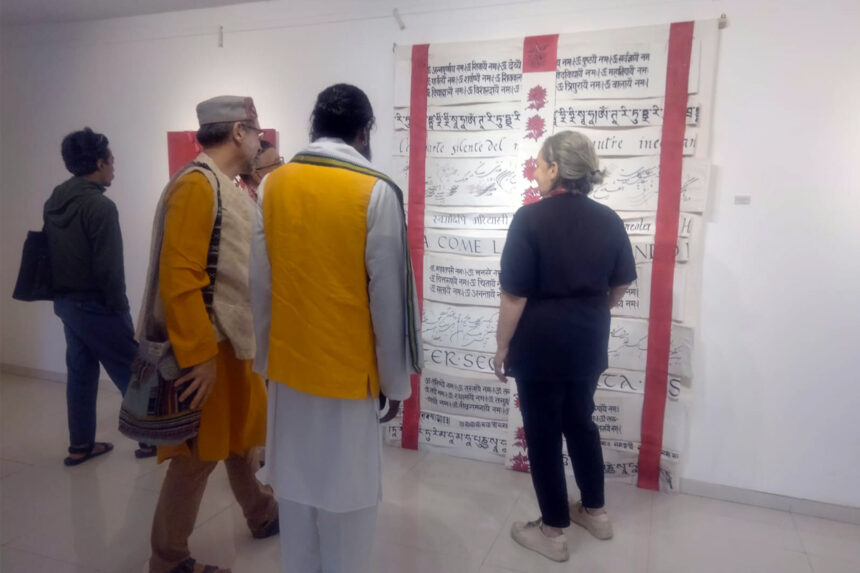
Do hearts, scattered across continents and cultures, tremble in the same quiet rhythm? What lies at the innermost core of human feeling- beneath language, beyond geography? Such questions often linger in the minds of those who dare to reflect deeply. Artists, perhaps more than anyone, dwell within these inquiries, tracing their contours through silence and sensation until they arrive- not at answers, but at moments of profound realization.
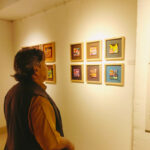
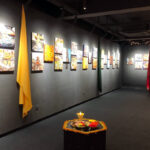
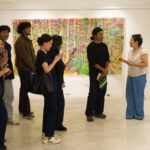
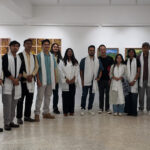
It is this very realization that now unfolds at Siddhartha Art Gallery under the evocative title Invocation to the Goddess. The exhibition feels less like a display and more like a quiet offering- an intimate dialogue between the artist’s inner world and the collective consciousness we all share.
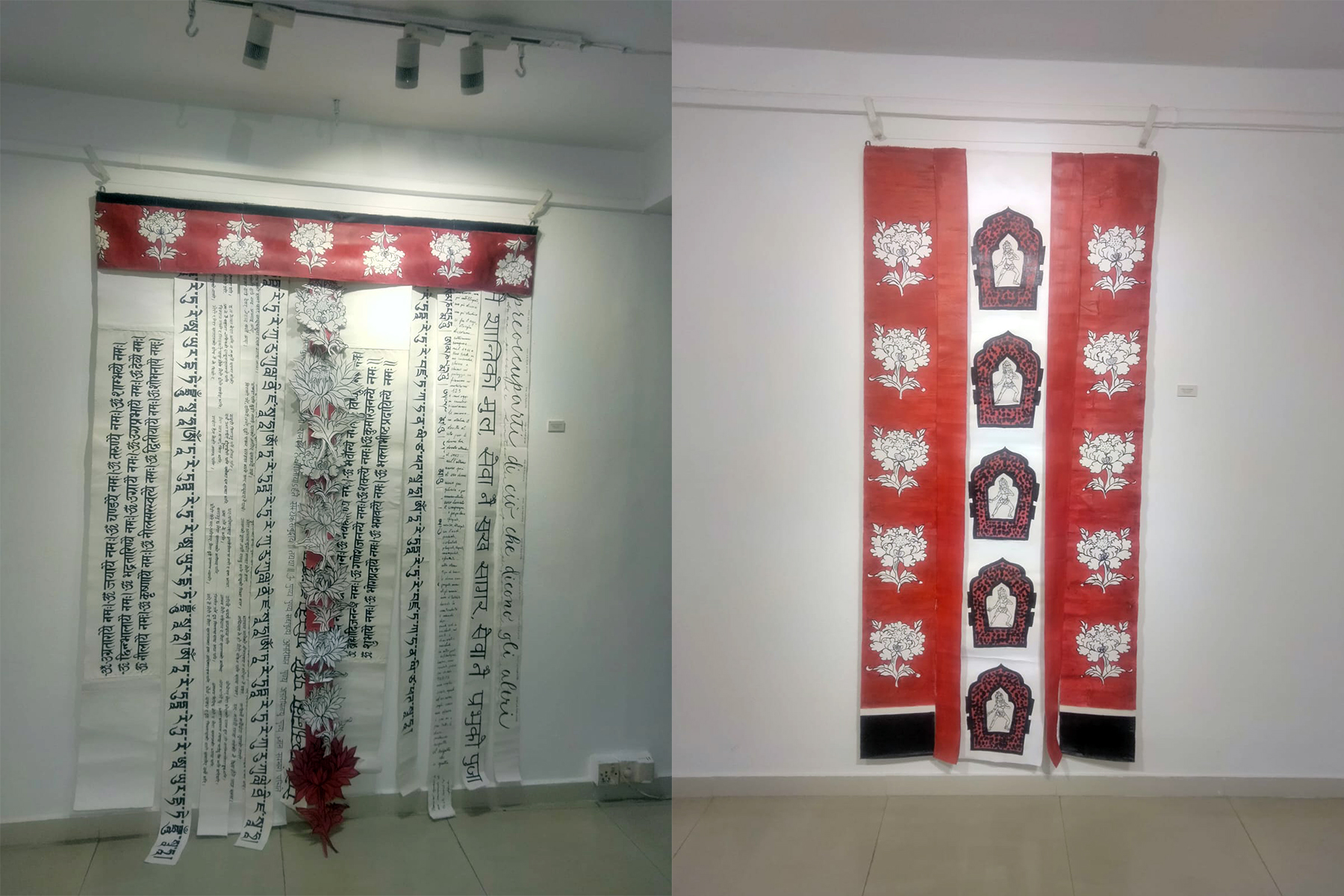
What makes this exhibition particularly compelling is its nomadic spirit. Sara Gurberti, the artist behind the works, describes it as a “traveling exhibition”- a body of art that refuses to remain confined within a single geography. Originating from Italy, she carries these pieces across borders, allowing them to gather new meanings and resonate differently with each audience they encounter.
Her artworks, predominantly composed as collages, embody both fragility and adaptability. Light enough to be rolled and transported, they mirror the very essence of movement and transition. Within these compositions, acrylic drawings merge seamlessly with layered fragments, creating a textured visual language where memory, myth, and material coexist. Each piece feels like a convergence- of places, of emotions, of identities- echoing the universal yet deeply personal quest that inspired them.
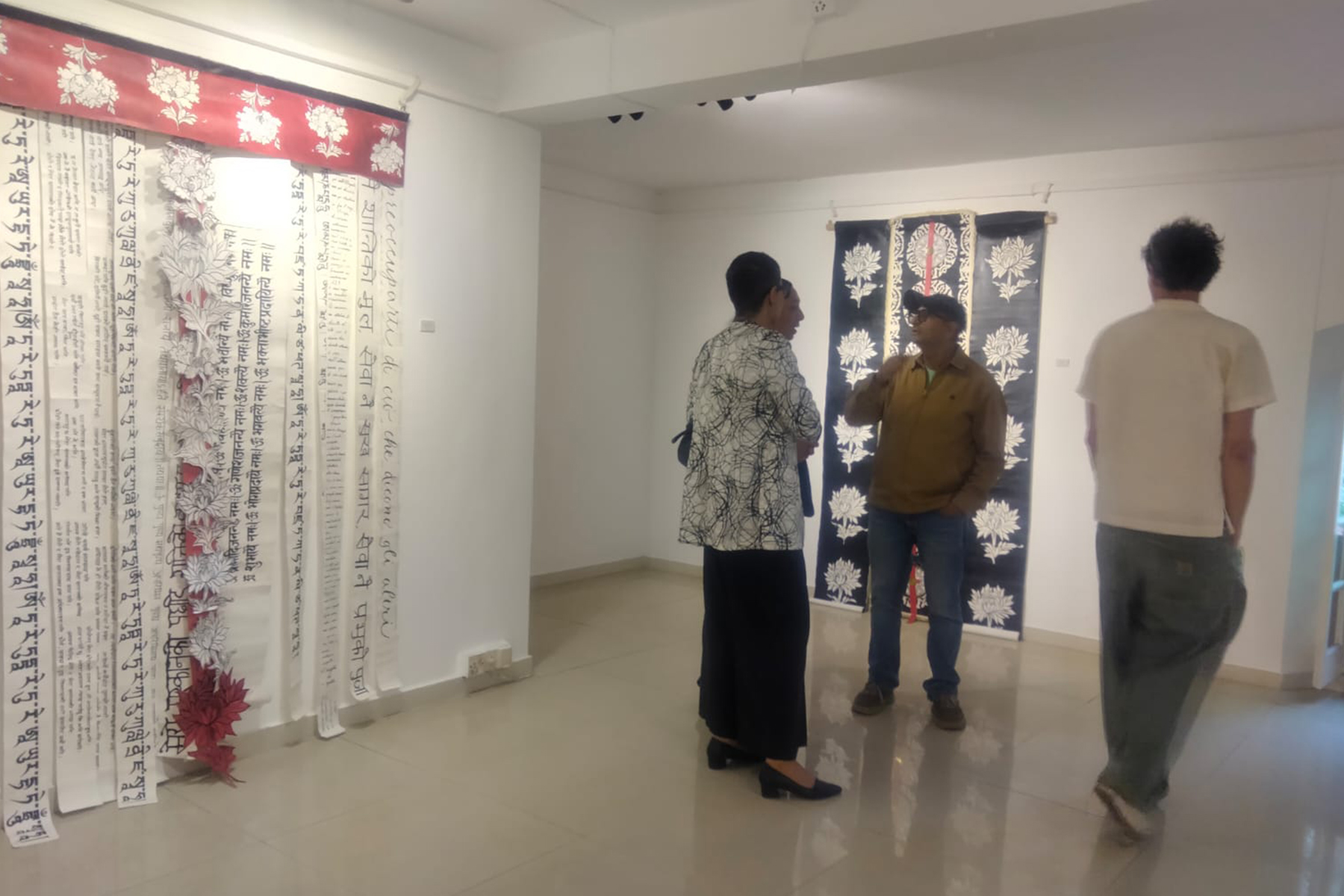
One of the most arresting qualities of her work lies in its delicate yet deliberate attempt to hold two vast spiritual traditions- Catholicism and Hinduism- in a single, breathing space. Rather than placing them in opposition, she allows them to flow into one another, as if they were always meant to share the same sacred ground.
The first image that commands attention within the gallery is that of Saraswati- rendered in a stark, almost meditative black, set against a pulsating red backdrop. The contrast is immediate and evocative, drawing the viewer into a space that feels both intense and contemplative. Yet, what unsettles and intrigues even more is the absence of a face. This faceless Saraswati seems to dissolve the idea of identity itself. In contrast, Lakshmi emerges with defined features, her presence anchored and recognizable.
When asked about this distinction, the artist responded with a quiet smile, offering a reflection that lingers long after: knowledge, she suggests, is boundless and formless- it does not belong to a single face, a single place, or a single origin. It exists everywhere, waiting to be discovered. Wealth, on the other hand, is rooted in origin and movement; it comes from somewhere, shaped by context and circumstance.
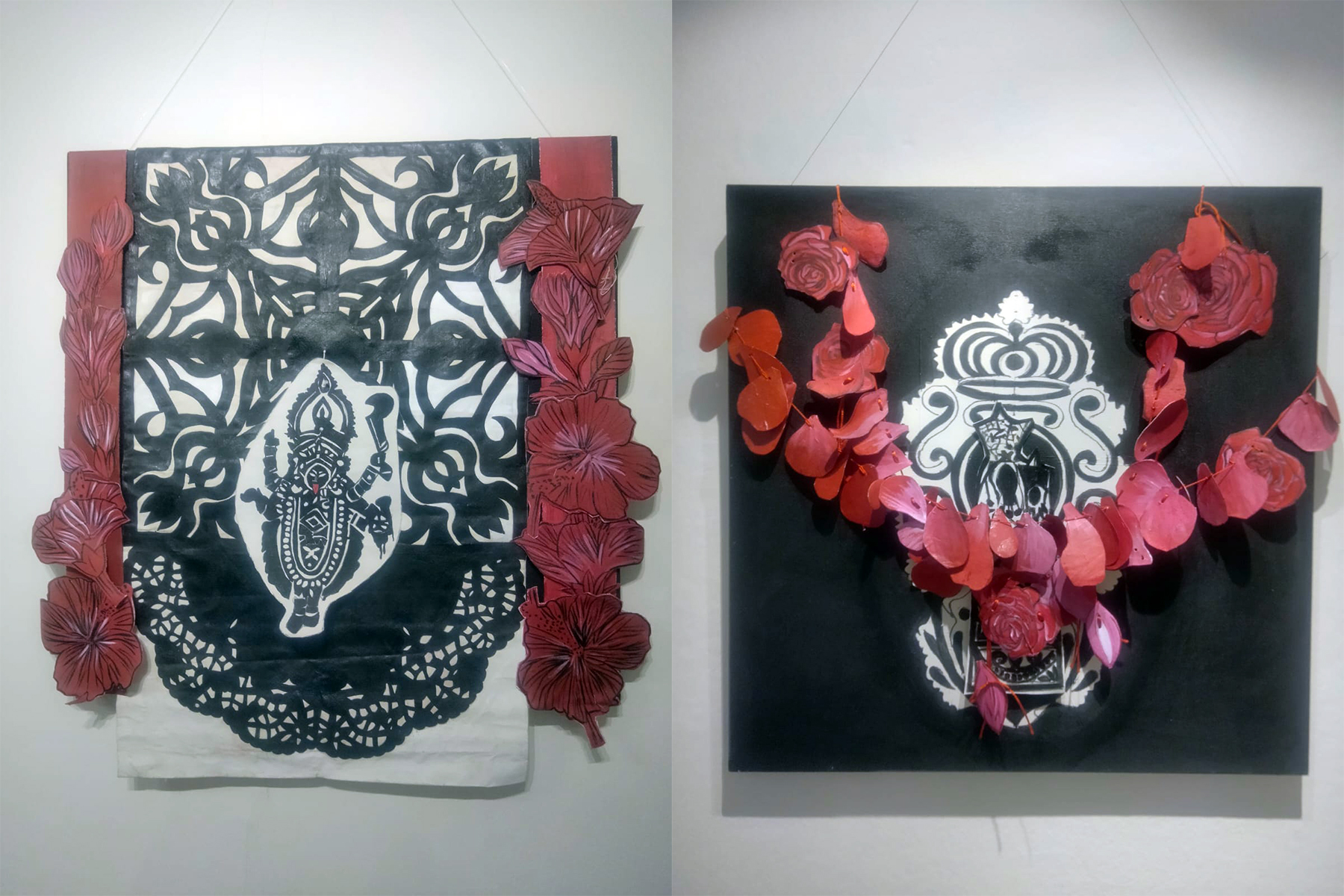
Equally compelling is her portrayal of Virgin Mary, often revered as the Madonna. Here, she appears enveloped in a deep black background- an aesthetic choice that feels both unexpected and quietly radical. The darkness does not diminish her; rather, it grounds her, returning her to something elemental.
In speaking about this, the artist gently challenges long-held visual traditions. She reflects that in earlier interpretations, the Madonna was once depicted in darker tones- not as an aesthetic accident, but as a symbol of fertile earth, of soil from which all life emerges. Over time, this imagery, she suggests, was altered, reshaped into the familiar pale figure that dominates contemporary iconography. Through her work, she seeks to reclaim that primal symbolism, restoring the Madonna to a space of origin, depth, and quiet energy- the generative force that nurtures all existence.
“In a time when the earth trembles under unrest,” she reflects, “much of the world is still steered by structures of male dominance. Perhaps, if guided by a more feminine presence, it might learn the language of compassion anew.” Her voice carries neither defiance nor accusation—only a quiet, persistent concern. “I am not here to argue,” she adds gently, “but to share what I genuinely feel.”
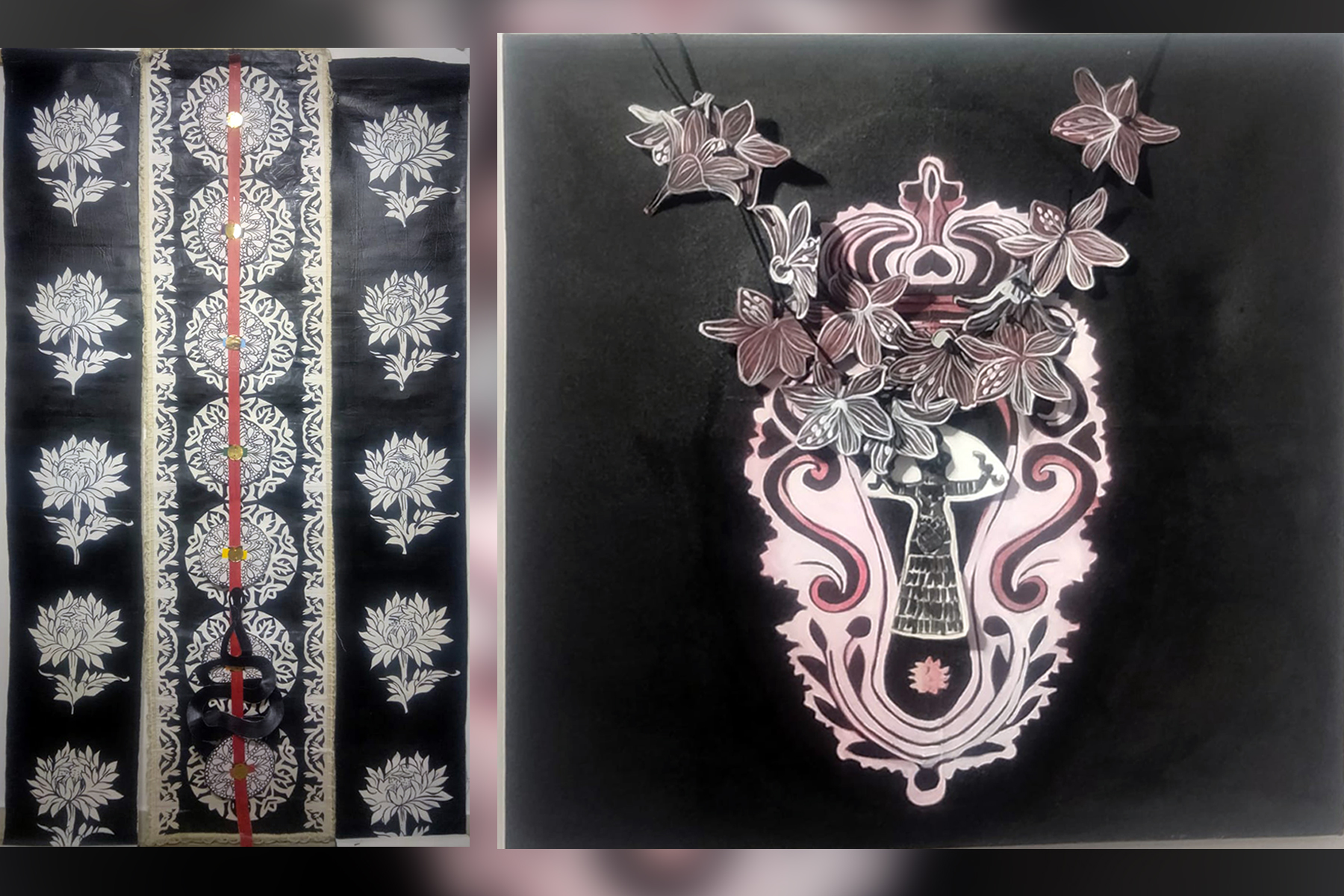
This sensibility finds a poignant expression within one of the canvases displayed at Siddhartha Art Gallery. Here, the artwork extends beyond the artist’s own hand, inviting participation from the female viewers themselves. They are encouraged to inscribe their inner voices- fleeting thoughts, buried emotions, silent assertions- onto the surface. These contributions, intimate and unguarded, do not remain confined to a single space; instead, they travel with the exhibition, quietly weaving themselves into each new context the works inhabit.
In this way, the exhibition becomes a living entity- gathering fragments of human experience as it moves across geographies. It carries not only the artist’s reflections, but also the whispered truths of those who encounter it. Such traveling exhibitions often leave audiences in a state of wonder, for they blur the boundary between creator and observer, turning art into an evolving conversation.
As Invocation to the Goddess continues its presence in Kathmandu, it offers more than visual engagement—it invites introspection, urging each viewer to listen closely to their own inner dialogue. For Nepali art lovers, this is not merely an exhibition to be seen, but one to be experienced, to be felt. The show remains open from April 10 to April 30, a fleeting yet profound window into a journey that is at once deeply personal and universally resonant.

Leave A Comment