
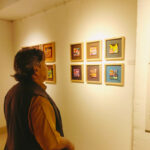
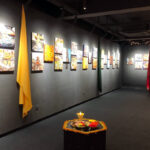
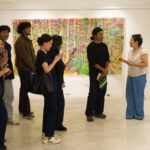

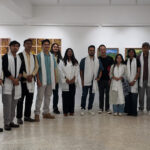

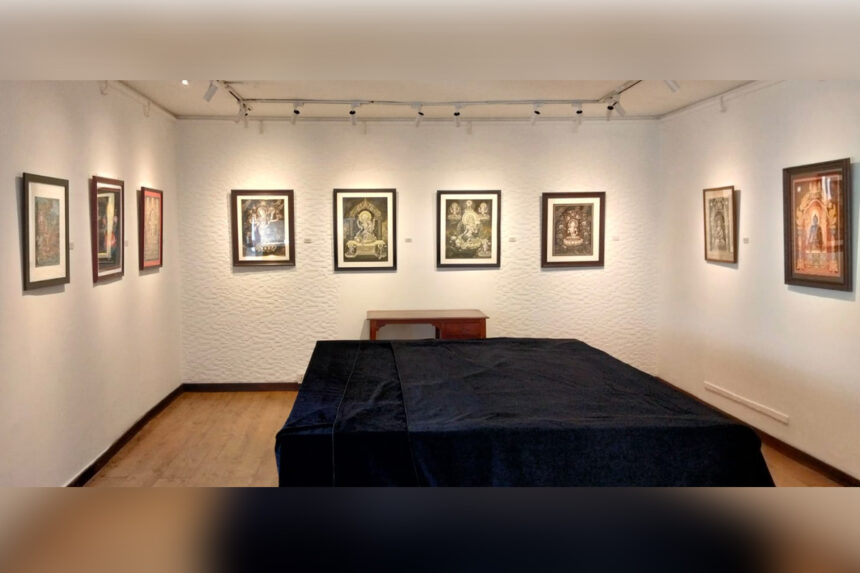
Kathmandu Art Gallery in Babarmahal welcomes visitors to its newly revived space, now alive with the vibrant energy of a fresh exhibition. Nestled within the old Rana Durbar, the century-old edifice itself stands as a timeless work of art—its weathered walls and grand corridors breathing history into every frame displayed within. Experiencing an art show in such a setting is nothing short of enchanting, where heritage and creativity harmoniously intertwine.
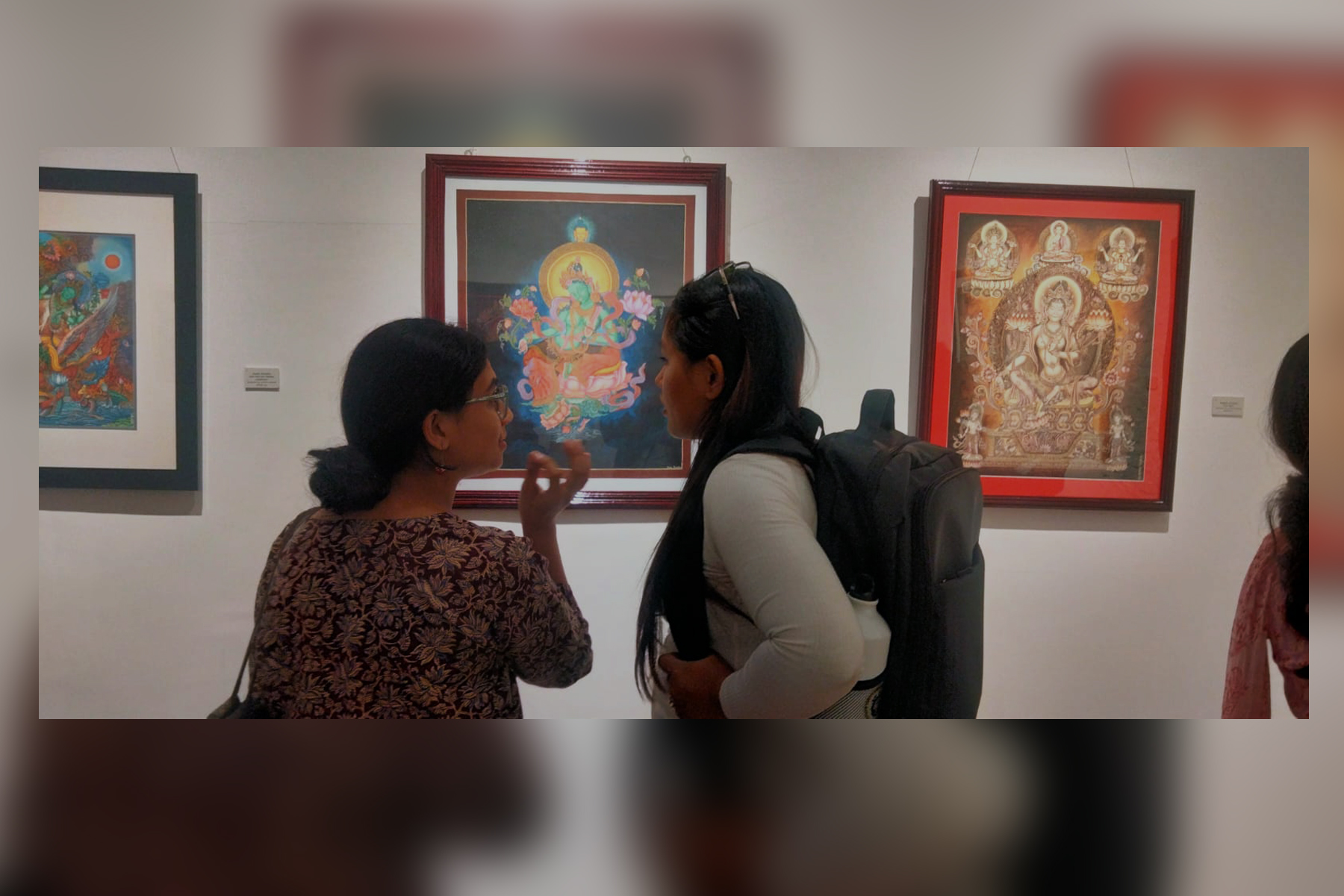
The exhibition, titled “The Master of Devotion,” opened on October 17 and will continue to grace the gallery until November 22.
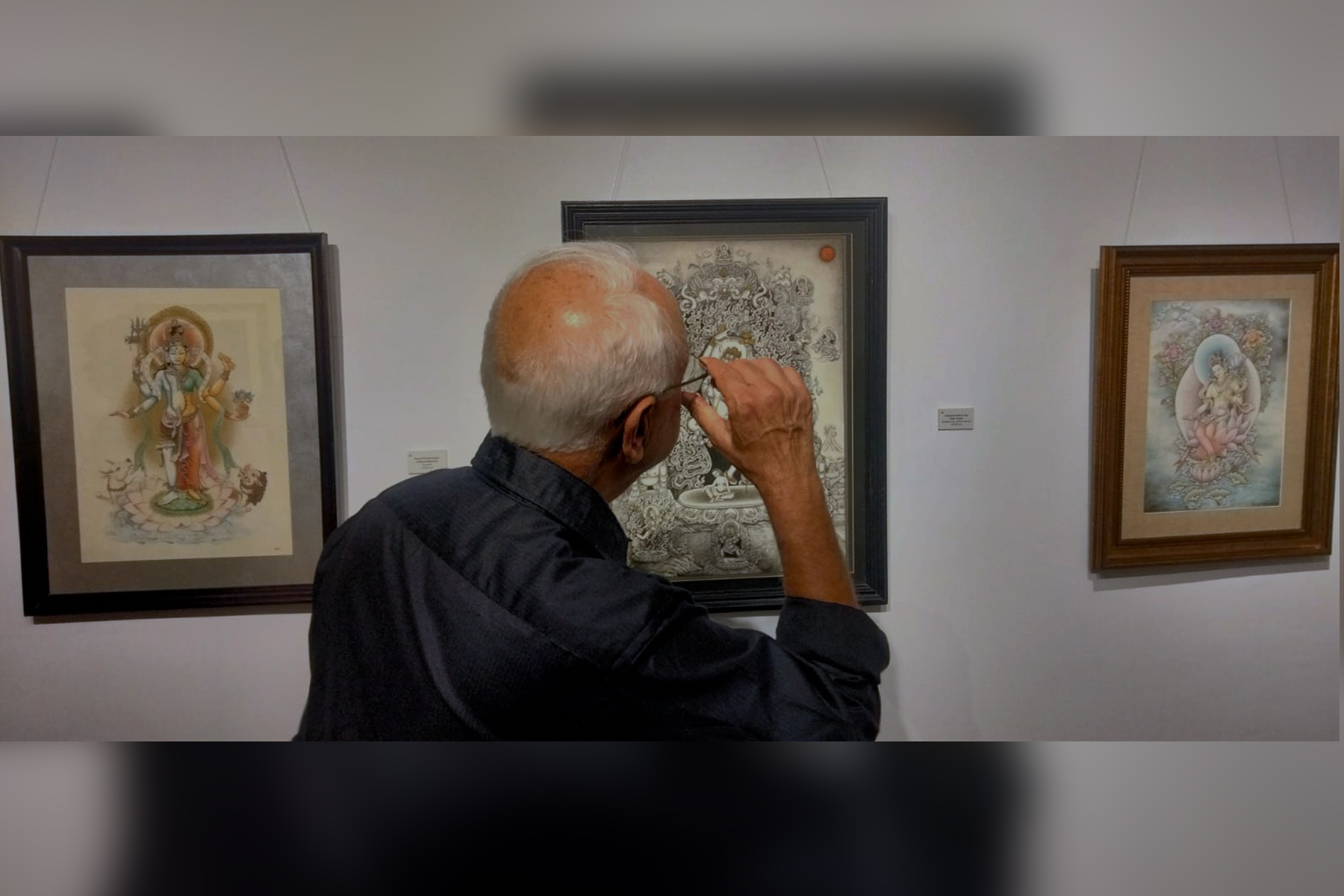
Within its halls, visitors are invited to encounter a collection of profound and inspiring artworks—each piece a testament to artistic mastery and spiritual reverence.
Surya Bahadur Chitrakar’s Laxmi radiates a serene traditional charm, rendered in the classic Newari style. The goddess is portrayed in the midst of worship, her divine grace intertwined with the delicate rituals of devotion. The painting carries the essence of old Kathmandu—its earthy palette, ornamental details, and sacred ambience evoke the rhythm of a culture deeply rooted in reverence and artistry.
Rajani Sinkhwal, another remarkable artist, presents a compelling portrayal of Ganesh—a form both fierce and divine. Draped in flowing fabrics that cascade dramatically around the figure, the deity emerges against a deep black background, his aura gleaming like the first light of dawn. The interplay of darkness and radiance gives the piece an almost ethereal vitality, as if the god himself were awakening from the canvas.
Sundar Sinkhwal, a master of symbolism and form, reimagines Krishna in a vision that diverges from conventional depictions. Here, Krishna resides within the element of water, surrounded by two makaras—mythical creatures with bird-like heads—that gracefully frame the composition. Only the upper half of his divine body is revealed, while the lower portion is veiled by an exquisite fan of peacock feathers. The result is an image that feels fluid, mystical, and profoundly poetic.
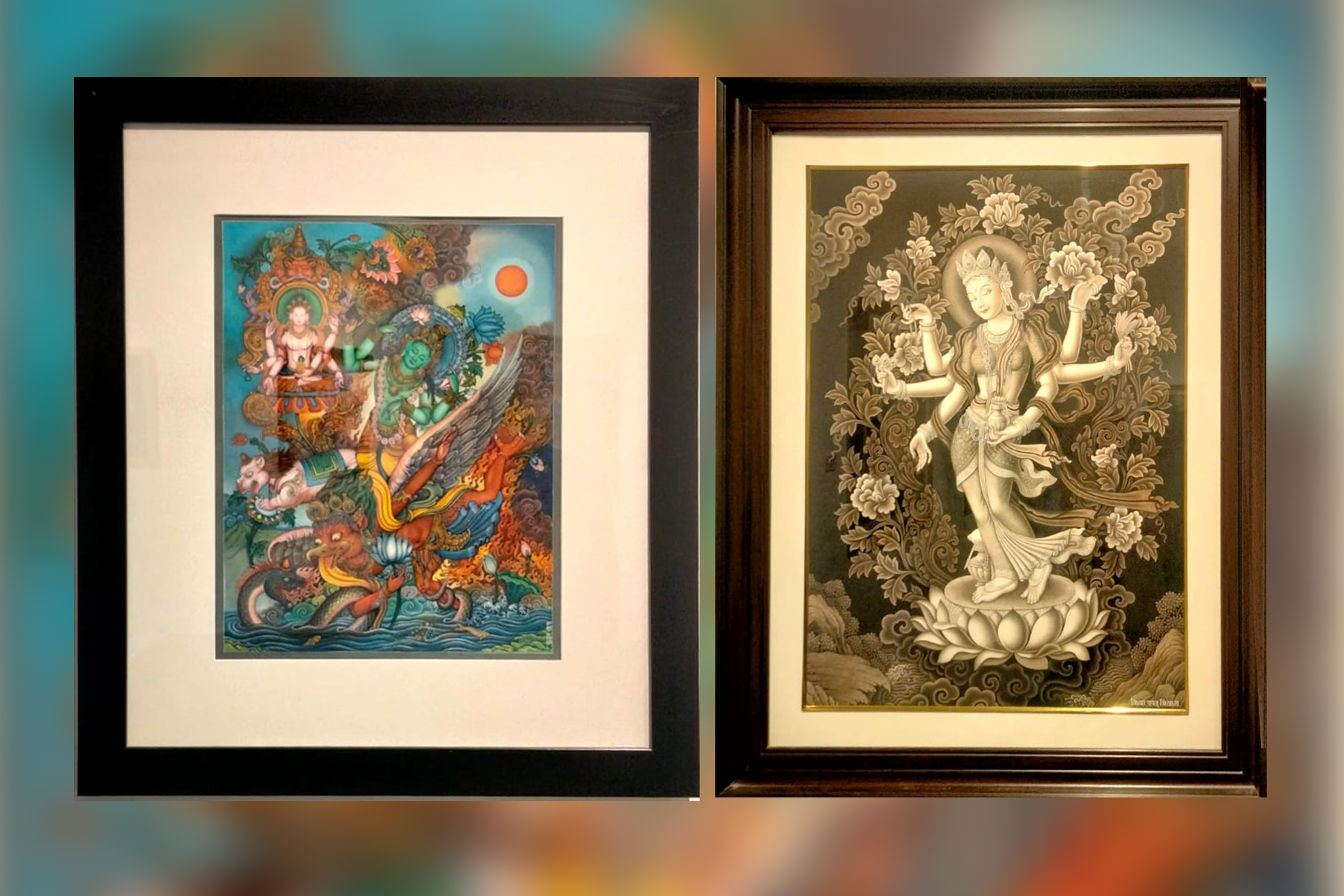
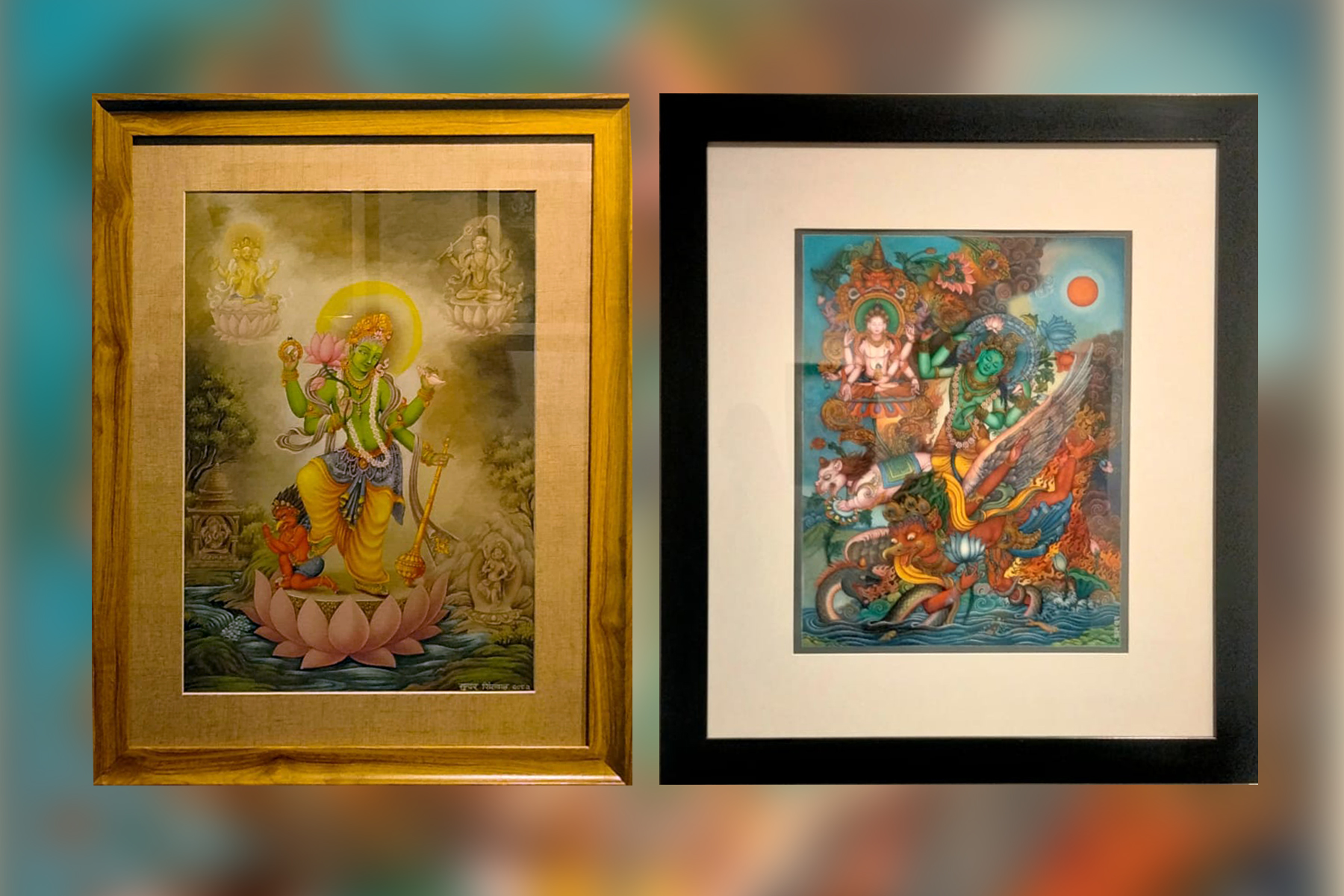
Sundar Shrestha, another celebrated artist, unveils a majestic image of Hari Hari Hari Vahana Lokeshvara. The divine figure, accompanied by his sacred companions—the Garuda, serpents, and lion—exists in a state of perfect balance amidst a fiery expanse. The background, an interplay of blue and orange hues, captures both tranquility and intensity. The gentle sun radiates through the scene, casting an amber glow that dances upon the flames, creating an atmosphere where divinity and nature burn in harmonious unity.
Balaram Nhishutu’s Arya Tara evokes a quiet reverence, drawing the viewer into its serene simplicity. The composition radiates a subtle yet powerful aura—its restrained palette, dominated by soft tones, creates an atmosphere of calm devotion. Behind the goddess, an orange hue glows gently, suffusing the space with a sense of divinity and inner light. Though the painting appears modest at first glance, every line and shade reveals Balaram’s meticulous precision and heartfelt craftsmanship, making the simplicity itself a form of elegance.
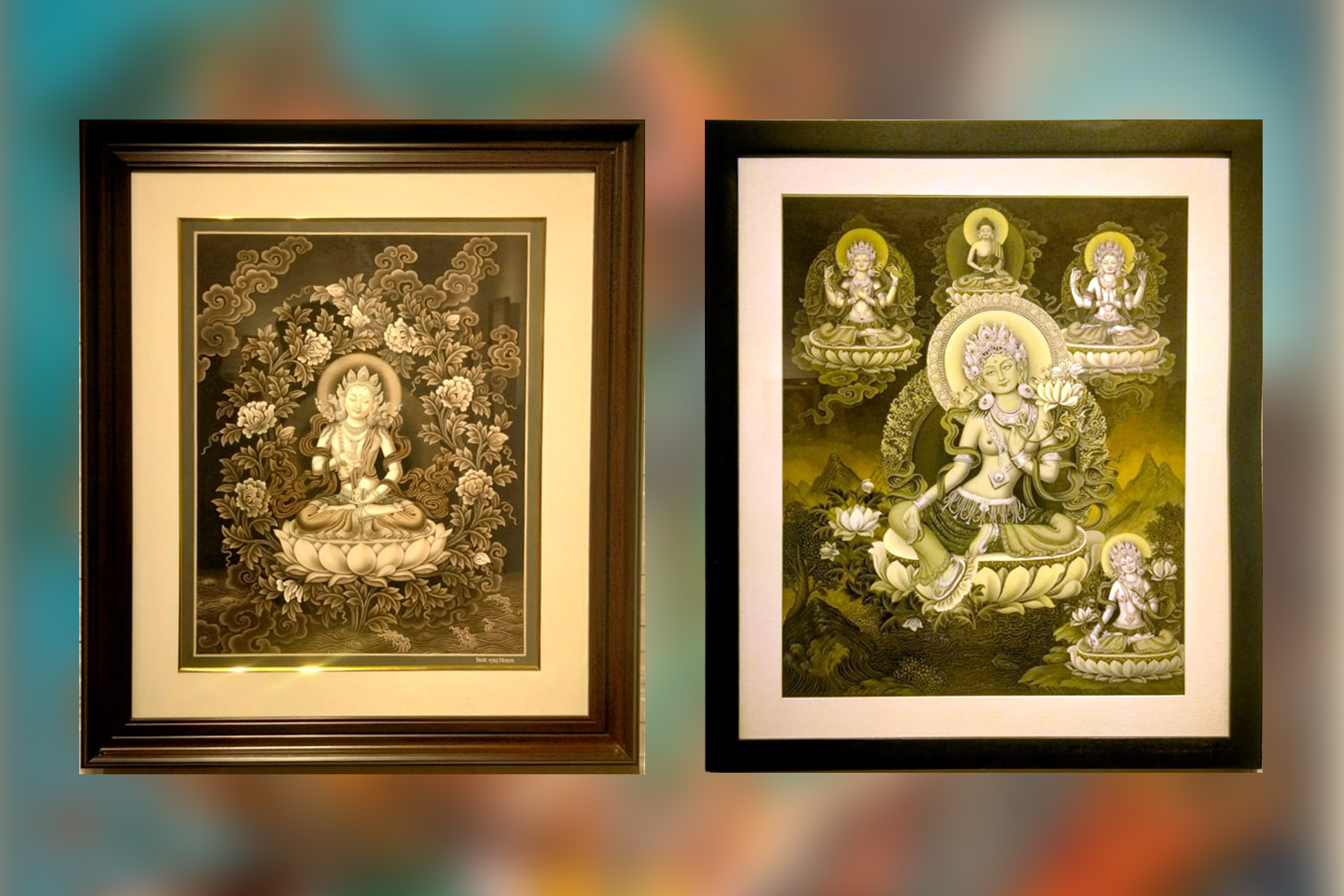
Shiva Prasad Kiju’s Brahmananda Lokeshvara unfolds with a sense of sacred grandeur. Set against an olive backdrop, the deity is portrayed with exquisite care—the ornaments gleam with lifelike delicacy, as if they were forged from real metal and sanctified through touch. The central figure cradles his consort tenderly upon his lap, while two others rest symmetrically at the base, their presence balancing the entire composition. The work radiates harmony, devotion, and the quiet rhythm of divine intimacy.
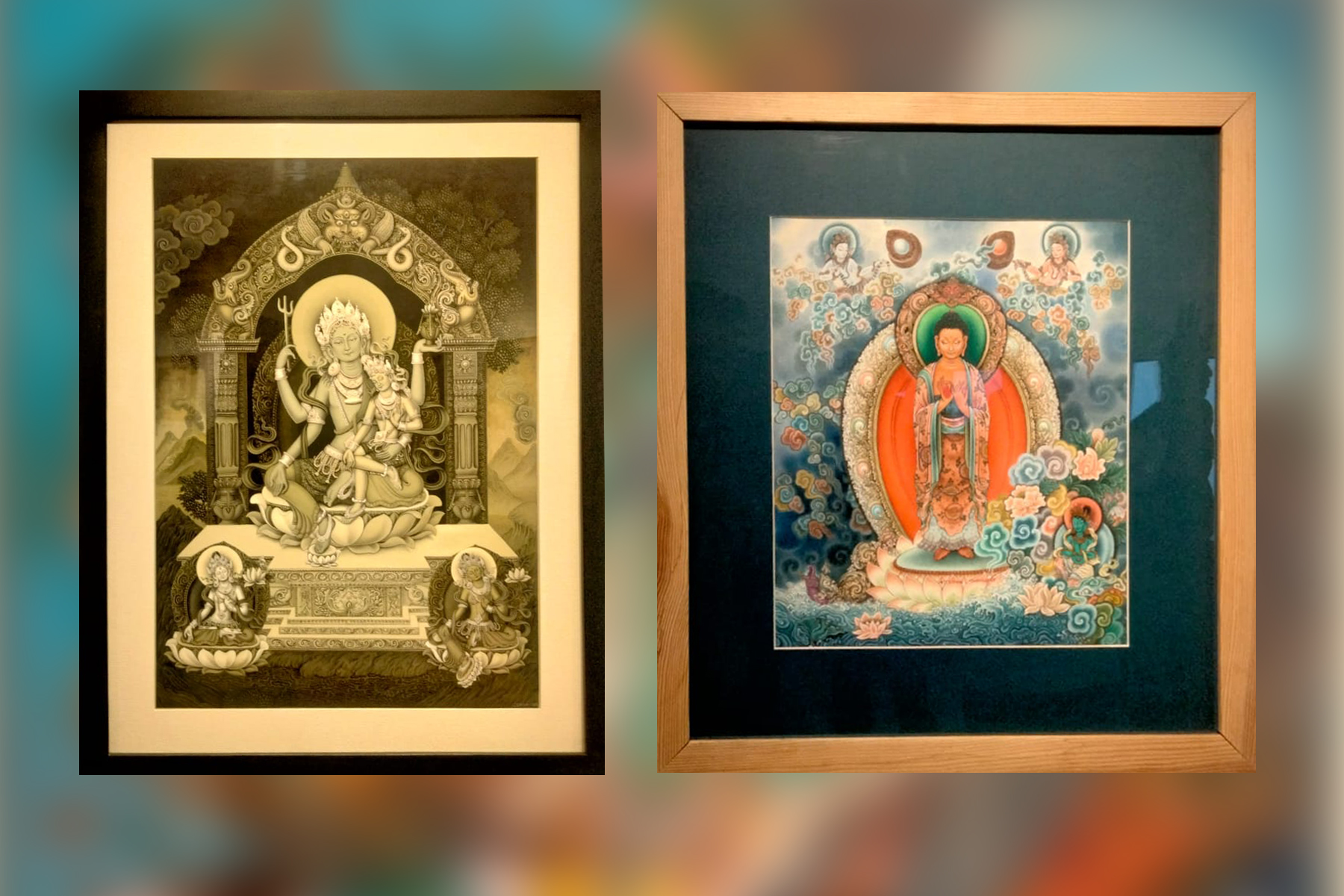
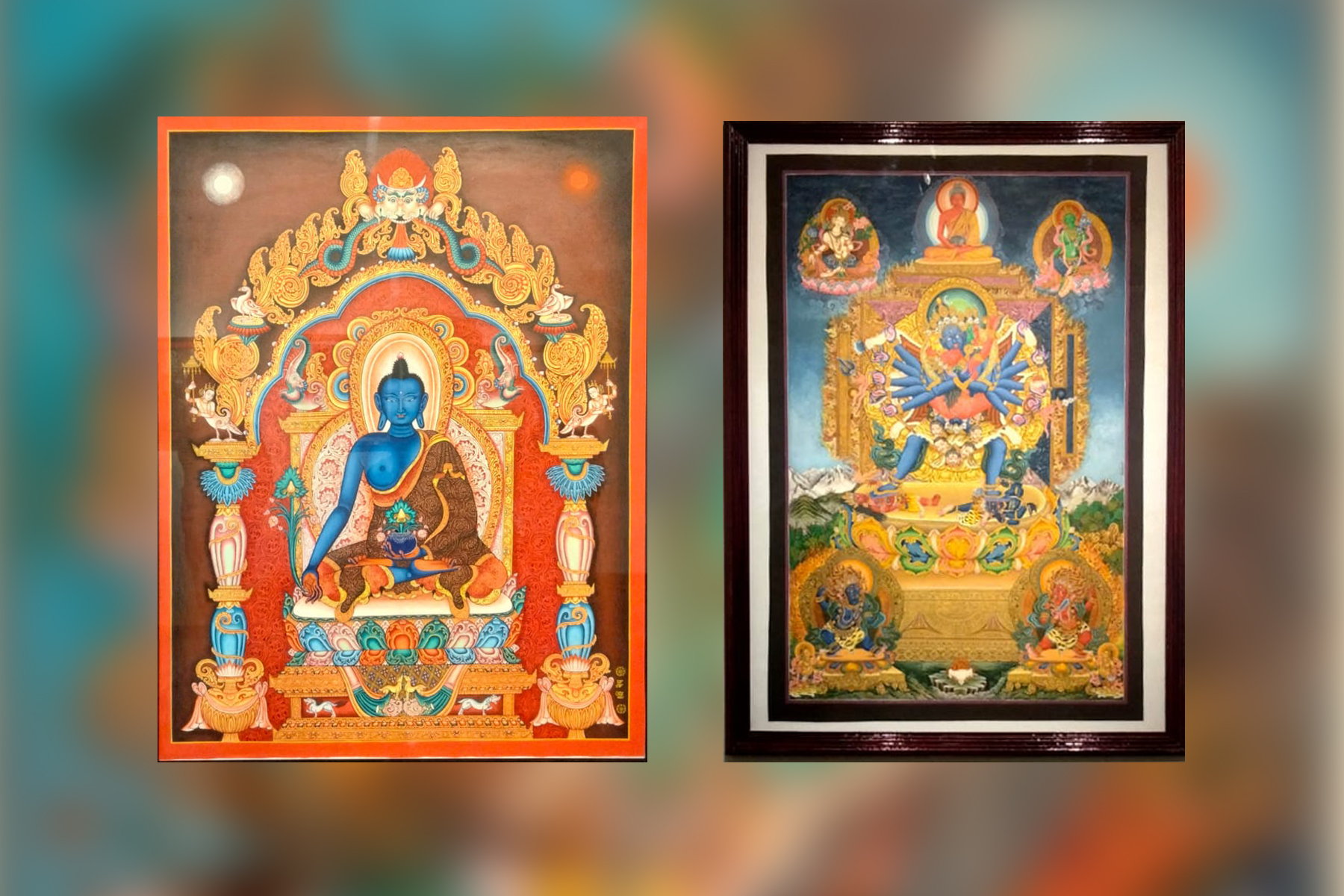
Rabindra Munakarmi’s Amitabh Buddha emanates a meditative stillness that lingers in the mind of the viewer. Against a deep black background, the Buddha rests upon his throne in profound contemplation. The artist employs a monochrome palette to masterful effect, allowing tone and texture to carry the spiritual weight of the image. The craftsmanship—precise, refined, and restrained—exalts the stillness of enlightenment itself, making the painting feel both timeless and transcendent.
Ram Hari Sinkhwal’s Avalokiteshvara enchants the eye with its mesmerizing intricacy. The compassionate deity stands gracefully upon delicate rose petals, supported by Chhepu, Nagas, and other mystical beings rising from the depths below. Every element—each curve, each ornament, each ripple of divine energy—is rendered with remarkable precision. The composition feels alive, as though the deity’s compassion were emanating outward, enveloping the viewer in a serene spiritual embrace.
Subendra Lohala’s Kurkula Devi captures a vision both mystifying and powerful. The painting pulsates with fiery vitality—the flames seem to encircle the goddess, forming an aura of divine energy that blazes with life. Draped in a garland of emerald serpents, she wields her bow and arrow with commanding grace. Beneath her, verdant mountains rise like waves of devotion, grounding the fiery spectacle in nature’s own rhythm. The interplay of flame, serpent, and earth creates a visual symphony that feels at once mystical and elemental—a dance between destruction and renewal.
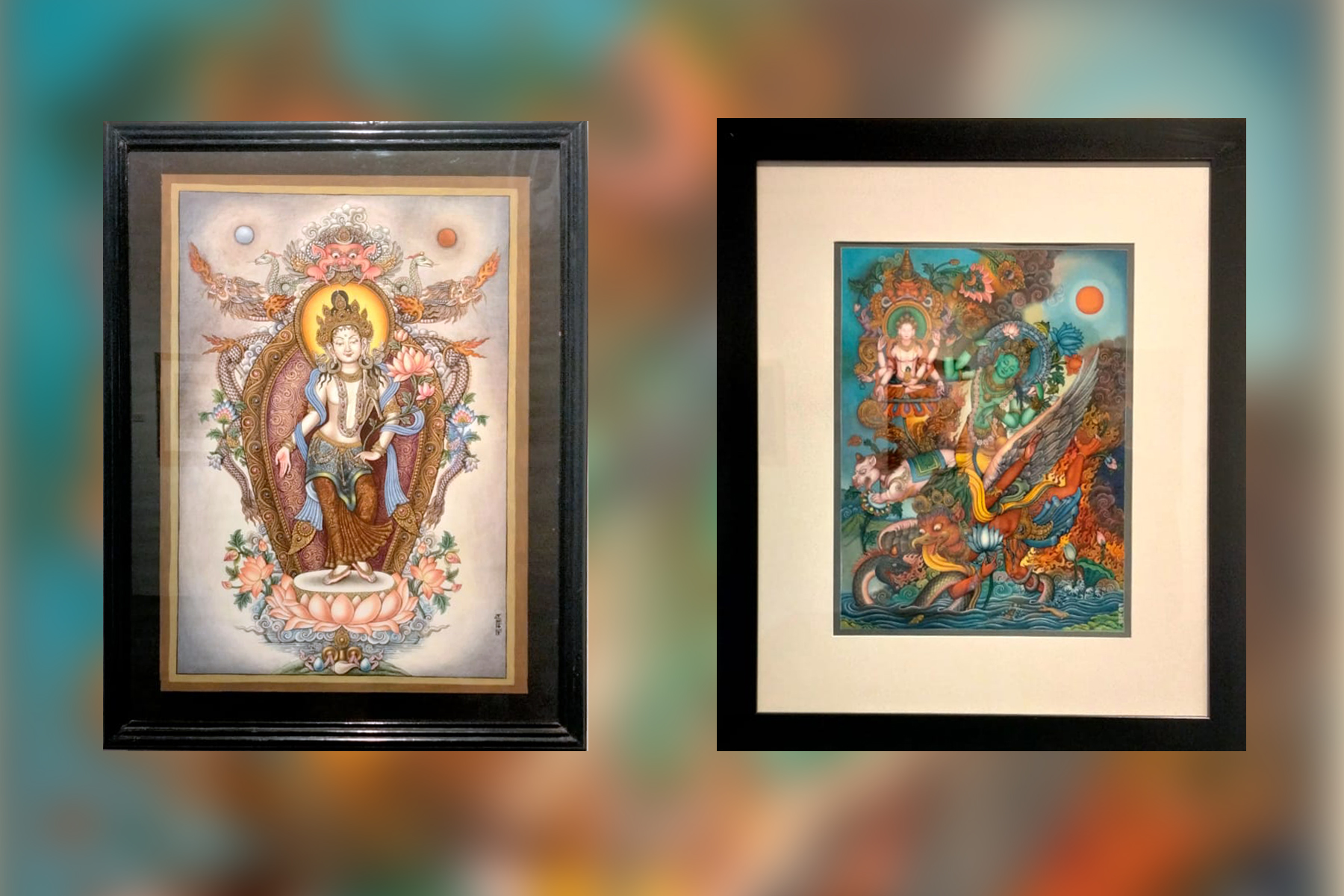
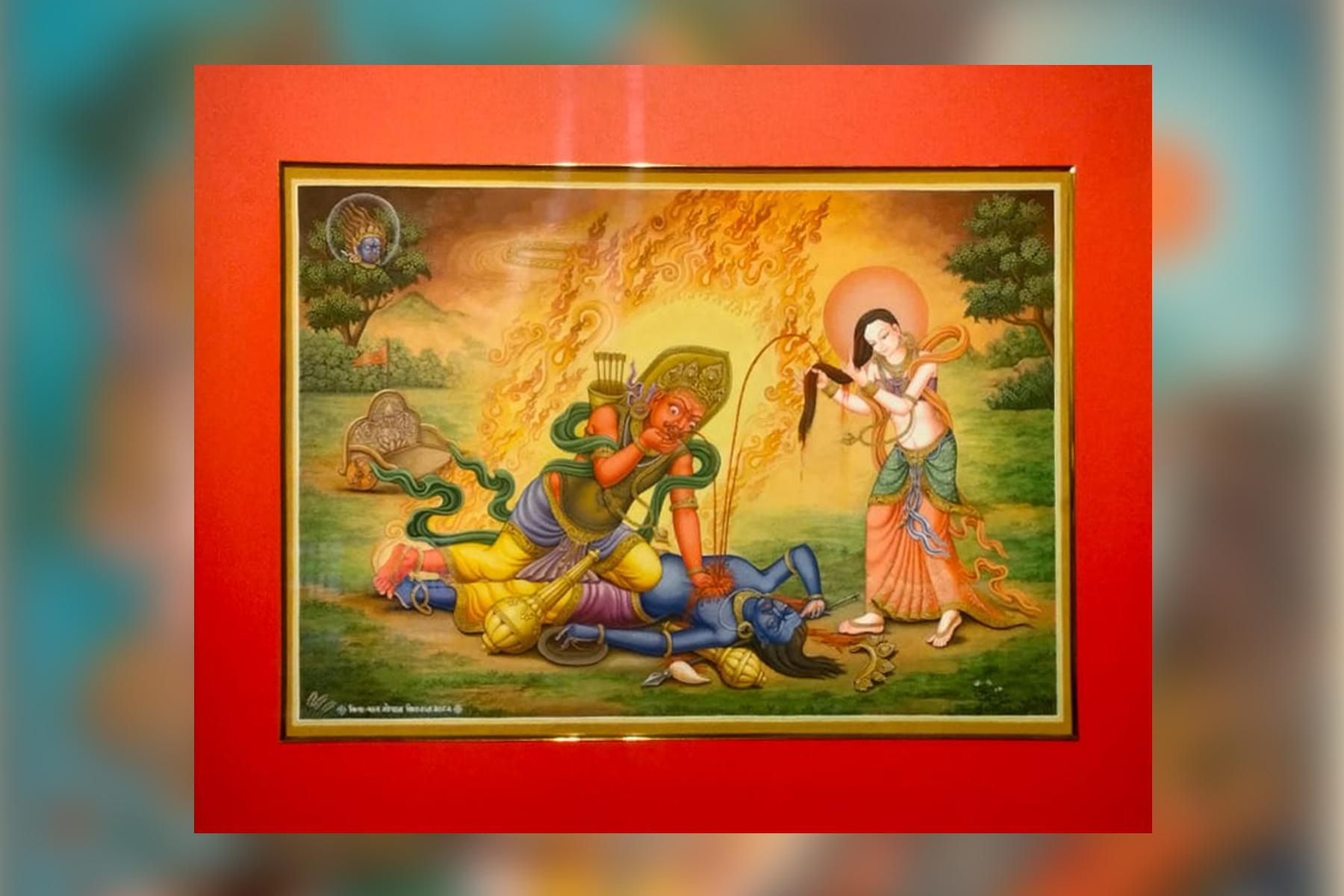
Ratna Gopal Sinkhwal’s Bhimsen transports viewers into one of the most powerful moments of the Mahabharata. The painting captures the climactic scene where Bhimsen defeats Duryodhana, and Draupadi, in a haunting act of retribution, washes her hair in his blood. Overlooking this charged tableau, Barbarik silently witnesses the culmination of vengeance and fate. Sinkhwal’s masterful brushwork transforms this mythic moment into a visceral visual experience—imbued with drama, sorrow, and divine justice. The painting leaves a profound impression, echoing in the mind long after the viewer has turned away.
Chandra Krishna Kiju’s Vajra Varahi commands attention with its remarkable play of light and shadow. Executed through delicate pencil work enhanced by subtle hues, the composition achieves an extraordinary balance of restraint and intensity. The fierce goddess emerges from the depth of the canvas, her presence both terrifying and mesmerizing. The precision of every contour and the harmony of tones create an image that lingers—an embodiment of raw divine power softened by the grace of artistic mastery.
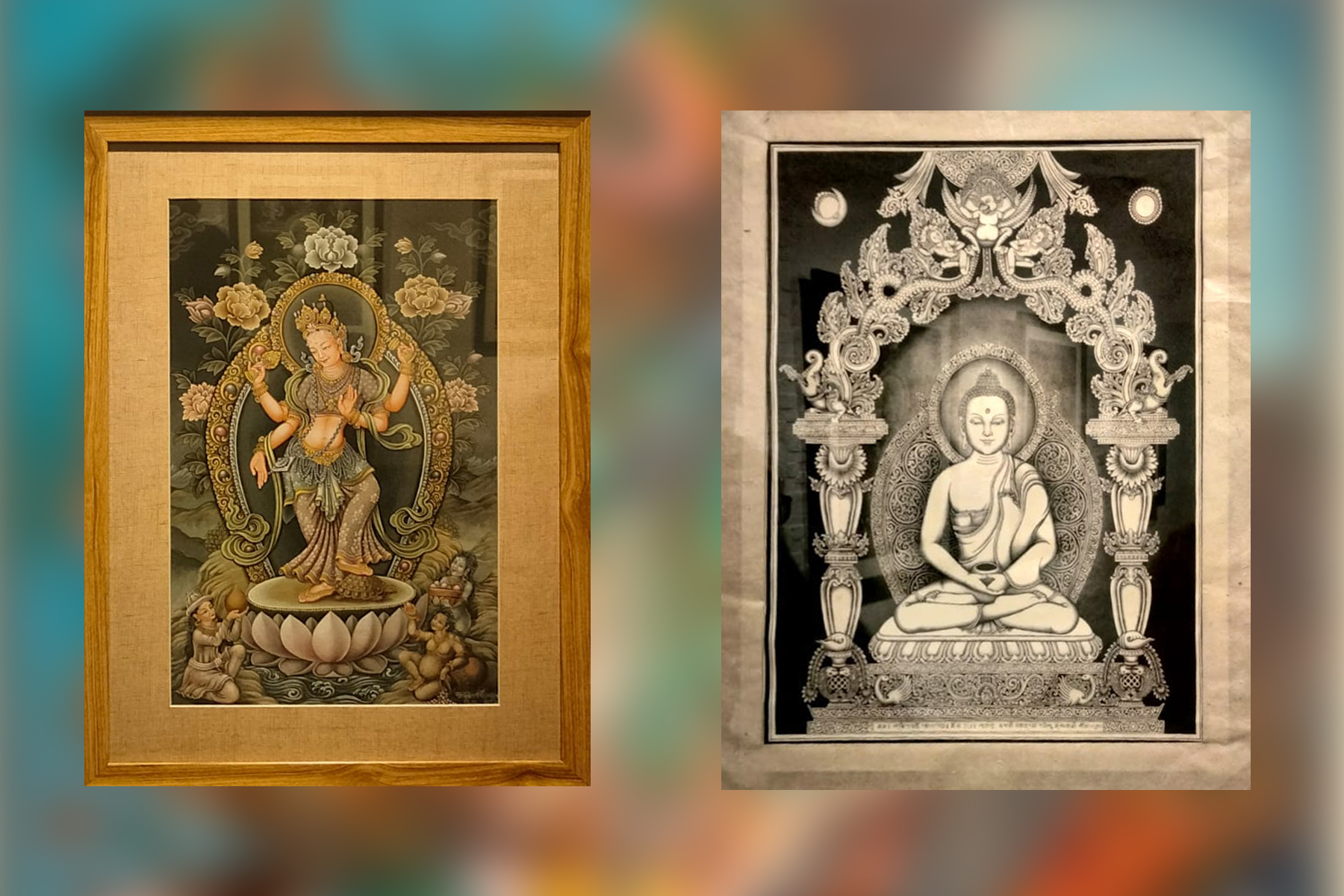
Hari Prasad Baidhya’s Vishnu offers a refreshing reimagination of the preserver deity. The god’s face glows in shades of green, radiating an otherworldly calm, while intricate decorations surround him like celestial constellations. The work departs from conventional portrayals, instead evoking a vision of Vishnu that feels alive, mysterious, and deeply spiritual. It stands out as a captivating blend of divinity and individuality.
Roshan Khyaju’s Amoghapāśa Lokeshvara rises grandly among the collection—an expansive masterpiece that also encompasses the Pañcha Buddha, the five celestial Buddhas. The composition emanates a sense of sacred magnitude, inviting awe and introspection. Each minute detail, from the ornamental patterns to the fluid gestures of the figures, reveals Roshan’s exceptional craftsmanship. The painting’s aura commands reverence; it is a testament to patience, devotion, and the boundless depth of artistic skill.
The late Gyankar Bajracharya’s Bishwo Rupa Bhairava stands as a timeless homage to the sacred visual traditions of antiquity. The painting’s intricate forms and rich pigments recall the spiritual manuscripts of bygone eras, where every stroke was both prayer and creation. Bajracharya’s command of detail and color transforms the work into a living relic of devotion. To gaze upon it is to be transported into the sacred past—where art and divinity converged in luminous unity.
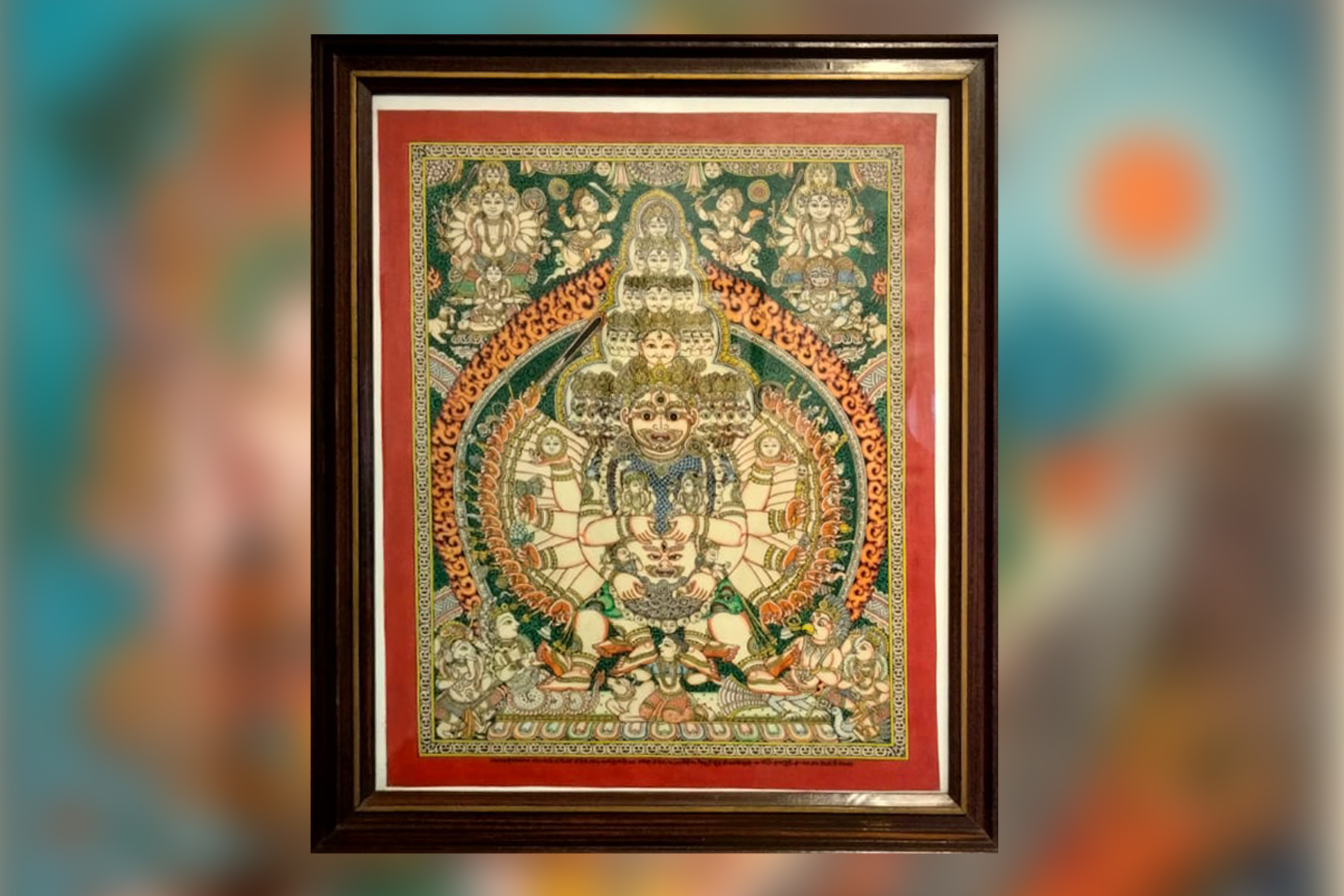
A collection of traditional Nepali religious artworks, mainly crafted in the Newari style, portraying both Hindu and Buddhist deities. These paintings are distinguished by their intricate detailing, rich symbolism, and deeply spiritual atmosphere. The collection highlights how contemporary Nepali artists uphold age-old devotional traditions while infusing them with their own creative vision, resulting in artworks that feel both deeply rooted in history and strikingly contemporary.

Leave A Comment